
Bordeaux at a human scale.
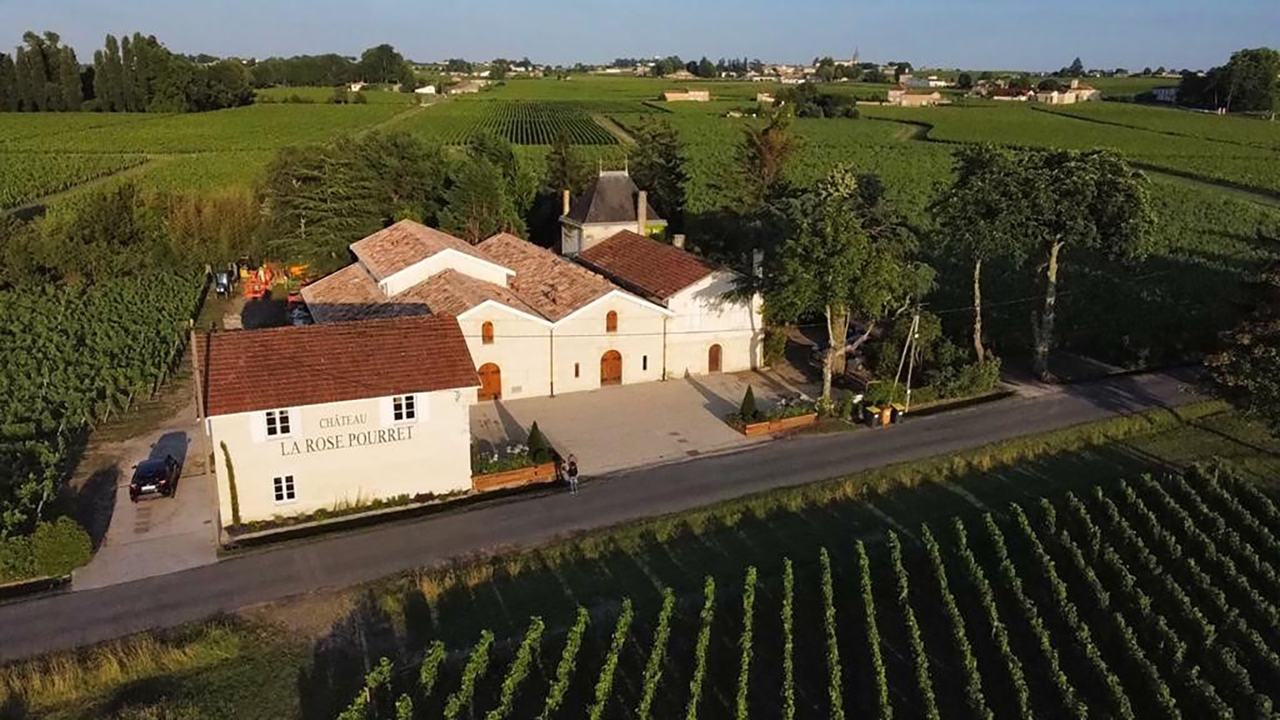
A single unbroken block just outside the old walls of Saint-Émilion, where the plateau begins to tip: nine hectares in one piece, and no borrowed fruit. Half the vines are around fifty years old. The estate changed hands in 2018 and the new owners did the unfashionable thing immediately: began organic conversion, and were certified by the 2021 vintage. Sand over deep clay, planted mostly to Merlot with Cabernet Franc on a newer limestone parcel; vinified plot by plot in truncated steel and old concrete, raised in a mix of new and used barrel. Bordeaux at a human scale, which is rarer there than it should be.
02 · Five generations, then a saleThe Warions, a century on the Libourne road, and a recycler who wanted vines.
Pourret is a lieu-dit on the western flank of Saint-Émilion, a kilometre out of the town on the road to Libourne, and several crus carry the name; La Fleur Pourret next door belongs to the Manoncourts of Figeac. La Rose Pourret was the Warion family’s for five generations and the better part of a century; the Hachette listed them year after year, a reliable eight hectares of seventy per cent Merlot with both Cabernets, thirty thousand bottles, sold entirely by the family. Where the rose in the name comes from, nobody has written down.
In 2018 the Derichebourg family bought it: Daniel Derichebourg, who built a large recycling business and had already bought wine estates on the Riviera, and whose group also owns Domaine Guy Bocard in Meursault, which is how two of our producers share an owner. The decision was taken in February and the keys came in July, and the first act was to begin organic conversion that same month, with Ecocert; the estate was certified from the 2021 vintage. The team is small and named: Bruno Lacoste, the consulting oenologist, and Daniel Desplat, the vineyard manager, who came with organic experience. The Girondine house was re-roofed and refaced, a steel vat room and a barrel cellar were built, and a wine bar, Le Comptoir de La Rose, opened in a stone house across the lane with the bell tower in view.
Une seule volonté nous guide : retranscrire dans nos vins la pureté du grand terroir de Saint-Émilion.
Château La Rose Pourret
03 · One blockSand and silt over deep clay with iron pan, and a corner of the limestone plateau.
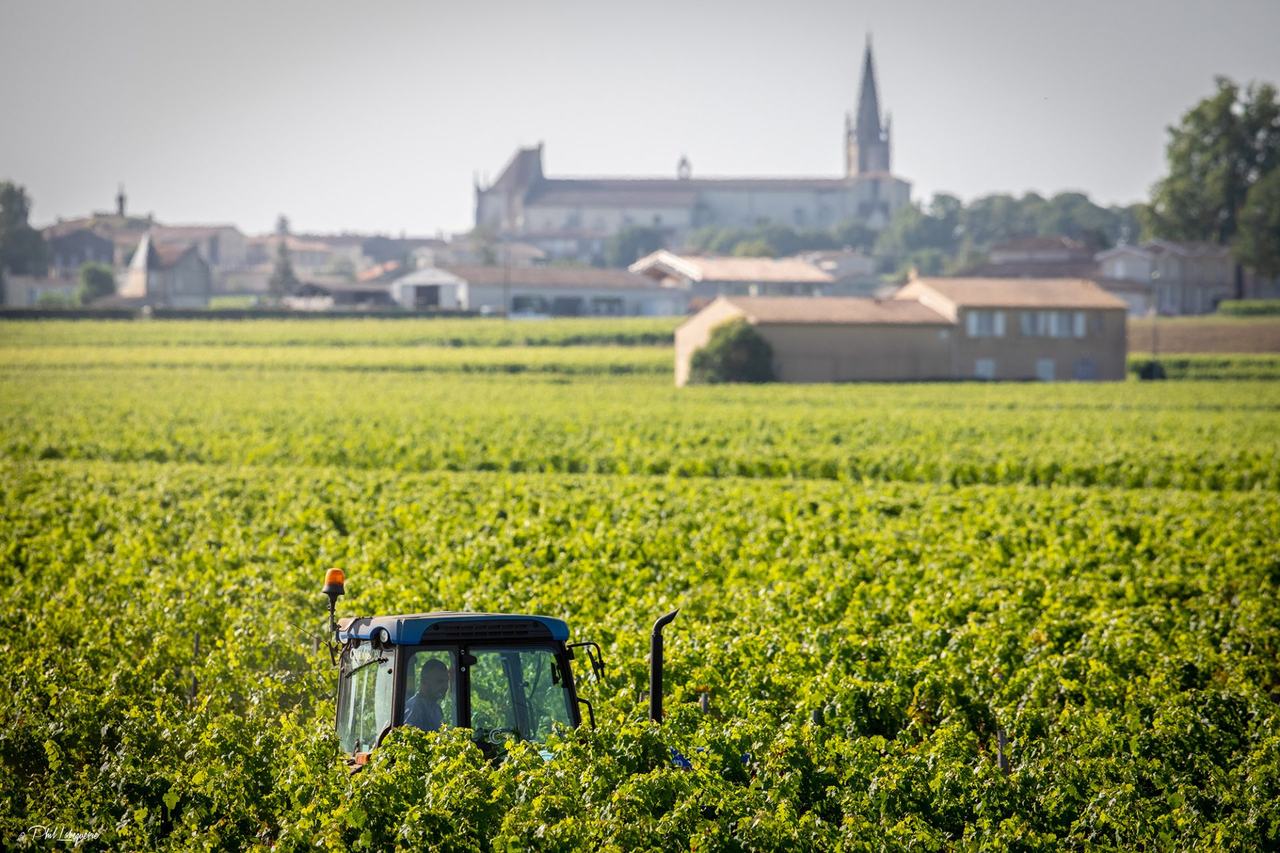
Nine hectares in one piece on the north-west plateau below the town, homogeneous enough that the estate describes the soil in a sentence: sand and silt over deep clay, with the crasse de fer, the iron pan, that the old Hachette entries always mentioned and that the Figeac side of Saint-Émilion is known for. Half the vines are fifty years old; the rest is being restructured a few rows at a time, planted at 6,666 to the hectare and cropped around thirty-five hectolitres. The blend is now 85 per cent Merlot and 15 Cabernet Franc (the Cabernet Sauvignon of the Warion years has gone), with Malbec planted to add, in the estate’s words, generosity and gourmandise.
The addition is the hectare and a half bought immediately after the sale on the north slope of the limestone plateau, studied for two years and planted in 2021, mostly to Cabernet Franc: the parcel that, the estate says, will give the Cabernet its depth.
04 · Plot by plotCold soak, truncated steel beside the old concrete, barrel, and since 2022 a fifth in clay.
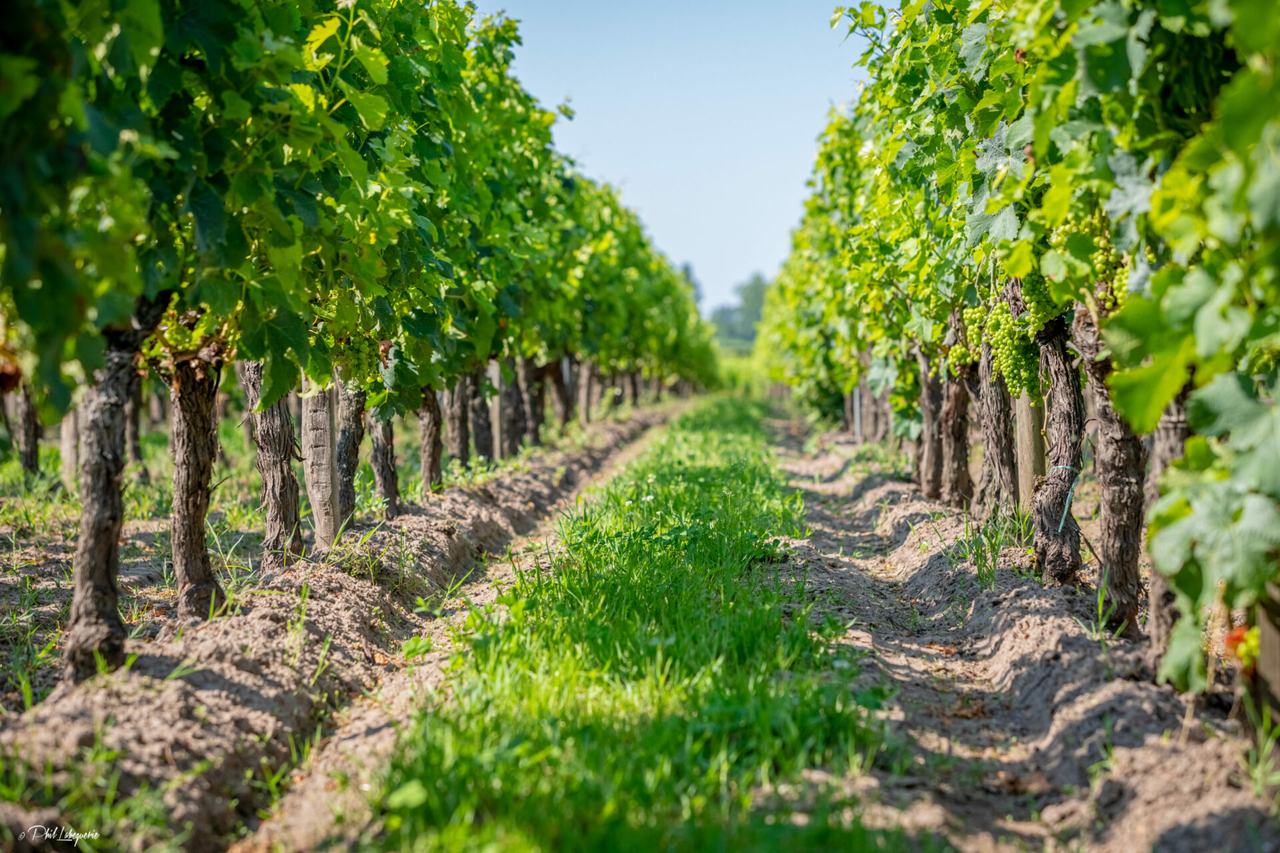
No pesticide, herbicide or synthetic product since July 2018; green-manure cover crops of beans and peas between the rows; the vineyard team’s obsession, as they put it, is “adapting to each parcel, to the raw material and to the fermentation conditions.” Each plot goes to its own vat. The new vat room is truncated-cone stainless with a double thermal circuit, so one tank can be heated while another is cooled, and a glycol loop for a cold pre-fermentation soak to pull the fruit forward; the old concrete vats stand beside it and are still used. Extraction is by pump-over, the vatting about a month.
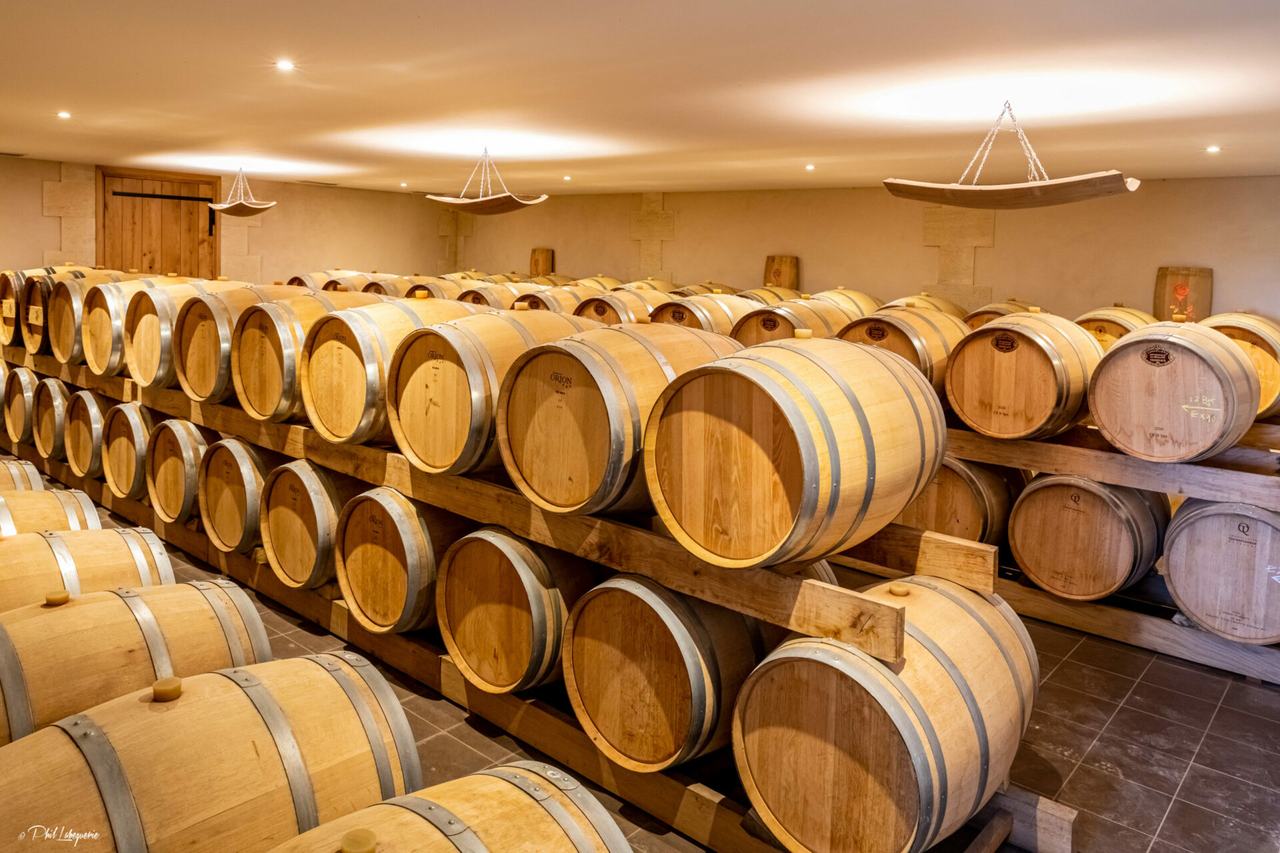
Then barrel, mostly (the new cellar holds two vintages at eighteen degrees): a third new, a third second-fill, with a share of the élevage in concrete and, from the 2022 vintage, twenty per cent in terracotta amphorae. The Hachette, which has not stopped listing the property under its new owners, gave the 2020 a star and the 2022 another: corsé et séveux, porté par des tanins puissants… Patience.
Notre objectif est de produire un vin dense qui exprime le terroir dans une conduite d’agriculture biologique.
Bruno Lacoste and Daniel Desplat
05 · What they say“A very pretty, silky Saint-Émilion.”
Antonio Galloni, Vinous, on the 2020: “A very pretty, silky Saint-Émilion. Crushed flowers, red berry fruit, mocha, spice and new leather all grace this attractive, mid-weight 2020… elegant and charming. Best of all, it will drink well right out of the gate.” Lisa Perrotti-Brown, Wine Advocate, 89–91: “baked black plums, chocolate-covered cherries and kirsch, plus hints of dried lavender, powdered cinnamon and sautéed Provence herbs… framed by plush tannins.” James Suckling, 90–91: “A firm, silky red with medium body and nicely polished tannins.” Jeb Dunnuck, 89–91: “a rich, medium-bodied, nicely textured Saint-Émilion that offers good tannins and solid length. It could easily be outstanding.” And on the 2019: “a terrific floral quality… plenty of upfront appeal yet should keep nicely for over a decade.”
The Guide Hachette on the 2020, one star: “lovely notes of vanilla and ripe fruit, prolonged by a balanced palate, at once lively, solid and silky… all indicated for a côte de bœuf.” Galloni has stayed with the property through the 2025 en primeur: the 2023 “a potent, dark Saint-Émilion,” the 2025 “elegant and classy all the way.”
Elegant and charming. Best of all, it will drink well right out of the gate.
Antonio Galloni, Vinous, on the 2020
In the vineyard
& cellar.
- Holding
- Nine hectares in a single block on the north-west plateau below Saint-Émilion, plus 1.5 ha on the north slope of the limestone plateau planted 2021; sand and silt over deep clay with iron pan
- Since
- The Warion family for five generations; bought by the Derichebourg family in July 2018
- Team
- Bruno Lacoste, consulting oenologist; Daniel Desplat, vineyard manager
- Vines
- 85% Merlot, 15% Cabernet Franc, Malbec coming; half the vines ~50 years; 6,666 vines/ha; ~35 hl/ha; around 40,000 bottles
- Farming
- Organic conversion from July 2018, Ecocert certified from the 2021 vintage; cover crops; no synthetic treatments
- Cellar
- Plot-by-plot; cold pre-fermentation soak; truncated-cone stainless and the original concrete; pump-overs; ~30 days’ vatting
- Élevage
- About 15 months: a third new barrels, a third one-wine, a share in concrete; 20% in terracotta amphorae from 2022