
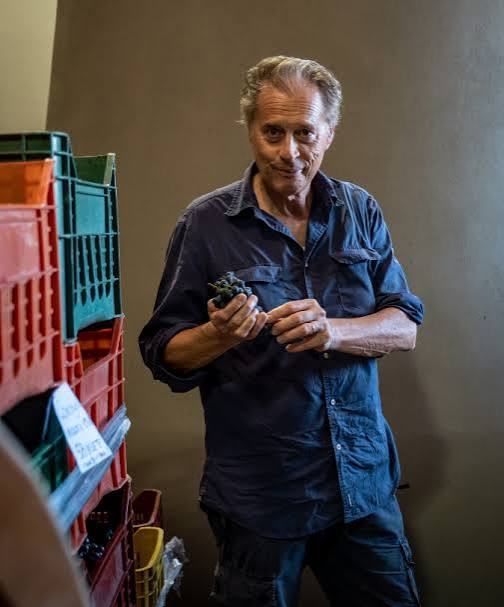
A thousand-year-old name, and a cellar rebuilt for Sangiovese.
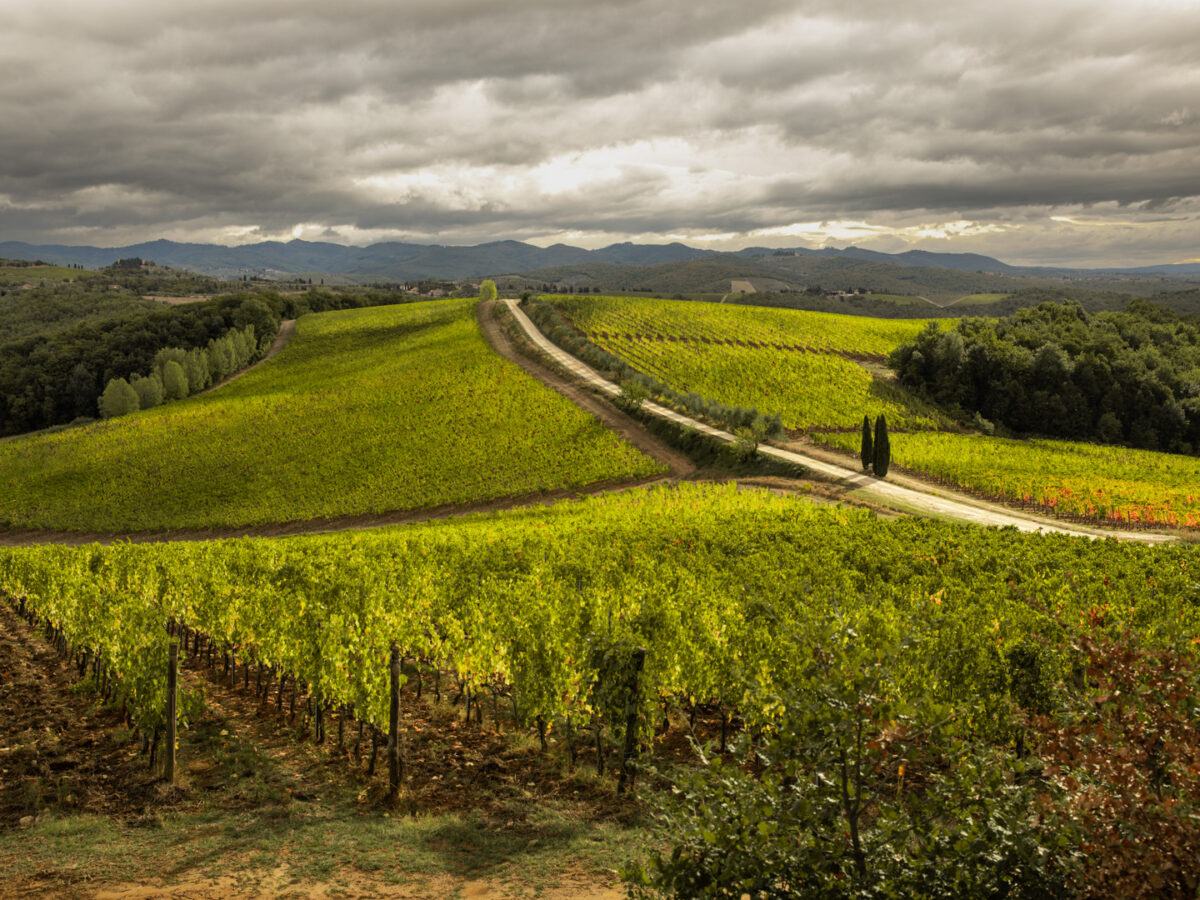
Dievole enters the written record on 10 May 1090, in a contract by which two men, Rodolfino and Vinizio, paid two capons, three loaves of bread and six silver Lucca denari for a vineyard there. The name is usually read as a contraction of Dio vuole, God willing. Nine centuries later the estate covers some six hundred hectares at Vagliagli, in the commune of Castelnuovo Berardenga about twelve kilometres north of Siena, with 158 hectares of vines between 270 and 420 metres.
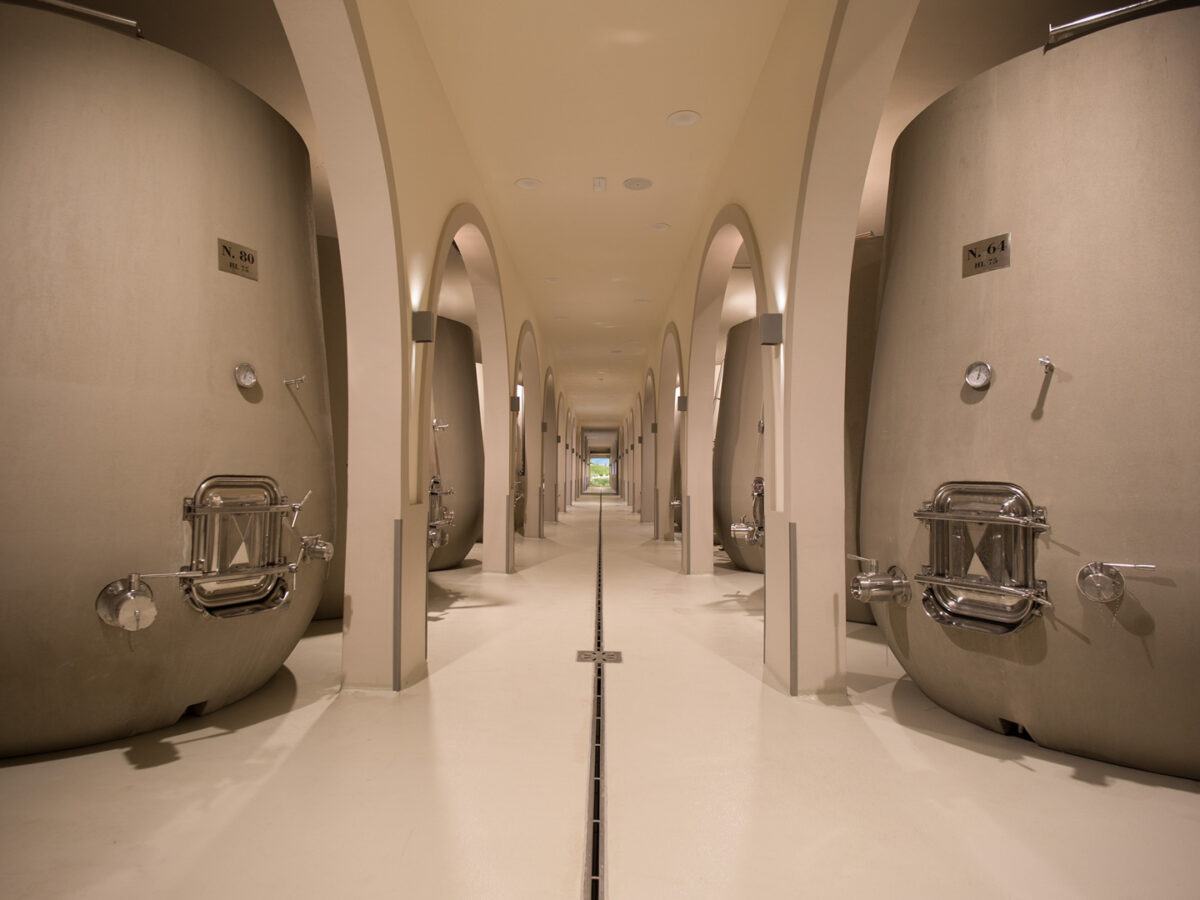
In 2012 the Argentine businessman Alejandro Bulgheroni took it on and began a slow renewal, with the consultant Alberto Antonini at his side. One of the first changes, as the International Wine Review reported, was to take out the oak fermenters and put in cement. Today every wine ferments in 75-hectolitre cement vats on its own yeasts and then rests in large, untoasted French oak. The aim is Sangiovese that tastes of its hill.
It works. These are modern Chianti Classico in the best sense: fresh and unforced, with the bright acidity and fine, dusty tannin of high vineyards on stony soil. The vines have been certified organic since 2017. Big estate, small-grower thinking.
02 · Dio vuoleA vineyard paid for in capons.
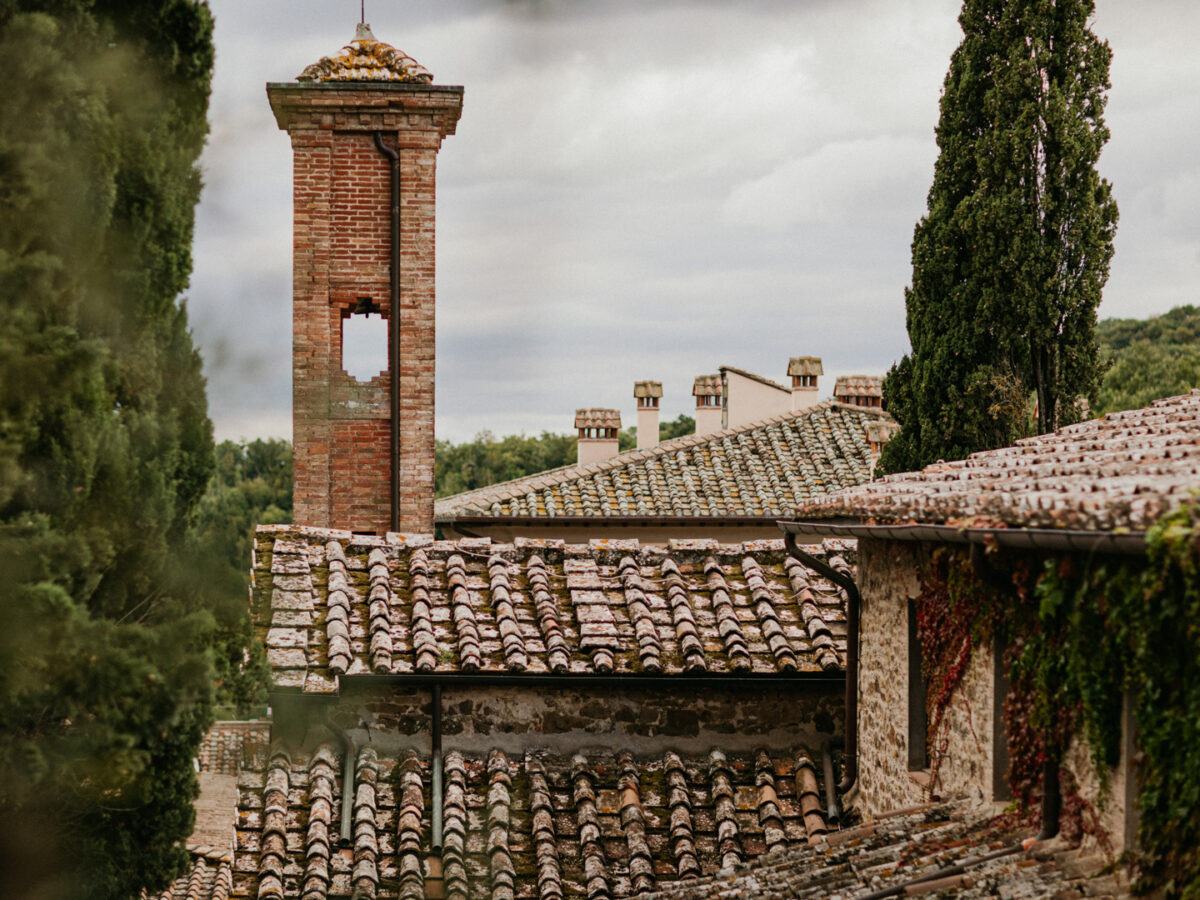
For several centuries Dievole belonged to the Malavolti, a noble family of Siena; the vineyard nearest the hamlet, Colombaio, still recalls their time. The next document that matters is a wedding present. Count Giulio Terrosi-Vagnoli gave the estate, valued at 361,632 lire, to his bride-to-be Ildegonda Camaiori, the last noblewoman of Dievole. She left behind a ledger of balances that names every peasant family on the property and the holding each one worked.
Those holdings still shape the estate. The land was divided into sixteen poderi, and Dievole today farms sixteen vineyards. Many descendants of the families in Ildegonda’s ledger still live nearby, and since the 1980s they have been back working these vines.
The modern chapter opened in 2012, when the Bulgheroni family began what the estate calls a gradual renewal, starting in the vineyard. The 2013 Chianti Classico was the first wine of the new era, in a new label. The Riserva, Novecento, takes its name from the nine hundred years of history behind it.
03 · Macigno and albereseSandstone for finesse, limestone for flesh.
From the medieval hamlet at 450 metres, where Villa Dievole stands, the estate falls away south-east in long rolling slopes to around 300 metres. The soils are marine in origin and vary a good deal from one side of the property to the other: partly sandy, partly silty clay, with marl and a dense scatter of fossils. Two formations do most of the talking. Macigno del Chianti, a sandstone, gives Sangiovese with gentle tannin and lift. The Monte Morello formation, clay and the pale limestone Tuscans call alberese, gives juice, body and grip.
Dievole has made the contrast its project, with three single-vineyard Chianti Classico wines. Casanova is two and a half hectares of Macigno at 400 metres, near the winery: the most delicate of the three, which the estate calls a Chianti Classico “as it used to be.” Catignano is an eleven-hectare plateau at 370 metres, full of alberese, sunny by day and cold at night. Petrignano, seven hectares at 350 metres facing north-east, is the stoniest: the roots reach the limestone mother rock, the vines grow weakly, and the wine comes out concentrated and savoury.
The climate is Chianti’s own. Winters are harsh and often snowy; summers are hot and dry; only at the end of September does the sun soften and the nights turn cold. Vagliagli is also one of the eleven new village units (UGA) into which Chianti Classico has now been divided.
04 · CementOut went the oak fermenters.
Alberto Antonini was head winemaker at Antinori before setting up his own consultancy in 1997, and he has spent much of the time since arguing against new oak. In 2015 he told The Drinks Business, in the line that became the headline: “We don’t need barrels.” At Dievole he put that into practice. The grapes ferment in raw cement tulip vats under a long row of brick arches; the estate’s view is that the porous cement lets the wine breathe and keeps it fresh. Ageing is in untoasted Allier oak, much of it in 41-hectolitre casks, large enough to give the wine air without the taste of wood.
The team is the one Bulgheroni uses at Tenuta Meraviglia in Bolgheri. Luigi Temperini makes the wine, with Antonini consulting. The vineyard renewal was led by Stefano Capurso, who matched each part of the estate to the right variety and rootstock; head agronomist Lorenzo Bernini took all the vines to organic certification in 2017.
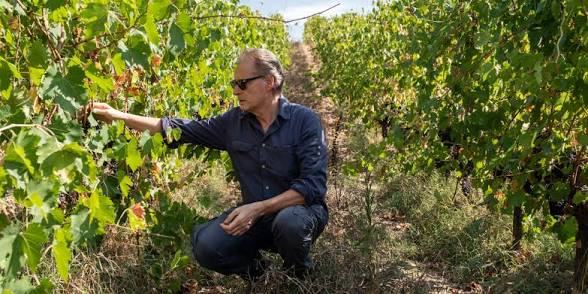
The farming rules are strict. Chemical fertilisers and systemic insecticides are banned; cover crops sown between the rows feed the soil; pheromone confusion keeps moths off the grapes when needed. Harvest is entirely by hand over about three weeks, section by section, at night or in the evening when possible to keep the fruit cool. Only native yeasts start the ferments, and the cellar is cleaned with hot water, no chemicals.
We don’t need barrels.
Alberto Antonini, The Drinks Business, 2015
05 · The winesChianti Classico that tastes of altitude.
The Chianti Classico is the estate’s signature: 90 per cent Sangiovese with 7 per cent Canaiolo and 3 per cent Colorino, from south and south-west-facing vines of about twenty years on sandy, silty marine soils with traces of marl and limestone. It ferments for about two weeks in concrete on its own yeasts, then spends a year in large untoasted French oak. It is a wine to drink at the table: red cherry, a little spice, firm acidity and a dry, clean finish.
Novecento, the Riserva, is a selection of the best grapes from the higher vineyards, between 300 and 420 metres: 95 per cent Sangiovese, 3 per cent Canaiolo and 2 per cent Colorino. The estate says its elegance comes from the Macigno sandstone and its juice and body from the Monte Morello clay and limestone. It ferments in 75-hectolitre cement at no more than 26 to 28°C, then ages seventeen months in 41-hectolitre untoasted casks and six months in bottle before release.
Reviewing the 2020 in 2024, the International Wine Review gave it 94 points and called it “an outstanding example of modern Chianti Classico.” That is fair. What sets Dievole apart is restraint: no new-oak gloss, no over-ripe fruit, Sangiovese left to taste of the stone and height it grew on.
The refined Novecento Riserva is an outstanding example of modern Chianti Classico.
International Wine Review, on the 2020
In the vineyard
& cellar.
- Holding
- ~600 ha estate at Vagliagli (Castelnuovo Berardenga) · 158 ha of vines in 16 vineyards · 270–420 m
- Since
- Named in a contract of 10 May 1090 · Bulgheroni family since 2012
- Soil
- Marine sands, silt and clay with marl and fossils · Macigno del Chianti sandstone and Monte Morello (alberese) limestone
- Grapes
- Sangiovese-led · Canaiolo, Colorino, Ciliegiolo · Trebbiano and Malvasia
- Farming
- Certified organic since 2017 · hand harvest · no chemical fertilisers
- Cellar
- 75-hl cement tulips, native yeasts · large untoasted French oak · Luigi Temperini, with Alberto Antonini consulting