
Late starts make for urgent wines.
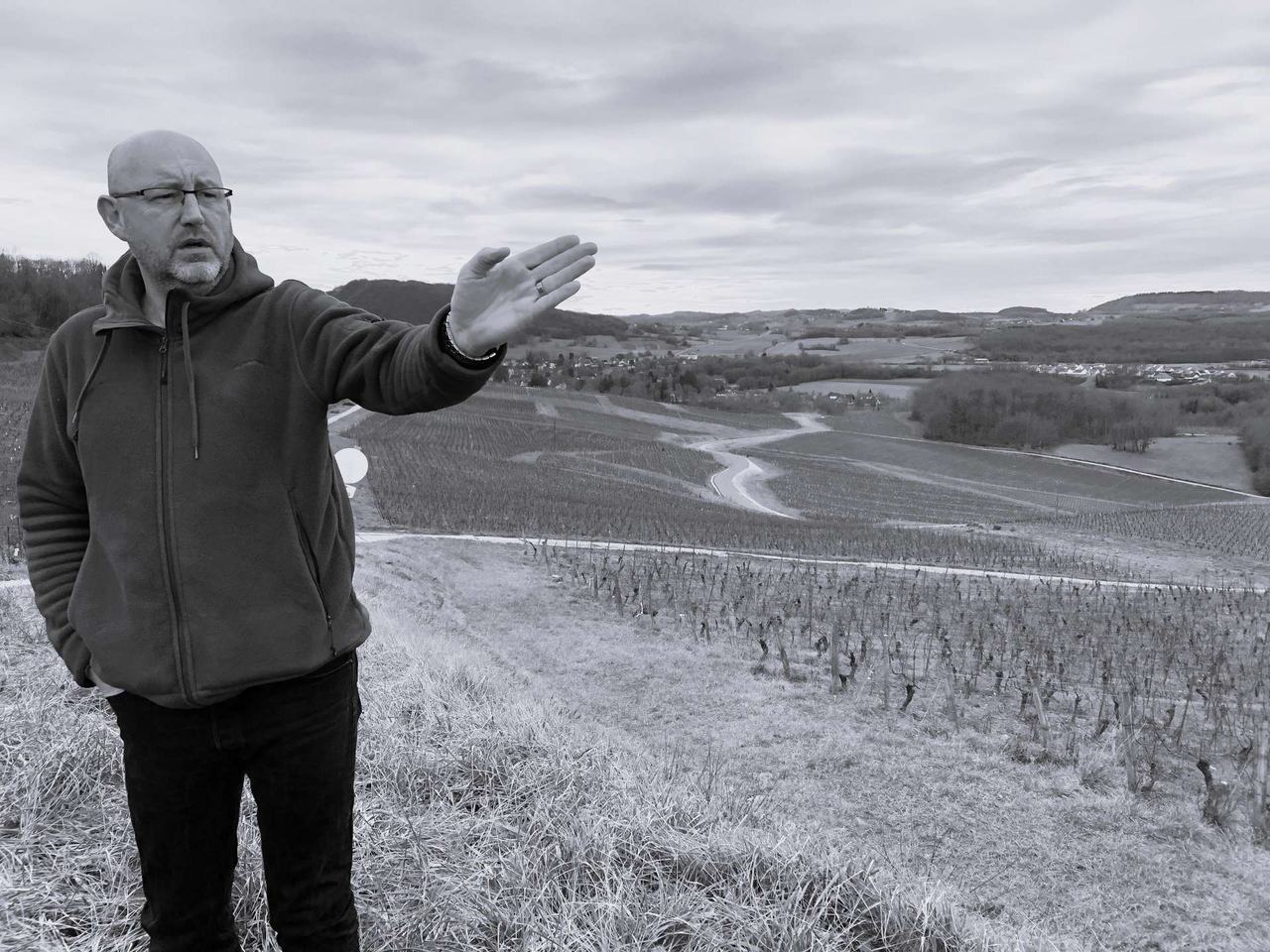
Patrick Ligeron spent a career elsewhere and never stopped wanting to go back to the Jura. In October 2015, with Sophie, he leased five hectares and did it, at an age when most people are planning to stop. Eleven hectares now, including three hectares inside the Château-Chalon appellation itself, which is fifty hectares in total and one of the strangest, greatest terroirs in France. Grey marl, vines thirty to forty-five years old, hand-harvested, fermented in used Burgundy barrels. The whites are raised ouillé (topped up, not left to the veil) for eighteen months, unfined and unfiltered. Late starts make for urgent wines.
02 · The thistleTwo careers in the trade, a lease in 2015, and the first vintage at forty-six.
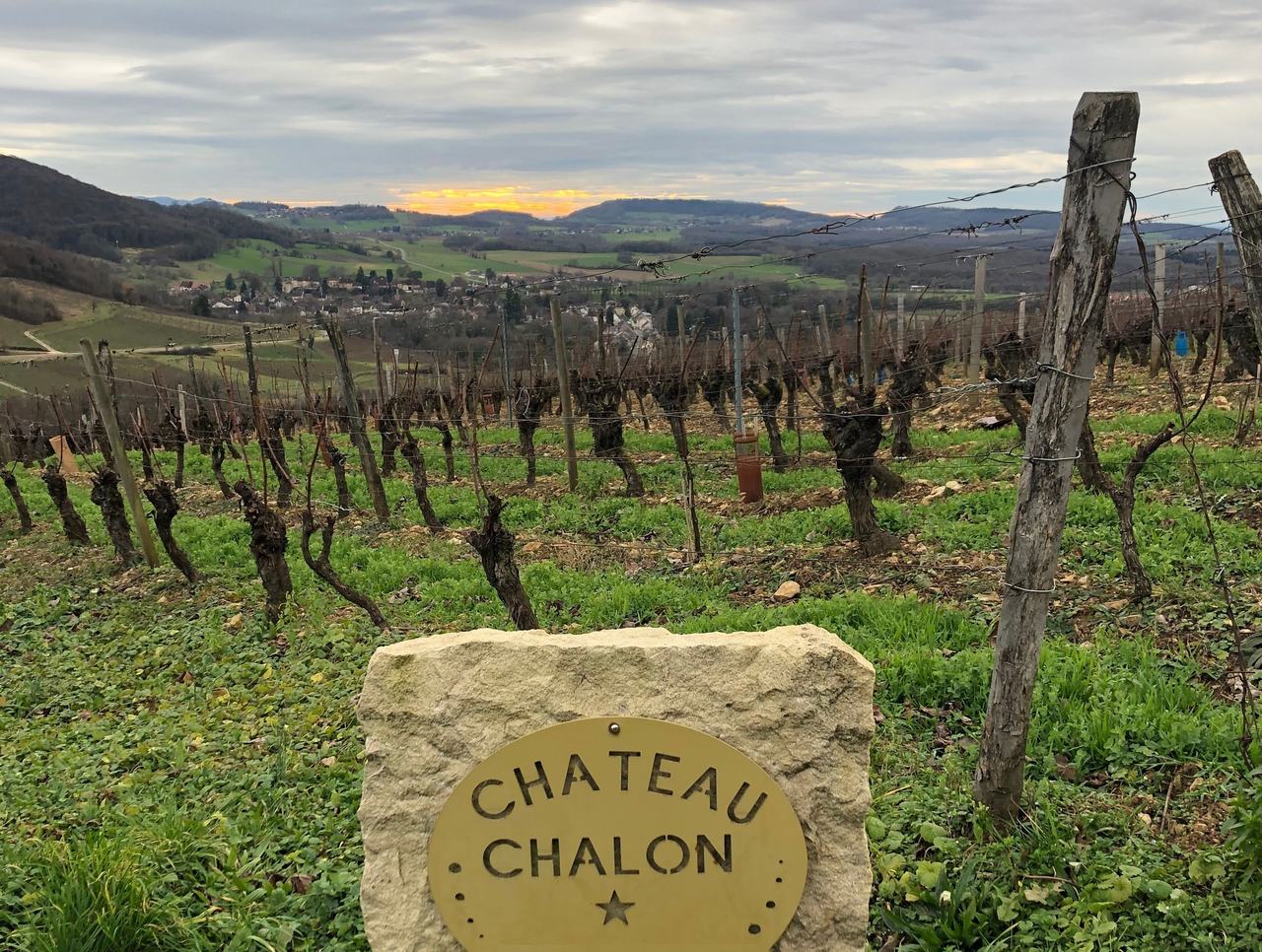
Patrick Ligeron was born in the Jura in 1970 and left it for the wine trade: he and Sophie built and still run a small export company representing family estates from several French regions, the Jura among them, selling them to importers abroad. “They had both been looking for years for a chance to create their own domaine in the Jura,” the estate’s own text says, “and it finally paid off” at the end of 2015, when a lease on five hectares around Ménétru-le-Vignoble came free. The first harvest was 2016; Patrick was forty-six. In 2018 they bought six more hectares, and the holding is now eleven, in the villages of the Château-Chalon appellation (Ménétru, Domblans, Château-Chalon itself), with three hectares inside the appellation’s own boundary.
The name is a flower: the carline, the stemless silver thistle of the Jura pastures, the one the farmers nailed to barn doors because it closes before rain. The cellar is at Ménétru, in the lee of the Château-Chalon rock, and Patrick farms it almost alone. He is also, by every account, a serious cook.
Ils ont tous deux été à la recherche d’une occasion de créer leur propre domaine dans le Jura depuis des années.
Domaine des Carlines
03 · Grey marlLias marl under the Château-Chalon rock, parcel by parcel.
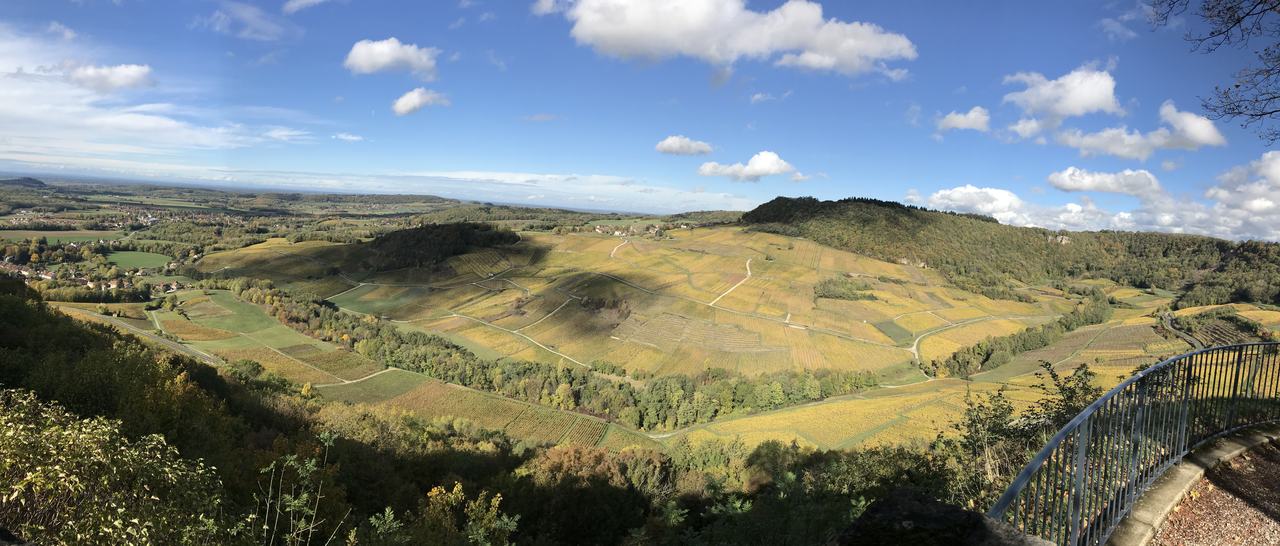
Everything sits on the grey marls of the Lias (marnes grises, the blue-grey clay that the Jura’s great whites come from), in named parcels the family bottles separately. En Lya, a hectare of Chardonnay facing west at 320 metres inside the Château-Chalon boundary, on grey marl with a limestone skin; because it is Chardonnay it is sold as Côtes du Jura. Le Calvaire, just outside the line, 1.6 hectares of forty-year Chardonnay facing southeast on the same marl with clay and sand. Trémoulette, 1.3 hectares at 250 metres on marl and clay, inside the appellation. Gaillardon, 1.8 hectares at 340 metres, is co-planted half Chardonnay and half Savagnin and picked and fermented together: the house’s most Jurassien wine. En Beaumont, half a hectare of forty-year Savagnin facing southeast, Château-Chalon vines bottled as Côtes du Jura because the wine is topped up rather than left under the veil. Above them, En Charnay, Savagnin at 400 metres on marl with more limestone, and the highest plot, Derrière l’Église, Chardonnay at 450.
The reds are small and deliberate: twenty ares of Pinot Noir on a sheltered mid-slope at 350 metres, and two parcels of Poulsard on deep clay over the marl, both around forty years old. Patrick has been replanting Savagnin for several years to balance the estate’s weight of Chardonnay, and the Château-Chalon parcel proper (Savagnin, about forty years old) went under the veil for the first vin jaune, released from the 2017 vintage.
04 · OuilléTopped up twice a week, eighteen months, nothing added at the end.
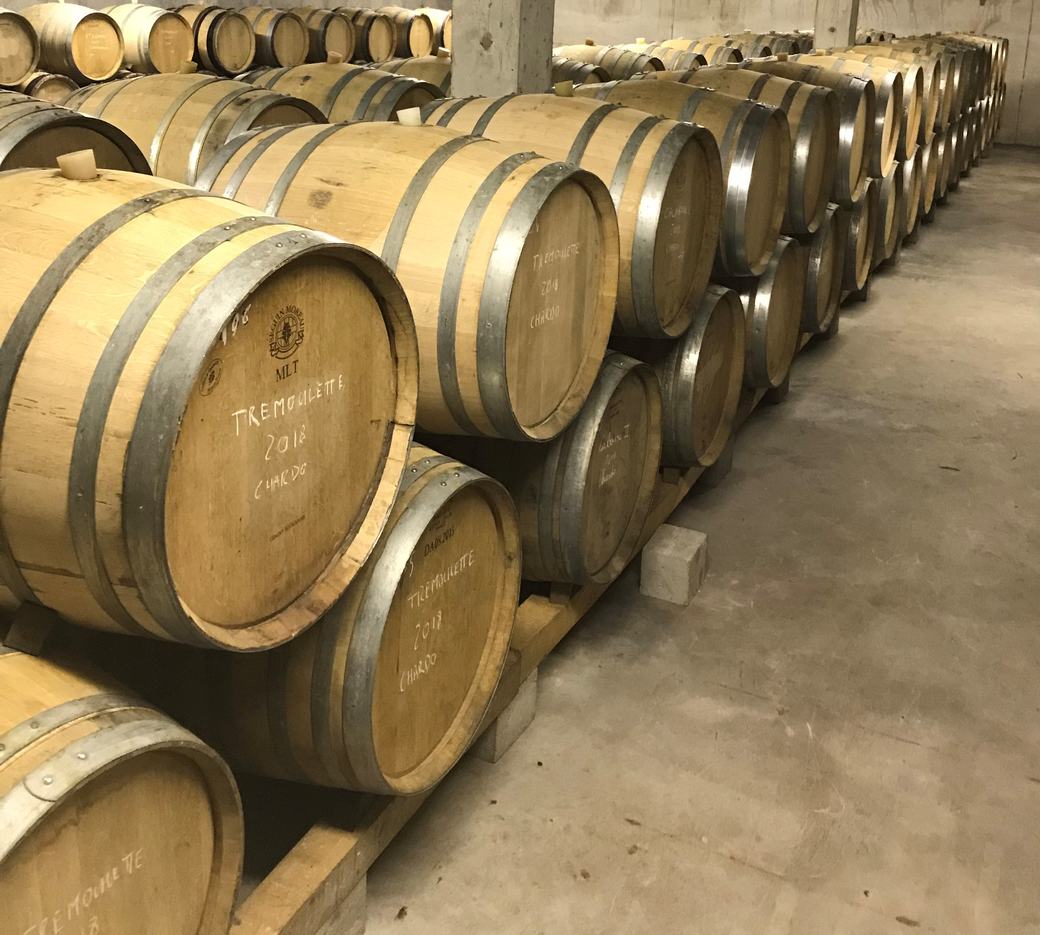
Grass between the rows, no herbicide, the soil worked to push the roots into the marl; organic in practice, though not certified. Harvest entirely by hand into small crates, a quick press, a day’s settling. The whites ferment on their own yeasts and go through malo in used Burgundy barrels, three years old at least, parcel by parcel, and stay on their fine lees without stirring for twelve to eighteen months , then a few months in steel for the blend to settle. The barrels are topped up about twice a week: ouillé, the modern Jura’s word for a white kept full and fresh rather than left to the voile. Nothing is fined or filtered.
The veil is not refused, only chosen. A Voile de Chardonnay spends a year topped up and then two or more under the yeast; the Château-Chalon, Savagnin only, waits its six years and three months in the clavelin; La Vouivre, the house blend, carries about five per cent of Chardonnay sous voile for the nutty edge. Reds are cold-soaked ten days and raised eight months in 500-litre casks. A Crémant, seventy Chardonnay and thirty Savagnin, is dosed at one gram.
05 · What they say“Quickly making an impression not only on Jura geeks.”
Keith Mabry of K&L in San Francisco, who imported the first vintage: La Vouivre is “fresh and tense with roasted pear and mineral notes… a wonderful introduction to the region,” and the four single-vineyard wines “equally exceptional”; the domaine “is quickly making an impression not only on Jura geeks.” The Wine Society in London on the 2022 Le Calvaire: “dried lemon peel, lemon verbena and a smoky, flinty note… supported by a mineral and saltiness on the palate.” On En Charnay: “fleshy peach and citrus supported by lots of spice and saltiness. Full bodied with plenty of concentration and balance.” Bruno Lafon, who brought the wines to New York, thinks the couple may make “some of the best future Jura wines in the region.” Anna Kirk, this January, on La Vouivre: “ripe peach, melon and fresh citrus… flint smoke and a bit of spice… Delicious.” And the Guide Hachette on the Poulsard: une bouche au caractère friand, offrant une belle longueur.
Fresh and tense with roasted pear and mineral notes.
Keith Mabry, K&L Wine Merchants, on La Vouivre
In the vineyard
& cellar.
- Holding
- Eleven hectares at Ménétru-le-Vignoble, Château-Chalon and Domblans, three of them inside the Château-Chalon appellation; grey Lias marl throughout; parcels En Lya, Le Calvaire, Trémoulette, Gaillardon, En Beaumont, En Charnay, Derrière l’Église
- Since
- Patrick and Sophie Ligeron; five hectares leased at the end of 2015, first vintage 2016, six more hectares bought 2018
- Grapes
- Chardonnay, Savagnin (being replanted), Poulsard, Pinot Noir; vines mostly 30–45 years
- Farming
- Organic practice, grassed rows, no herbicide; hand harvest into small crates
- Whites
- Indigenous yeasts; fermentation and malo in used Burgundy barrels; ouillé, topped up twice a week; 12–18 months on fine lees, no bâtonnage; a few months in steel; unfined, unfiltered
- Sous voile
- Voile de Chardonnay (two years and more under the yeast); Château-Chalon, Savagnin, 6 years 3 months, first release 2017; ~5% voile Chardonnay in La Vouivre
- Reds
- Cold soak ~10 days; natural fermentation; 8 months in 500-litre casks; unfined, unfiltered