
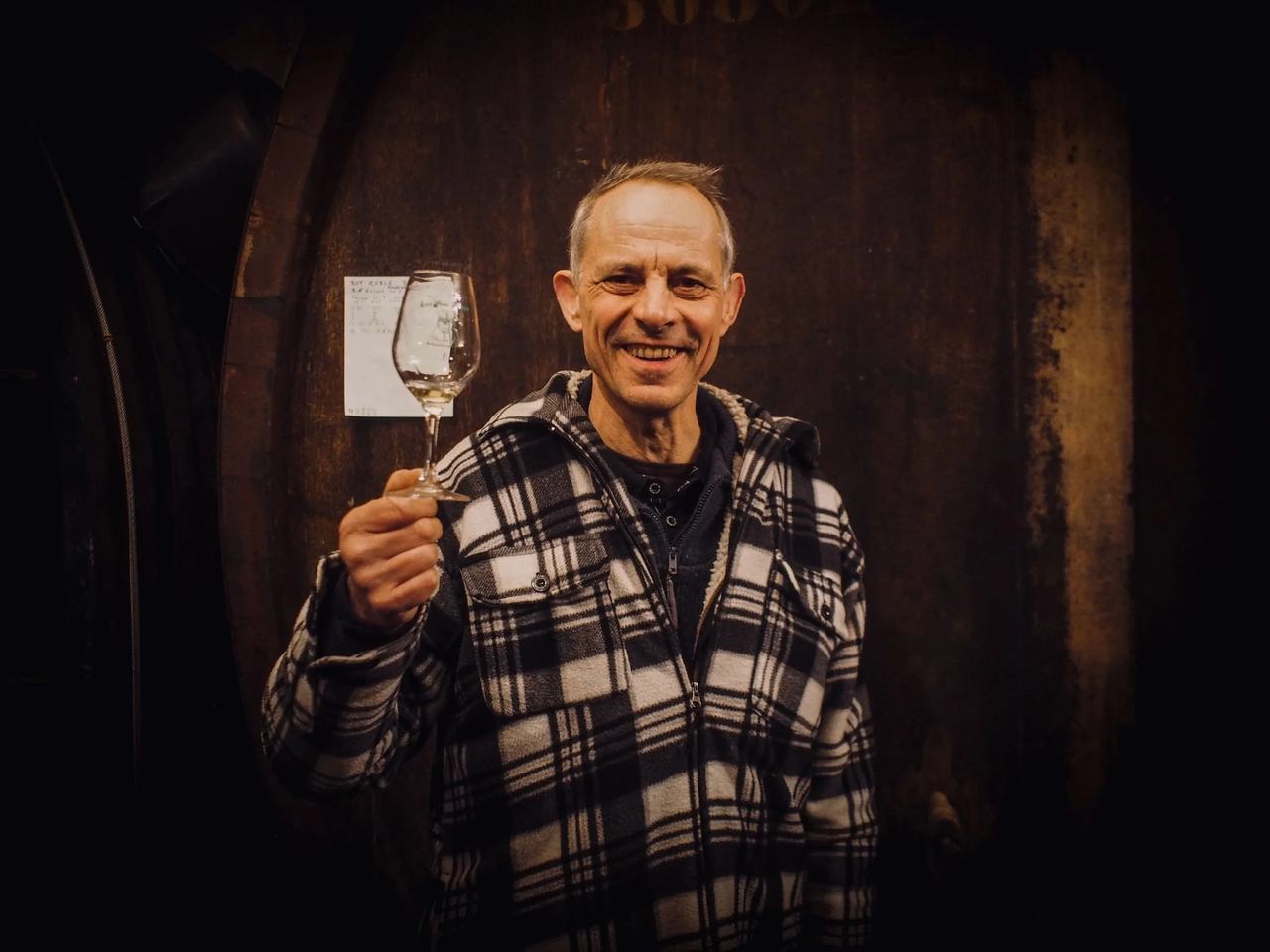
Fifty years early.
Organic since 1970. Biodynamic since 1981. No added sulfur on the Purs Vins since 1999, and that is now most of what they make. Twelve generations, twelve hectares, twelve limestone terroirs scattered over fifteen kilometres, and a family that has been right for fifty years while the rest of the world caught up and called it a movement. Jean-Pierre and Chantal press whole uncrushed bunches, ferment on wild yeast with no enrichment or acid correction, bottle most cuvées without added sulphur, and since 2002 have sealed the bottles under a steel crown cap rather than cork, because cork was spoiling wine and they cared more about the wine than about looking traditional.
02 · Before it had a nameOrganic when organic Alsace was twenty hectares.
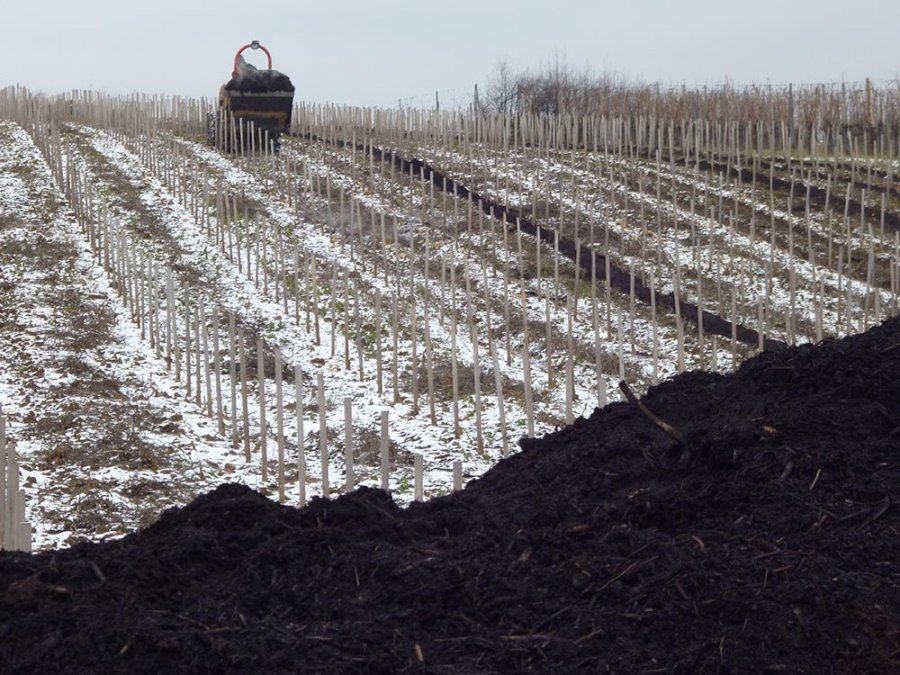
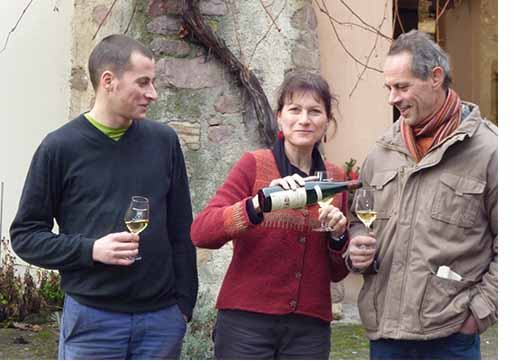
In 1930 César Frick sold half his crop in small returnable barrels to the restaurants and winstubs of Mulhouse and Colmar, and his grandson still remembers how the wine changed over the week the barrel was open. The family had been growing vines at Pfaffenheim, south of Colmar, for generations before that: twelve, by their count. In 1970 Pierre and Annette Frick converted the domaine to organic farming, at a time when all the organic vines in Alsace put together came to about twenty hectares. The advice available then was wrong for their soils (a calcareous-algae method for ground that was already at pH 8), and the vines stayed weak, which is what pushed the family further, toward biodynamics. Jean-Pierre, who had made his first vintage beside his father in 1966 at twenty after internships in Switzerland and Germany, trained in it, joined the biodynamic growers’ syndicate, began the preparations in 1981 and took the first Demeter label in 1986, with François Boucher, then the only biodynamic adviser in French viticulture, doing the inspection visits.
The rest of the house rules followed one at a time, each with a date. From 1980 the labels said non chaptalisé; from 1988 no wine was chaptalised at all. In 1999, encouraged by the merchant Michel Le Gris and their friend Pierre Overnoy in the Jura, the first bottles went out with no sulphur added anywhere: the Purs Vins, which now make up nine-tenths of what leaves the cellar. In 2002 a count of their own stock found one bottle in ten spoiled or muted by cork; a blind trial of the 2002s under crown cap and synthetic stopper went the crown cap’s way with every taster, and from that vintage every bottle has been sealed like a champagne before disgorgement, under stainless steel with an unglued polyethylene liner. Decanter ran the news in February 2003. Since 2014 the white grapes have been macerated whole for a few days before pressing. Chantal, from the next village, runs the business side with Jean-Pierre and has for decades; their son Thomas, who proposed braiding the shoots instead of trimming them, grew up in the cellar.
Jean-Pierre is also one of the Quatre Mousquetaires of Alsace natural wine with Christian Binner, Bruno Schueller and Patrick Meyer; a founder of the Foire Éco-Bio d’Alsace in 1982 and of the Salon des Vins Libres; and the subject of a book, La composition du monde, and of a France 3 documentary in 2024 that called him, without irony, the pope of natural wine. He takes the title badly. “After the war,” he says, “the wines were almost natural. Growers weren’t stingy with sulphur, true — but there weren’t thirty-six other additives.”
Le graal du vin nature, c’est zéro sulfite, zéro intrant.
Jean-Pierre Frick
03 · Twelve limestonesOolite, marl, loess, iron-red limestone: the extremes fifteen kilometres apart.
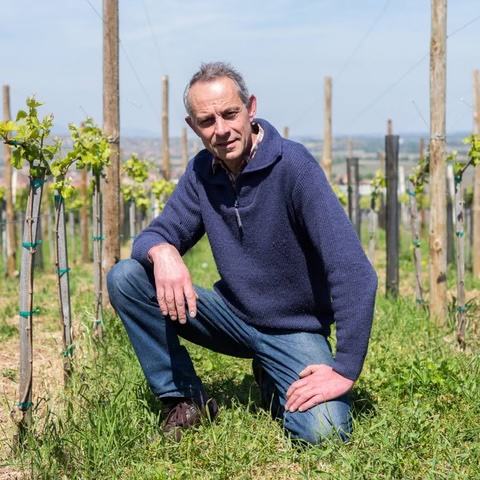
Twelve hectares, a third of them rented, in about thirty parcels across Pfaffenheim, Rouffach, Westhalten and Eguisheim, every one on limestone of one kind or another. Three grands crus. Steinert, the stone-heap, is Pfaffenheim’s own: the steepest slope in the commune, east-facing, dry, Dogger oolitic limestone with the scree of the same rock below it. Riesling, Gewurztraminer and Muscat; the Hachette calls it the jewel of the village. Vorbourg at Rouffach, below the Château d’Isenbourg, faces south-southeast in the shelter of the two Ballons, marl over conglomerates of sandstone and limestone pebble, among the driest and earliest sites in Alsace and a regular for noble rot; the domaine makes a Riesling there, in recent years by whole-bunch maceration. Eichberg, the oak hill at the foot of the three castles of Eguisheim, Oligocene conglomerate and marl, the lowest rainfall in the Colmar district, Gewurztraminer only.
The lieux-dits are where the house character lives. Bergweingarten, the garden vines of the hill at Pfaffenheim, is a mid-slope of sandstone marl with more quartz than lime, and it grows the domaine’s signature Sylvaner on vines past forty years. Michael Godel called the 2010 “a passionate, iconoclastic Sylvaner, distilled and concentrated from and in lemon/lime.” Carrière, also called Krottenfues, is the slope above the Vorbourg under the old yellow-sandstone quarry, two hectares facing east on the same marl, with the half-hectare of Chasselas and the Auxerrois that once fermented for five years before Jean-Pierre bottled it. Bihl is a hill pushed out into the plain, west-facing oolite. Rot Murlé at Rouffach is the iron-red limestone over hard slabs, late-afternoon sun, Pinot Noir and Riesling, and one of five Frick sites in the queue for Alsace’s new premier cru tier. Lerchenberg is the same hill under deep loess. And Strangenberg, at the summit of a dry hill at Westhalten, brown limestone on bare slab, is where the Pinot Noir we bring in comes from.
Rappelons-nous qu’il y a un siècle il y avait plus de cent cépages en Alsace.
Jean-Pierre Frick
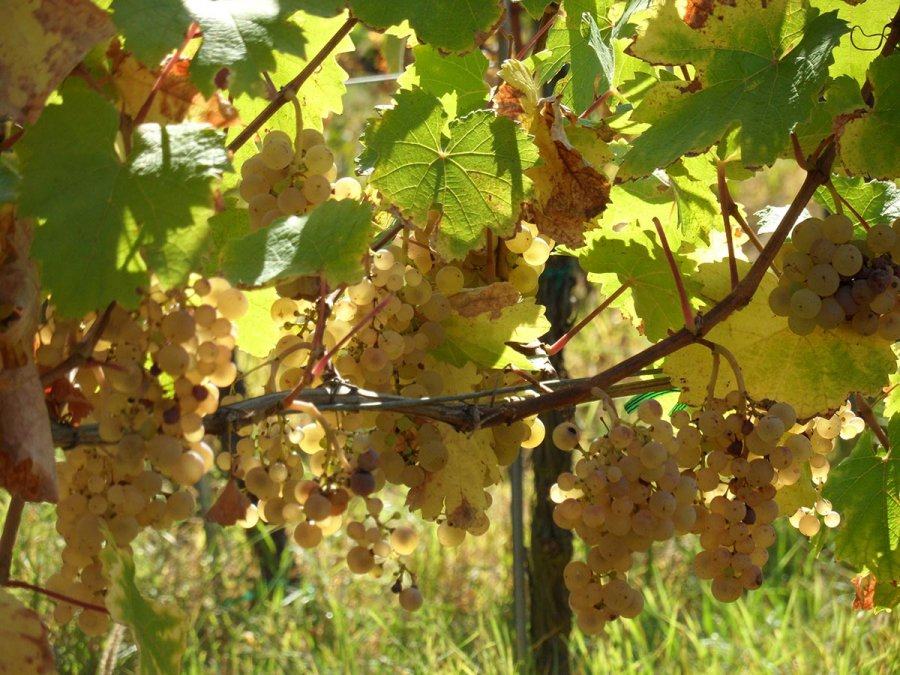
04 · Nothing addedWhole bunches, century-old foudres, a stuck fermentation left alone till spring.
Horn manure, horn silica and the Thun calendar; compost every five years or so; copper kept under a kilo a hectare on a five-year average, sulphur against oidium, and that is the whole pharmacy. No rotary tools in the vineyard since 1999. Spontaneous grass from June to spring, a light ridging in March and April. Cutting the shoot tips before flowering is, in Jean-Pierre’s phrase, une faute grave; the shoots are braided instead. “If you won’t use synthetics,” he says, “you have to anticipate. You have to be there every day, carry the flock a little.” Hand harvest by a local crew over four or five weeks.
The cellar is subtraction all the way down. Whole uncrushed bunches (macerated for a few days since 2014, ten or more for the Pinot Noir) are pressed for at least five hours in a pneumatic press; settled overnight with no sulphur, no enzymes, no bentonite; into foudres of about three thousand litres, most of them a century old and long past giving any taste of oak. Indigenous yeasts, no temperature control, no chaptalisation since 1988, no acidification, no concentration, no fining, no flash pasteurisation. A fermentation that sticks in the cold of winter is not warmed and gets no finishing yeast; it starts again by itself in spring. Eight to eleven months on fine lees, then bottling from June, with no sterile filtration and increasingly none at all. No sulphur touches the wine at any stage before bottling, and at bottling the house goes two ways: the Pur Vin, sans sulfite ajouté, which is most of the production, and a small dose for a handful of cuvées carrying residual sugar. “The ideal,” the website says, “is to close the cycle with a bottling without added sulphite.” In ninety per cent of cases, Jean-Pierre told France 3, there is no reason to use it.
Then the crown cap, on everything since 2002. The back label says it in one sentence: one bottle in ten did not remain true to the original wine because of the cork. “This betrayal by cork of all our work upstream, we no longer accept.” A wine this honest with itself was always going to be a little oxidative at the edges (quince, chamomile, a balsamic lift), and Les Caves de Pyrene call it simply Riesling à la Frick. The house’s own descriptors are claquant, sportif, digest: snapping, athletic, easy to digest.
Prendre son temps et donner du temps au vin.
Jean-Pierre and Chantal Frick
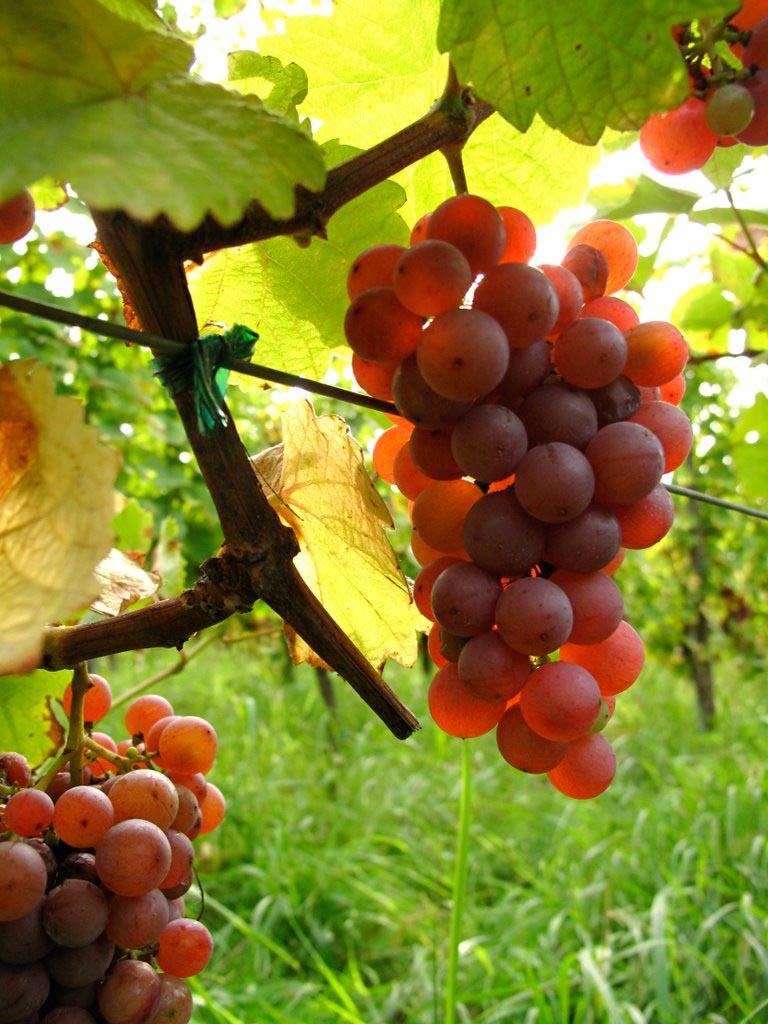
05 · What they say“Delicate” and “luminous.”
The Guide Hachette, which has listed the domaine for twenty years and gave a coup de cœur to the 2010 Gewurztraminer Grand Cru Steinert: “The scents, of great finesse, evoke linden then peach… rich in exotic-fruit aromas, distinguished by its persistence.” Of the house: “he rejects the additifs de confort — enrichment, yeasting and fining — that make standard wines.” Jamie Goode, 91 on the Steinert Vendange Tardive: “intense and fat, with lots of sweetness and nice herby complexity. Viscous but still well balanced.” Eben Lillie of Chambers Street Wines, after a day in the cellar: “delicate” and “luminous.” Emma Bentley on the 2018 Auxerrois Pur Vin, four stars and “maybe even five”: texture “sumptuous and salty,” the wine “effectively in a perfectly pure condition.” Britt Karlsson of BKWine: “full-bodied and full of flavour… over-all very well balanced,” with the Pinot Noirs singled out. Michael Godel on the 2006 Auxerrois Carrière, five years in fermentation: “one of the most impossible, idiosyncratic and unusual wines” he had met.
There is a dissent to record, because it is the honest one. Richard Hemming MW, tasting a 2007 Vorbourg for JancisRobinson.com in 2011, found it “oxidative, bitter, rather harsh.” Some vintages of some cuvées are like that, and the people who love these wines know it; Les Caves de Pyrene describe the same Vorbourg as “dense, supple, fresh” with “a gentle, almost balsamic oxidative character,” which is the same observation made by a friend. Anyone who wants Alsace Riesling to taste the way it did in 1995 should look elsewhere. These are for the drinker who wants to know what the grape tastes like with nothing between it and the glass.
Ce que l’on veut, c’est du vin vivant. Il faut qu’il soit libre, vivant et vibrant.
Jean-Pierre Frick
In the vineyard
& cellar.
- Holding
- Twelve hectares, about thirty parcels, all limestone, at Pfaffenheim, Rouffach, Westhalten and Eguisheim; grands crus Steinert, Vorbourg and Eichberg; lieux-dits Bergweingarten, Carrière (Krottenfues), Bihl, Rot Murlé, Lerchenberg, Strangenberg
- Since
- Twelve generations at Pfaffenheim; Pierre and Annette Frick converted to organics in 1970; Jean-Pierre Frick’s first vintage 1966, in charge with Chantal Frick; son Thomas
- Farming
- Organic 1970; biodynamic preparations from 1981, Demeter from 1986; copper under 1 kg/ha on a five-year average; no rotary tools since 1999; spontaneous cover; shoots braided, not trimmed; hand harvest
- Cellar
- Whole bunches, macerated since 2014; pneumatic press ≥ 5 hours; overnight settling, nothing added; century-old 3,000-litre foudres; indigenous yeasts; no chaptalisation since 1988, no enzymes, fining, acidification or temperature control
- Sulphur
- None before bottling. Purs Vins (~90% of production) bottled with none at all; a small dose at bottling on a few cuvées with residual sugar
- Closure
- Stainless-steel crown cap on every bottle since the 2002 vintage
- Honours
- Guide Hachette coup de cœur, Gewurztraminer Grand Cru Steinert 2010; subject of Pierre Frick : la composition du monde (2013) and France 3’s Le vin nature (2024)