
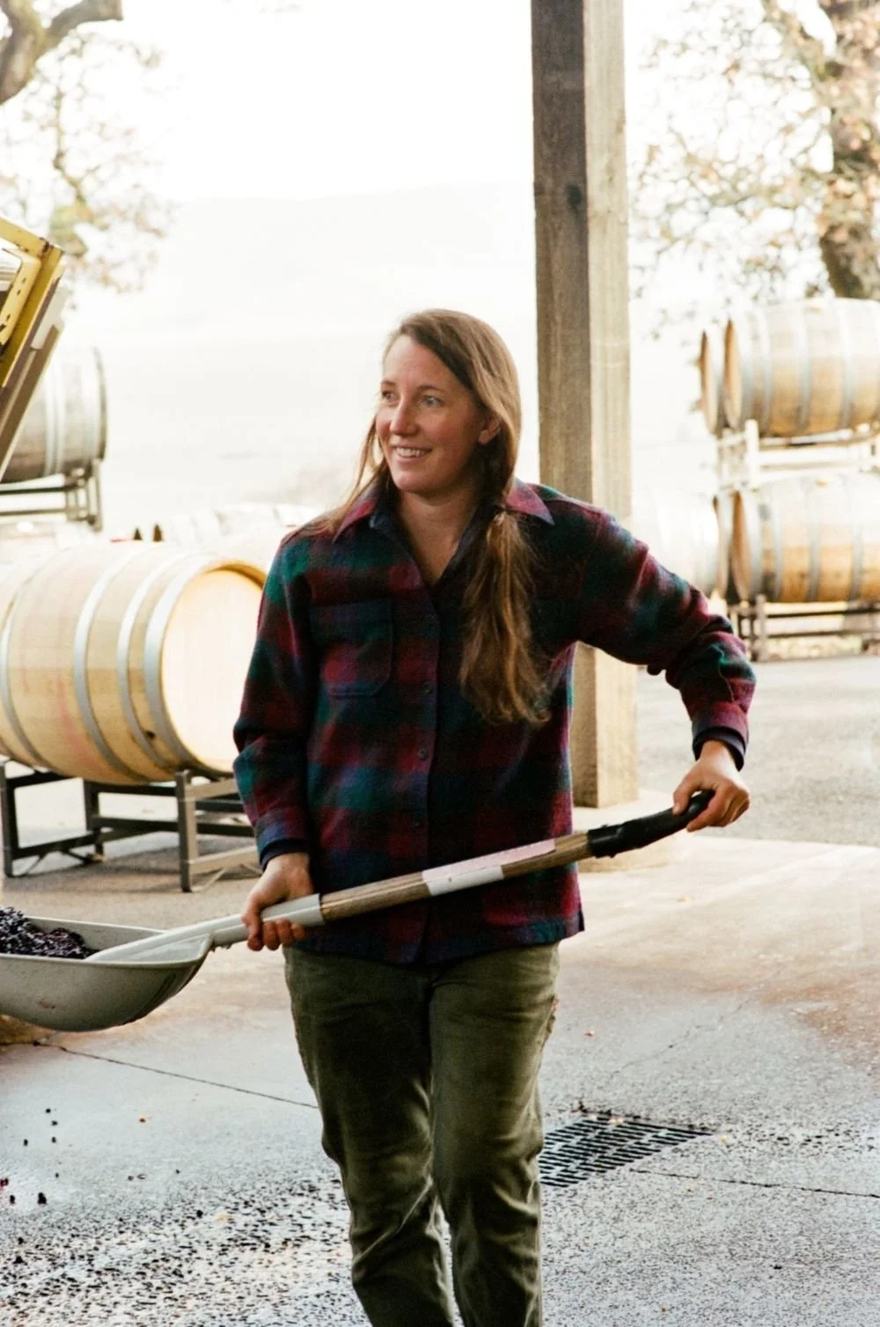
Pinot Noir from the windiest door in the Willamette Valley.
The Van Duzer Corridor is a real geographic feature: a low gap in the Oregon Coast Range, the only east-west channel that lets cold Pacific air pour into the Willamette Valley. On warm days the wind arrives in the early afternoon and the vineyards cool fast. Johan sits at the mouth of that gap, forty miles from the ocean and sixty south of Portland, and its average daily temperatures run two to three degrees Fahrenheit below the Dundee Hills. The wind slows ripening and thickens the grape skins, so the fruit comes in ripe at lower sugar, with more acidity and firmer structure than warmer parts of the valley give.
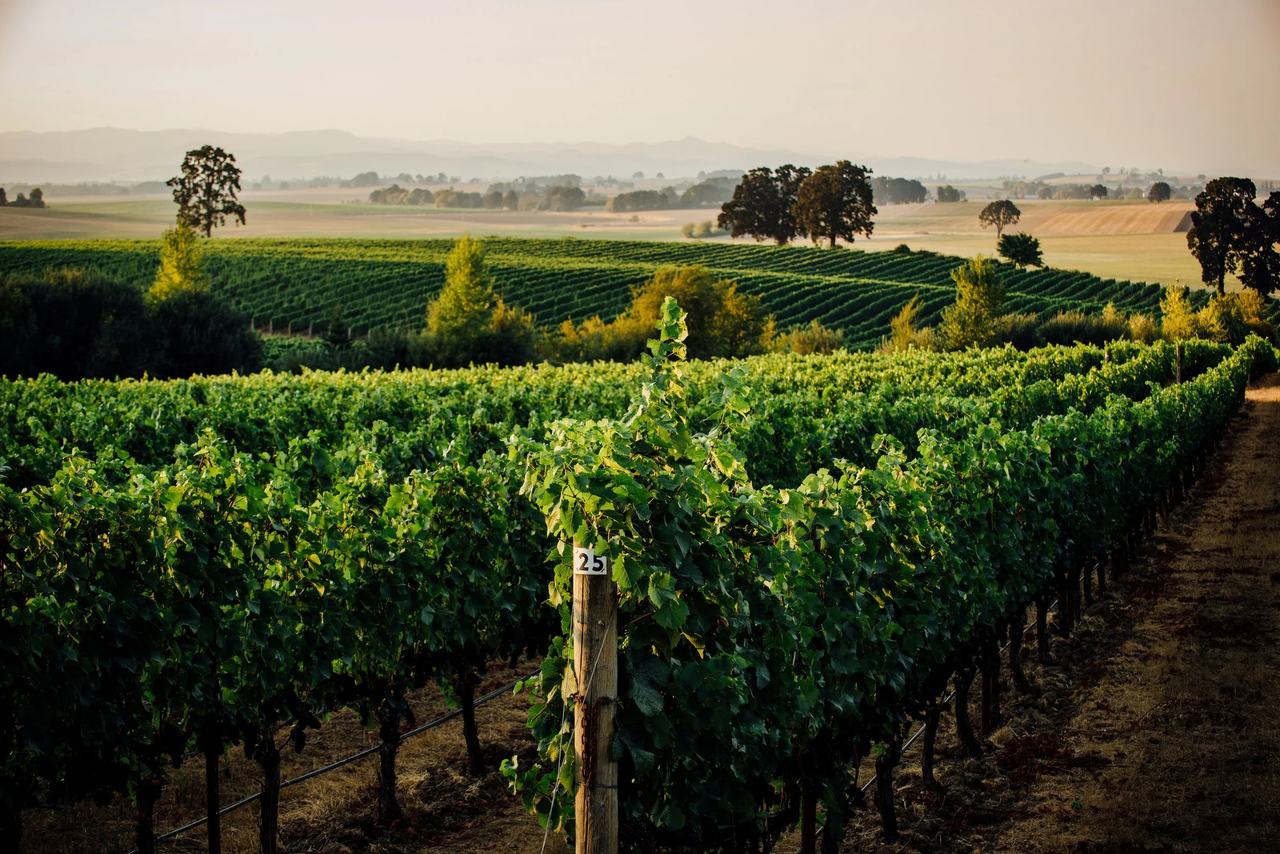
The farm is as unusual as the site. It is 175 acres, 87 under vine, certified organic and Demeter biodynamic since 2010, with sheep and chickens in the rows and more than thirty acres left as oak savannah and wetland. Twelve blocks carry sixteen varieties, from ten clones of Pinot Noir to Blaufränkisch, Grüner Veltliner and Savagnin. The winery has never used a cultivated yeast, and it adds no acid, no sugar and no tannin.
The Pinot Noir Estate is the wine I open when I want to show someone what Oregon does that Burgundy cannot quite replicate: something cool and northern with a voice of its own. It is pale, fragrant, and longer on the finish than the colour would lead you to expect. Oregon, I keep saying, has arrived. Johan is the evidence I use most often.
02 · Dag Johan SundbySent to learn business, he bought a vineyard.
Johan takes its name from Dag Johan Sundby, who grew up outside Oslo. In 2004 his father, Nils, a mergers-and-acquisitions man, sent him to the United States to learn business alongside an old colleague. Within six months Dag had bought a vineyard in Oregon. Forty acres had been planted in 2002, to Pinot Noir, Chardonnay and a little Pinot Gris; the rest went in in 2009. His father, he told Wine Anorak, supported him because he was his son: “He drinks pilsner, he’s not really a wine guy.”
Dag knew he wanted to farm without herbicide. Biodynamics came through Dan Rinke, the viticulturist and winemaker who made the first Johan Pinot Noir, the 2007 Nils. “I wanted to go organic and not spray herbicide on soils,” Dag said, “but I didn’t know about biodynamic farming until I met Dan.” Organic certification from Stellar and biodynamic certification from Demeter both came in 2010, the same year they began grafting blocks over to other varieties.
In 2021 the estate changed hands. Mini Byers, who had bought Cowhorn in southern Oregon’s Applegate Valley that same year, was approached when Johan was looking for a new owner. A property with Cowhorn’s philosophy, she said, was a good fit and a way to connect the two regions. The two biodynamic estates are now run as sisters.
I want to show what the vineyard can do and stay out of the way.
Dan Rinke, Johan’s first winemaker, to Wine Anorak
03 · The corridorCold air at two in the afternoon.
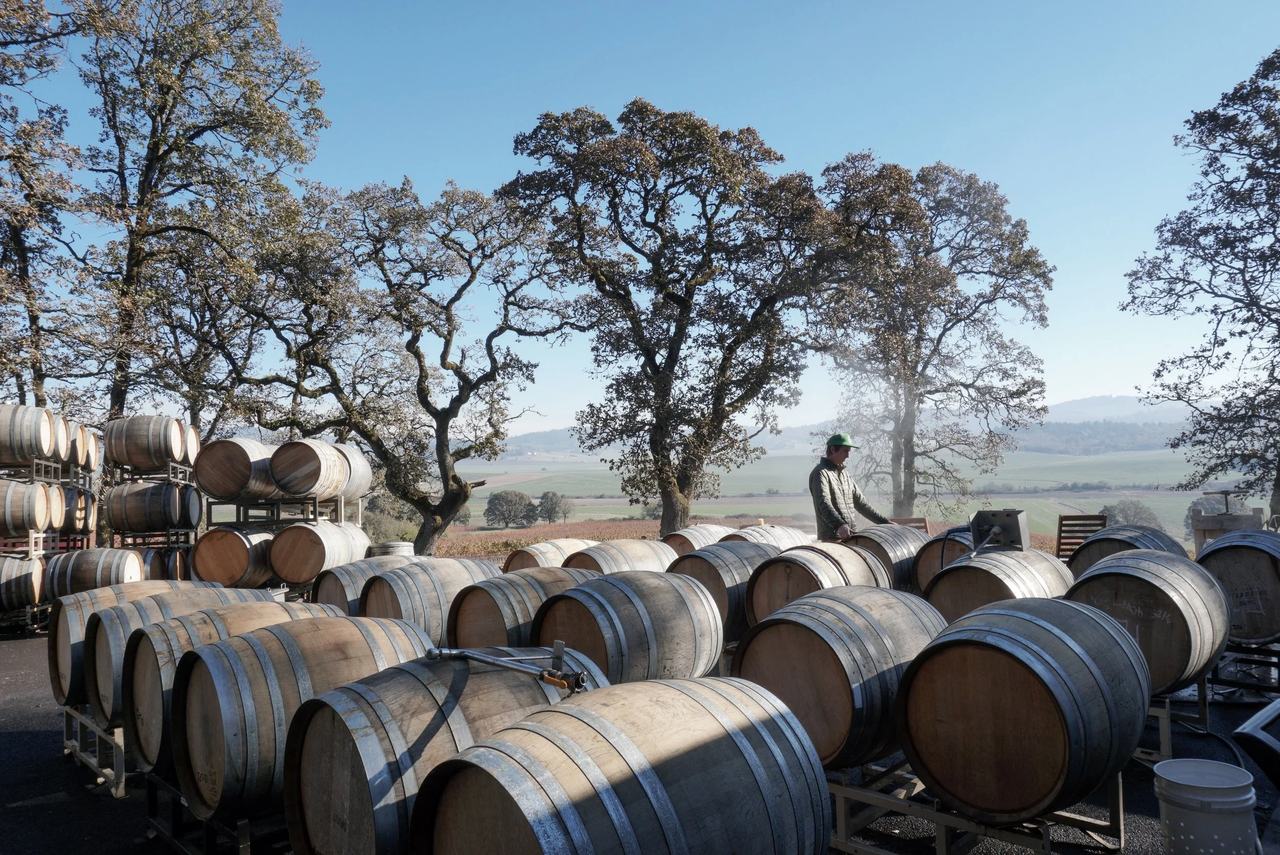
The Van Duzer Corridor became its own AVA in 2019. Its whole identity is the wind. Afternoon gusts, starting around two o’clock on hot days, push marine air east through the gap and give the vineyards a wide swing between day and night. The wind can close the vines’ stomata, which slows ripening, and the grapes build thicker skins in response. In the glass that means firmer tannin and brighter acid than the same clones give in warmer parts of the Willamette.
Johan’s vines run across gently sloping hills between about 180 and 380 feet. The soils are silts (Helvetia, Steiwer and Santiam), laid down mostly by the Missoula Floods at the end of the last ice age, over ancient marine sedimentary rock. The twelve blocks combine different rootstocks, aspects and soil depths, and ten clones of Pinot Noir and seven of Chardonnay, which gives the winemaker a wide palette to blend from.
Pinot Noir is still the heart of the place, but the farm grows sixteen varieties, chosen for cool climates: Chardonnay, Pinot Gris, Savagnin, Gamay, Cabernet Franc, Melon de Bourgogne and Mondeuse from France; Grüner Veltliner, Blaufränkisch and Zweigelt from Austria; Ribolla Gialla and Friulano from Italy; Kerner from Germany. Morgan Beck is especially taken with the Blaufränkisch, which she thinks suits Oregon’s climate.
04 · A living farmSheep, chickens and thirty acres left wild.
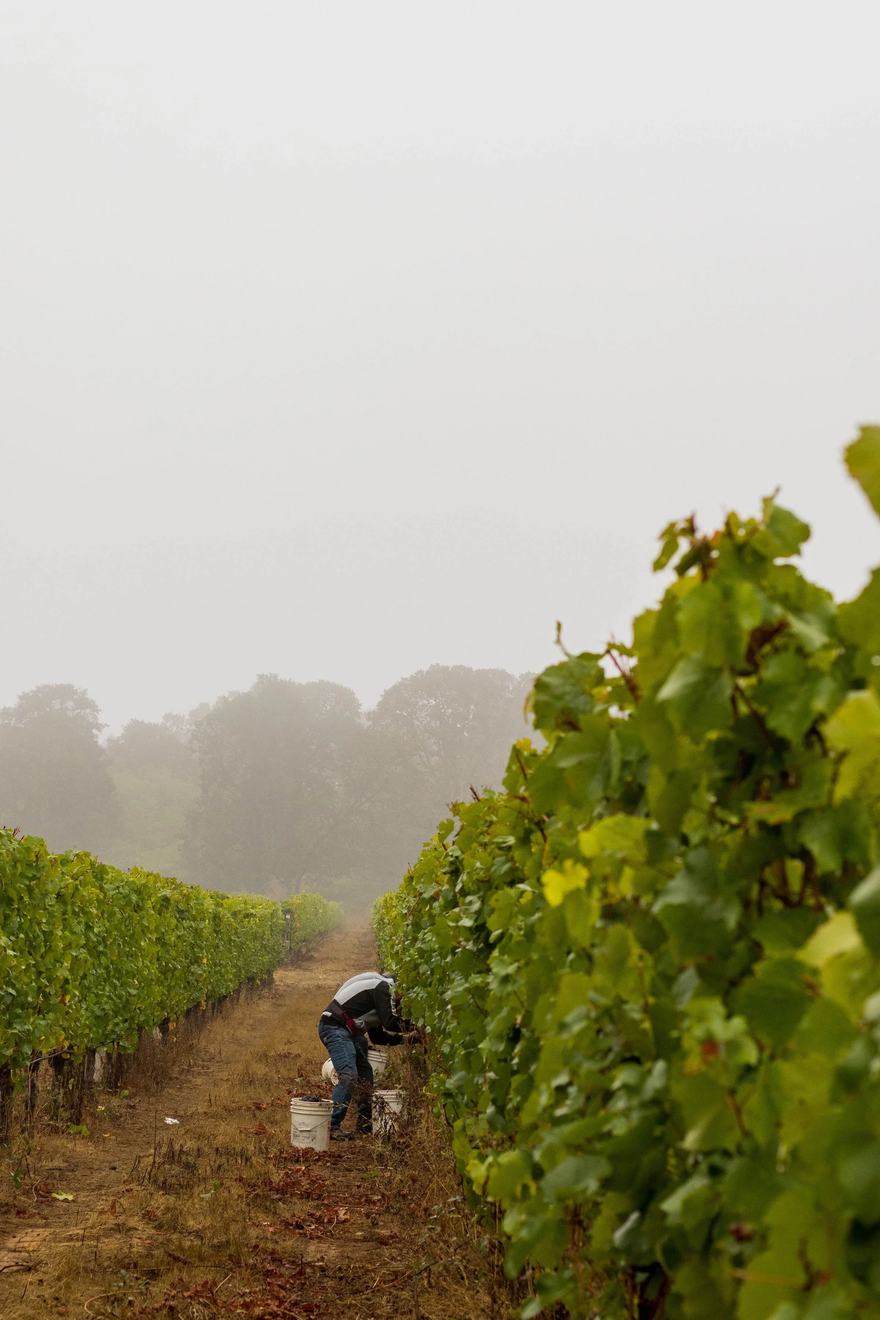
The estate describes itself as a living, self-sustaining ecosystem, and the farming backs that up. Soil health is built with compost and cover crops. Sheep graze the rows and chickens work through them, fertilising and keeping pests down, which cuts the need for anything brought in from outside. More than thirty acres are kept as a biodiversity preserve, including virgin oak savannah and riparian zones along the creeks. The biodynamic preparations, 500 to 508 as Rudolf Steiner set them out, are used across the vineyard.
Biodynamics in the Willamette is a community effort. Local growers meet twice a year to make preparations together on each other’s farms, which frees them from relying on a single supplier on the East Coast, and there has been a local reading group working through Steiner’s agriculture lectures. Mini Byers sees the Demeter rules as a baseline, achievable for any serious farm, that good growers go beyond.
Nathan Wood manages the vineyard. He grew up in the vines of Rutherford in the Napa Valley, beside his father and grandfather, and worked his way up through some of California’s most respected vineyard crews before coming north.
The best wine is made in the vineyard with the lowest intervention on the winemaking side.
Mini Byers, owner, to The Fizz
05 · Morgan BeckA guide through fermentation, nothing more.
Morgan Beck grew up in Colorado and studied finance before wine found her. She took a year-long enology and viticulture certificate in Argentina, fell for Pinot Noir, worked her first harvest at a custom-crush winery in Santa Rosa and then chased vintages round the world, including time with Ted Lemon at Burn Cottage in Central Otago, her deepest training in biodynamics. She joined Johan in 2015, became winemaker in 2018 and now runs the estate as general manager too.
Her rules are those of Demeter’s full biodynamic wine label, stricter than “made with biodynamic grapes.” Native yeasts carry both the alcoholic and the malolactic fermentation. Nothing is added to correct the wine: no acid, though Dijon clones of Pinot Noir often see their pH climb at full ripeness, no sugar and no tannin. The Pinot Noir Estate draws on all ten clones, each small parcel of rootstock, slope, soil and vine age kept apart through fermentation and ageing. It has about 30 per cent whole clusters, the stems well ripened by the long cool season, and gentle punch-downs by foot to keep extraction low; eleven months in French oak, only 6 per cent new, then bottling unfined and unfiltered.
The Chardonnay spends nineteen months on its lees, which protect it naturally from oxygen. The Pinot Noir pétillant naturel is bottled while still fermenting and finishes in the bottle, with no dosage. Each label is painted by the local artist Yong Hong Zhong, working with Beck on what the wine should show.
We want to be just a guide through fermentation and not try to push a wine in any one direction.
Morgan Beck, to The Fizz
In the vineyard
& cellar.
- Holding
- 175 acres, 87 under vine in 12 blocks · 30+ acres of oak savannah and riparian preserve
- Location
- Van Duzer Corridor AVA, Willamette Valley · about 180–380 ft · 40 miles from the Pacific
- Since
- First vines 2002 · Sundby family from 2004–05 · Mini Byers since 2021 (sister estate to Cowhorn)
- Soil
- Helvetia, Steiwer and Santiam silts from the Missoula Floods over marine sedimentary rock
- Grapes
- 16 varieties · 10 clones of Pinot Noir, 7 of Chardonnay
- Farming
- Certified organic (Stellar) and Demeter biodynamic since 2010 · sheep, chickens, compost
- Cellar
- Native yeasts only · no acid, sugar or tannin added · winemaker Morgan Beck