
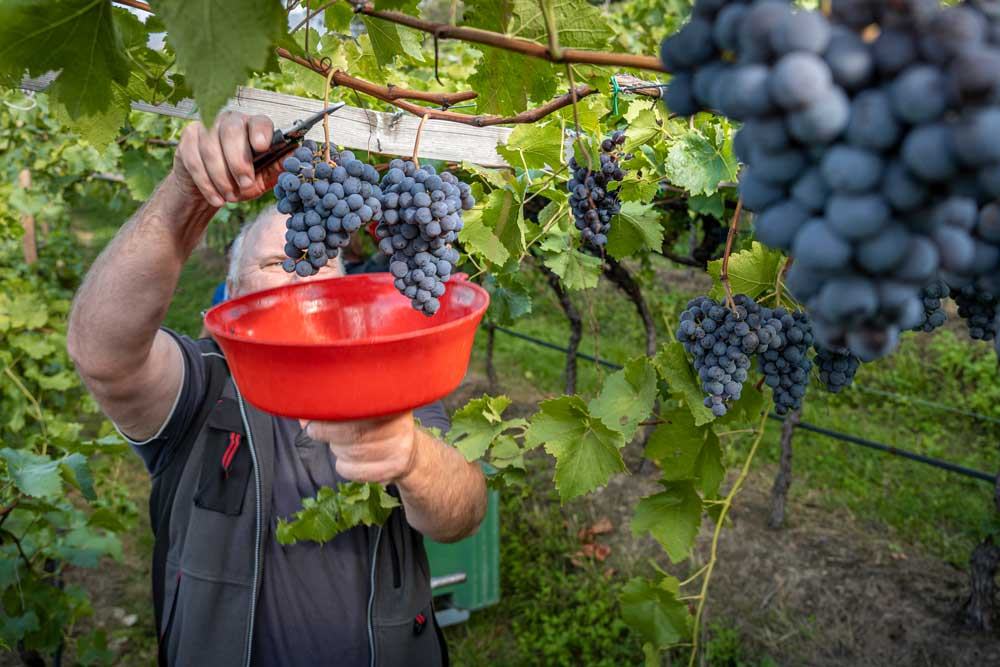
A hill farm south of Bolzano that stopped selling its grapes.
Putzenhof is a maso, a South Tyrolean farmstead, on a rise south of Bolzano at San Giacomo, with a view from the Burggrafenamt above Merano down to the Unterland. Roman Mottironi’s grandparents bought it in the 1950s. For half a century the family made a white and a red for themselves and their guests, in litre bottles, and took the rest of the grapes to the cooperative. With the 2009 harvest Roman began to vinify everything the farm grows. About forty thousand bottles a year now carry the farm’s name, from estate fruit only.
The case for Putzenhof is simple and it is a good one. The vines grow on porphyry, the red volcanic rock that Bolzano is built on, facing southwest between about three hundred and five hundred metres. Porphyry gives wines of high minerality and taut acidity, and the Mottironis don’t cover it up: whites in steel, reds in large old casks, no new oak anywhere.
The range is the local one. Kerner and Sauvignon among the whites; Lagrein, Pinot Nero and Merlot among the reds; and Bozner Leiten, the light, perfumed Vernatsch of the hills around Bolzano that South Tyroleans drink every day and the rest of the world has mostly forgotten.
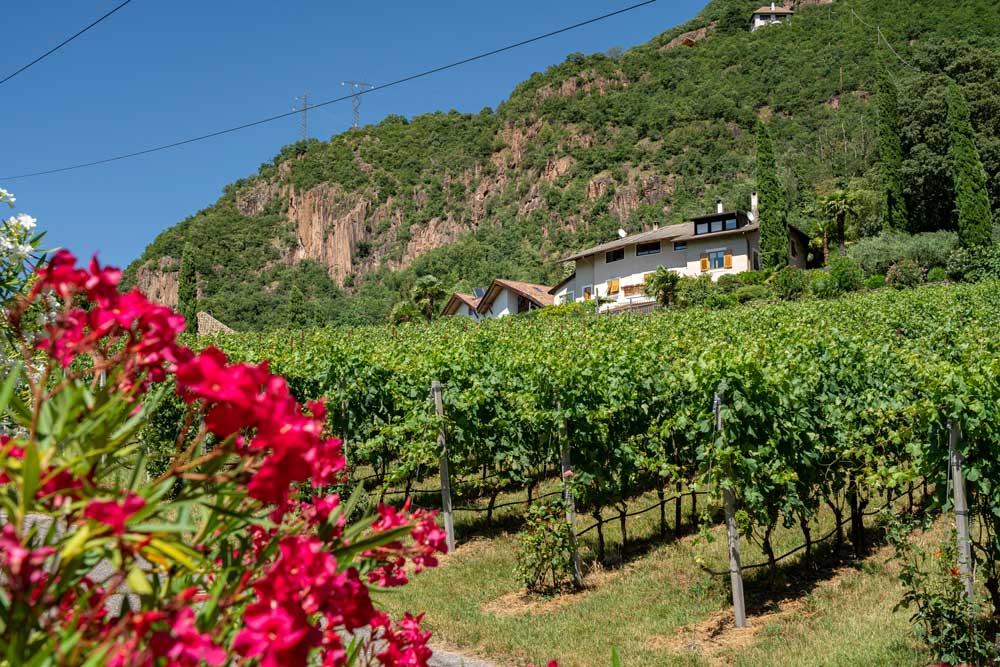
02 · The masoApples, vines, six guest rooms and the cooperative.
Putzenhof is a working fruit and wine farm, as most South Tyrolean farms are: about five and a half hectares of vines and a hectare and a half of apple trees. The house has six guest rooms, open from April to the middle of October, and the farm stay, Urlaub auf dem Bauernhof, is as much a part of the family business as the cellar. Roman Mottironi is the third generation; his mother, Anna Schweigkofler, owns the estate.
Wine has always been made here. Roman’s grandfather made a white and a red from local varieties for the house. Until 2009, though, most of the crop went to the cooperative cellar, as it does for most growers in the region. Bottling their own was a real decision for a farm this size, and it has paid off: the importer Marc de Grazia took them on.
The house stands at about 340 metres on a rise above the Adige valley, at St. Jakob in the commune of Leifers, or San Giacomo di Laives on the Italian side of every road sign. The view runs from the Burggrafenamt to the Unterland and the mountains around them, and the guests come for the quiet, the walking and the wine. Roman runs the cellar visits himself, by appointment.
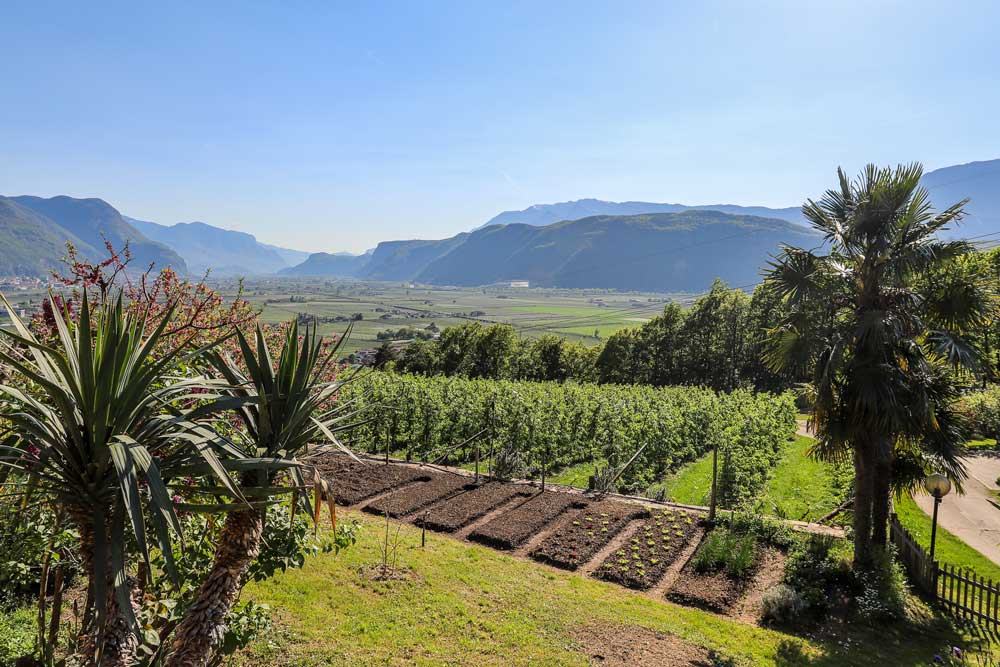
03 · PorphyryRed volcanic rock, a southwest slope, and Mediterranean warmth under the Alps.
The vineyards sit between 340 and 500 metres on the slopes south of Bolzano, facing mainly southwest, on sandy soils over porphyry. The family describe Mediterranean influences paired with an alpine microclimate, and credit the climate, the southwest exposure and the porphyry for wines with high minerality and balanced acidity.
The plantings are small and specific. Lagrein is the biggest at about two hectares, then Sauvignon at one, Cabernet Sauvignon at 0.8, Pinot Nero and Vernatsch at 0.6 each, Merlot at half a hectare. The Merlot, 0.4 hectares planted in 2003 at 340 metres on porphyry and clay, is a reminder that the variety has grown in this region for over a century. Pinot Nero goes higher, to 450 metres. Kerner, a cross of Riesling and Vernatsch, does best in the farm’s highest vineyards.
04 · Cut in halfHalf a bunch in July, and no weedkiller for years.
Most growers who want to concentrate their crop drop whole bunches in summer. At Putzenhof they cut each cluster in half in July and remove the lower part, which ripens later. What is left ripens evenly. Herbicides were banned years ago, grass grows between the rows, and the only sprays are those allowed under organic rules, which is why they are listed here as practicing organic. Everything is picked by hand from mid-September into early November.
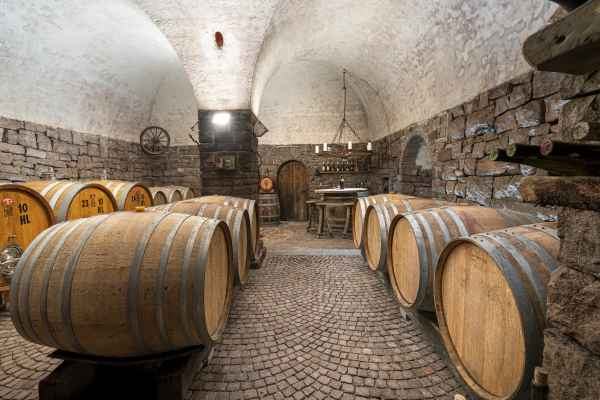
The cellar is plain and sensible. The Kerner ferments on indigenous yeasts in stainless steel, about four thousand bottles a year. Sauvignon spends six or seven months in steel. Lagrein gets a month on its skins and a year in casks of ten to fifteen hectolitres; the Merlot gets two years in the same casks. The importer names Mirko Maccani as winemaker, with Roman running the vineyards. Yields run from seven tonnes a hectare for the Merlot to ten for the whites.
05 · Bozner LeitenThe everyday red of Bolzano, made from old vines.
Bozner Leiten means the hills of Bolzano. It is one of the oldest DOCs in South Tyrol, a site name for the slopes around the town, and the wine must be at least 85 percent Vernatsch, which Italians call Schiava, with other local reds picked and fermented with it. Putzenhof’s is 85 percent Vernatsch and 15 percent Lagrein, from old vines, six months in steel and no oak. Light, fresh, with sour cherry, wild berries, violets and the small almond note Vernatsch often has; the family serve it slightly cool, at twelve to fourteen degrees, with speck and cheese.
The rest of the range follows the same plain lines. The Sauvignon is the Alto Adige style, blackcurrant and nettle and herbs, with lively acidity. The Merlot, from the porphyry-and-clay plot, is full and round, with ripe tannins and a mineral edge, and our 2019 has had time to settle. There is a Pinot Nero, a Cabernet Sauvignon and a rosé of Merlot and Lagrein as well, which are not on our list.
Vernatsch was once the most planted grape in South Tyrol and has lost ground for decades to white grapes and to Lagrein. It deserves better. This is the kind of red sommeliers ask for and rarely find: low in alcohol, transparent, made to drink with food. The Lagrein is the farm’s more serious red, dark, velvety and spiced. The Kerner, aromatic and fresh, is the one to pour first.
In the vineyard
& cellar.
- Holding
- ~5.5 ha of vines and 1.5 ha of apples · San Giacomo / St. Jakob, Laives, south of Bolzano
- Since
- Bought by Roman Mottironi’s grandparents in the 1950s · own wines from the 2009 harvest
- Soil
- Sandy soils over porphyry · 340–500 m, facing southwest
- Vines
- Lagrein 2 ha · Sauvignon 1 ha · Cabernet Sauvignon 0.8 · Pinot Nero 0.6 · Vernatsch 0.6 · Merlot 0.5 · Kerner
- Farming
- Practicing organic · no herbicides, grass between the rows · bunches halved in July
- Cellar
- Whites and Bozner Leiten in steel · Lagrein and Merlot in 10–15 hL casks
- Production
- ~40,000 bottles a year, estate fruit only