
Burgundy’s close spacing, rebuilt for Sonoma.
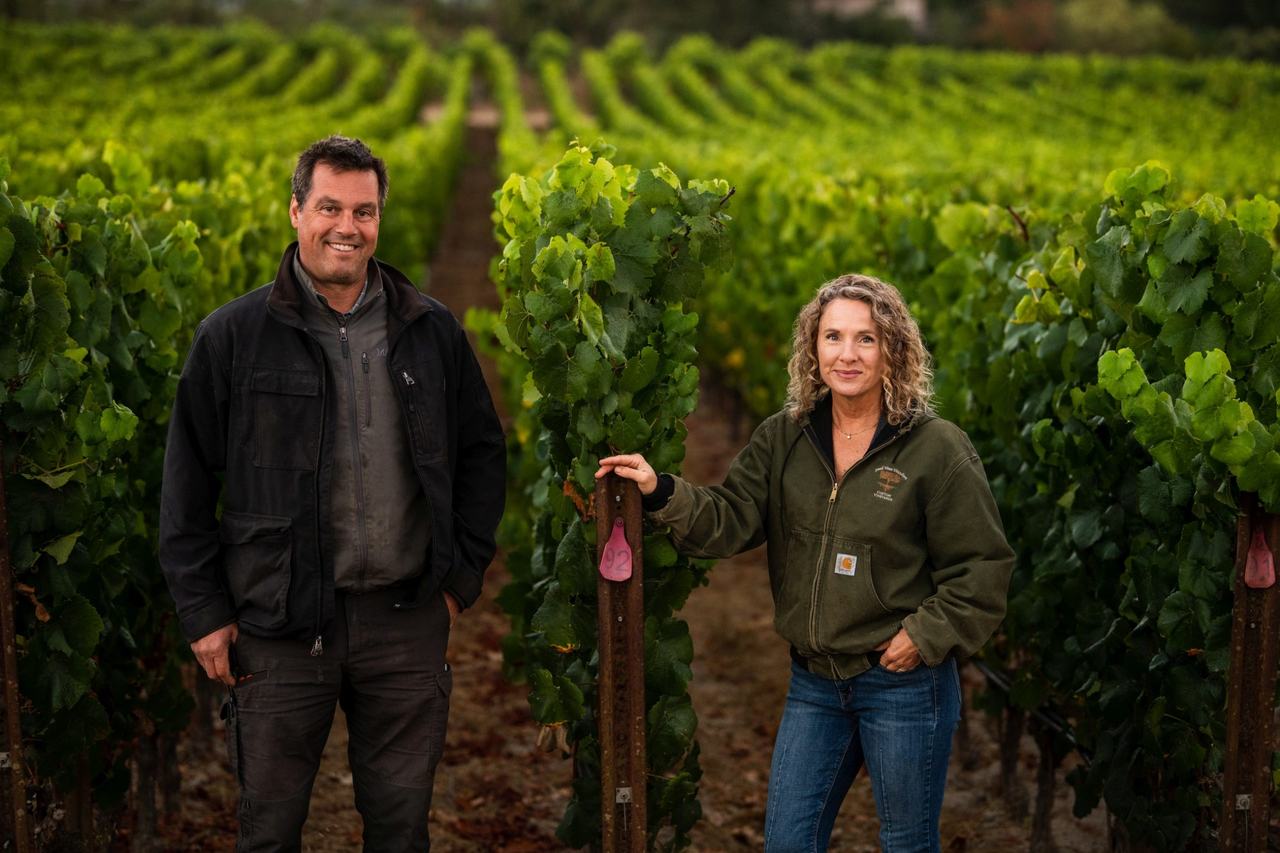
The name is the whole farming philosophy. Most California vineyards were laid out for tractors, with rows eight to twelve feet apart. Paul and Kathryn Sloan plant theirs four feet apart, with up to 3,630 vines to the acre, a density Sonoma County almost never sees. Each vine carries well under two pounds of fruit, a fraction of the California norm. The vines compete for water and nutrients, the roots go down, and the result is concentration rather than abundance.
Paul Sloan is a third-generation Sonoman who learned to farm under Warren Dutton and started Small Vines Viticulture with Kathryn in 1998, when almost nobody here believed in close planting. Growers such as Paul Hobbs and DuMol hired them to plant and farm their vineyards; in 2005 the Sloans began making wine from vines they had planted themselves. Today they make Pinot Noir and Chardonnay only from their own organically farmed, hand-tended, close-planted sites in the cool west of the county, picked at night and made with native yeasts.
The TBH Vineyard Chardonnay has a mineral salinity that I associate with vines under stress in the best sense, reaching down rather than spreading out. It isn’t showy. It repays attention, which is what I’m looking for.
02 · Paul and KathrynA wine steward, a bottle of Montrachet and Warren Dutton.
Paul Sloan’s epiphany came while he was a wine steward at the John Ash restaurant in Santa Rosa, when he tasted his first Le Montrachet. He shared the obsession with his girlfriend, now his wife, Kathryn McGrath. He studied viticulture at Santa Rosa Junior College and went to work for Warren Dutton of Dutton Ranch, one of the great growers of the Russian River Valley. Dutton encouraged him to start a company devoted to close-spaced vineyards, though plenty of others told him it would never pay.
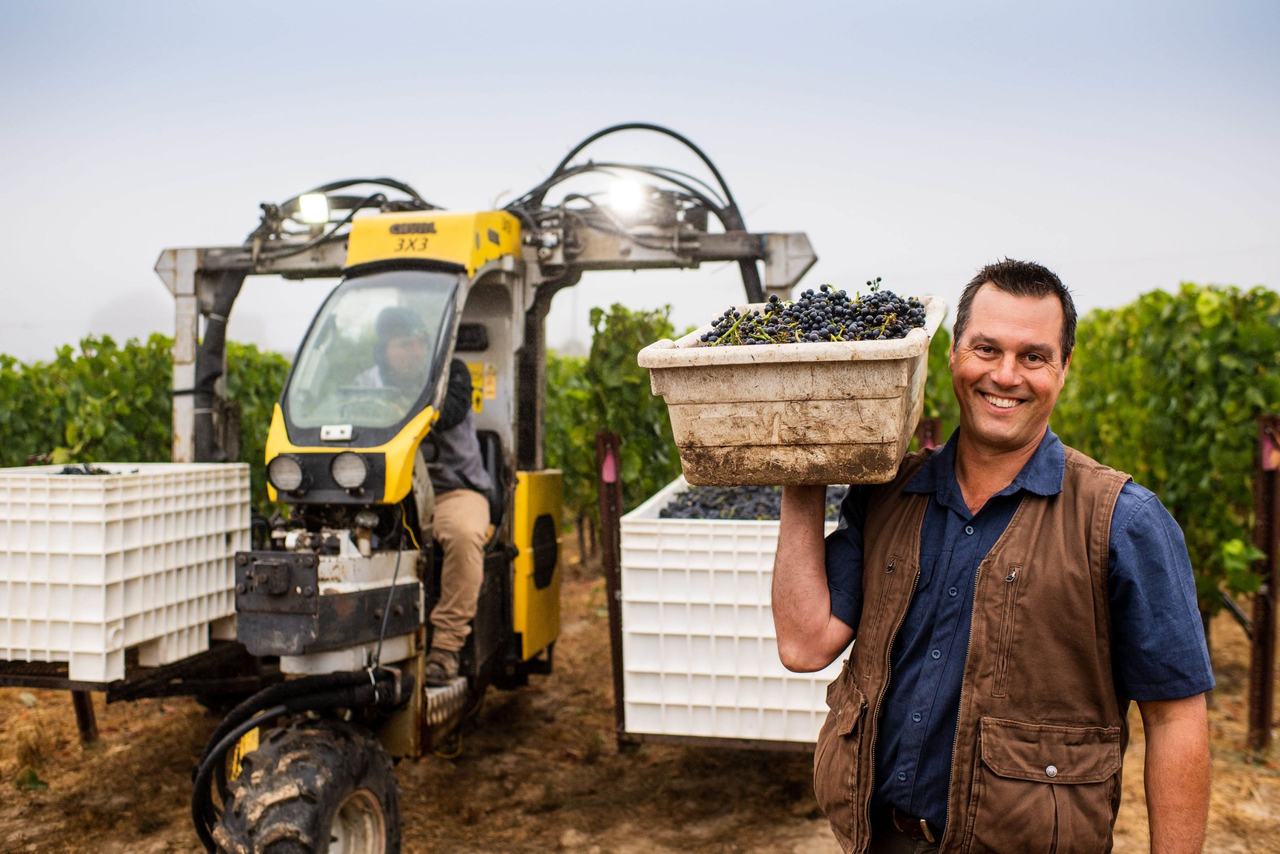
In 2004 Small Vines Viticulture became, by its own account, the first vineyard company in America to import a tractor built for high-density farming: a French Caval, seven feet tall, which Sloan modified to work two or three rows at once. In 2005 it planted fifteen acres for DuMol, at the time the largest close-spaced vineyard in the county. The wines followed the same year, starting with fruit from the MK Vineyard above Occidental, which the Sloans had planted and were able to lease back.
The only thing it doesn’t do is harvest, and we prefer to do that by hand.
Paul Sloan, on the Caval tractor
03 · Close companyFour feet between rows, and the fruit raised out of the heat.
Close planting is old wisdom in Burgundy, where a metre between vines is common. In California it arrived late and often failed: the soils here are warmer, the sun stronger, and early high-density plantings near the ground gave baked, overripe fruit. The Sloans studied the differences in fog, temperature and rainfall between the two places and adjusted. They carry the fruit between 24 and 32 inches off the ground, well above French height, out of the heat the soil throws back. Rows are four feet wide and vines three feet apart, and the taller, narrower canopy shades the bunches when the heat spikes, which keeps the acidity.
The crop on each vine is small, about 0.75 to 1.5 pounds a vine, roughly a fifth of the California average. Each block is an acre or less and is farmed by hand, shoot by shoot. The vineyards are dry-farmed, organically, without herbicides or synthetic sprays. The Sloans call it intentional viticulture. It also costs more to farm: more vines, more hand work and machines that had to be imported or built.
04 · The vineyardsA cool ridge top on Barlow Lane, and three older sites.
After years of looking for the right ground (coastal influence, well-drained low-vigour soil, a ridge top) the Sloans established their own estate in 2007. TBH stands for The Barlow Homestead, on Barlow Lane in Sebastopol: a cool, windy ridge with heavy coastal influence, planted in 2009 around the house and winery in Goldridge, a dark grey, very fine sandy loam. The Chardonnay there comes from two old California Wente selections, Hyde and Kistler’s Mount Eden.
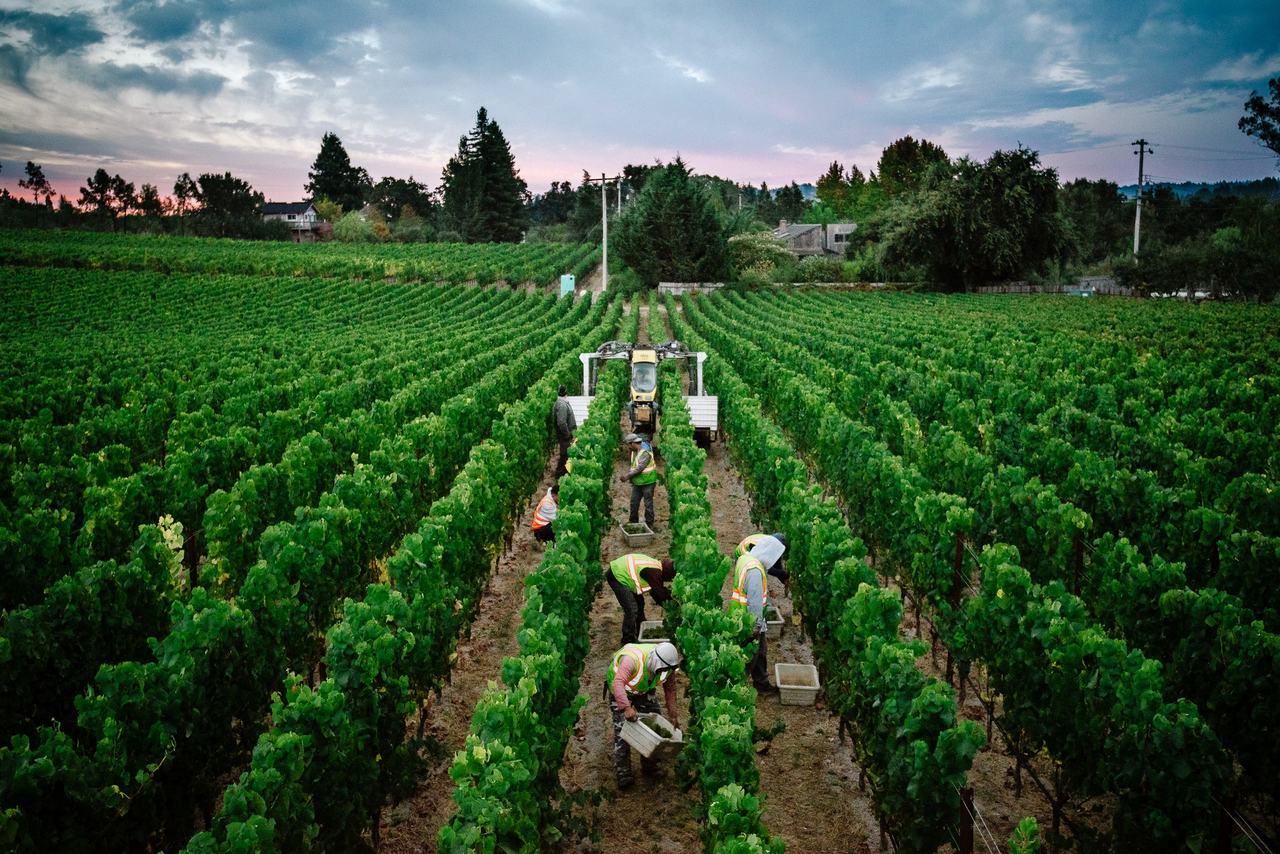
The Pinot Noir draws on four sites, all farmed by the Sloans: MK in the Occidental hills (1999), Fassler near Graton (2000), Baranoff near Sebastopol (2001) and TBH. The soils run from red sandy clay loam to Goldridge, some with alluvial gravel, on sites from the Occidental hills to the edge of the Laguna de Santa Rosa. The clones are a library: Calera, Pommard, Swan and a run of numbered French clones. Baranoff is always the first to ripen. Picking starts at two in the morning, with headlamps between the rows, so the fruit comes in cold.
05 · In the cellarNative yeast, mostly old barrels, nothing added.
The TBH Chardonnay is picked in several passes, vine by vine. The bunches are pressed whole on a very slow cycle, then fermented in barrel with native yeasts and native malolactic, with no additions and little stirring. In 2017 only nine per cent of the barrels were new. The wine spends nine months on its fine lees, three more in steel, and is bottled unfined. The Pinot Noirs get a five-day cold soak, eighteen to twenty days on the skins, about a third whole clusters and punch-downs by hand, then around eleven months in barrel, roughly a quarter new.
Rusty Gaffney, who writes the PinotFile as the Prince of Pinot, came across the wines in 2010 while tasting more than fifty Pinot Noirs in the press room at the World of Pinot Noir. The 2007 Russian River Valley Pinot stopped him; he went to congratulate the Sloans and then to walk their vineyards. Paul spent two days on the New York market with us in October 2026.
This was clearly the best wine I sampled over a two day period.
The PinotFile, on the 2007 Small Vines Pinot Noir
In the vineyard
& cellar.
- Founded
- Small Vines Viticulture 1998 · first wines 2005 · estate established 2007
- Spacing
- 4-ft rows · 2,722–3,630 vines per acre · fruit wire at 24–32 in
- Yields
- About 0.75–1.5 lb per vine
- Vineyards
- TBH (Sebastopol, 2009) · MK (Occidental hills, 1999) · Fassler (Graton, 2000) · Baranoff (Sebastopol, 2001)
- Soil
- Goldridge fine sandy loam · red sandy clay loam · some alluvial gravel
- Farming
- Organic, by hand, dry-farmed
- Cellar
- Night picks · native yeasts and malolactic · whole clusters on the Pinot · mostly neutral French oak · unfined