
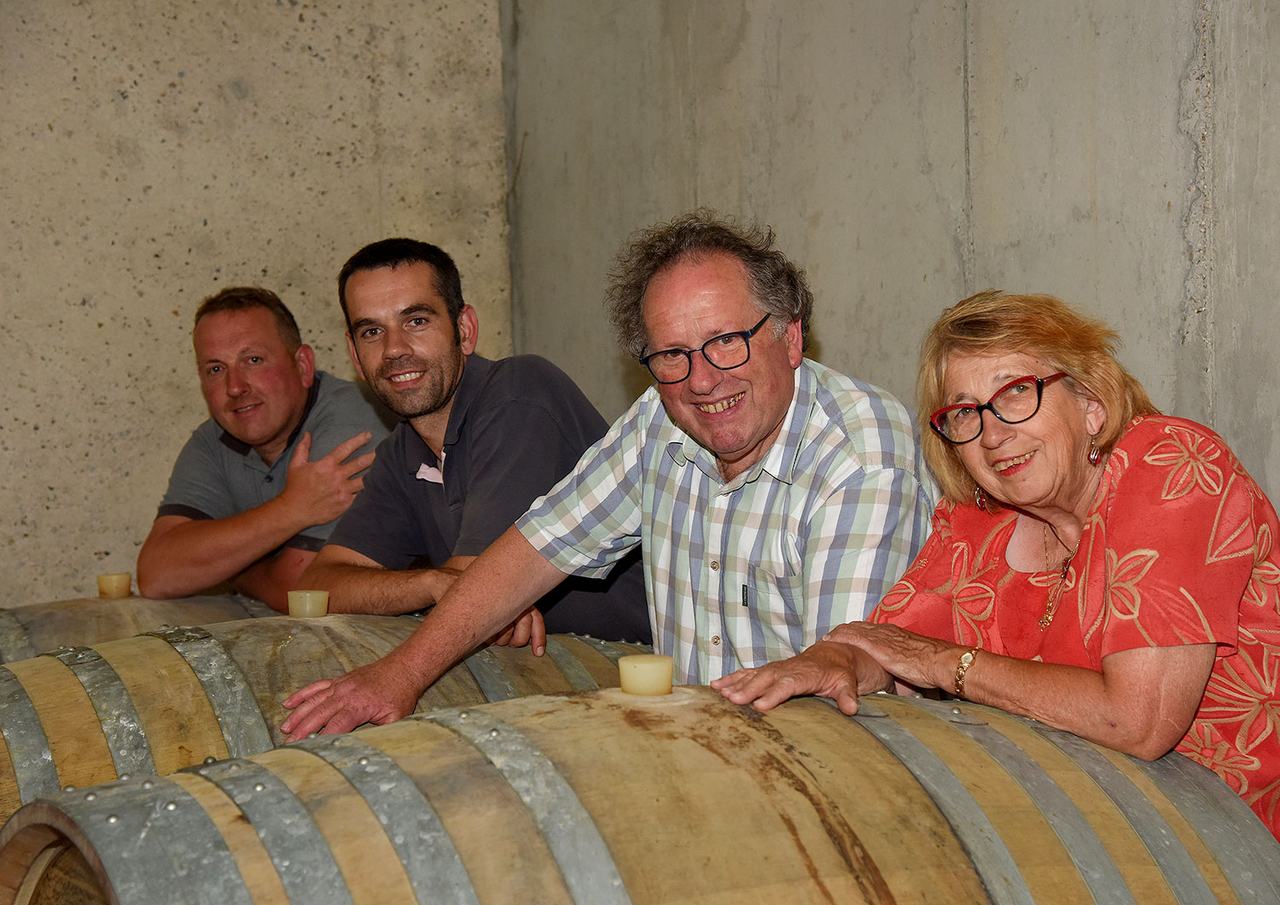
A farmer cured himself without chemicals, then treated his farm the same way.
Thirteen generations on these slopes, back to 1683, and then in 1964 Lucien Dauny converted the entire farm to organic. Nineteen sixty-four. There was no market for it, no certification worth having, no customer who would pay a centime more. He had been ill, had treated himself with herbal medicine and homeopathy, and wondered why the plants and animals on his farm should not be treated the same way. That is the whole ethic of this book in a single decision, made sixty years before anyone would applaud it.
It was not easy. The first harvests were poor, the cereals and the vines worst of all, and it took five or six years for the farm to find its balance again. Lucien kept going. His son Christian and daughter-in-law Nicole turned the mixed farm into a vineyard; their sons Benoît and Thibaut, the thirteenth generation, now run it with them. No herbicide has touched it in sixty years.
Seventeen hectares now, at Champtin in Crézancy-en-Sancerre: Sauvignon Blanc on limestone and clay-limestone, Pinot Noir alongside. The wines are clean, direct and true to their ground, and Clos du Roy, from old vines facing full south, rewards a few years in the cellar.
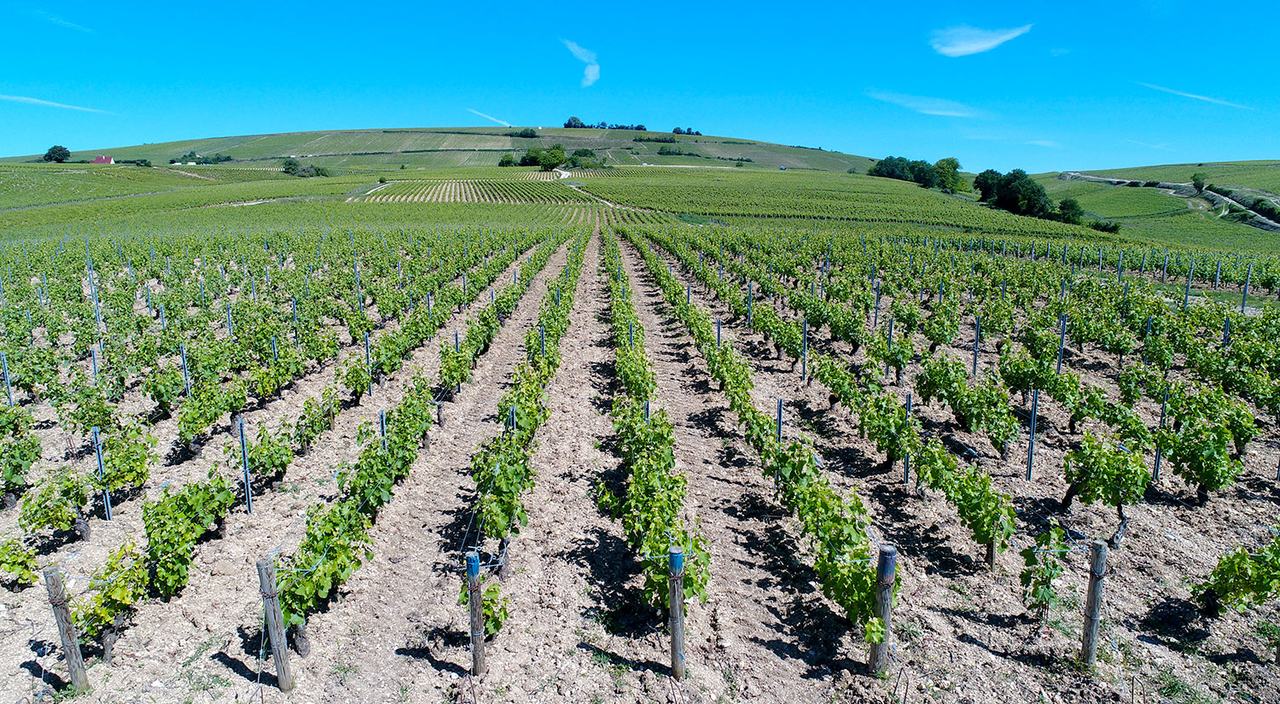
02 · Lucien DaunyHerbs, homeopathy, and six lean years.
In the early 1960s the Dauny place was a typical small farm of the Sancerrois: vines, but also cereals, goats and cows. It had one hectare and forty-five ares of vines. Lucien fell ill, looked after himself with natural remedies, and discovered herbalism and homeopathy at a time when people only spoke of them shyly. He read what he could, visited the few farmers who were already working without chemicals, and in 1964 he converted all of it. The animals adapted first. The crops struggled. Only around 1970, the family says, did the farm find its balance, and then the results proved him right.
France had no official organic label then. Growers like Lucien followed a private charter written in the early 1970s, which banned many cellar additives and limited sulphur, and they policed themselves. Today the estate is certified AB, and in 1990 its first bottles of organic Sancerre went abroad, to Britain and then Germany.
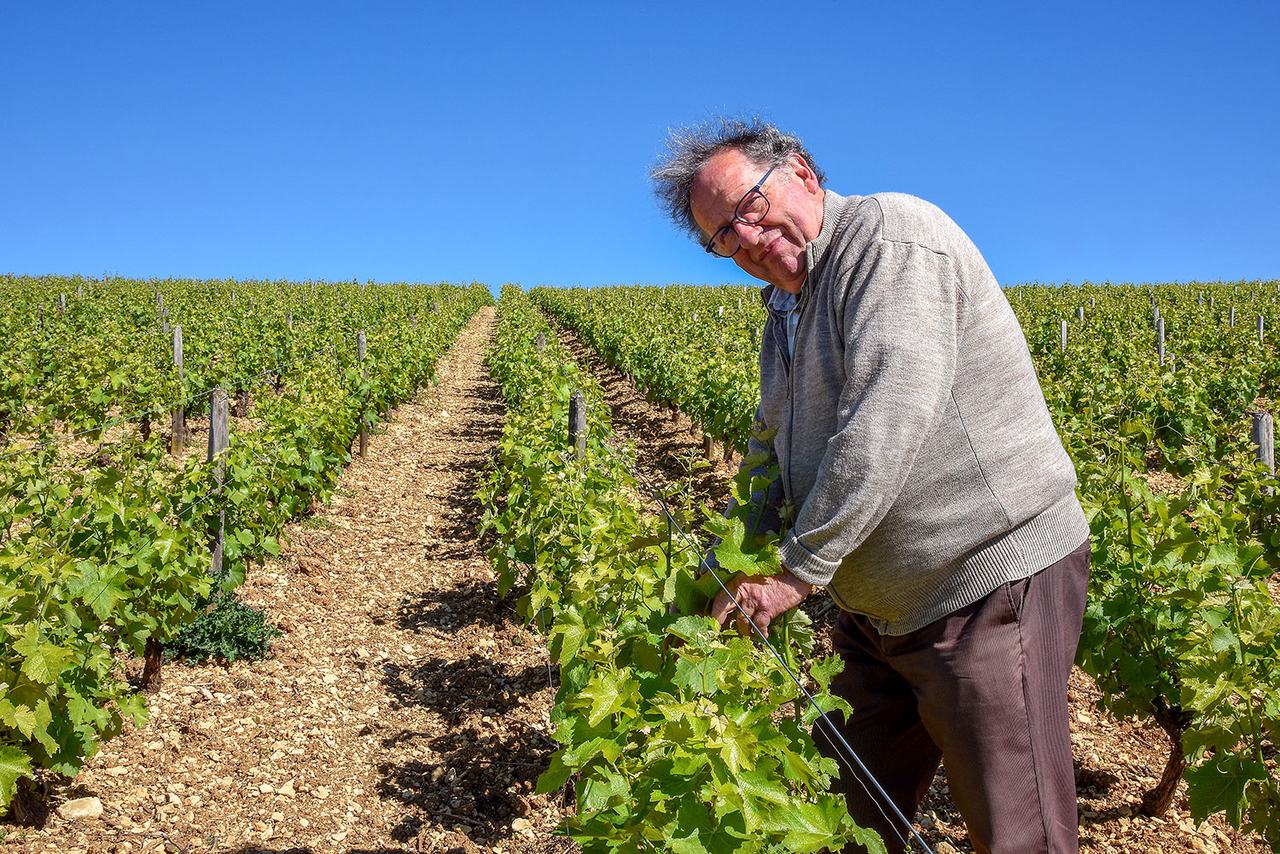
03 · ChamptinCaillottes, terres blanches, and a clos facing full south.
The Daunys have grown vines on the slopes of Bué and Crézancy since at least 1683, and the cellar sits in the hamlet of Champtin, on hillsides the family calls famous. Sancerre’s white wines come from three kinds of ground, and the Daunys have two of them. Caillottes are the stony, broken limestone of the lower slopes, quick to warm and quick to drain; the wine from them is light and meant to be drunk young. Terres blanches are the white clay-limestone marls, heavier and cooler, which give a broader, more aromatic Sauvignon that keeps longer.
The Clos du Roy is limestone with a perfect exposure, full south, planted with vines that now average about forty-five years. It is the estate’s keeper: rounder and finer, built to age five to eight years, and the family suggests it with foie gras once it has two or three years on it. The reds come from four hectares of Pinot Noir on limestone: Pynoz, light and fresh, from vines of about twenty years, and the barrel-aged Romble from vines over forty.
Laisser faire la nature pendant toute une année serait une catastrophe. (To let nature do as it pleases for a whole year would be a catastrophe.)
Vignoble Dauny
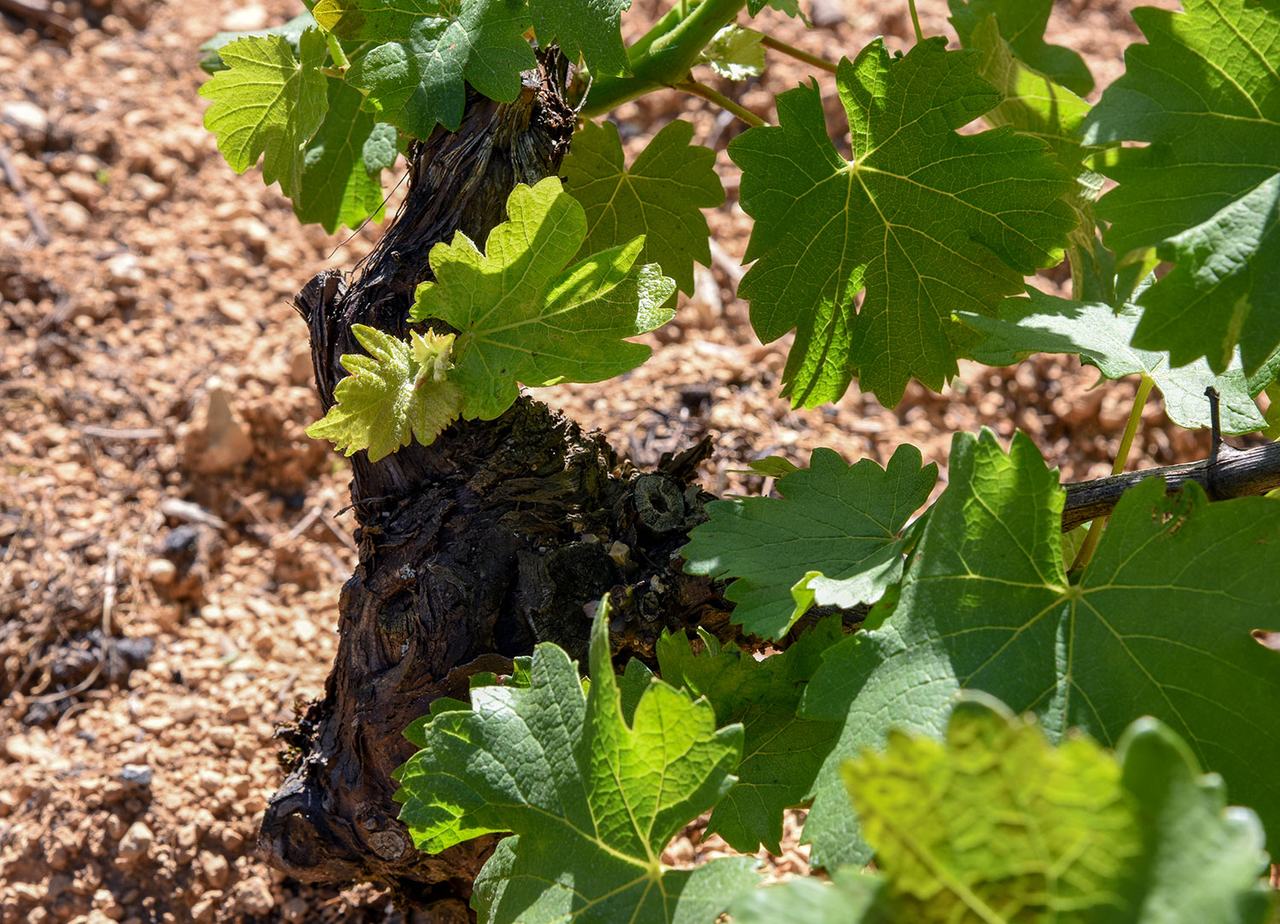
04 · Copper, sulphur, nettleWhat organic means here, sixty years in.
The Daunys are blunt about it. An organic grower is still a grower, they write, and has to look after the vines to bring in a good crop; leaving nature to its own devices for a year would be a disaster. The work is in the soil and the plant’s own resistance. They feed the ground with compost made from farm manure, worm compost, plant waste and seaweed. They plough and hoe instead of spraying herbicide, which turns the weeds back into humus and holds the slopes together in heavy rain. Nettle and horsetail teas and seaweed extracts give the vines trace elements.
When disease pressure demands it they use the two old remedies, copper as Bordeaux mixture against mildew and sulphur against oidium, and nothing else: no chemical fertiliser, no weedkiller, no insecticide or acaricide, no synthetic fungicide. In the cellar the same restraint holds. The wines ferment in stainless steel between 18 and 25 °C after a gentle pneumatic pressing; the reds are not fined at all, the whites only with bentonite. Only the Romble cuvées see oak: the white, a selection of their terroirs, spends ten months on fine lees in barrique.
The point of all this is the soil. A ground rich in humus, they write, gets through a long drought more easily, and ploughing loosens it so the roots go deeper. They avoid burning weeds with gas, which some organic growers do, because the heat kills the life in the soil along with the weeds. Sixty years of this on the same hillsides is the real difference between Dauny and a vineyard converted last decade: the soil has had two generations to recover.
05 · The thirteenth generationChristian, Nicole, Benoît and Thibaut, and wines for the table.
Lucien handed over in 1975 to Christian and Nicole, newly married. Bit by bit they planted the cereal fields and the meadows inside the appellation with vines, and from 1985 the farm grew grapes and nothing else, under a new name, Vignoble Dauny. They built a 600-square-metre cellar in 1986 and 1987. Benoît, born in 1977, joined in 1999; Thibaut, born in 1981, in 2007. The vineyard that measured under a hectare and a half in 1964 was 16.82 hectares by 2014: thirteen of Sauvignon Blanc and four of Pinot Noir. The four of them run it as partners, with three permanent workers in the vines.
Three-quarters of what they make is white Sancerre, a fifth red, the rest rosé. About a third is sold at the cellar door and a third goes abroad, to Germany, Belgium, Scandinavia, Britain and the United States. The wines win their share of medals at the Vignerons Indépendants competition, golds for Terres Blanches and Pynoz among them. They are wines for oysters and Crottin de Chavignol, for fish and white meat, made by a family that chose the harder way of farming before it had a name and has never gone back.
In the vineyard
& cellar.
- Holding
- 17 ha · 13 ha Sauvignon Blanc, 4 ha Pinot Noir · Champtin, Crézancy-en-Sancerre
- Since
- Family on these slopes since 1683 · 13 generations · Vignoble Dauny since 1985
- Farming
- Organic since 1964, among the first in Sancerre · certified AB
- Soils
- Les Caillottes (limestone) · Terres Blanches (clay-limestone) · Clos du Roy (limestone, full south, ~45-yr vines)
- Treatments
- Copper and sulfur · horsetail and nettle purins · seaweed · compost · ploughing, no herbicide
- Élevage
- Stainless steel, 18–25 °C · Cuvée Romble fermented and aged in barrique, 10 months on fine lees