
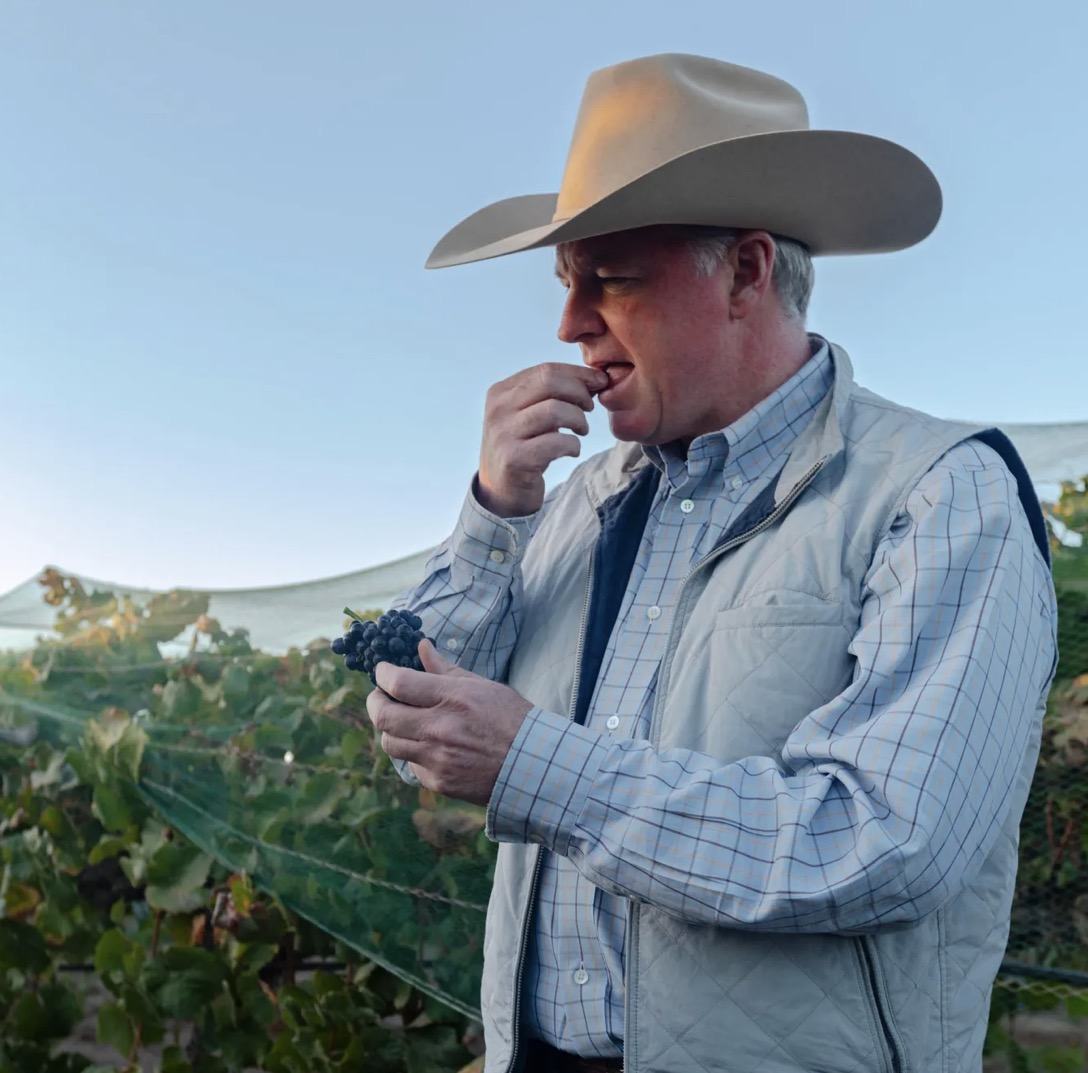
A ninth-generation farmer’s portrait of the Santa Maria Valley.
The Ontiveros family has been in Alta California since 1781 and in the Santa Maria Valley since 1855. James Ontiveros is the ninth generation of them here, and he planted his first vineyard while he was still at Cal Poly. Alta Maria is the label he started with his college friend Paul Wilkins, then Alban’s assistant winemaker, as a place to work with the valley’s other great sites alongside the family’s own. The family calls itself “farmers first, vineyard focused,” and the wines read that way: three bottles, each made to show a piece of Santa Barbara County without much in the way.
The fruit comes from some of the valley’s founding ground. The Chardonnay is from Nielson, the vineyard planted in 1964 that started commercial grape growing in the Santa Maria Valley, and from Gold Coast. The Pinot Noir adds Costa de Oro and Rancho Ontiveros, the windswept sandy ranch above the old family land grant where James put in his own vines in 1997.
The Santa Maria bench is underrated, and this is one of the reasons I keep saying so. The Pinot Noir has a spice and a freshness I associate with cold growing seasons: cranberry, dried rose, something almost savory. It is a Pinot that has not been pushed, and those are harder to find in California than they should be.
02 · Since 1781Ten generations in one valley, and a student with a shovel.
Josef Ontiveros rode into Alta California with the Rivera expedition in 1781 and stayed. His descendant Juan Pacifico Ontiveros held a 35,971-acre land grant in what is now Orange County; in 1855, five years after statehood, he and his wife Doña Martina sold it to buy Rancho Tepusquet in the Santa Maria Valley, because it had water. The adobe they built the next year still stands. By the time Doña Martina died in 1898 the rancho had been split into eleven lots among the family, and over the generations most of it was sold.
In 1975 James’s parents, Mark and Louise, built their house on a small cattle ranch that looks over the old grant. The land had been written off because of old oil operations. James grew up there riding in the local rodeo and raising cattle, went to Cal Poly to study animal science, switched to crop science as the vineyards closed in around the ranch, and in 1997, at 23, planted five acres of Pinot Noir on the windswept Garey sands at more than 700 feet. The family history says he was known as the student who came to class filthy from the vineyard. He went on to manage vineyards in the Russian River Valley and Sonoma Coast, driving six hours home on weekends to look after his own.
He had got to Cal Poly on a rodeo scholarship and took his first viticulture class in 1995. After graduating in 1999 he went to Gallo in grower relations, in Healdsburg. Then, at the 2001 World of Pinot Noir, he met the Miller family, who own Bien Nacido, and spent the next twelve years as their director of sales and marketing, which is how Bien Nacido came to be the most vineyard-designated vineyard in the country. In 2012 he and Matt Turrentine left to start Grapevine Capital Partners, which develops and farms vineyards from the Central Coast to Oregon; that is the company behind his lease of Rancho Viñedo and the old Nielson vineyard. In the Santa Barbara Independent in 2025, AJ Fairbanks of Crown Point called him the region’s elder statesman. He was 51.
At Cal Poly he had met Paul Wilkins, who went on to Alban Vineyards and became assistant winemaker there. In 2005 Wilkins went out on his own; one of his first clients asked him to find fruit from a vineyard called Ontiveros. The two friends made the first Native9 from James’s ranch, and soon after started Alta Maria.
Through struggle and adversity comes triumph, in the poetic weirdness of life.
James Ontiveros
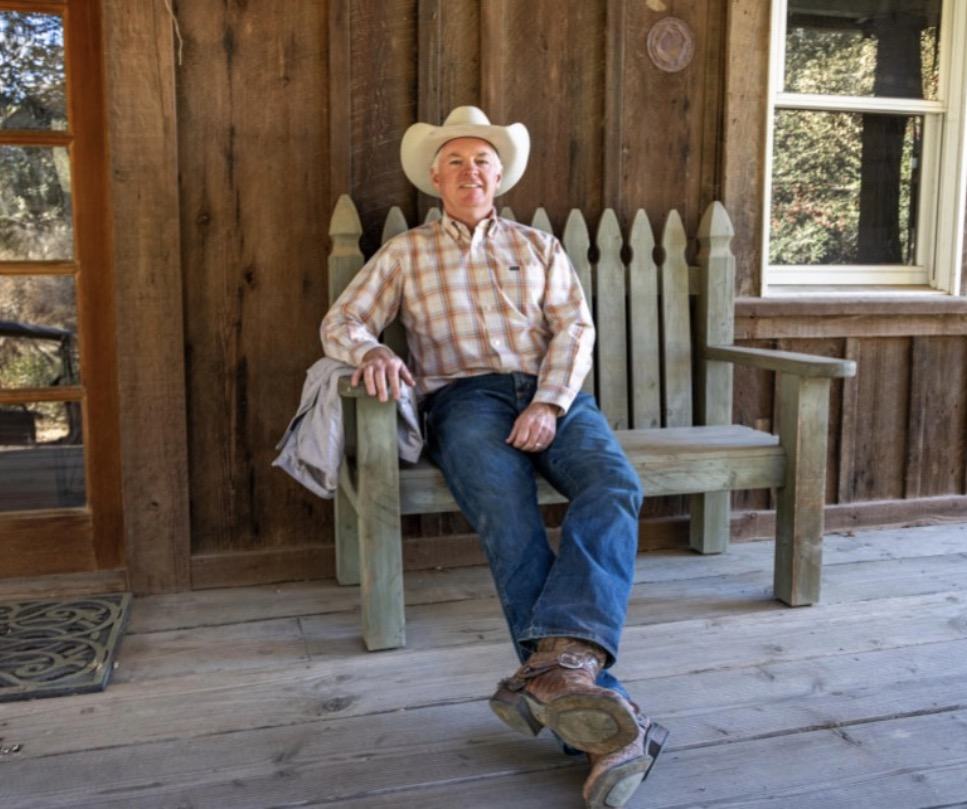
03 · The benchA cold, windswept valley, open to the Pacific.
The Santa Maria Valley runs east to west, so the ocean wind and fog come straight up it. The family calls it “a cold windswept coastal desert.” Before 1964 the county was thought too cold for wine grapes; that year the Nielson family planted the first commercial vineyard on the Santa Maria bench, and the rest of the valley followed. Alta Maria’s Chardonnay still draws on Nielson, with Gold Coast: alluvial Elder and Pleasanton shaley loams, and silty, sandy loam laid down by the wind.
The Pinot Noir is from Nielson, Costa de Oro and Rancho Ontiveros. The ranch vineyard, now 153 acres, sits on Garey series sandy loam at over 700 feet at the southern edge of the valley. It is poor, nutrient-depleted ground; the vines struggle in it, and James thinks the struggle is what makes the wine. Four miles away, on the old grant, he has leased the Rancho Viñedo vineyard since 2012, own-rooted Chardonnay and Pinot Noir from 1973 on Pleasanton soil over river cobble. That fruit goes to the family’s estate wines, which have their own page in this book.
The Sauvignon Blanc comes from further south and inland, small vineyards in the Santa Ynez Valley and the Los Olivos District: heavier clay loam with dolomitic limestone shale, and sandy river wash with gravel and cobble.
04 · Hand-forged nailsWhole clusters, neutral barrels, and a label from the blacksmith’s shop.
The label shows square iron nails, hand-forged and hammered in the blacksmith shop that still stands at Rancho Ontiveros, built around 1883. Homesteaders in Santa Maria used nails like these before the machine-cut kind arrived; no two are the same, because each depended on the conditions it was made in and the skill of the smith. The family means it as a description of the wine.
The cellar work is light. The 2021 Chardonnay is whole-cluster pressed and raised in French oak, 40 per cent new, with malolactic, and it finishes at 12.6 per cent alcohol. The Pinot Noir is fermented in small lots with 15 per cent whole clusters and spends eight months in neutral French oak; 13.7 per cent. The Sauvignon Blanc is whole-cluster pressed and raised for eight months between stainless steel and neutral oak; 12.9 per cent. Those are modest numbers for California, and they are the reason the wines taste of the valley’s cold.
The winemaking itself tends to be minimalist, using native yeasts whenever possible.
Alder Yarrow, Vinography
05 · CollaborationBuilt with friends, from the people who farm the valley.
Alta Maria was set up as a place for collaboration outside the family’s estate vineyards, and its partners have changed with the years. Paul Wilkins made the early wines. In 2012 the Murphy family, who own Presqu’ile just down the road from James’s home ranch, became partners and production moved to their new winery. The winery’s own site now credits the wines to winemaker Chris Brown, with James Ontiveros farming. What stays the same is the fruit. James knows these vineyards from the ground up, and producers large and small up and down the West Coast lean on what he knows about vineyards and winemaking.
He has also spent a good deal of time in Burgundy. In 2001 he met Mounir Saouma of Lucien Le Moine, who told him the Santa Maria Valley was “the right place”; from 2003 he went back often, to the cellars and vineyards of Dujac, Leflaive and others, and brought home what he saw. You can taste some of that in Alta Maria’s restraint. When Alder Yarrow reviewed the 2008 Pinot on Vinography, he wrote that minimalism might be the defining thing about these wines, from the label to the cellar. It still is. At home the holdings have been pared back on purpose: James pulled out a 75-acre Pinot block that had leaf roll, kept the best fifty acres for Native 9 and the Ranchos de Ontiveros wines, and in 2024 brought in Katie Luttge, 23 years at Sea Smoke, to run them.
In the vineyard
& cellar.
- Proprietor
- James Ontiveros, ninth generation of the family in California
- Since
- 2005; the family in the Santa Maria Valley since 1855
- Vineyards
- Nielson, Gold Coast, Costa de Oro and Rancho Ontiveros (Santa Maria Valley); small sites in the Santa Ynez Valley and Los Olivos District for the Sauvignon Blanc
- Soils
- Elder and Pleasanton shaley loam and wind-blown silty sand (Chardonnay); Garey sandy loam (Pinot Noir); clay loam with dolomitic shale, river gravel and cobble (Sauvignon Blanc)
- Winemaking
- Paul Wilkins for the early vintages; the winery now credits Chris Brown
- Cellar
- Whole-cluster pressing for the whites; Pinot Noir in small lots, 15% whole cluster, eight months in neutral French oak