
Right, year after year.
Six generations in the middle of Fuissé since 1878, thirty-one hectares across eight villages, and the siblings Patrick and Christine running it now. This is the Mâconnais at its most dependable (Pouilly-Fuissé, Pouilly-Loché, Saint-Véran), and dependability is badly undervalued in this business. When you need forty cases of good white Burgundy that will not embarrass you and will not bankrupt the table, this is the phone call. Not every wine has to be a revelation. Some of them just have to be right, year after year, and this family has been right since before the phylloxera.
02 · From four hectares to thirtyRoger and Renée, November 1966, and a whole crop bottled at home by 1972.
The date on the label is a birthday, not a deed: Jean Luquet, who enlarged the family’s vines, was born in 1878, and his father Benoît, born 1847, was already a vigneron at Fuissé. Jean’s son Maurice set up on his own in 1938 and was the first to send Luquet wine abroad, in bottle, through the French embassies, a strange and effective channel for a Mâconnais grower in the 1950s. He planted En Chatenet in 1958 and, with his own father, the vines in the heart of the village in 1927 that the family still works today, the oldest they have.
The modern domaine is Roger’s. In November 1966 he and his wife Renée settled on four hectares and seventy ares and called it Domaine Roger Luquet; by 1972 the entire crop was bottled at home, at a time when most Mâconnais fruit still went to the co-operatives and the négoce. Saint-Véran came in 1972 (Renée and Roger planted La Grande Bruyère at Davayé themselves the next spring), Mâcon-Villages in 1983, the Clos de Condemine at Charnay in 1984, and from 1992, with the children, something more ambitious: the replanting of the abandoned vine slopes at Cortevaix, between Cluny and Cormatin, where the vineyards had gone to cereals. The Hachette called it une réussite étincelante, a brilliant success, and gave the first Cortevaix wine of the century a coup de cœur. Four and a half hectares had become twenty-four by the early nineties and thirty by 2014.
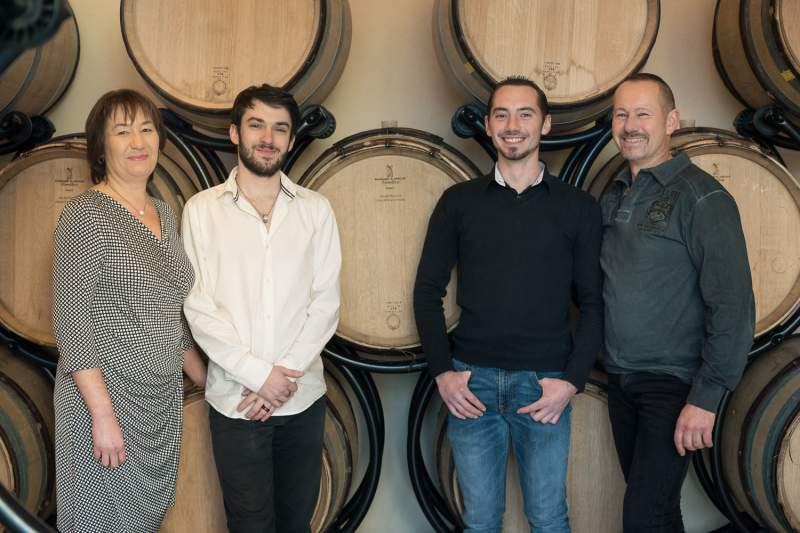
Christine joined in 1987, her husband Thierry Mathieu took the vineyards in 1990, and Patrick came in 1992, when the business became a GAEC between the generations; the Hachette dates the children’s direction to 1993. Patrick runs the cellar and the vineyard team and is the voice abroad; Christine runs the office. The sixth generation is already there: Patrick’s son Kévin since 2014, in the vines and the cellar, and Christine’s son Loïc since 2016, in the office and the labelling room. The name changed in 2017 to what it is now: Domaine Luquet, depuis 1878.
Véritable domaine familial depuis six générations.
The Luquets, Fuissé
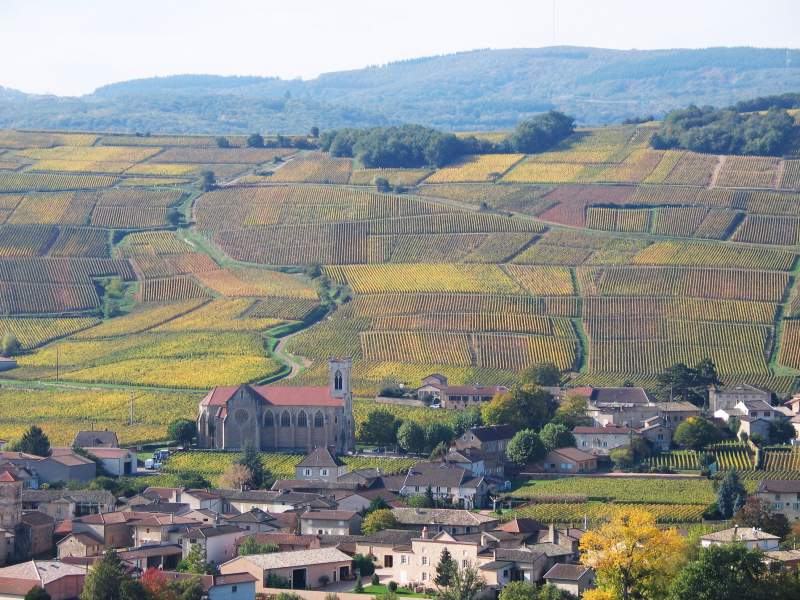
03 · Eight villagesThe Fuissé amphitheatre, the stones of Chasselas, and a hill above Cluny.
Fuissé sits at the bottom of a cirque closed to the south, with a remarkable band of flinty clays (argiles à chailles) along the western slope that the old texts credit with noble, powerful wines. The domaine has 7.2 hectares of Pouilly-Fuissé at Fuissé and Solutré-Pouilly, averaging past fifty-five years. Au Bourg, between the house and the church, is the 1927 planting, tiny berries from old vines inside the village walls, the house flagship, bottled under Maurice’s original label; En Chatenet, the 1958 planting, is mid-slope on the best hill of the village; Bois Seguin is on the west side of the amphitheatre between 355 and 390 metres, steep, due east, fifty-year-old vines sheltered by the woods, and kept in steel for its minerality. In 2020 the appellation gained its first premiers crus, and the family’s Les Vignes Blanches at Fuissé is among them.
Pouilly-Loché is the small neighbour, thirty-two hectares in all, of which the domaine has 1.3 since 2014: La Colonge, planted in thirds in 1951, 1982 and 1995 on iron-rich clay-limestone; Les Mûres, red clays and sandstone schists, five hundred and seventy bottles; Aux Scellés, planted 1929, the softest wine in the range. Saint-Véran is 6.7 hectares at Davayé, Leynes, Chasselas and Solutré-Pouilly, averaging past forty years: the Tradition from very stony ground at Chasselas and Solutré, and La Grande Bruyère at Davayé, 245 metres on clay-limestone, the vines Renée and Roger planted in 1973, which gives the same exotic fruit every year. Then the Mâcon: the Clos de Condemine at Charnay on sand, clay and silica, and at Cortevaix, Les Mulots and Le Pavillon, on limestone that, as the family says, breathes. Everything is Chardonnay except seventy ares of Pinot Noir planted at Cortevaix in 2013, un vrai challenge familial.
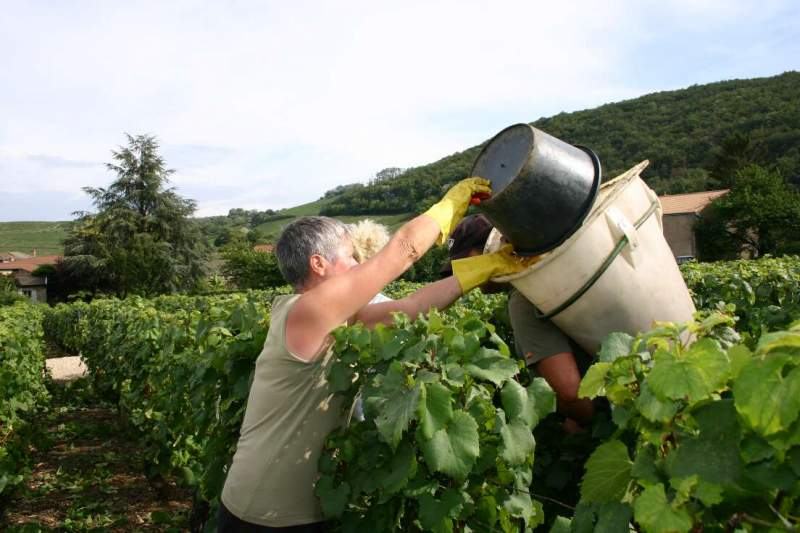
04 · Steel for the fruit, oak for the old vinesHVE since 2019; no added yeast, little sulphur, lees.
The farming is raisonnée, certified Haute Valeur Environnementale since 2019, several of the Loché parcels grassed over. The old-vine and single-parcel cuvées are picked by hand (the Hachette’s standing note on the house is “no yeast, little SO₂, aged on the lees”), pressed in a modern pneumatic press at Fuissé, fermented in temperature-controlled tanks with the malolactic done in full.
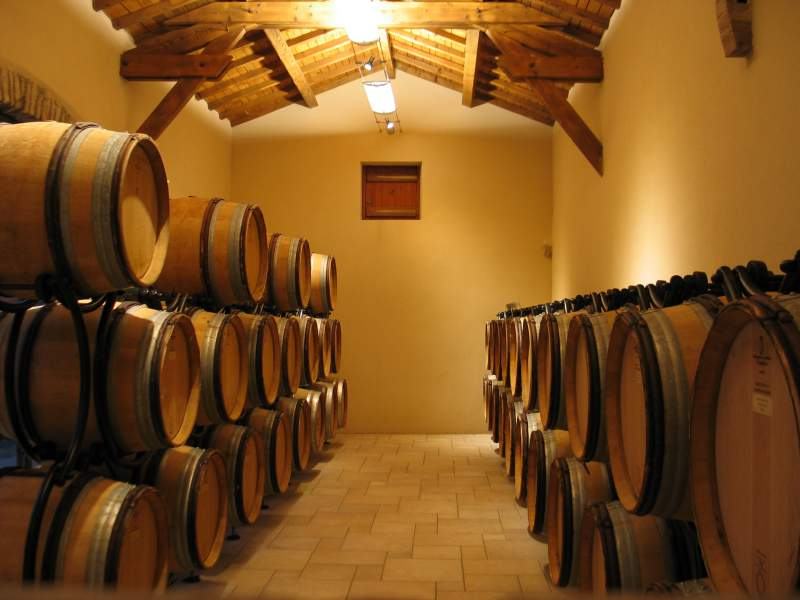
The division of the cellar is simple and the family states it plainly on every label. Steel for the wines meant to carry the fruit and the vintage: the Pouilly-Fuissé Terroir, Bois Seguin, the new premier cru, La Colonge, the Saint-Véran Tradition and La Grande Bruyère, the Mâcons. Tronçais oak, one to five years old, medium toast, for about five months, for the Vieilles Vignes of Pouilly-Fuissé and Saint-Véran and for Les Mûres. The Crémant is Chardonnay picked by hand into perforated crates, a hundred and fifty kilos of grapes for a hundred litres of juice, twelve to sixteen months on the lees. It was the Hachette’s coup de cœur in 2009 after what it called a merciless selection. Two hundred and forty thousand bottles a year, six in ten of them exported, which is why the wines are as consistent as they are: a house this size cannot afford a bad year, so it does not have one.
05 · What they say“Un hyper-classique par un vigneron réputé.”
The Guide Hachette, which has listed the domaine every year this century: of the Saint-Véran La Grande Bruyère, “a hyper-classic from a renowned grower… floral and mineral, with honey and vanilla around the edge. Clean and incisive”; of the Clos de Condemine, a juror’s J’achète! and “the archetype of the appellation”; of the new premier cru Les Vignes Blanches 2020, one star, “well built, sappy, long, held taut by a fresh, mineral finish.” Gilbert & Gaillard gave the 2017 Au Bourg 91 (“a wine that has it all”) and gold medals to the 2018 En Chatenet and Vieilles Vignes. Roger Voss in Wine Enthusiast on the Vieilles Vignes: “rich, wood-aged… a balanced toast element, crisp fruit and a taut texture.” And the Canadian panel at WineAlign, 92 on the 2022 Terroir, John Szabo MS: “broad, full, rich and ripe… product of the hot and dry vintage, with admirable” balance.
None of that is the language of revelation. It is the language of a house that has been right for a long time.
Il faut admettre l’évidence: la plantation du chardonnay sur les coteaux de Cortevaix se révèle une réussite étincelante.
Guide Hachette des Vins
In the vineyard
& cellar.
- Holding
- About 31 hectares in eight villages (Fuissé, Solutré-Pouilly, Loché, Davayé, Leynes, Chasselas, Charnay-lès-Mâcon, Cortevaix); 7.2 ha Pouilly-Fuissé, 1.3 ha Pouilly-Loché, 6.7 ha Saint-Véran, the rest Mâcon-Villages, Mâcon-Fuissé and Bourgogne; all Chardonnay but 0.7 ha of Pinot Noir
- Since
- Vignerons at Fuissé from Benoît Luquet (b. 1847); named for Jean Luquet, b. 1878; the modern domaine founded by Roger and Renée Luquet in November 1966; Patrick and Christine Luquet in charge since 1993; Kévin and Loïc, sixth generation
- Oldest vines
- Au Bourg, planted 1927 in the heart of the village; Aux Scellés 1929; La Colonge from 1951; En Chatenet 1958
- Farming
- Lutte raisonnée; HVE certified 2019; old-vine and single-parcel cuvées picked by hand
- Cellar
- Pneumatic press; thermo-regulated tanks; full malolactic; no added yeast, low sulphur, lees ageing; steel for Terroir, Bois Seguin, the premier cru, Saint-Véran and the Mâcons; Tronçais oak, 1–5 years old, ~5 months, for the Vieilles Vignes and Les Mûres
- Volume
- 240,000+ bottles a year; about 60% exported
- Honours
- Guide Hachette coups de cœur: Mâcon-Villages Les Mulots 2000, Crémant de Bourgogne 2006