
Chardonnay planted where the experts doubted it would ripen.
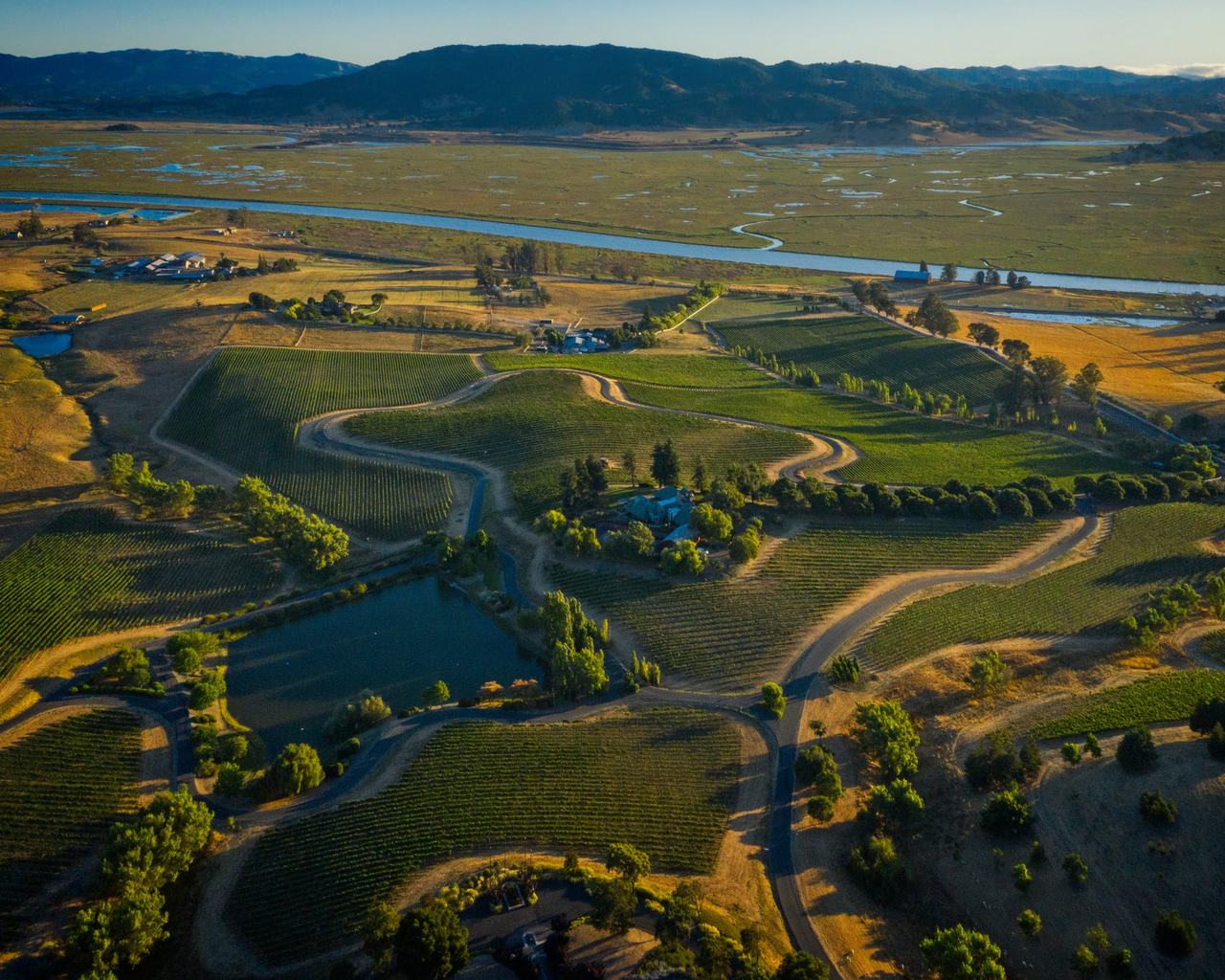
The Petaluma Gap is a geographic fact: a break in the coastal hills that funnels Pacific wind into the Sonoma interior every afternoon, with enough force to keep the growing season long and cold. You can feel it standing in the vineyard. When Arturo and Deborah Keller planted their first vines here in 1989, on a ranch above the Petaluma River, the advice they got was to plant Chardonnay, because nobody was sure grapes would ripen at all; if they didn’t, the fruit could go for sparkling wine. It ripened. For years it went to Rombauer and other wineries, and then the family started making its own.
Keller is a Mexican family estate, the largest winery in the Gap, and it names its wines in Spanish on purpose. It was Ana Keller, Arturo’s daughter, who pushed the neighbours to define the region, and the Petaluma Gap became an American Viticultural Area in 2017. And the home vineyard, La Cruz, sits on calcium-rich adobe clay that was once seabed, which gives the Chardonnay a cool, saline freshness most California Chardonnay never has.
The La Cruz Chardonnay is what that kind of tenure produces: a wine that knows where it is and has stopped trying to be the biggest Chardonnay in the room. I have opened it blind next to white Burgundy and said nothing, and watched people decide they preferred it. I still say nothing.

02 · Arturo KellerFrom car seats in Mexico City to a ranch above the Petaluma River.
Arturo Keller was born and raised in Mexico City. His family was Swiss and had moved to Mexico in the early 1900s; Keller means cellar in German, which the family likes to point out. He built a business supplying seats to the big car makers, collected vintage cars, made wine at first for friends and family, and in the 1980s bought several hundred acres of hillside in the southeast corner of Sonoma County, between Tolay Park and the river, with the Petaluma marshes below.
The vineyard went in from 1989, Chardonnay first and a small block of Pinot Noir in 1994, then Syrah. Ted Lemon, of Littorai, helped choose the plant material and lay out the rows. The first vintage was 2000, the year they hired the Mexican architect Ricardo Legorreta to design a winery; its walls are faced with stone from the Three Gorges dam project in China. Arturo named every wine in Spanish to celebrate, as the family puts it, la hermosura de nuestra lengua, the beauty of our language. A life-size sculpture of him at the wheel of a 1929 Mercedes greets visitors, and some of the cars are parked in the tasting room. Labels and the winery’s stained-glass doors are the work of a family member, Grace Keller.
03 · Ana KellerA biochemist, a stuck fermentation, and an appellation.
Ana Keller studied biochemistry in Mexico City and took her first wine classes while doing a master’s degree in London. One evening her father called and asked whether she would like to solve a stuck fermentation. She found in wine, she says, everything she loved: plants, chemistry, art and stories. She joined the venture in 1998 and moved from Mexico to live on the property. She now runs the estate as CEO, and three generations of the family work there.
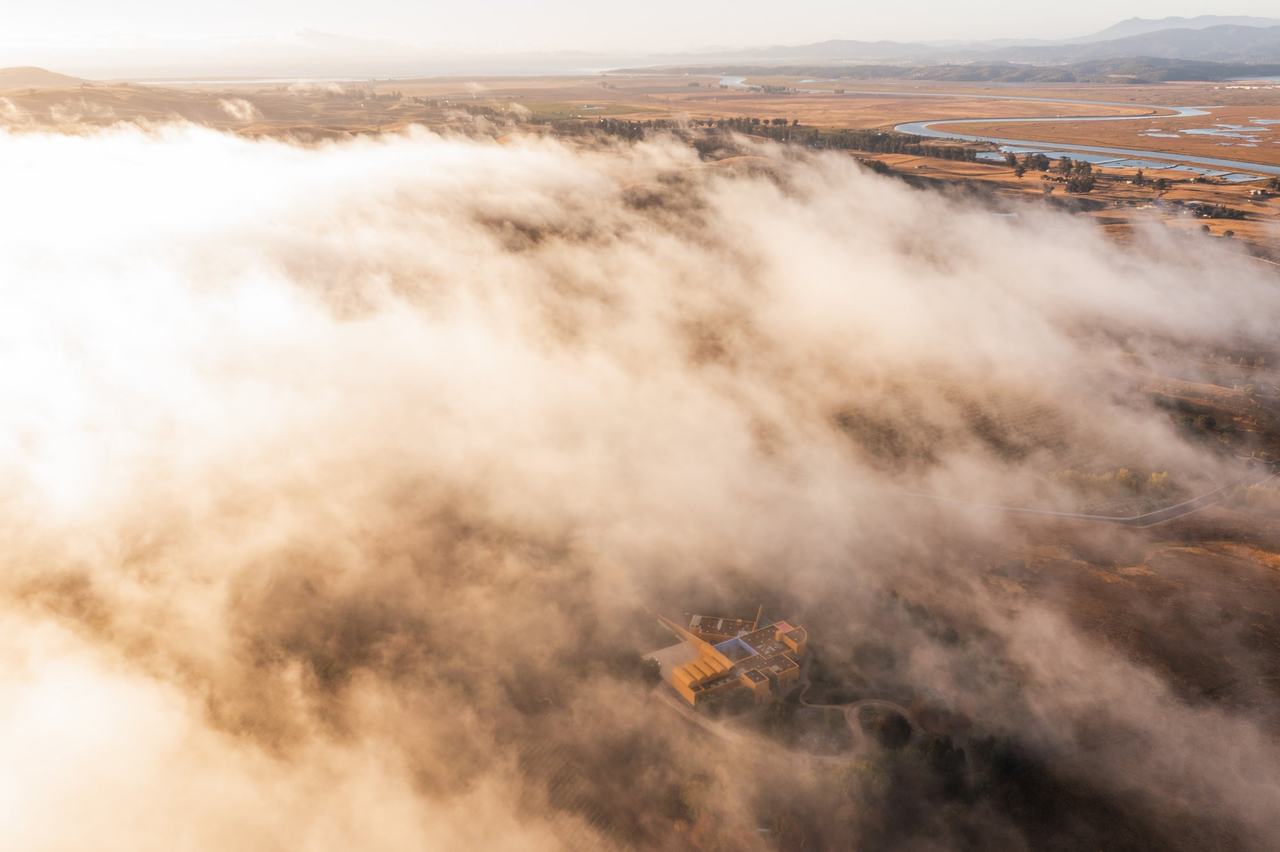
Her larger achievement is the appellation. By 2011 she had concluded that the growers of the windy country between the Pacific and San Pablo Bay needed a name of their own; the Kellers worked with their neighbours to define the Petaluma Gap, and in 2017 it became an AVA. The wind is the point of it. Morning fog comes in off the ocean, and in the afternoon the warming Central Valley pulls cold air through the gap in the hills; grapes here hang longer and keep their acidity. Keller’s own summary of its style is short: highlight with honesty what this windy site provides, “great acidity and balanced fruit flavors.”
Wine is a timeless process that returns us to our roots and reminds us how the years pass while we share meals with our loved ones.
Ana Keller
04 · La Cruz and El CoroAdobe clay at 500 feet, sandy loam on the ridge at 1,100.
La Cruz is the foundation: 44 acres on the lower hills just above the Petaluma River at about 500 feet, where the Kellers planted Chardonnay in 1989. The soil is adobe clay, heavy and rich in calcium, laid down on an ancient seabed. Fog sits on it in the morning and the wind works on it all afternoon. It grows the estate’s Chardonnay and Pinot Noir, with a little Pinot Gris, Viognier and Syrah, and it gives all of them a mineral, salty edge. The Casa wines, the estate’s “house wines,” come from the same ground.
El Coro, “the choir,” crowns the highest ridge of the estate at 1,100 feet, often above the fog. It is 20 acres of sandy loam over adobe clay, planted to nine clones of Pinot Noir, and each block is picked separately and fermented on its own. Only a small part of the ranch is vineyard. Thirty-six acres are olive trees, and the rest is grass, native oaks, ponds and pasture, running down to the Alman and Petaluma marshes, more than 5,000 acres of protected wetland.
05 · Sheep and marshlandCertified organic in 2025, and a cellar that leaves the wind in the wine.
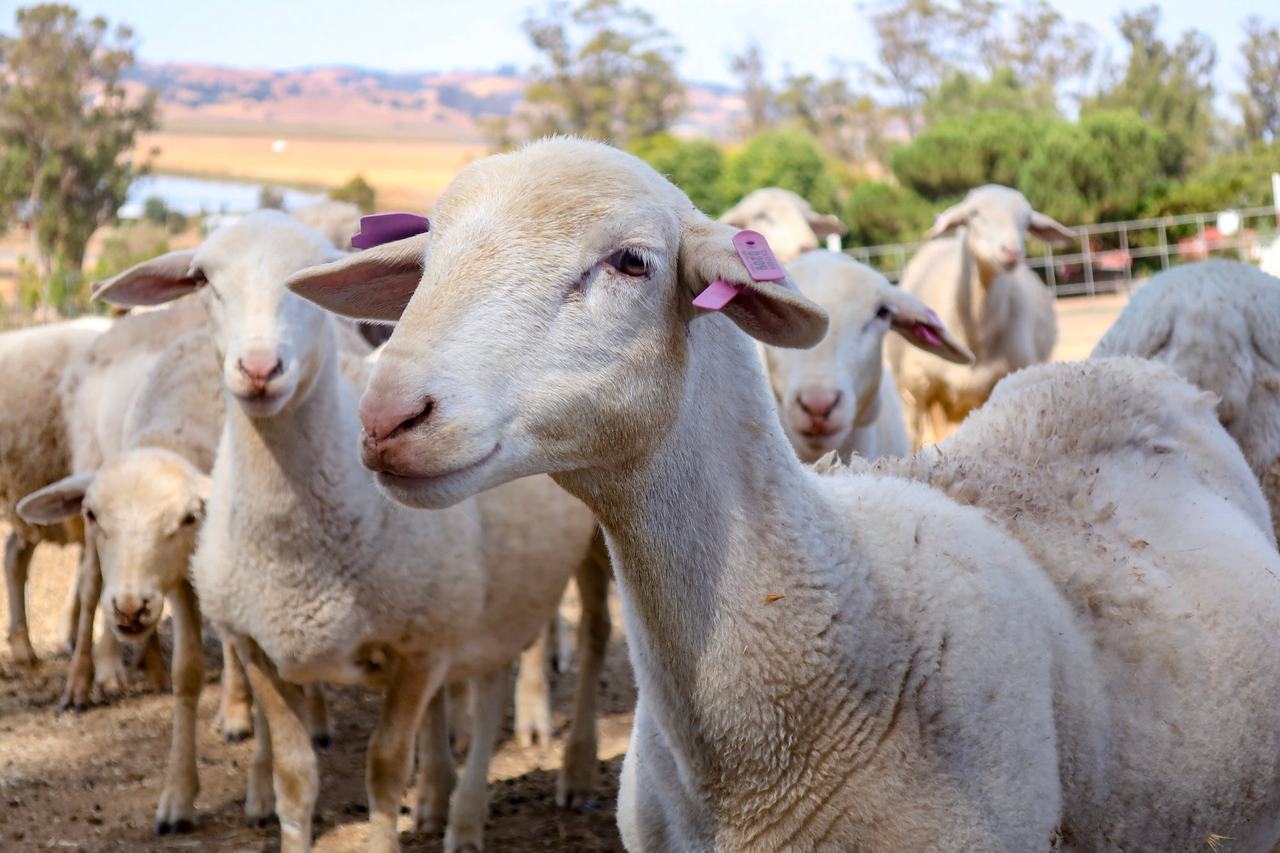
Keller farmed under California’s sustainable certification for more than ten years, committed to organic farming in 2022, and expected certification for the vineyards and olive groves in 2025. A flock of a hundred Dorper sheep mows, fertilises and keeps the fire risk down; owl and bat boxes deal with the gophers; bees pollinate and make the estate honey; milkweed is planted for the monarch butterflies, and three rain-collection ponds water the vines and olives. The family’s reason is simple: they intend the place to stay theirs for generations, and that, they say, keeps them honest.
The cellar is close by and gentle. Fruit reaches the tanks within minutes; there are long cold soaks, native fermentations, French oak chosen with care, lees stirring for the whites and little racking. The 2021 Casa Pinot Noir is typical: picked at night, four days’ cold soak, a native fermentation of two weeks, a gravity-flow winery, twelve months in barrel with only a fifth new. The results are on the quiet side. The North Bay Bohemian found “Keller Chards are on the subtle side”; reviewing the 2017 La Cruz Pinot Noir, the Prince of Pinot wrote, “I like this wine for its freshness and juiciness.”
In the vineyard
& cellar.
- Location
- Lakeville, above the Petaluma River · Petaluma Gap AVA · Sonoma Coast
- Since
- Vines planted 1989 by Arturo and Deborah Keller · first vintage 2000 · Ana Keller, CEO
- Vineyards
- La Cruz, 44 acres at 500 ft on calcium-rich adobe clay · El Coro, 20 acres at 1,100 ft on sandy loam over adobe clay, nine Pinot Noir clones
- Grapes
- Chardonnay · Pinot Noir · Syrah, Pinot Gris, Viognier
- Farming
- Certified sustainable (CCSW) for 10+ years · organic, certified 2025 · sheep, owls, bats, bees
- Cellar
- Cold soaks, native fermentation, French oak, lees stirring, minimal racking · gravity flow