
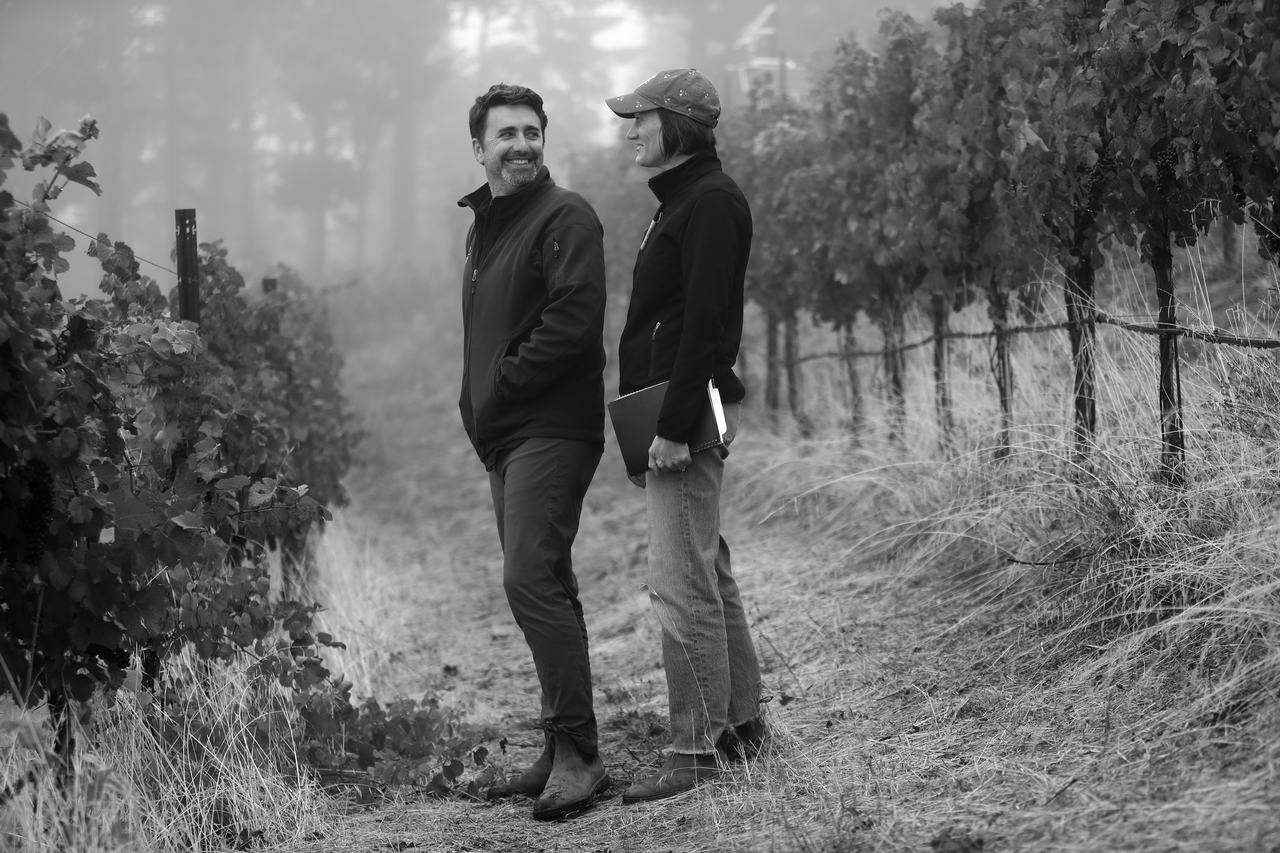
Two acres of Syrah, farmed by hand after the day job.
Joanna Wells and Sean Castorani met on the winemaking team at Sinskey. In 2013, while Joanna was associate winemaker at Kutch and Sean assistant winemaker at Rhys, they took a long-term lease on two acres of Syrah on the eastern side of the Petaluma Gap. For seven vintages they farmed it in the evenings and at weekends, by hand, with no tractor and no heavy equipment, and made between two and seven barrels a year. They kept both day jobs until 2020.
That start explains the whole project. Model Farm is two people, a handful of organically farmed vineyards on cool, high ground (on the Sonoma side of the Gap, on Sonoma Mountain, and one in the Santa Cruz Mountains), and the conviction that Wildcat Mountain and P·M Staiger taste different from each other and from everything else, and that the difference is worth bottling separately. Most producers blend because blending is easier and the result is more predictable. Wells and Castorani make specific wines from specific places and let the vintage decide what those wines become.
The critics who have found them are emphatic. John Gilman of View from the Cellar has been a fan, as he puts it, since the first sample bottle they sent him; Antonio Galloni at Vinous has reviewed them since their 2015 Syrah. I admire the whole project, and the Chardonnays are as good as the decision behind them.
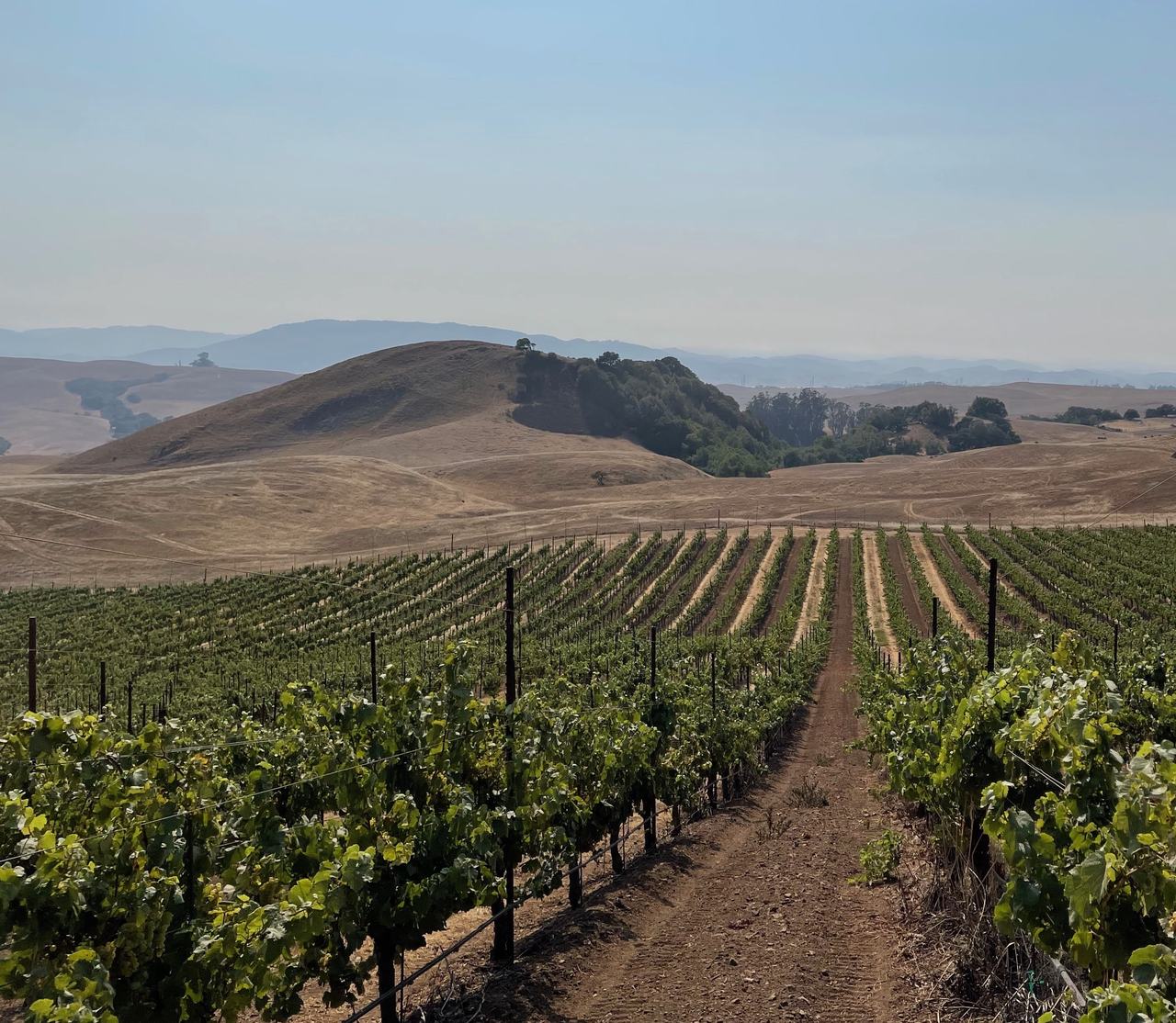
02 · Jack LondonNamed for a farm that was ahead of its time.
The name comes from Jack London. On his ranch in Glen Ellen, in the Sonoma Valley, the novelist ran a Model Farm: a programme to rebuild worn-out soil with natural fertilisers, cover crops, crop rotation, terracing and drainage tile. Most of it was dropped after he died in 1916. Wells and Castorani took the name as a statement of how they want to farm.
Their rules for choosing a vineyard are short. They look for higher, cooler sites, and for owners who share their way of farming. Every vineyard is farmed organically and by hand. The Petaluma Gap Syrah they farm themselves, which is the point: by doing the vineyard work they can do very little in the cellar.
The estate Syrah block was planted in the mid-1990s to three clones. Its days follow a rhythm they came to know well from all those evenings: cold, foggy mornings, a few hours of late sun, and the steady afternoon wind that gives the Gap its name, which they compare to the Mistral of the Rhône. Production is minuscule and allocated.
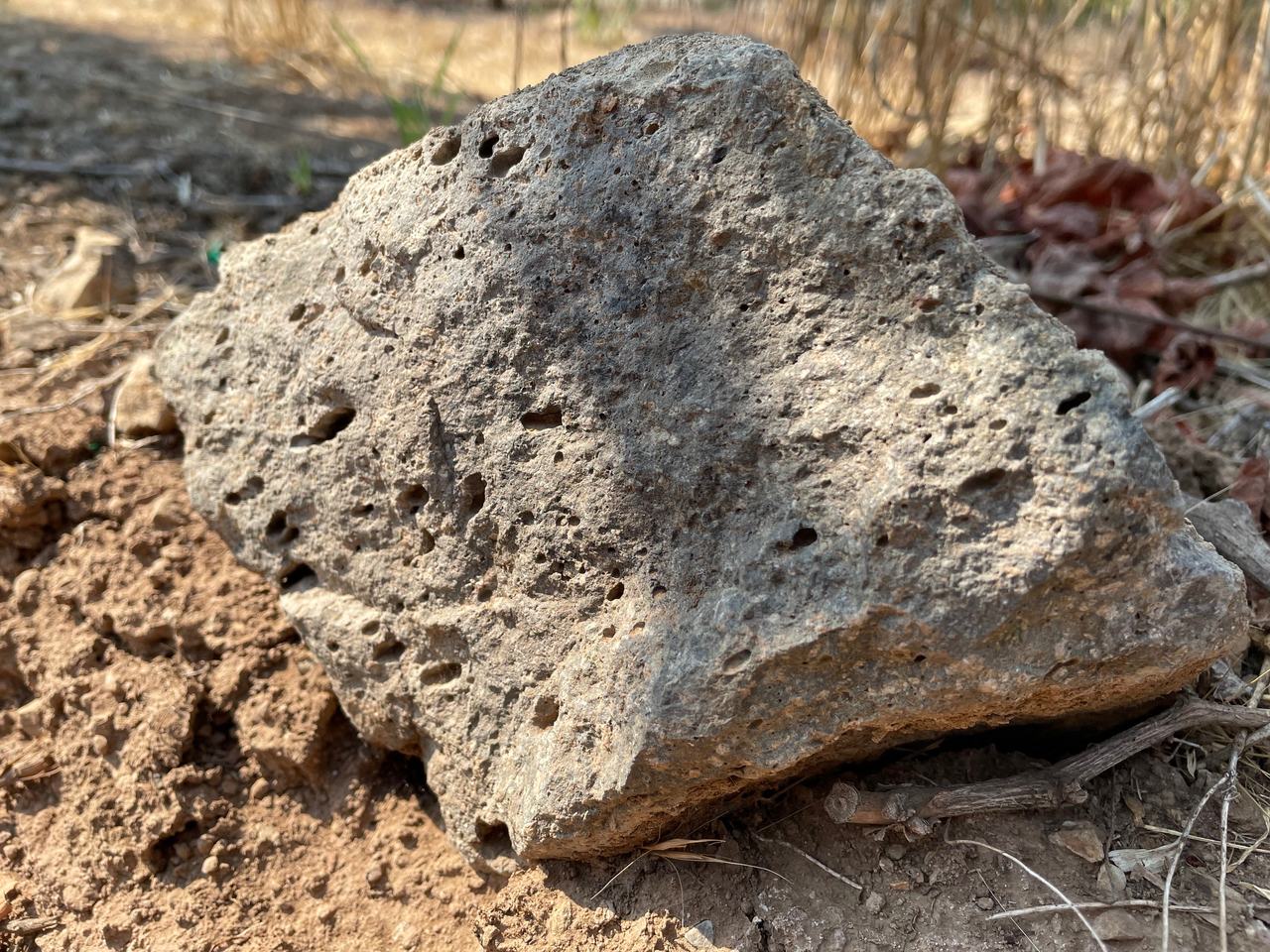
03 · Wildcat MountainA volcanic ridge in the full force of the Gap.
Steve MacRostie planted Wildcat Mountain in 1998 on a windswept ridge that separates the Sonoma Valley from Petaluma. The vines grow at about 750 feet in shallow, rusty, weathered metavolcanic rock over bedrock of pure Sonoma Volcanics, high above the deep clay of the valley floor. The site takes the full blast of the Petaluma Gap wind and the cold fog that funnels off San Pablo Bay. The thin, rocky soil lets the grapes ripen despite the cold. Model Farm calls it some of the best Chardonnay ground in the Sonoma Valley: the volcanic rock gives structure and power, the wind freshness and cut.
They had long wanted fruit from it, and 2020 was their first vintage. It nearly didn’t happen. They picked on 17 August, the day the fires began; Gilman notes that had they not been picking early there would probably have been no wine that year. Their 2020 came in at 13.3 per cent alcohol. Gilman scored it 93+ and called the vineyard “a perfect place to grow chardonnay in this era of global warming.”
Galloni gave the same wine 93 and praised its energy, delineation and persistence. In the cellar it is whole-cluster pressed, barrel-fermented in old French oak on native yeasts, left without stirring, and raised a year in barrel and six months more in stainless steel on its lees.
More than anything, though, I admire the wine’s delineation and persistence.
Antonio Galloni, Vinous, on the 2020 Wildcat Mountain
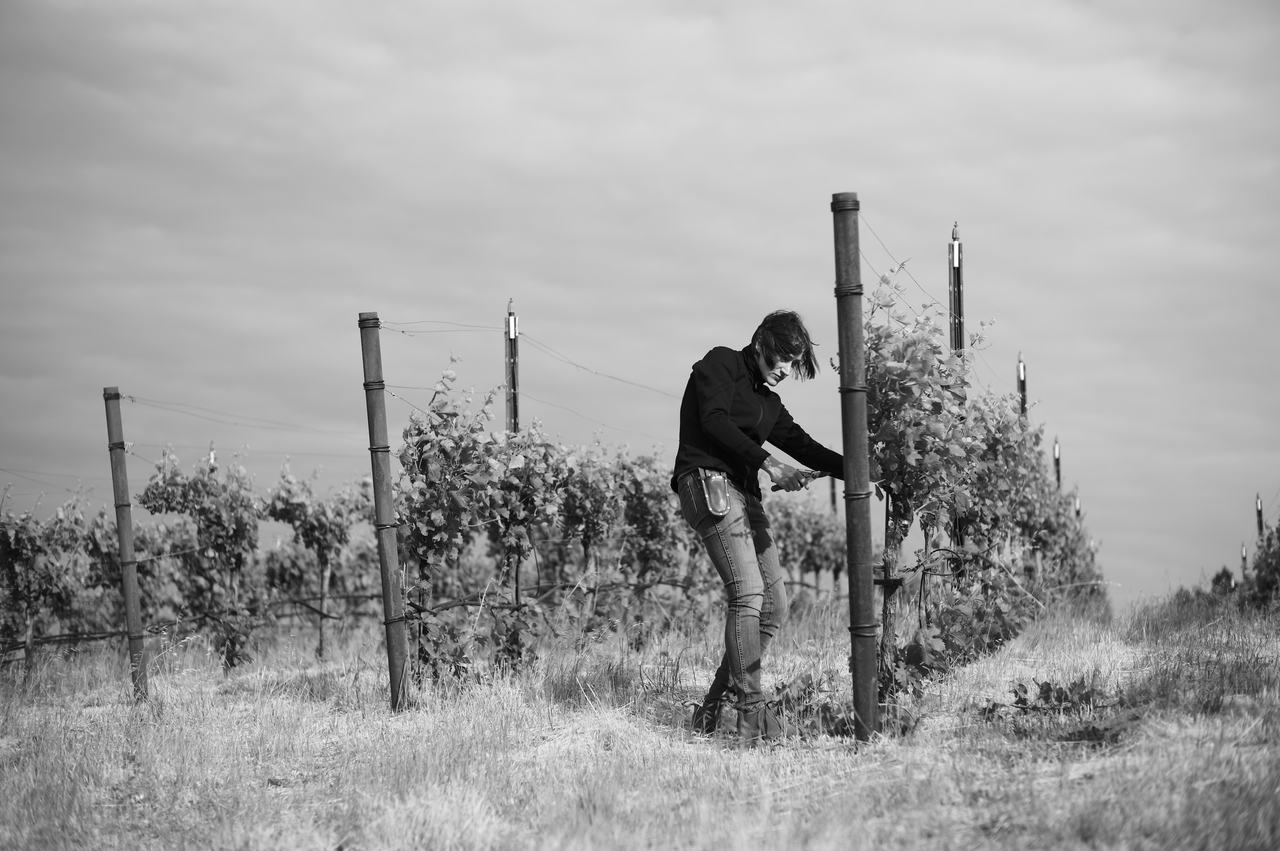
04 · P·M StaigerOwn-rooted 1973 Chardonnay above Boulder Creek.
The Santa Cruz Mountains Chardonnay comes from a historic site deep in the San Lorenzo Valley, above the town of Boulder Creek. The P·M Staiger vineyard, named for Paul and Marjorie Staiger, was planted in 1973 on its own roots, to a selection of the old Wente clone. Own-rooted Chardonnay of that age is a rarity in California.
The vines face south-west on a steep slope of thin sandstone and shale about a thousand feet above the valley. The height brings plenty of sun, the cold Pacific air keeps temperatures down, and fog comes in at the start and end of most days. The result, in Model Farm’s words, is full flavour at low sugar and high acidity. The 2019 came in at 12.7 per cent.
Gilman gave that 2019 94+ points, describing pear, lemon and elderflower over a complex base of minerality, and judged it more open young than their earlier Chardonnays, though built to age. Galloni called it “a gorgeous, expressive wine from a site in the Santa Cruz Mountains,” vivid and layered from start to finish.
05 · Nothing addedNative yeast, old barrels, no additions.
Model Farm’s cellar rules fit on a card. Native yeasts only, for both fermentations. No additives, commercial yeasts or enzymes, apart from the minimum of sulphur. Old French oak, almost never new. Bottled unfined and unfiltered. The Chardonnays are whole-cluster pressed, settled overnight, fermented in barrel without stirring, given twelve months in barrel and six in steel. The Syrahs ferment in small wood and steel vessels with a high share of whole clusters, are worked by hand with punch-downs and pump-overs, and spend eighteen months in barrel.
The 2018 Petaluma Gap Syrah is a fair example: 100 per cent whole cluster, raised in used 228-litre barrels, 12.5 per cent alcohol. Gilman gave it 94 and wrote that its aromas reminded him very strongly of Gérard Chave’s estate Saint-Joseph of old, with more depth and power. Galloni found the 2018 gracious and light on its feet, yet with terrific depth.
Lately they have added Cabernet Sauvignon from the dry-farmed Berger Vineyard on Sonoma Mountain, the 1973 vines Patrick Campbell used for Laurel Glen. Gilman called one 2023 bottling “unequivocally one of the best young California cabernets I have tasted in the last twenty years.” It is the same approach applied to another grape: find the right old site, farm it well, and leave the wine alone.
This is the finest wine I have yet tasted from Sean Castorani and Joanna Wells (and I have been a fan since the very first sample bottle that the couple sent me)!
John Gilman, View from the Cellar, on the 2019 Petaluma Gap Syrah
In the vineyard
& cellar.
- Winemakers
- Joanna Wells and Sean Castorani (formerly of Kutch and Rhys)
- Since
- 2013, with a long-term lease on two acres of Petaluma Gap Syrah
- Vineyards
- Estate Syrah, Petaluma Gap (mid-1990s) · Wildcat Mountain, Sonoma Valley (1998, ~750 ft, volcanic) · P·M Staiger, Santa Cruz Mountains (1973, own-rooted) · also Berger (Sonoma Mountain) and La Cruz
- Farming
- Organic, by hand; the estate Syrah farmed by the couple themselves
- Cellar
- Native yeasts · no additions but minimal sulphur · old French oak · unfined, unfiltered
- Name
- After Jack London’s Model Farm in Glen Ellen