
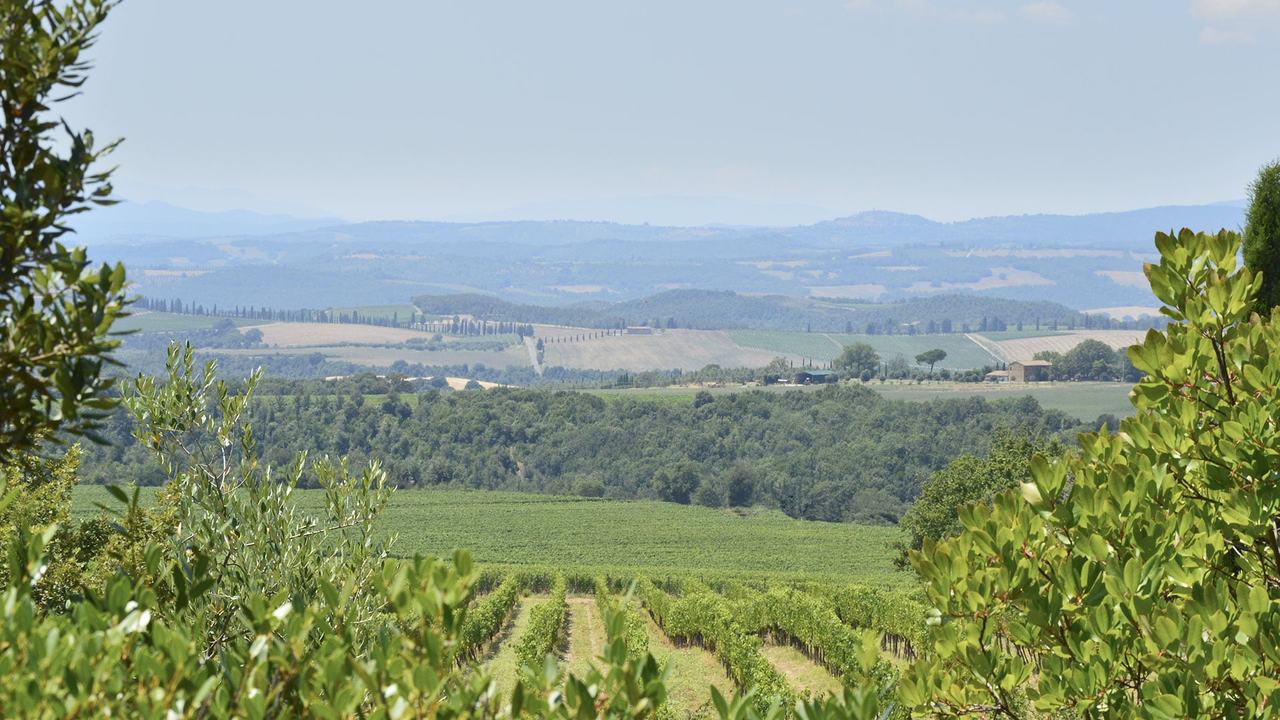
Old Pieve Santa Restituta ground on Montalcino’s seaward side.
Podere Brizio sits on a hilltop in the south-west of Montalcino, with its vines facing the coast. On clear days you can see the sea from the farmhouse windows, past the olive grove. The soil is marine sand and loam over marl and limestone more than a hundred million years old, at 330 to 350 metres, in the warmest part of the appellation. The vineyards were once part of Pieve Santa Restituta, the estate Roberto Bellini founded in the 1970s and later sold to Angelo Gaja; what Bellini kept became Podere Brizio.
In 2013 the estate was bought by the Argentine Alejandro Bulgheroni, whose Tuscan group includes Dievole in Chianti Classico and Tenuta Meraviglia in Bolgheri. Alberto Antonini, one of the most respected consultants working in Italy, supervises the wines with the in-house oenologist Giovanni Alberio, and Lorenzo Bernini runs the vineyards. They converted the farm to organics (certified since 2017), took out everything but Sangiovese, stopped using cultured yeasts and bought big untoasted French casks.
Eleven hectares of Sangiovese, made into Brunello and Rosso with precision rather than muscle. Montalcino has plenty of trophy estates. This is a serious one making Brunello that tastes of its hill, which is harder to find there than it should be.
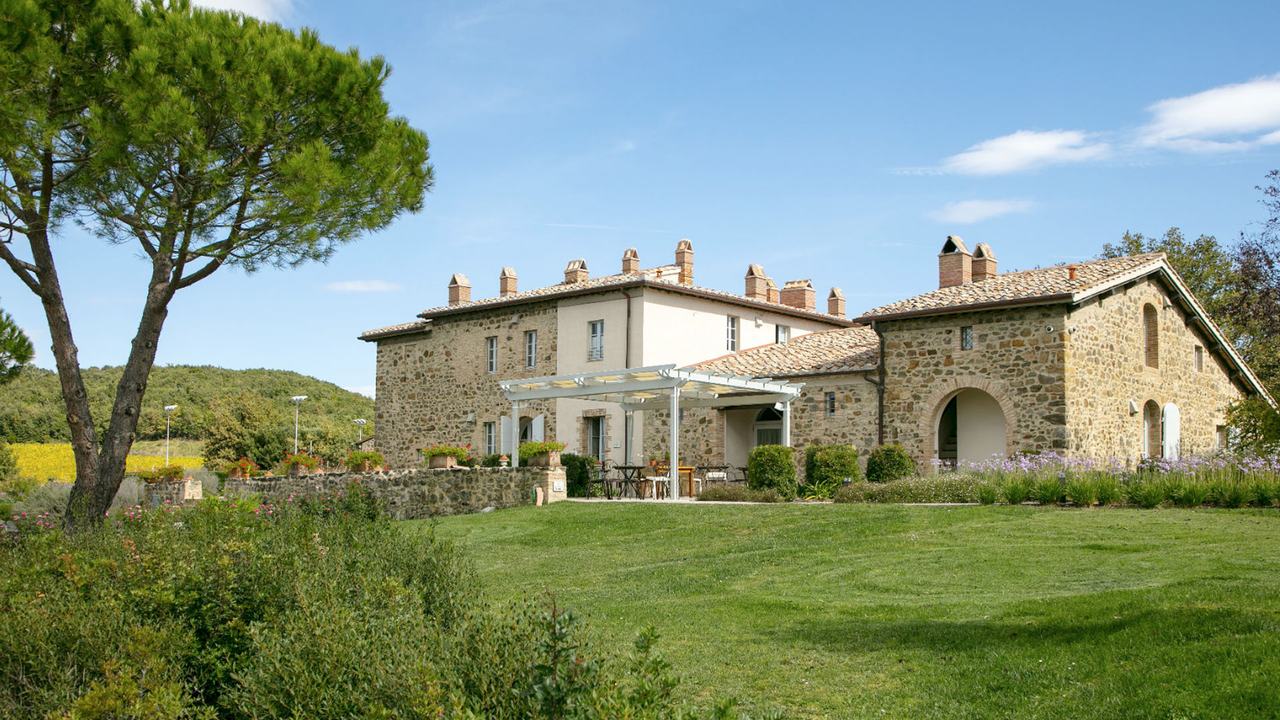
02 · Roberto BelliniWhat was left when Gaja bought the Pieve.
Roberto Bellini founded Pieve Santa Restituta in the Tavernelle area, south-west of Montalcino, in the early 1970s, about the time Gianfranco Soldera settled at Case Basse next door. Twenty years later Bellini went into partnership with Angelo Gaja, and in the 1990s Gaja took over the Pieve and most of its vineyards. (Sources give dates from 1994 to 1996.) The land Bellini held back became the base of Podere Brizio. Its wines did well, appearing regularly in the Gambero Rosso guide, and the label still carries a Parpagliola, a coin minted in Siena in 1556.
By the 2010s Bellini was well past the age when most people retire. Bulgheroni, who had formed the company Blends with his fellow Argentine Carlos Pulenta and with Antonini, had just bought Dievole. Podere Brizio was the group’s third Tuscan purchase in under a year. Decanter reported at the time that the existing staff would stay and that the business would be run from Dievole; the group’s Italian team, led by Antonini, still works from there across all its estates.
03 · The hillSea sand at 340 metres, facing the Maremma.
Montalcino is a big appellation with very different sides. The south-west faces the Maremma and the sea and is the hottest corner of the zone, where Sangiovese ripens fully. Brizio is on that side. The topsoil is sandy silt laid down by an ancient sea; below it are marl and limestone, which give the Sangiovese its structure and a mineral edge. The vineyards face south and south-west at 330 to 350 metres.
The farm covers thirty-three hectares: a little over eleven of Sangiovese, two of olives, the rest woods, old oaks and the guest house. The tasting room, where twelve people can sit, looks toward the sea; the guided walk starts in the herb garden and goes out through the vines before it reaches the cellar. The vines are planted at five thousand to the hectare, 2.5 metres by 0.8, trained on spurred cordon, and are mostly twenty to thirty years old. Yields for Brunello run about 1.3 kilograms a vine. The Rosso comes largely from about a hectare and a half of younger vines on sandy silt.
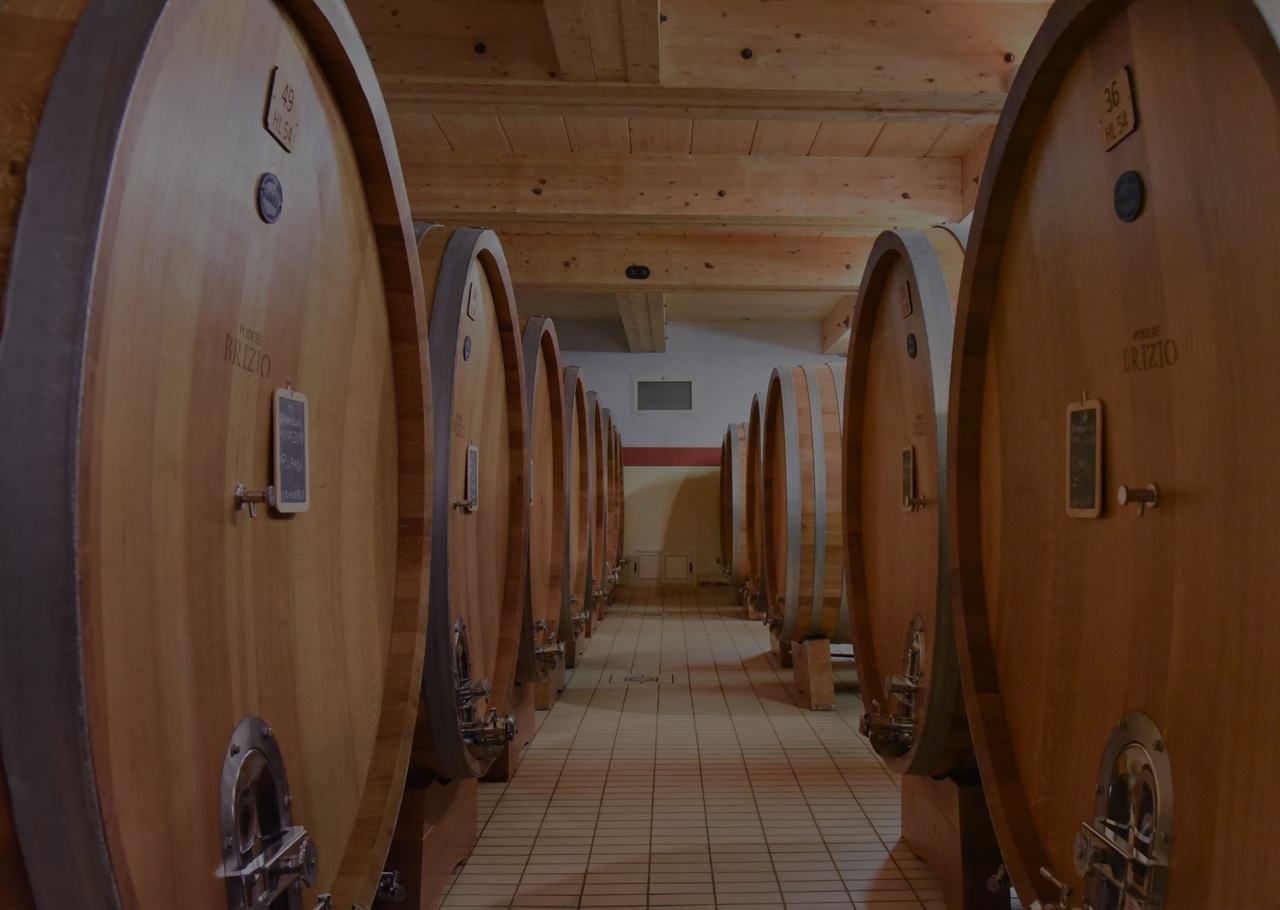
04 · The cellarNative yeasts, and no toast on the wood.
The cellar is deliberately plain. The grapes are picked by hand, sorted and destemmed, and ferment spontaneously on their own yeasts in steel for about two weeks. Then the wine goes into large casks of untoasted French oak, fifty-four hectolitres each, from the Tronçais and Bertrange forests in the Allier. Untoasted wood lets the wine breathe slowly without adding vanilla or smoke. The estate puts it simply: the focus is on the natural character of the grapes and the place they grow.
Brunello spends thirty-eight months in those casks and at least six more in bottle. Rosso di Montalcino gets twelve months in the same big wood and three in bottle, and before bottling it is blended with twenty to thirty per cent wine from the Brunello casks, according to its Danish importer. Both are 100 per cent Sangiovese. The estate also makes a Riserva.
05 · What they sayOld-school Sangiovese, and a panel that argued about it.
The World of Fine Wine put the 2018 Brunello, the vintage in our book, in front of three critics, and they disagreed, which tells you something. Michael Palij gave it 95 and wrote of an “old-school, high-toned nose” and a length that was “proof of the value in this approach.” Bruno Besa, at 92, found a “classic, tobacco and spice nose” and a “well-balanced, weightless palate.” Andrew Jefford, at 87, found it “rather brutally generous” and said to drink it young. On the 2013, Besa went to 95: “A classically crafted Brunello with great aging potential.”
Our view is closer to Palij’s. This is Brunello made the traditional way, from a warm site, with the fruit left to speak. It is generous, and it is also built to last. The Rosso, with its cherry and orange peel, is the bottle for the table this week.
The star of the show is unquestionably the core of ripe Sangiovese that sweeps along convincingly unaided by modern vinification.
Michael Palij, The World of Fine Wine, on the 2018 Brunello
In the vineyard
& cellar.
- Holding
- 33 ha · over 11 ha of Sangiovese · 2 ha of olives
- Site
- South / south-west-facing hilltop, 330–350 m · marine sandy silt over marl and limestone
- Since
- Bellini’s vineyards, from the old Pieve Santa Restituta · Alejandro Bulgheroni’s group since 2013
- People
- Alberto Antonini (consultant) · Giovanni Alberio (oenologist) · Lorenzo Bernini (agronomist)
- Farming
- Certified organic since 2017 · hand harvest · 5,000 vines/ha
- Cellar
- Native yeasts in steel · 54 hl untoasted Allier casks · Brunello 38 months in wood