
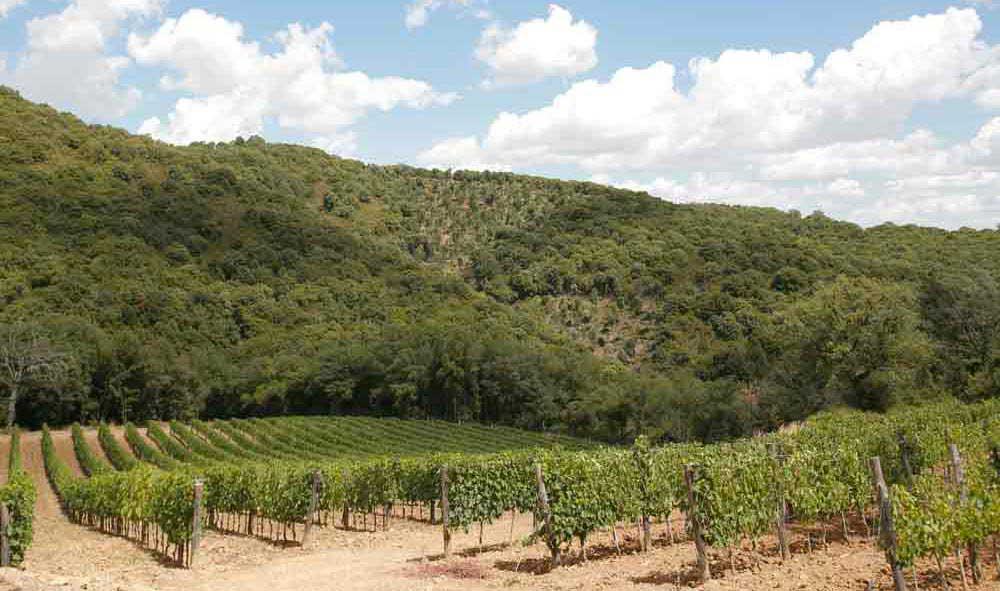
Brunello from the edge of the Greppo, made the old way.
Poggio la Croce is a small piece of Montalcino with a very good address. In 1955 Paola Benocci, of one of the town’s old families, inherited thirty-five hectares of fields, woods and olive trees on the eastern border of the Greppo, the Biondi-Santi vineyards where Brunello di Montalcino began. She and her husband planted two hectares of vines, opened a small agriturismo, and in 1997 bottled their first Brunello under the family’s light blue and gold coat of arms.
In 2017 the Benoccis sold the estate to Edward Corsi, a Montalcino grower who had already been working the vines beside them and whose grandmother had been their friend. Edward and his wife Alessandra Marzocchi kept the name and the label, and now make the wines at their family winery, Poggio Rubino.
Three things make it: the site, the patience and the scale. The Brunello is all Sangiovese Grosso from vines planted in 1996 on rocky galestro at four hundred metres, macerated for about five weeks and aged three years in large casks. There are about four thousand bottles of it. It tastes of Montalcino and nothing else, which is the best thing a Brunello can do.
02 · Paola BenocciThirty-five hectares, an agriturismo, and a blue-and-gold coat of arms.
The Benocci land is mostly not vineyard. Of the thirty-five hectares Paola inherited in 1955, most were fields, woods and olive groves, the mixed farm that was normal around Montalcino before Brunello became famous. Over the years she and her husband planted vines on two hectares and turned part of the house into an agriturismo, making them part of the town’s early tradition of hospitality.
Their first Brunello, labelled Fattoria La Croce, came in 1997. It carried the family’s heraldic arms in light blue and gold, and the same arms are on the bottle today. Poggio la Croce was never a famous name, and never tried to be. It was a family making a few thousand bottles from a remarkable piece of ground, and selling them to people who came to stay.
03 · Idolina’s grandsonHow the vines passed to Edward Corsi.
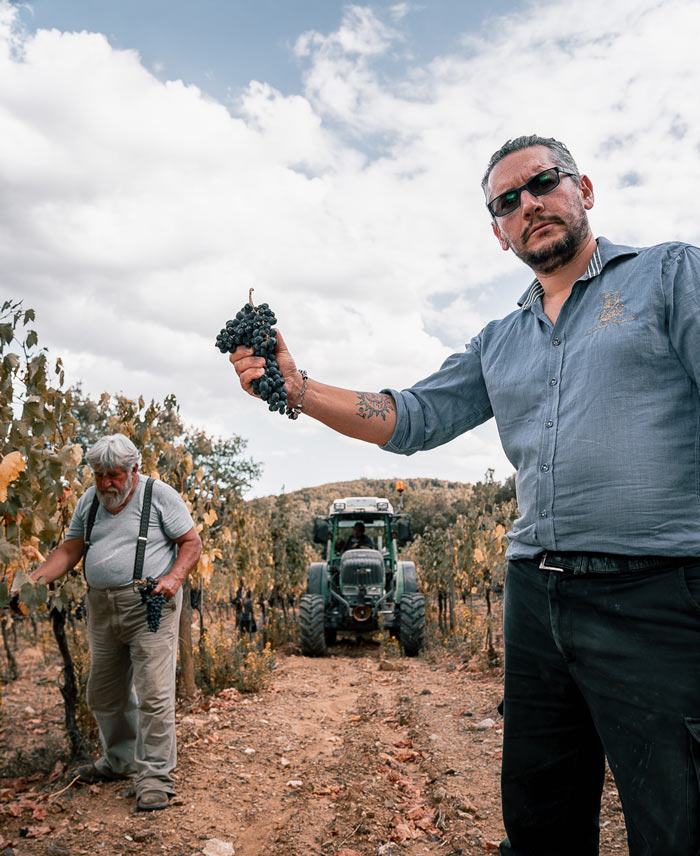
Edward Corsi’s link to the Benoccis goes back to his childhood, and to his grandmother. Idolina was a native of Montalcino who opened one of the first restaurants and guesthouses in town shortly after the Second World War; she was known for her donzelline, the local fried dough, and she counted Franco Biondi Santi among her friends. Edward met Paola and her husband at Idolina’s house.
Edward grew up in the vineyard with his grandfather Giovanni, who had bought land near the Abbey of Sant’Antimo in the 1950s, the vineyard now called Campo del Prete. In 1997 Edward bought a two-hectare farm of his own with his grandmother’s help. He married Alessandra Marzocchi, an agronomist from the University of Florence whose family had a farm in Chianti Classico, and in 2005 they built the Poggio Rubino cellar. Franco Biondi Santi came for the first toast in 2010.
When the Benoccis decided to stop, they sold to the man who had been working their vines. Edward kept the name and identity of Poggio la Croce and folded the vineyards into Poggio Rubino. The team is the same one that makes the Poggio Rubino wines: the agronomist Massimo Achilli and the oenologist Fabio Signorini, who has twenty-eight harvests behind him in Italy and abroad and has made the family’s wines since their first vintage, always, they say, respecting the character of Sangiovese.
04 · Four hundred metresGalestro, sandy loam and a south-east face beside the Greppo.
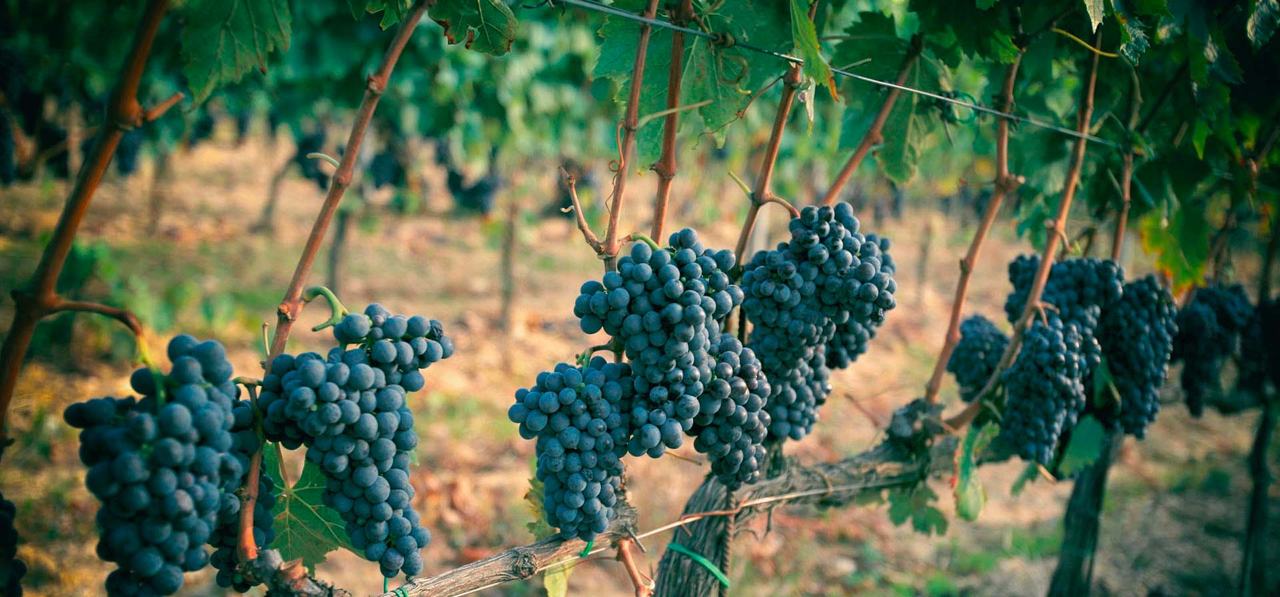
The Brunello comes from one hectare of Sangiovese Grosso planted in 1996, with a further 1.3 hectares planted in 2020 that are now coming into production. The vines face south-east at about four hundred metres. The soil is rocky, with a good share of sandy loam, clay and galestro, the flaky marl of Montalcino that gives Sangiovese structure and length. The Rosso comes from another half-hectare of 1996 vines, on loamier ground with limestone rock.
This is the cooler, higher side of Montalcino, close to the town and to the Greppo, where Biondi-Santi first bottled Brunello as a wine of its own in the late nineteenth century. Height and the morning sun of a south-east slope keep acidity in the grapes, and that is what makes the wines here long and fresh rather than heavy. Montalcino’s warmer southern slopes give rounder wine; this side gives a Brunello that needs time and rewards it.
The vines are trained on cordon spur and the rows are grassed. The farming is sustainable, though not certified, and at Poggio Rubino only copper and sulphur are used in the vineyards, with the soil worked instead of weedkiller. Everything is picked by hand, the Brunello in two passes through the vines.
05 · Big wood, long patienceFive weeks on the skins and three years in large casks.
The cellar choices are the traditional ones, made deliberately. The grapes ferment on their own yeasts in stainless steel at 24 to 26 °C. The Brunello then stays on its skins for about thirty-five days, a long maceration that draws out tannin and colour slowly. It ages for thirty-six months in wooden casks of thirty to thirty-two hectolitres, big enough that the wood gives air and time without adding flavour. The Rosso has a shorter maceration and twelve to eighteen months in casks of twenty to twenty-five hectolitres.
There are about four thousand bottles of Brunello in a year and two thousand of Rosso. The importer describes the Brunello as velvety and elegant, with ripe tannin and lively acidity, cherry, violet and liquorice; the Rosso as fresh red fruit, cherry and cranberry, with balanced tannin. The Rosso is for the table now, with pasta al ragù or a young pecorino. The Brunello is a wine to lay down for a few years and then drink with something roasted.
There are grander Brunellos and much bigger ones. This one is quiet and correct, made by people who have lived in Montalcino all their lives, from vines next to the place the wine was invented.
In the vineyard
& cellar.
- Holding
- 35 ha of fields, woods and olives inherited by Paola Benocci in 1955; 2.8 ha of Sangiovese
- Site
- Loc. La Croce, on the eastern border of Biondi-Santi’s Greppo; south-east facing, about 400 m
- Since 2017
- Edward Corsi and Alessandra Marzocchi; wines made at their Poggio Rubino winery
- Team
- Agronomist Massimo Achilli · oenologist Fabio Signorini
- Farming
- Sustainable, not certified; cordon spur, grassed rows, hand harvest
- Cellar
- Indigenous yeasts; Brunello ~35 days on skins, 36 months in 30–32 hl casks; Rosso 12–18 months in 20–25 hl
- Production
- About 4,000 bottles of Brunello and 2,000 of Rosso