
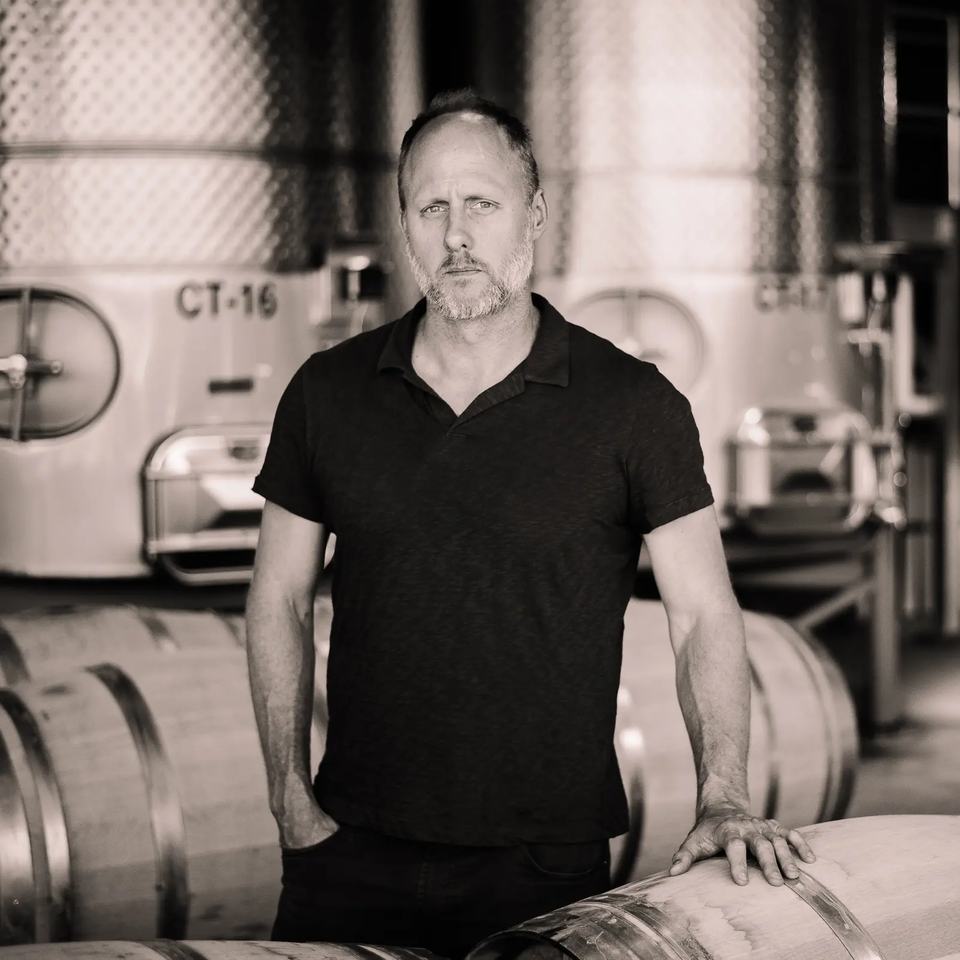
Three friends from Occidental, and the vineyards they grew up in.
Christopher Strieter, Max Thieriot and Myles Lawrence-Briggs grew up together in Occidental, a small town in the redwoods of west Sonoma County, on land their parents had planted to vines. In 2011 they started a winery of their own and called it Senses; the 3 in the logo stands for the three of them. They brought in Thomas Rivers Brown as winemaker, one of the most admired winemakers in California, and gave him their families’ vineyards to work with: B.A. Thieriot, planted in 1989 and long sold to Williams Selyem, Littorai and Landmark, and Hillcrest, home to the first Chardonnay planting in the West Sonoma Coast.
To those they added grower sites with real reputations, kept separate because the sites are different and blending them would hide what makes each one worth having. Charles Heintz, on Goldridge sand above Occidental, is the one to start with: it has a tension and a length that the valley floor doesn’t produce, cool-climate acidity and a stony finish, the kind of Chardonnay that gets better in the glass as it warms. Buy it when you can. El Diablo, on a ridge above Eastside Road, is its counterpart: grapefruit, orange blossom and a saline finish. The Kanzler Pinot Noir belongs in the same sentence.
The founders say they have never tried to make a house style, only to keep each vineyard’s voice. The critics agree it works: every single-vineyard wine in their 2024 release scored 96 or 97 with Lisa Perrotti-Brown MW.
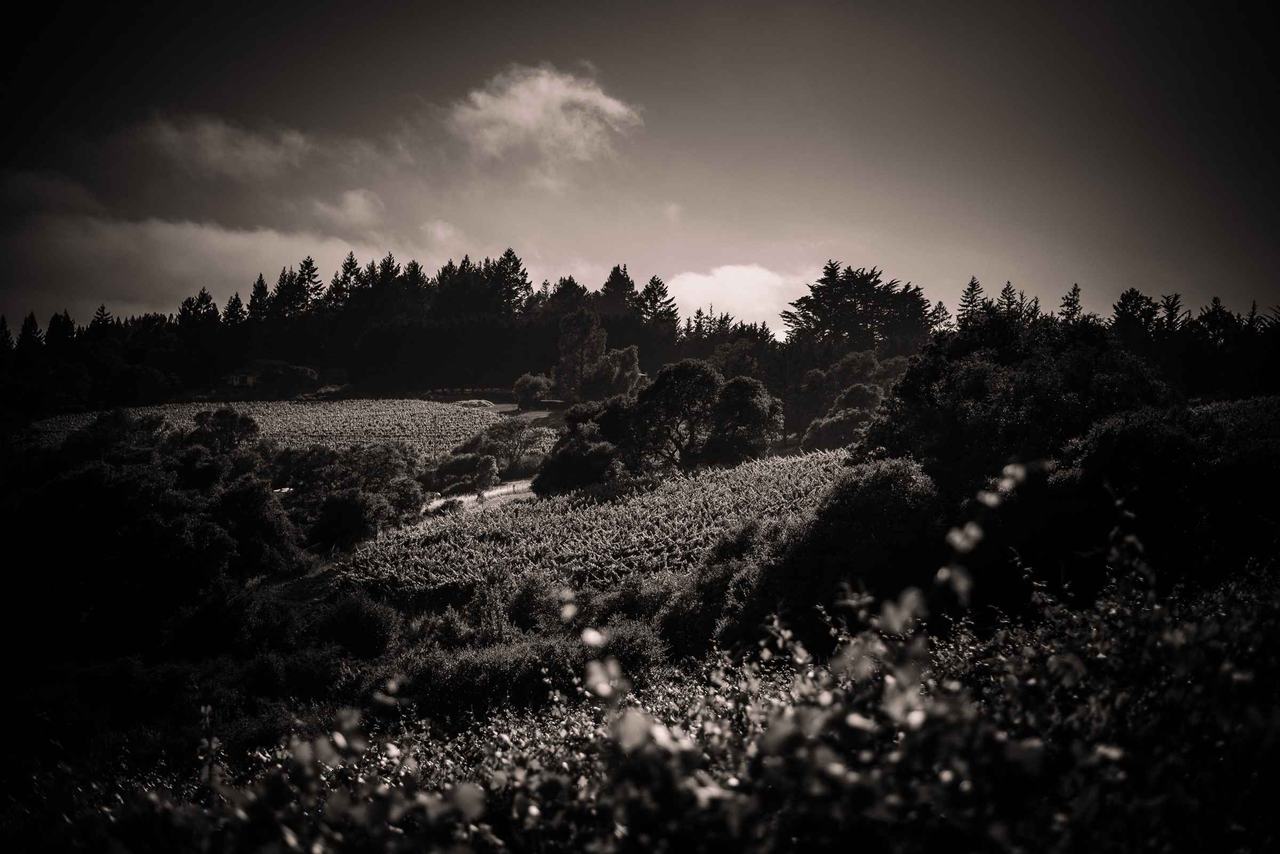
02 · OccidentalTheir parents planted the vineyards.
Cameron and Bridgit Thieriot, Max’s parents, bought their property outside Occidental in 1988, and the next year the late Warren Dutton of Dutton Ranch planted the first part of the vineyard: Robert Young Chardonnay in 1989, Pinot Noir in 1994, Wente Chardonnay in 1996. Its grapes went to Landmark, Williams Selyem, Neyers, Littorai and Rivers-Marie, and B.A. Thieriot became one of the best-known vineyards on the Sonoma Coast. Myles’s parents, Carleton Briggs and Lisa Lawrence, bought Hillcrest the same year. It neighbours Charles Heintz and held the original Chardonnay planting of the West Sonoma Coast; replanted to Pinot Noir in 2005, it has sold fruit to Littorai, Flowers and Gary Farrell, and Senses bottles it as Day One.
In 2013 Max and his wife Lexi bought a ninety-acre ranch of rolling hills, oaks and redwoods, six miles from the Pacific, from a family that had owned it for more than a hundred years. In 2016, with Thomas Rivers Brown, they planted nine acres of Pinot Noir: Bodega Thieriot, the second generation of Thieriot vineyards, beside Platt, de Coelo and Steve Kistler’s Occidental.
The three founders split the work. Christopher, who was business manager at Williams Selyem before Senses, runs the business; Wine Enthusiast named him one of its 40 under 40 in 2018. Myles walks the vineyards with the growers, takes the sugar readings and works the cellar beside the winemaker. Max does the branding and marketing, when he is not on set: he is also an actor, known for Bates Motel, SEAL Team and Fire Country, who grew up riding the tractor between the rows with his father.
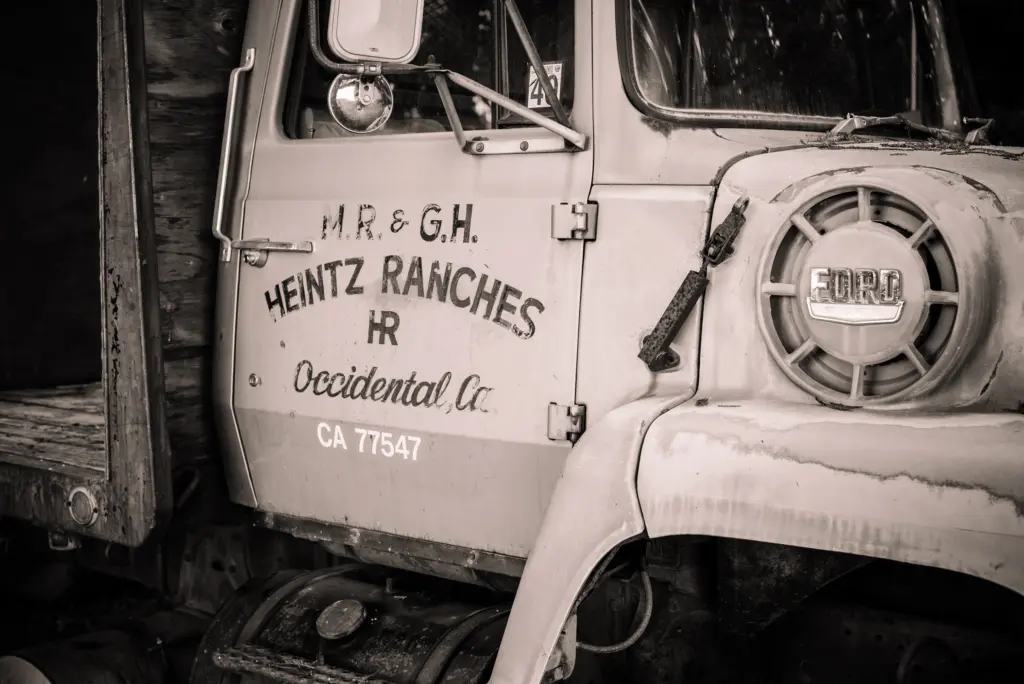
03 · Charles HeintzClone 4 Chardonnay on Goldridge sand since 1982.
The Heintz family has owned its ranch near Occidental for more than a hundred years, but it was only in 1982 that Charlie Heintz planted Chardonnay there, the Clone 4 selection, with Pinot Noir and Syrah later. There are twenty-five acres of Chardonnay on Goldridge sandy loam, the fine, free-draining marine sand of the western Sonoma hills, spaced seven by twelve feet on a split canopy and farmed by Charles Heintz himself. Williams Selyem, Littorai and DuMol have all bottled it under its own name.
Senses quotes Robert Parker’s verdict on the vineyard, and the record supports him. Warm days and cool nights, mature vines and a grower who has worked the same rows for more than forty years give a Chardonnay of real tension. Perrotti-Brown gave the 2023 97 points and wrote of its “fantastic tension and a gorgeous silkiness to the texture.” It is aged fourteen months in French oak, 30 per cent new.
El Diablo is a younger site with a different voice. Ulises Valdez, then the vineyard manager, planted it in 2008 to the Old Wente selection on a ridge above Eastside Road in the Russian River Valley: gravelly and sandy loam over tight clay, four by six feet. Valdez told the Senses team early on that “when you work hard, the fruit always tastes better.” It is now farmed by Bevill Vineyard Management.
…one of the great grand cru Chardonnay sites in California.
Robert Parker, on Charles Heintz Vineyard
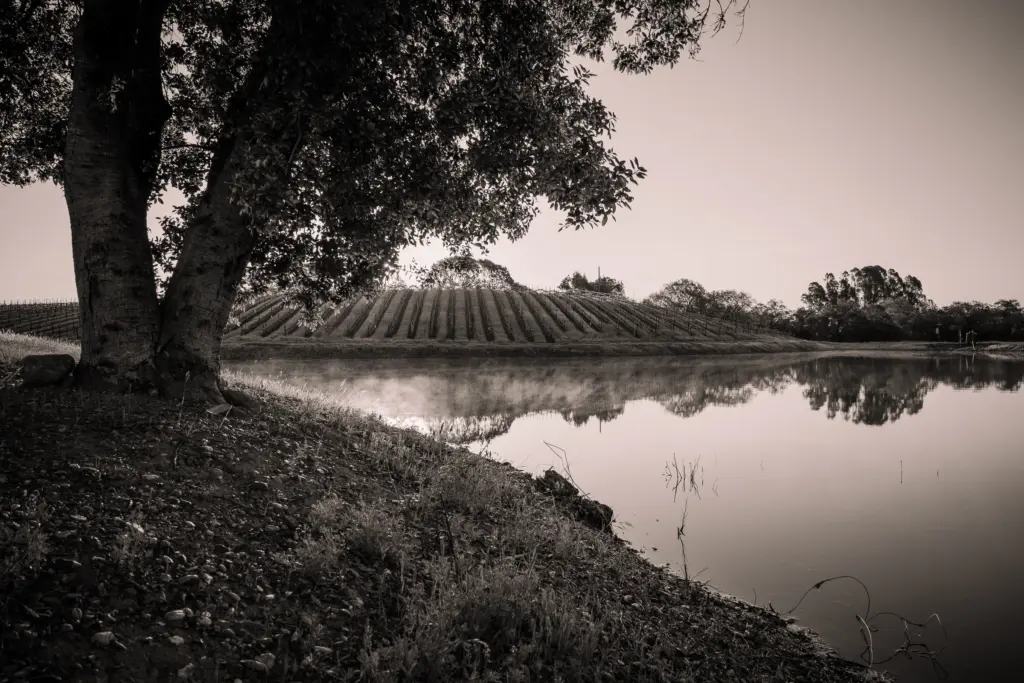
04 · KanzlerA vineyard planted where it was thought too cold.
When Kanzler was planted in 1996, it was one of the first vineyards in the rolling hills south-west of Sebastopol, eight miles from the Pacific. The area had long been thought too cool and foggy for grapes. It turned out to make some of the best Pinot Noir in Sonoma: fourteen and a half acres of Dijon 667, 115 and Pommard 4 on Goldridge sandy loam over the Wilson Grove formation, farmed by Eric Neil and the Kanzler family. Kosta Browne, Arista and Rivers-Marie have bought fruit here too.
The Senses Kanzler spends ten months in French oak, about a third of it new. Perrotti-Brown described the 2023 as needing swirling and coaxing before black cherry, violet and anise appear, soft-spoken and elegant on the palate with fine-grained tannins, “finishing long and savory.” The Russian River Valley Pinot Noir and Chardonnay are blends from the same family of cool Goldridge sites, the Chardonnay with only a tenth new oak.
One wine breaks the Sonoma pattern. The Cabernet Sauvignon is all hillside fruit from an Oakville site on the eastern side of the Napa Valley, a tribute to Max’s love of Cabernet that the winery calls the yin to its yang. Thomas Rivers Brown had access to the site and judged it right for Senses. It spends twenty months in new French oak.
05 · Thomas Rivers BrownA celebrated winemaker, and a light hand.
Thomas Rivers Brown was born in Sumter, South Carolina, and studied English and economics at the University of Virginia, where he found wine. He moved to Napa in 1996 and was soon working in the cellar at Turley Wine Cellars; after three years he set out on his own. In 2008 he became the youngest winemaker to receive two 100-point scores from Robert Parker of The Wine Advocate; in 2010 James Laube gave him two more at Wine Spectator, which Senses says made him the first American winemaker to earn 100 points from that magazine. Food & Wine named him Winemaker of the Year the same year. He now has more than twenty-five 100-point wines.
At Senses the method is simple and the same for every site. The grapes are sampled by hand and picked at the point the team judges right, cold-soaked for a few days, fermented with the vineyard’s own yeasts and pressed into barrels from a range of French coopers. Tim Beranek, director of winemaking, works beside Brown on the vineyards, the harvest and the bottling; he came to Sonoma for a harvest at Kosta Browne in 2010, worked his way up under Brown at Outpost and was winemaker at Mending Wall from 2019 to 2023.
Production is small, sometimes a handful of barrels of a wine, and most of it goes to the mailing list three times a year. Senses brings together west Sonoma Coast vineyards that the founders have known since childhood, some of California’s great grower sites and a winemaker with the standing to take on anything, who chooses to keep out of the vineyards’ way. That is why the wines are worth seeking out.
We have never set out to craft a house style; we try to preserve the singular voice of each vineyard.
Senses Wines
In the vineyard
& cellar.
- Founded
- 2011, in Occidental, by Christopher Strieter, Max Thieriot and Myles Lawrence-Briggs
- Winemaker
- Thomas Rivers Brown, with Tim Beranek (director of winemaking)
- Estate vineyards
- B.A. Thieriot (planted from 1989) · Hillcrest (Day One) · Bodega Thieriot (planted 2016)
- Grower vineyards
- Charles Heintz (Clone 4 Chardonnay, 1982) · El Diablo (2008) · Kanzler (1996) · Dutton sites
- Soil
- Goldridge sandy loam over marine sandstone; El Diablo on gravelly loam over clay
- Cellar
- Short cold soak · native yeasts · French oak (Chardonnay 10–30% new, 14 months)