
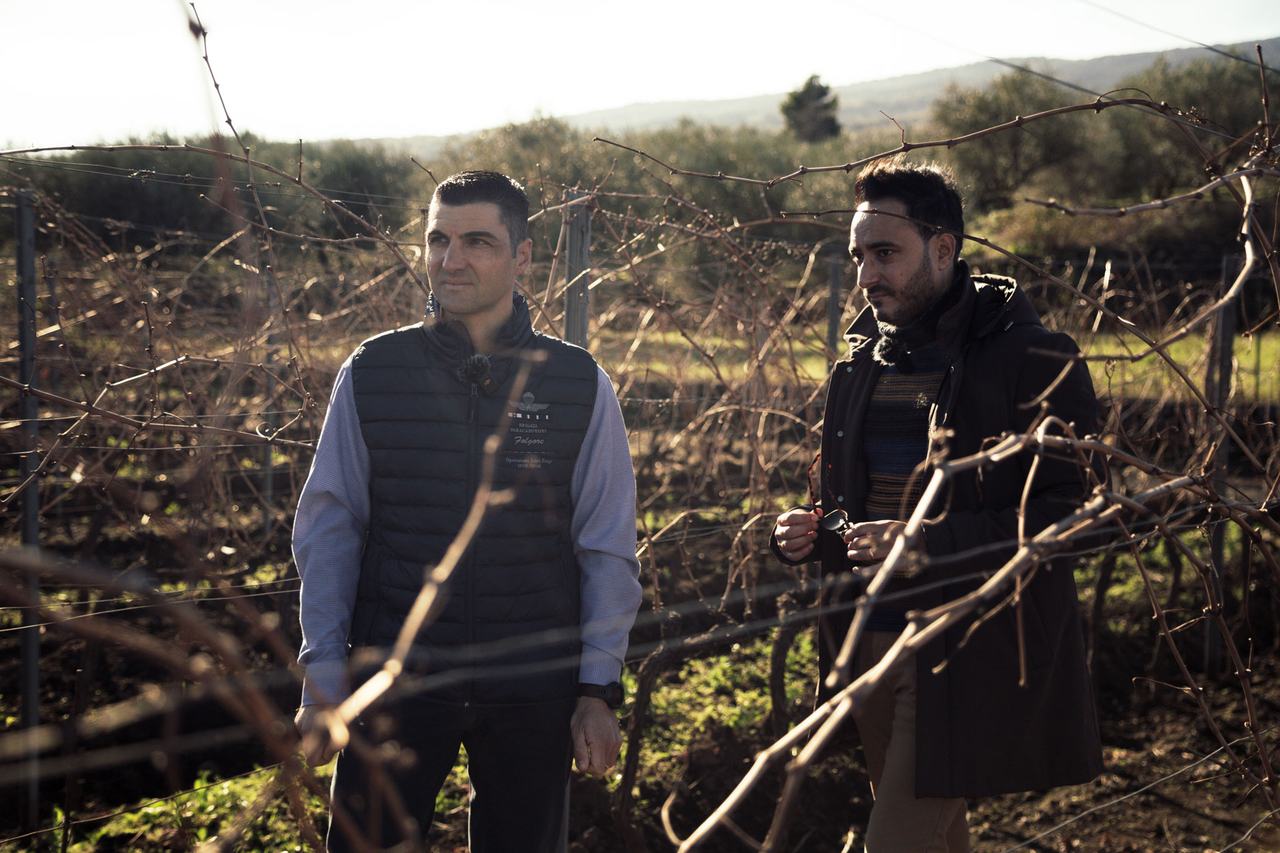
An Etna winemaker’s own vines, on ground the farmers gave up.
Calogero Statella has been the winemaker at Tenuta delle Terre Nere, one of the estates that made the wine world take Etna seriously, since 2008. In 2016 he and his wife Rita bought a vineyard of their own in contrada Pettinociarelle, on the north side of the volcano above Solicchiata, at seven hundred and seventy metres. It is poor, shallow, sandy ground that was once famous for its wine and was almost entirely abandoned after the Second World War. Theirs is one of the few vineyards there still in production.
Since then they have added two more contrade: Pignatuni, near Randazzo, where some of the bush vines are around eighty years old and a few predate phylloxera, and Tartaraci, a thousand metres up above Bronte, outside the DOC altogether. From these they make Nerello Mascalese and Nerello Cappuccio of real elegance, high, cool and mineral, with red fruit and ash, and a white from Carricante.
Few people know Etna’s north slope better: he has spent nearly two decades learning it from the inside, and now farms some of its best and least-known ground himself, organically and on a very small scale. Critics have noticed. Monica Larner of the Wine Advocate and Vinous both scored the 2022 crus at ninety-three and ninety-four points.
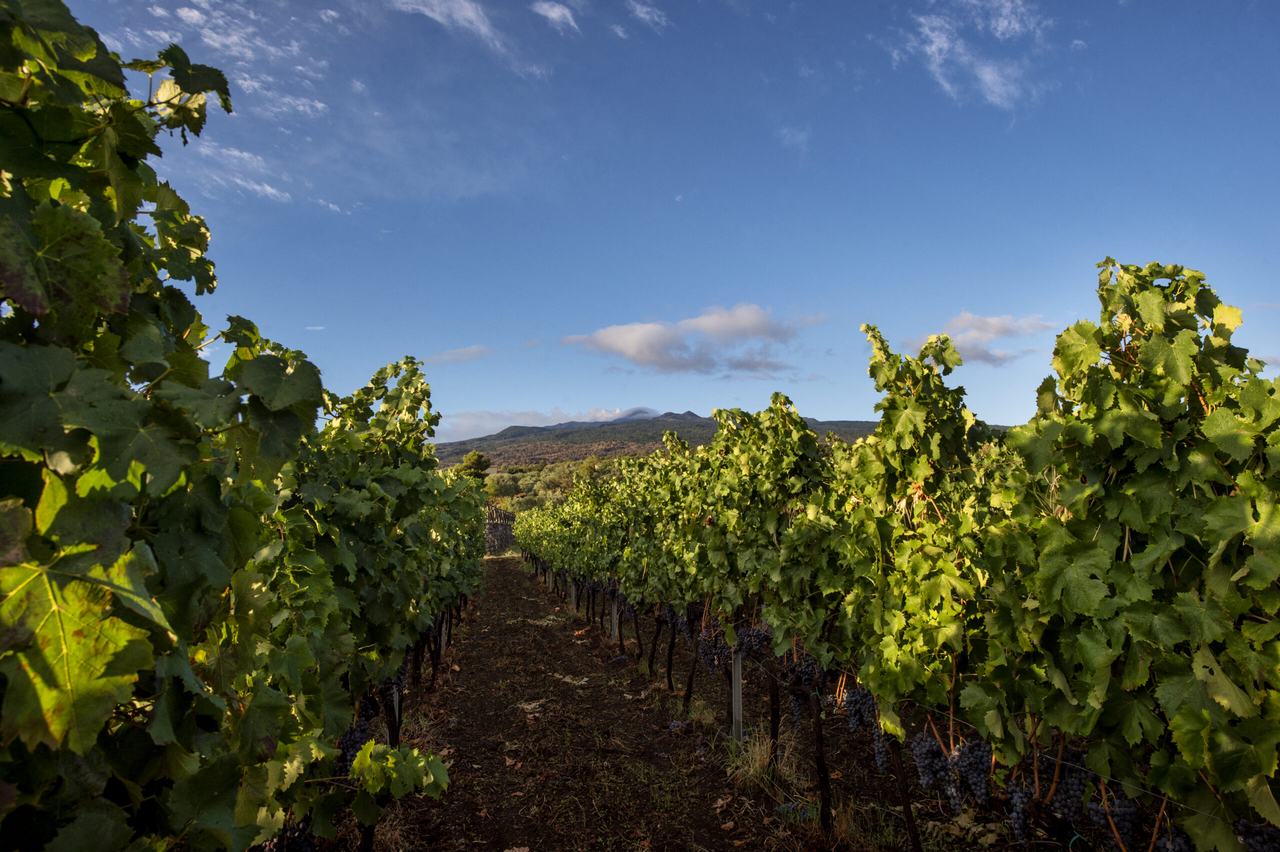
02 · Nino’s sonA sommelier’s boy who wanted a wine that described Etna.
Calogero’s first encounters with wine came as a child, through his father Nino, a chef and sommelier who was one of the first in the Catania area to run wine-tasting courses. He took his son along. The boy watched people put their noses into glasses and talk about faraway hills and mountains, about the men and women who grew vines in the most beautiful places in the world. Nobody talked about the place they were sitting in.
He trained at the wine school of San Michele all’Adige in Trentino and then at the faculty of viticulture and oenology in Milan. His first jobs led him back to Sicily and to Etna, and in 2008 he became the oenologist at Tenuta delle Terre Nere, on the north slope, where he still works. In 2016 he and Rita, both born on Etna, founded Famiglia Statella. The grapes are still vinified at the Terre Nere cellar.
The ambition he describes is the one from childhood: to make wine from Etna good and authentic enough to stand among the best in the world.
In the 1980s, there was no wine that described our Etna.
Calogero Statella
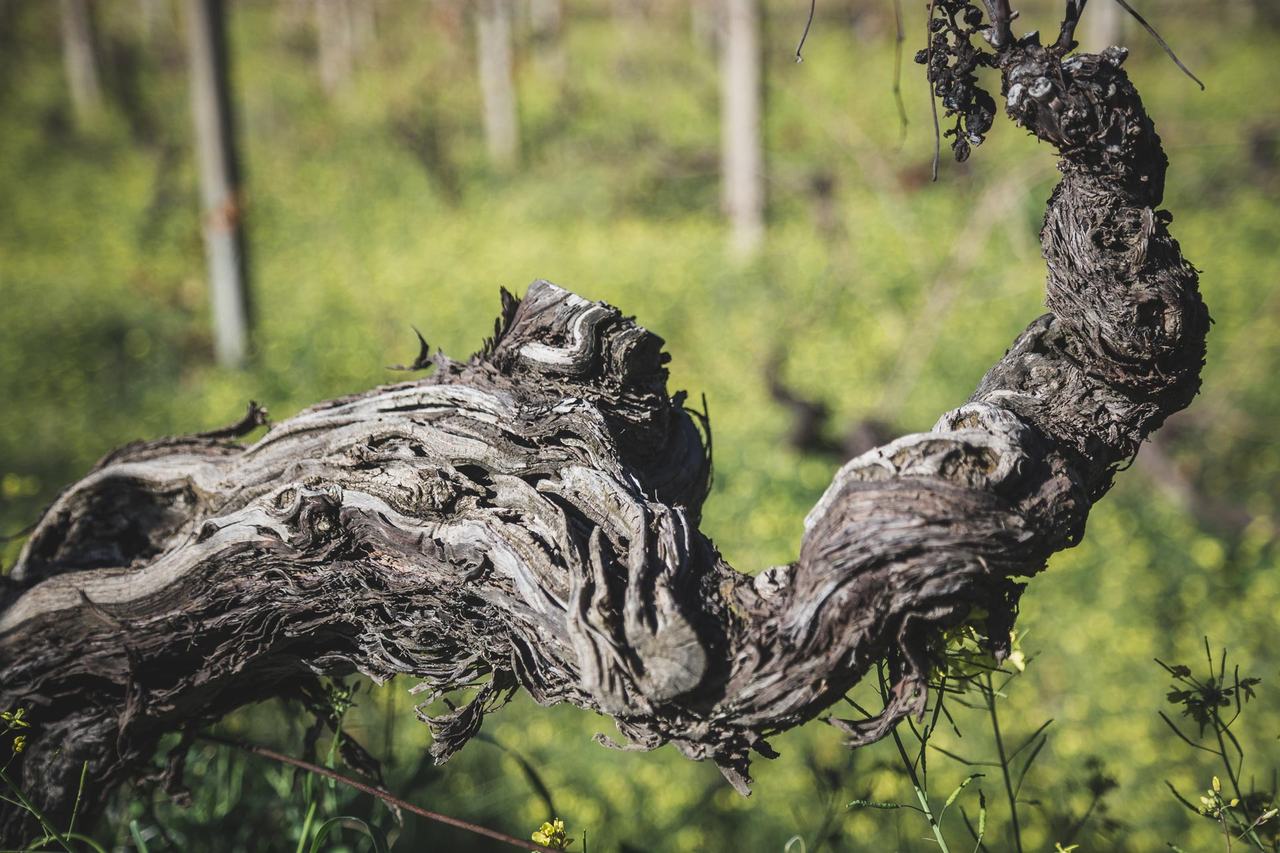
03 · PettinociarelleSeven hundred and seventy metres of sand the farmers left for olives.
Etna is divided into 142 contrade, each recognised by the DOC and each with its own exposure, altitude and lava. Pettinociarelle lies on the north side, in the commune of Castiglione di Sicilia, in the upper part of Solicchiata. The Statella vineyard sits at 770 metres.
The soils come from the eruptions of the so-called recent Mongibello, the last fifteen thousand years of the volcano’s life. They are very poor and shallow, mostly sand and stone, with little organic matter, and they drain so fast that they turn dry in summer. In the past that poverty made Pettinociarelle famous: yields were low and the wine was very good. After the war, growers moved their vines to places where they could produce more, and most of the contrada was turned over to olive groves. The Statella vineyard is one of the few that kept producing.
It was the first vineyard Calogero and Rita bought, and they say it has a particular emotional value for that reason. The Etna Rosso Pettinociarelle is ninety per cent Nerello Mascalese and ten per cent Nerello Cappuccio, fermented with pigeage and ten to fifteen days on the skins, and aged in French tonneaux on their second and third use, so that the oak stays in the background. It is ruby, with red fruit and Mediterranean scrub, and dense, fine tannin.
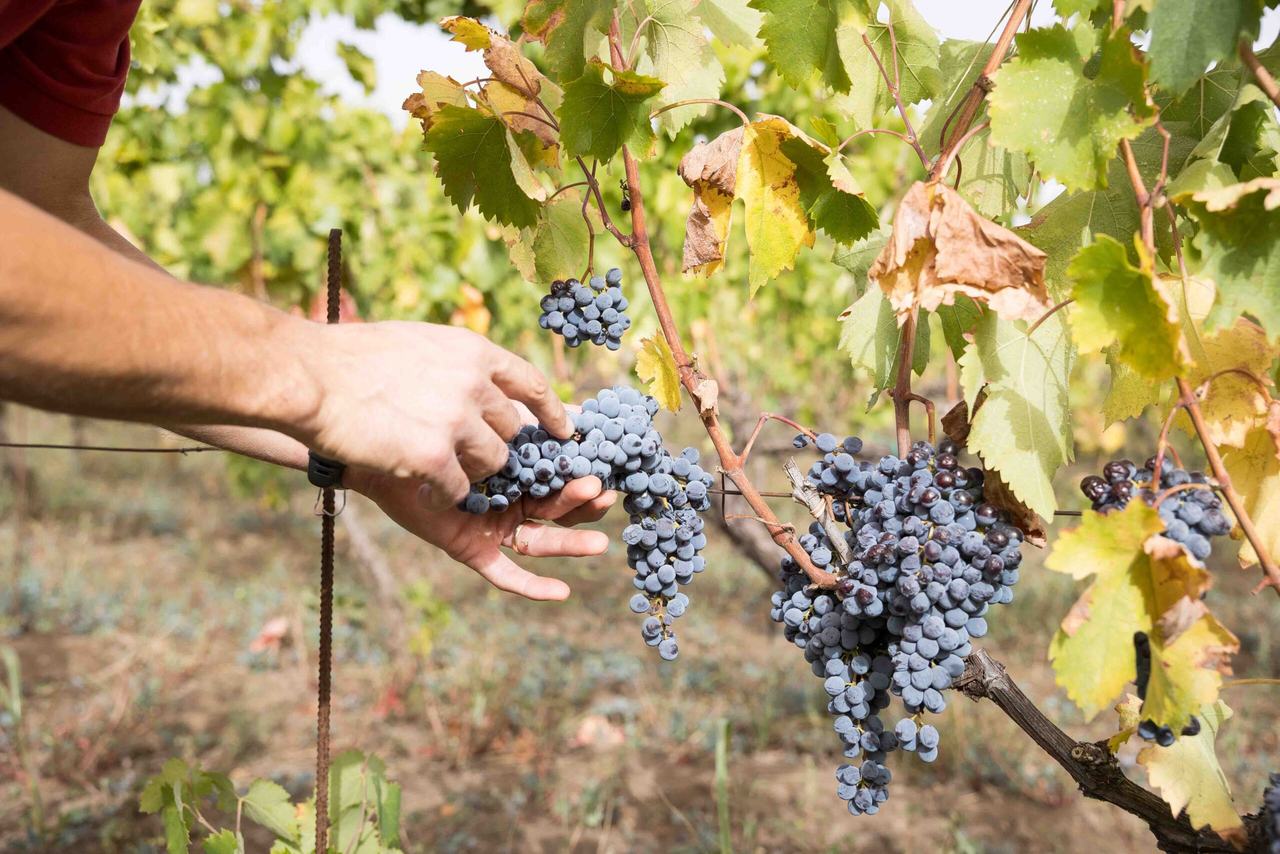
04 · Pignatuni and TartaraciEighty-year-old bush vines on an older volcano, and a white-wine bet above Bronte.
Pignatuni, near Randazzo, sits on the remains of an older volcano, the Ellittico, born about sixty thousand years ago, long before the present Mongibello. Its soils are deeper sandy loams full of crushed stone, loose and well drained but fertile and able to hold water through a dry summer. The vines grow as small trees, alberello, on soil formed by ancient lava. The family calls it the peak of Etna’s terroir. According to the Wine Advocate, the parcel is just 0.4 hectares at 650 metres, with vines averaging about eighty years old and a few that predate phylloxera. It makes the Etna Rosso Pignatuni Vecchie Vigne.
Tartaraci is the bet. It lies on the north-west side of the mountain, in the commune of Bronte, and it is not part of the Etna DOC at all; Calogero went looking for it because he believes in it. The vineyard is at the top of the contrada, at a thousand metres, on sandy recent-Mongibello soil that holds water well and rarely suffers drought. He thinks it is made for white wines with character and a long life. “But we will discover this with time,” the family writes. There is also a grove of about a hundred olive trees, some of them centuries old, from which they now make oil, as Calogero’s grandparents did.
The Etna Bianco is ninety per cent Carricante and ten per cent Catarratto, from Randazzo on the north slope: white flowers and stone fruit, fresh acidity, and a stony finish.
05 · The courage to waitOrganic bush vines, late picking, and critics who have caught on.
The vineyards are certified organic, in Europe and for the American market. The vines are trained as alberello, the aisles are left untilled and fed with natural fertiliser, and the harvest runs from the end of September to the end of October. Calogero is his own agronomist. By the importer’s count it is about 1.4 hectares and ten thousand bottles a year.
Etna’s harvest is late, and Statella makes a point of not hurrying it. In the hot summer of 2026, when the heat cost the grapes acidity and pushed sugar up quickly, the family waited, as they say they do every year, for the vines to find their balance again, picking each plot when it was ready. They call it the courage to wait. It is the right instinct on a volcano where every contrada ripens on its own clock.
The critics have caught up. For the 2022 vintage, Vinous gave the Pettinociarelle ninety-three points and the Pignatuni ninety-four; Monica Larner at the Wine Advocate gave them the same scores. Slow Wine named the 2025 Etna Bianco a Top Wine. These are wines of altitude and restraint, more Burgundy than south in their build, and Pettinociarelle in particular gives a clear picture of what poor sand at nearly eight hundred metres does to Nerello: red fruit, ash, lift, and a finish that keeps going.
In the vineyard
& cellar.
- Founded
- 2016 by Calogero Statella (oenologist at Tenuta delle Terre Nere since 2008) and his wife Rita
- Contrade
- Pettinociarelle (Castiglione di Sicilia, 770 m) · Pignatuni (Randazzo, old bush vines) · Tartaraci (Bronte, 1,000 m, outside the DOC)
- Soil
- Volcanic: recent Mongibello sand and stone at Pettinociarelle and Tartaraci; Ellittico sandy loam at Pignatuni
- Grapes
- Nerello Mascalese · Nerello Cappuccio · Carricante · Catarratto
- Farming
- Certified organic (EU and NOP); alberello; untilled aisles, natural fertiliser
- Cellar
- Vinified at the Terre Nere cellar; reds aged in used French tonneaux
- Scale
- About 1.4 ha and 10,000 bottles a year