
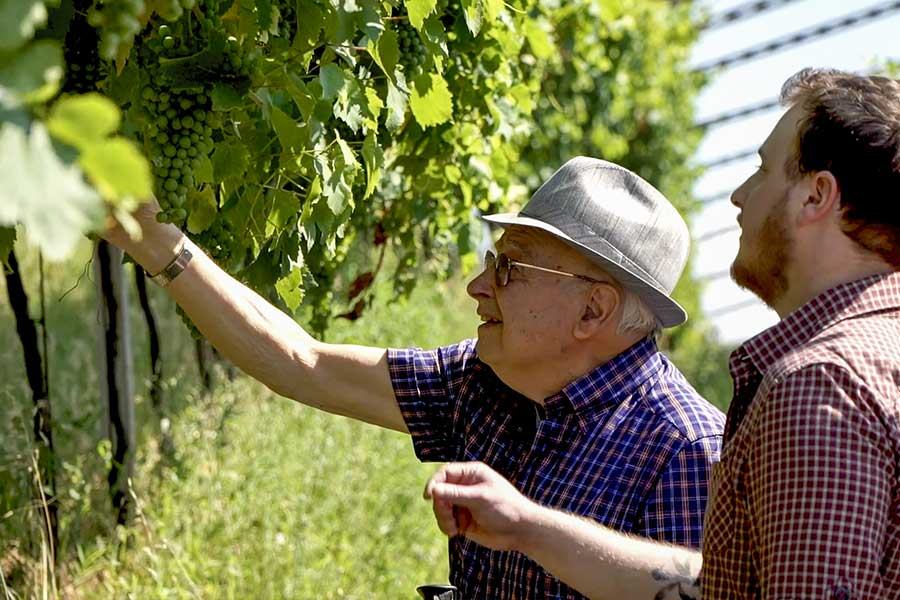
Fifty years running the co-op, then his own grapes.
Ettore Righetti was born in Negrar, and for more than fifty years he led the Cantina di Negrar, the co-operative at the heart of the Valpolicella Classica. He saw the valley through everything: the lean years when growers were tempted to pull out their vines, and the boom that followed Amarone’s rise. Few people alive knew these hills, vineyard by vineyard, as well as he did.
Late in life he handed the co-op to younger people and decided to make wine from his own grapes. The family had owned vines in Negrar since 1930, and Ettore had spent decades buying more in the best parts of the valley. The first grapes were vinified in 2011. From 2012 his grandson Gabriele, an oenology graduate, took charge of the cellar; Gabriele’s father Giampaolo, Ettore’s son, looks after the vineyards. Together they run the estate today.
What they have is rare in Valpolicella: nineteen hectares in five of the Negrar valley’s best crus, climbing from 190 to 450 metres, where the soil turns from clay to limestone to old volcanic rock as you go up. All of it is farmed organically, on the traditional pergola. The wines are Valpolicella, Amarone and Recioto made for freshness, the cherry-bright, high-acid style the region can produce when someone resists the urge to over-ripen and over-oak.
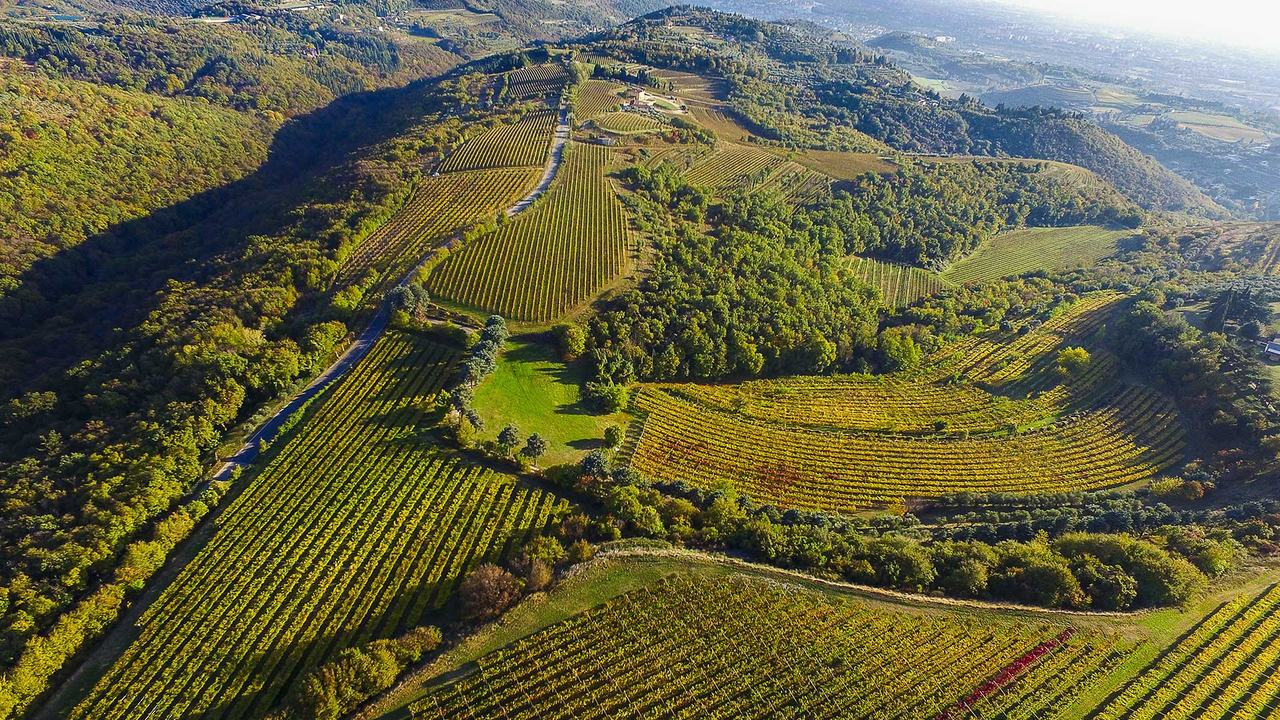
02 · Gioanin and EttoreBought in 1930, bottled from 2011.
It began in 1930, when Gioanin Righetti bought the Casetta, the farmhouse where the family still lives, and the vineyards round it. His son Ettore spent the following decades restoring the house and the vines and, with real foresight, buying land in the most suitable parts of the valley. With Giampaolo he trialled the old local grapes, the well-known ones and the forgotten ones: Turchetta, Pelara, Recantina, Spigamonti. For most of that time the grapes went to the co-operative Ettore ran.
When the vineyards were ready, he made the change. In his own account, he passed a fine legacy on to younger hands and set out to vinify his own grapes, with a group of close friends and his grandson Gabriele. Giampaolo describes the years that followed as slow, hard growth, with some disappointments, in the wake of tradition but with new combinations tried along the way.
The family’s first Amarone Riserva, from 2012, was released in 2022, ten years after the harvest, with a painting by the artist Dan Namingha, Moon over Valpolicella, on the label. It was also the wine for Gabriele and Chiara’s wedding. Ettore followed that vintage through every stage; the family’s note on it says he would not be there to enjoy its rewards. The estate’s name keeps him in every bottle.
For over fifty years, I led the Negrar Winery and lived through all the transformations and events of Valpolicella.
Ettore Righetti
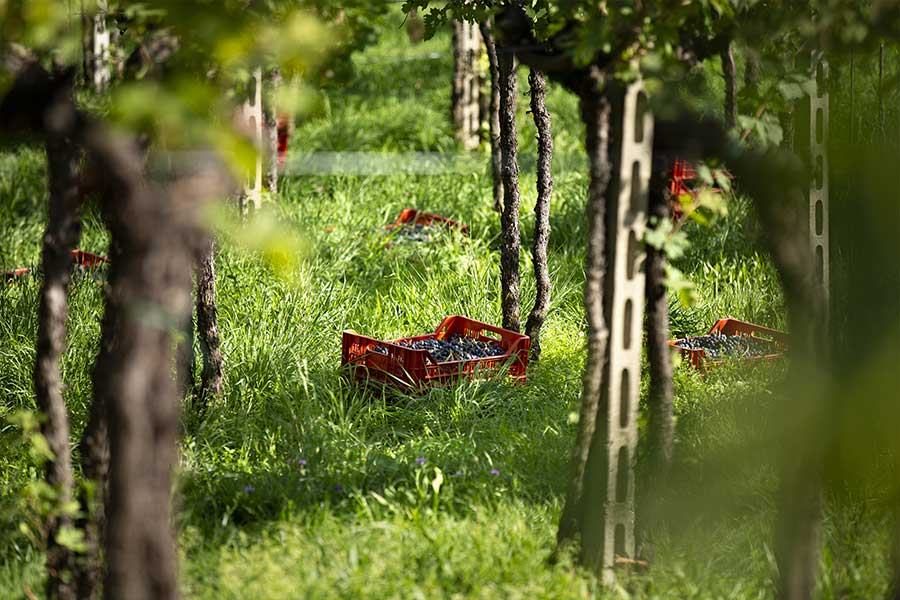
03 · Five crusClay at the bottom, old volcano at the top.
The nineteen hectares lie in five plots: Moron, Jago, Osteria Vecchia, Costa del Buso and Casetta. Between them they cover most of what the Negrar valley offers. Low down there is alluvium and clay; higher up the clay gives way to limestone; at the top there is basaltic tuff and other paleovolcanic rock. The soils are all stony, with plenty of rock fragments, and the family credits that for wines that are full of flavour yet stay fresh. Costa del Buso, at the crown of its hill, is the windiest and sunniest of the five, and its volcanic ground gives the grapes for Arsi, a spicier, more upright red.
The vines are trained on pergola, the old Valpolicella way, with some Guyot. The canopy shades the bunches from sunburn, which keeps the aromatics and acidity of the local grapes. Corvina, Corvinone and Rondinella make up most of the planting, with Molinara and Croatina, but the family keeps the minor varieties too: Oseleta, Pelara, Turchetta, Spigamonti. They are harder to grow and the share of each is small, yet the family thinks they add complexity and help with a warming climate. “These grapes are to us as color is to painters,” the estate writes.
The vines are between fifteen and fifty years old. Production is around 80,000 bottles a year, and the family says plainly that it does not want to grow beyond the size at which it can still control the details.
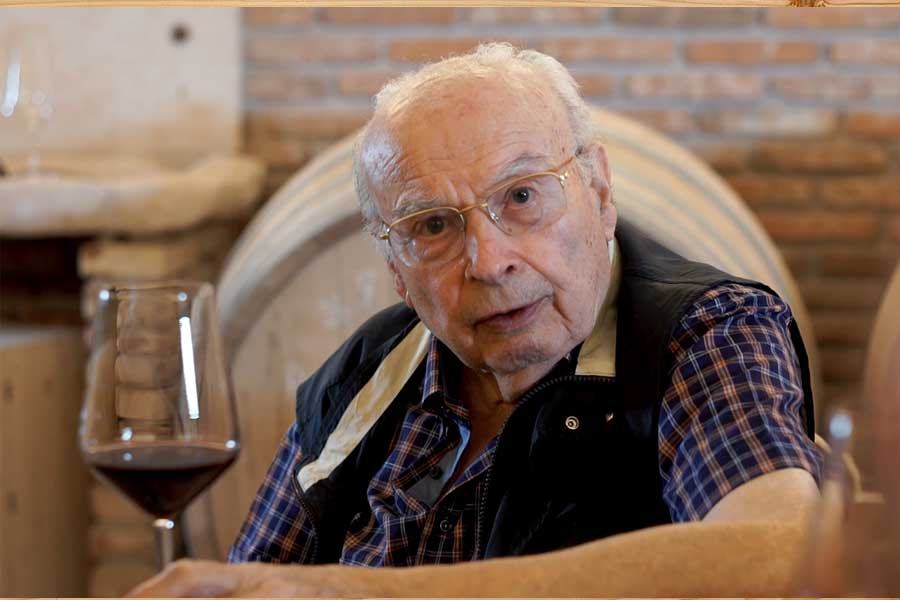
04 · Organic, by handLighten rather than weigh down.
The vineyards are certified organic, with grass left between the rows. Everything is picked by hand into small crates of about six and a half kilos, which keeps the bunches whole and lets the family use only small doses of sulphur. The grapes for Amarone, Recioto and Ripasso are picked first and laid out to dry; the Valpolicella grapes come in later, from mid-September to early October.
In the cellar there is no fixed recipe. Gabriele reads each vintage, each grape and each cru, and tries to keep their differences. Wood is used with care: tonneaux and large casks of 15 and 25 hectolitres, never barriques, so that the oak goes along with the wine’s ageing without taking it over. Amarone grapes dry for about a hundred days and the wine spends at least three years in wood and one in bottle; the Recioto grapes dry for 120.
The house style is set down in a few lines on the estate’s own site: finesse before opulence, freshness before muscle, and what the family calls a rich and balanced drinkability. The Valpolicella Classico is light red and transparent; the Amarone is deep purple; between the two runs a crescendo of intensity, with the same balance at every step.
We prefer to lighten rather than to weigh down; to take away rather than to add.
Vigneti di Ettore
05 · The calling cardStart with the Valpolicella.
Ettore had a rule, and the family prints it beside the wine: “Valpolicella is the calling card of a winery. It is from there that one starts to better orient oneself in going to the other wines. Only those who know how to make a good Valpolicella can make great wines.” The Valpolicella Classico is the wine Pas Mal brings in: Corvina, Corvinone, Rondinella, Molinara and Croatina from all five plots, floral and fruity, with cherry and morello on the nose and a balance of acidity and savouriness on the palate. It is a red for every day, and it shows the house style better than anything else in the range.
The critics have noticed the rest. Slow Wine awarded the estate its Bottiglia for overall quality in the 2024 guide. Veronelli gave the 2013 Amarone Riserva three gold stars, its mark for wines over 94 points. Luca Gardini named Gabriele the best producer under forty. Gambero Rosso, Vinous and James Suckling have all rated the Amarone well.
Every harvest ends with the Galzega, the old end-of-harvest feast for everyone who picked. It suits the place: a family estate that grew out of the co-operative, still working with friends, still making the wines Ettore liked. Gabriele puts it his own way on the estate’s wine list: “Wine is a non-linear thought.”
In the vineyard
& cellar.
- Holding
- ~19 ha in five plots (Moron, Jago, Osteria Vecchia, Costa del Buso, Casetta) · Negrar valley, Valpolicella Classica · 190–450 m
- Since
- Vineyards bought 1930 · first vintage 2011
- People
- Founded by Ettore Righetti (50+ years at the Cantina di Negrar; he died in March 2021) · run by his son Giampaolo (vineyards) and grandson Gabriele (winemaker)
- Soil
- Alluvium and clay, then limestone, then basaltic tuff with altitude; stony throughout
- Grapes
- Corvina, Corvinone, Rondinella, Molinara, Croatina · Oseleta, Pelara, Turchetta, Spigamonti
- Farming
- Certified organic · pergola and Guyot · grass between rows · hand harvest in small crates
- Cellar
- Tonneaux and 15–25 hl casks, no barriques · about 80,000 bottles