
Cabernet Franc alone, on a lava rock found nowhere else in Tuscany.
Bolgheri is Cabernet country: usually Sauvignon, usually blended, usually built for weight. Tenuta Meraviglia does the contrary thing. It is, by its own account, the only estate on this coast given over entirely to Cabernet Franc, the more aromatic, more nervous sibling, with just a few plots of Vermentino beside it. And it grows it on ground unlike any other in the denomination: whitish volcanic rhyolite, the Vulcaniti di San Vincenzo, which in all of Tuscany crops out only here, in the hills behind San Vincenzo at the southern end of Bolgheri.
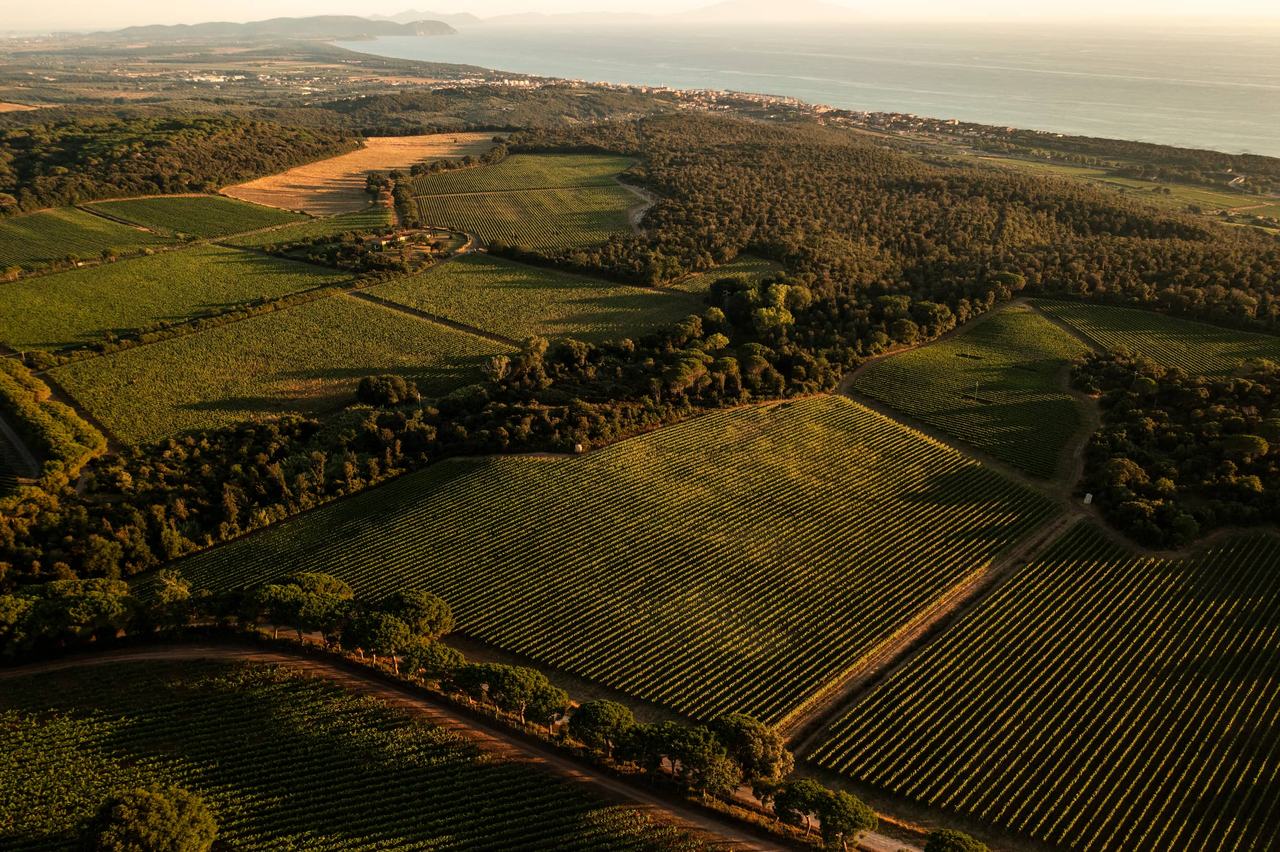
The vineyards sit on a terrace about 150 metres up, facing south-west over the Tyrrhenian to the islands of the Tuscan Archipelago and, on a clear day, Corsica. The sea breeze runs between the rows all summer. Alejandro Bulgheroni’s family, owners of Dievole in Chianti Classico, bought the estate in 2016 and farmed it organically from the start, with Alberto Antonini consulting.
The wines are made simply: native yeasts in raw concrete, then large casks of untoasted oak, which in a zone built on barriques is a point of view in itself. They catch the sea breeze and the Mediterranean scrub in something refined rather than heavy. In 2025 Decanter’s judges named the 2020 Maestro di Cava one of six Best in Show wines from all of Italy.
02 · Vulcaniti di San VincenzoWhite lava rock and red sand, in leopard spots.
Most of Bolgheri lies on sand, gravel and clay washed down to the coast. The estate’s corner is stranger. Millions of years ago, lava flowed here and cooled into rhyolite, a pale volcanic rock whose name comes from the Greek for a ‘stream’ of lava. The formation is called the Vulcaniti di San Vincenzo, and the estate describes it as rare throughout Tuscany and found only in this pocket behind San Vincenzo. The soils it makes are thin to shallow, very stony, with a sandy-loam texture; the estate says the rock adds minerality and helps the vines ripen soft tannins.
Over the volcanic base, alluvial red sands, the Sabbie Rosse della Val di Gori, lie in patches, ‘in leopard spots’ as the estate puts it, especially on the slope that runs down toward the sea. The best of it is Vigna Pianali, where the white rhyolite pebbles lie thickest between the rows; the area is already marked as vineyard land in the Leopoldine land register of 1765. Within it the team has mapped, plot by plot and row by row, an even smaller area of exceptional vines. Lower down, the Segmenti vineyard, named for its shape, is planted to Vermentino.
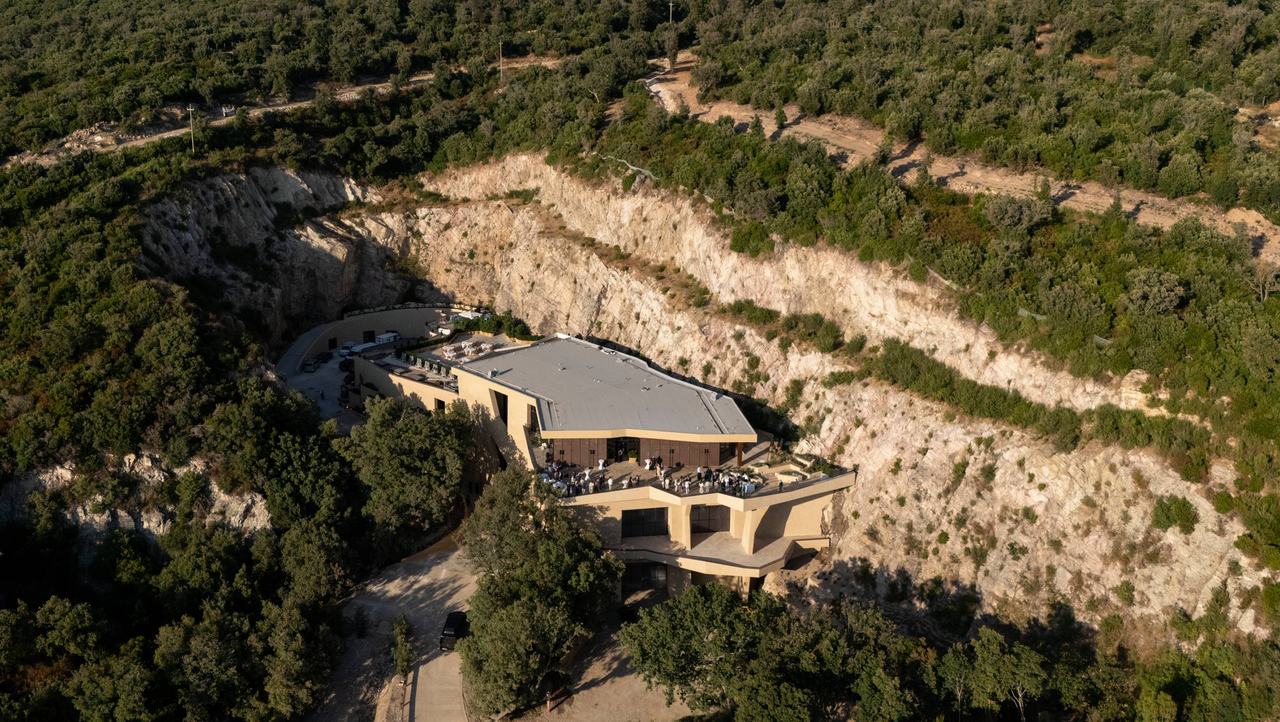
The rhyolite was valuable long before the vines. It was quarried for building stone, and the Cariola quarry below the plateau worked until the 1980s, then was left to the forest.
03 · Only Cabernet FrancThirty-four hectares of the grape Bolgheri usually blends away.
Cabernet Franc has been part of the Bolgheri story since the beginning, but almost always as a seasoning: a share of Sassicaia, a component in the big Bordeaux-style blends. A few estates bottle it alone. Meraviglia is the only one built around nothing else. The estate has 34 hectares of Cabernet Franc and a few plots of Vermentino, Guyot-trained, the vines now from five to twenty-odd years old.
The choice suits the place. Franc ripens earlier than Cabernet Sauvignon and keeps more of its fragrance in a warm climate, and on the stony, quick-draining rhyolite and the red sands it stays fresh. The estate’s description of the fit is direct: the red sands, the volcanic outcrops, the stones and the south-west exposure ‘refine the Cabernet Franc and enhance its complexity’. The wines show the grape’s leafy, tobacco side as well as its red fruit, and none of the green hardness Franc can have when it is pushed.
Decanter’s panel made the same point about the whole zone: this is one of relatively few places in the world where Cabernet Franc ‘not only flourishes and gives wine with greater poise than Cabernet Sauvignon and more freshness and lift than Merlot, but more importantly retains flesh and succulence as it does so’.
04 · Cement and big woodNative yeasts, sixty-hectolitre casks, and a winery in the old quarry.
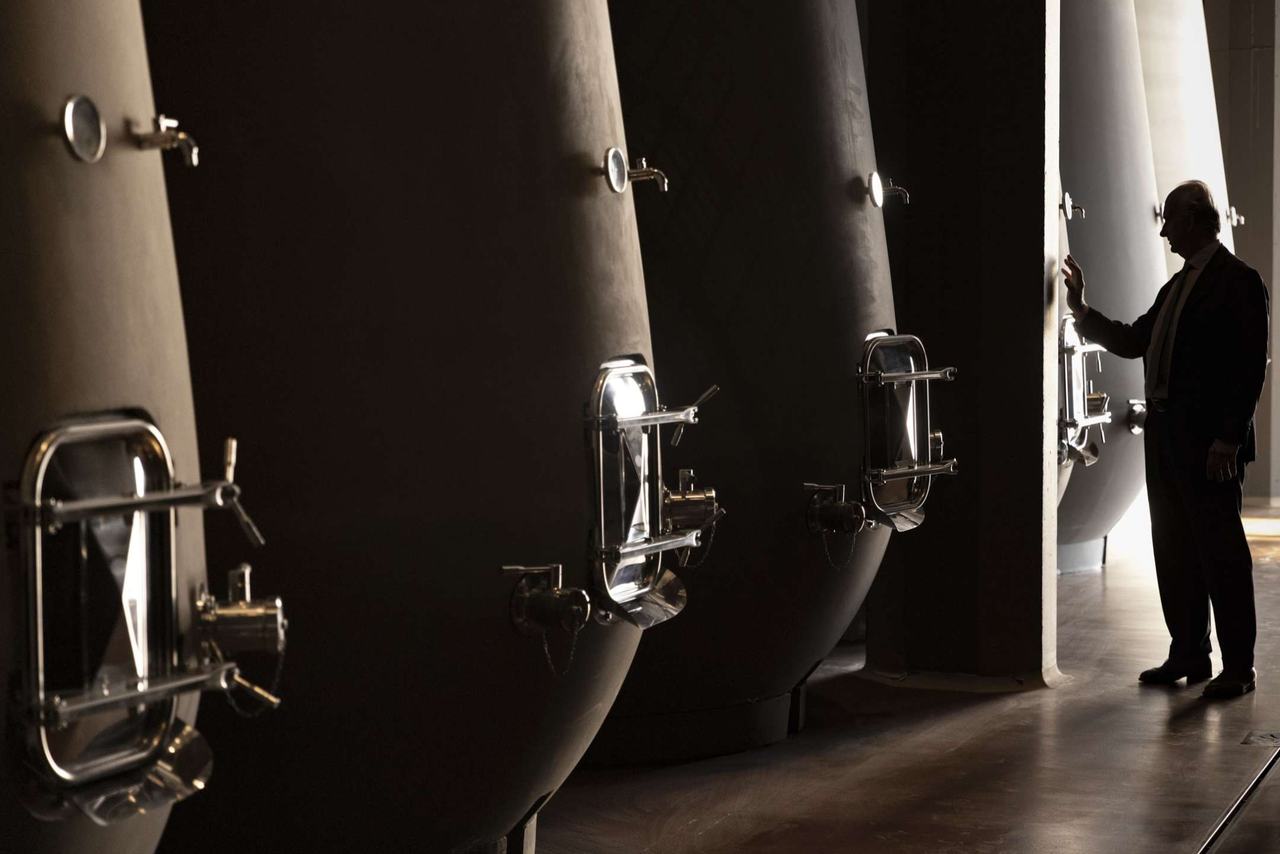
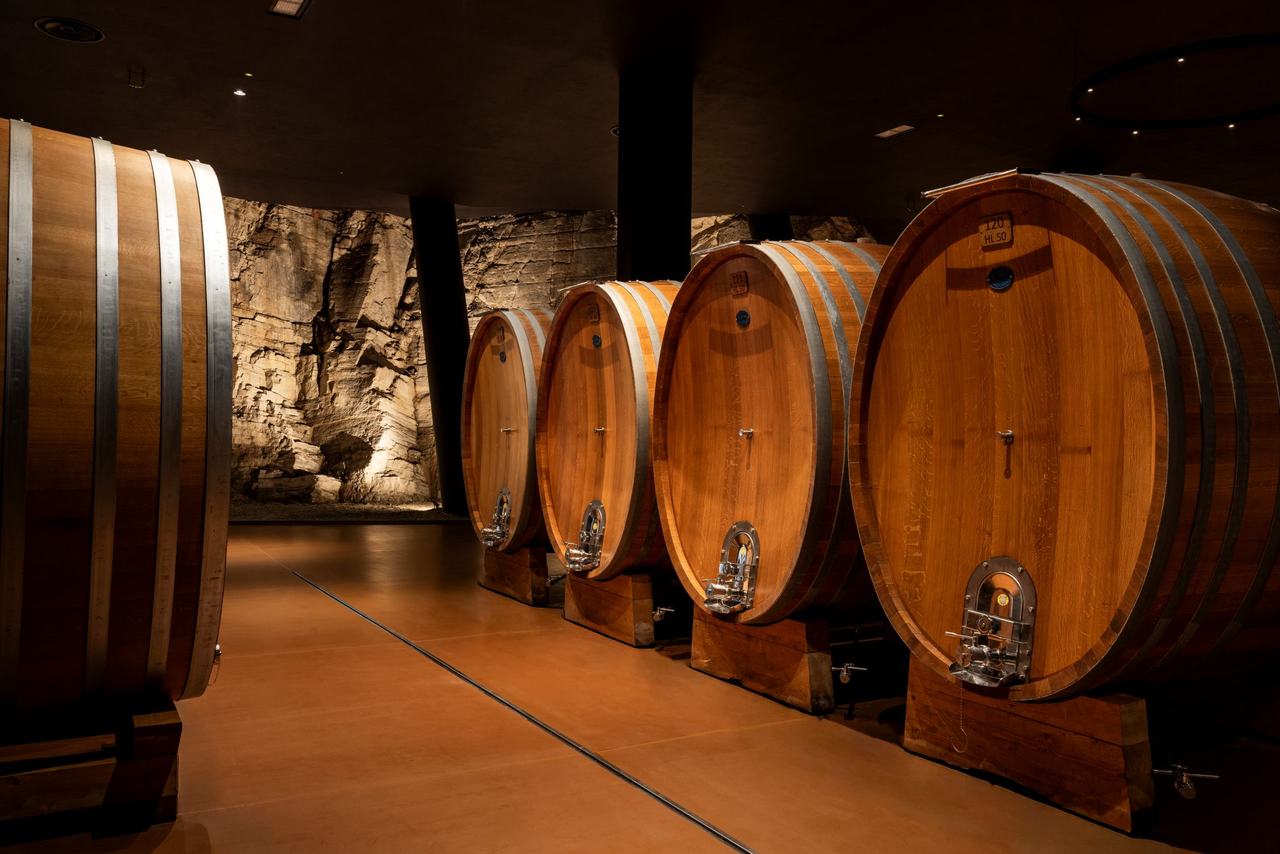
Lorenzo Bernini, who also runs Dievole, oversees the vineyards and the cellar, with Luigi Temperini as winemaker and Alberto Antonini consulting; the Chilean soil specialist Pedro Parra is also credited on the Maestro di Cava. Fermentation is spontaneous, on native yeasts, in truncated cones of raw, unlined concrete, for about two weeks. The reds then go into large casks of untoasted French oak, up to sixty hectolitres, twelve months for the Bolgheri Rosso and twenty-four for Maestro di Cava. In a district where new barriques have been the custom, that is a real departure.
The estate has been organic since its first vintage and is working toward Equalitas sustainability certification. In September 2025 it moved into a new winery, Cantina Meraviglia, built into the old Cariola rhyolite quarry: 7,000 square metres of cellars set into the rock, which keeps the temperature and humidity steady without much help, with tasting rooms and a terrace over the sea. It shares the building with the family’s other Bolgheri estate, Tenuta Le Colonne.
Wood casks are for us tools for the micro-oxygenation of wine, we don’t want them to be protagonists.
Tenuta Meraviglia
05 · Best in ShowDecanter’s judges, and a wine named for the quarry.
Maestro di Cava, ‘master of the quarry’, is a selection of the estate’s best Cabernet Franc parcels, from vines of about twenty years. At the Decanter World Wine Awards it took Platinum and 97 points with the 2019 vintage, then Best in Show and 97 with the 2020, one of six Best in Show wines from Italy in 2025, out of thousands entered. The judges were taken by its length and finish, and by its ‘great freshness and classic character’, with savoury, peppery notes. As Decanter’s report of the tasting put it, ‘This particular winery has hung its hat on Cabernet Franc.’
We have the 2016, now ten years from the harvest, a wine that has had time to settle: tobacco leaf and savoury herbs around the red fruit, the tannin softened, the currant note on the finish. The Bolgheri Rosso is its younger sibling from the same vineyards and the same method, with a year in big wood instead of two. It is fresh and mineral, the coastal style in plain form, and a very useful red for a restaurant that wants Bolgheri without the weight.
Bolgheri with the muscle traded for perfume, which on this coast still counts as a point of view.
In the vineyard
& cellar.
- Region
- Bolgheri DOC, Donoratico (LI), at the southern end of the denomination
- Holding
- About 34 ha of vines in all, nearly all Cabernet Franc with a little Vermentino, on a terrace at about 150 m facing south-west
- Since
- Bought in 2016 by Alejandro Bulgheroni; sister estate of Dievole and Tenuta Le Colonne
- Ground
- Vulcaniti di San Vincenzo (rhyolite) with patches of Val di Gori red sand; thin, stony sandy loam
- Cellar
- Native yeasts in raw-concrete cones; 12 to 24 months in large untoasted French oak. Cantina Meraviglia, in the old Cariola quarry, since 2025
- Team
- Lorenzo Bernini; winemaker Luigi Temperini; consultant Alberto Antonini
- Honours
- Maestro di Cava 2020: Best in Show, 97 points, Decanter World Wine Awards 2025