
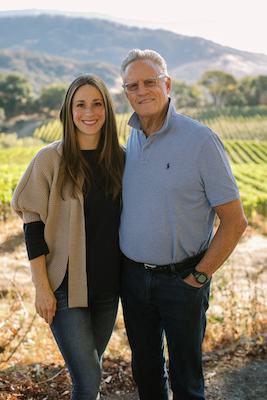
Helen Turley’s hill.
Jayson Pahlmeyer made his name with Napa Cabernet, and like most people who drink a lot of wine, he ended up wanting Burgundy. In 1998 his winemaker, Helen Turley, and her husband, the viticulturist John Wetlaufer, told him about a farm for sale down the road from their own Marcassin vineyard, on the far Sonoma Coast. He bought it. David Abreu, Napa’s most sought-after vineyard man, planted it, and finished in 2002.
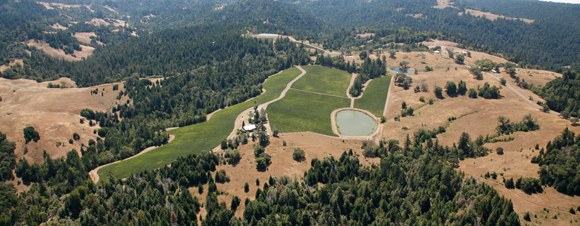
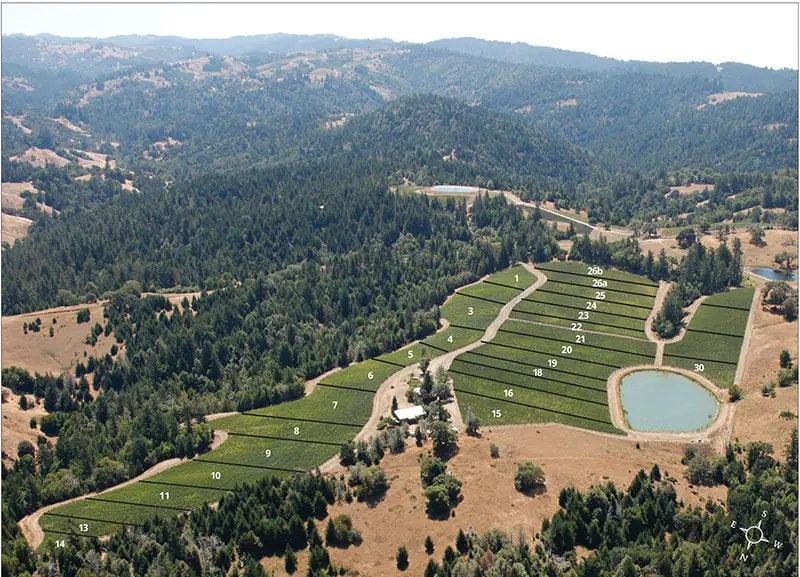
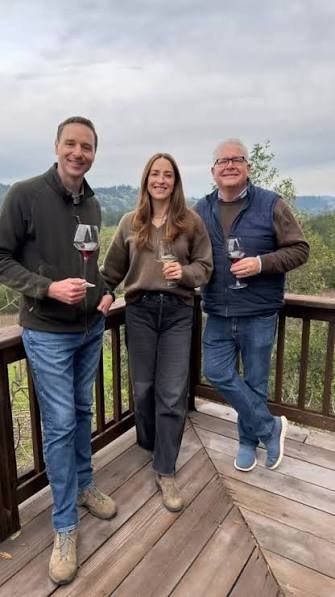
What makes Wayfarer different is the way it was planted. Thirty acres went in as about thirty blocks of roughly an acre each, every block a single clone, on four low-vigour rootstocks, at about 1,100 feet on a ridge four miles from the ocean with two more ridges between it and the water. For a decade the fruit went into Pahlmeyer’s Sonoma Coast blends. The first wines under the Wayfarer name are from 2012. When Gallo bought Pahlmeyer in 2019, the family kept this one. Jayson’s daughter Cleo runs it now.
Fort Ross-Seaview is a real place before it is an appellation: a ridge that catches the marine weather before the valley does. The Chardonnay has a saline cut and a length that Sonoma Coast fruit rarely achieves when it’s grown closer to the highway. The Pinot Noir has iron and blood and what I can only call northern-ness. I have opened it next to Gevrey and had the conversation go sideways in the best possible way.
02 · Fort Ross-SeaviewAbove the fog, most of the day.
Most of the Sonoma Coast sits in the fog. Fort Ross-Seaview is the exception: a band of coastal ridges that start around 900 feet and climb from there, high enough to sit above the marine layer on a summer day. The growers who petitioned for it in 2003, among them David Hirsch and Linda Schwartz of Fort Ross Vineyard, wanted the difference written down. The appellation came through in January 2012, and since 2022 it sits inside the larger West Sonoma Coast.
The neighbours tell you what kind of place it is: Hirsch, Flowers, Peay, Marcassin. Days up here are sunnier and warmer than the valleys below, and the nights are cold. Wayfarer’s own description is that the vineyard sits above the summer fog, and that in the evening the fog rolls up the ridge and blankets the vines through the night. Long days, cold nights, poor sandy soil: that is how you get ripe Pinot Noir that still tastes cool.
03 · Thirty blocksOne acre, one clone, one decision at a time.
About twenty-one acres are Pinot Noir, eight and a half Chardonnay, and a half acre Syrah, all on Goldridge, the fine sandy loam that drains like a sieve. East-facing blocks run down slopes of 10 to 30 degrees, west-facing ones 10 to 20. Rows are six feet apart, vines three feet apart, double-Guyot pruned. The farming is organic, without certification.
Planting one clone per block means every block can be picked on its own day and made on its own, and the winemaker gets to know each one like a parcel in Burgundy. The Pinot Noir selections include Pommard, Swan, Mount Eden, Hirsch, Old Wente from Hyde and Bacigalupi, three Dijon clones, and a suitcase cutting the family says came from a grand cru in Vosne-Romanée in the 1990s. The Chardonnay is Old Wente from Berlenbach, Hyde and Mount Eden material, and Dijon 95. Mother Rock comes from the top of the ridge, where the soil is thinnest over sandstone.
The Estate, and Mother Rock.
The whole vineyard.
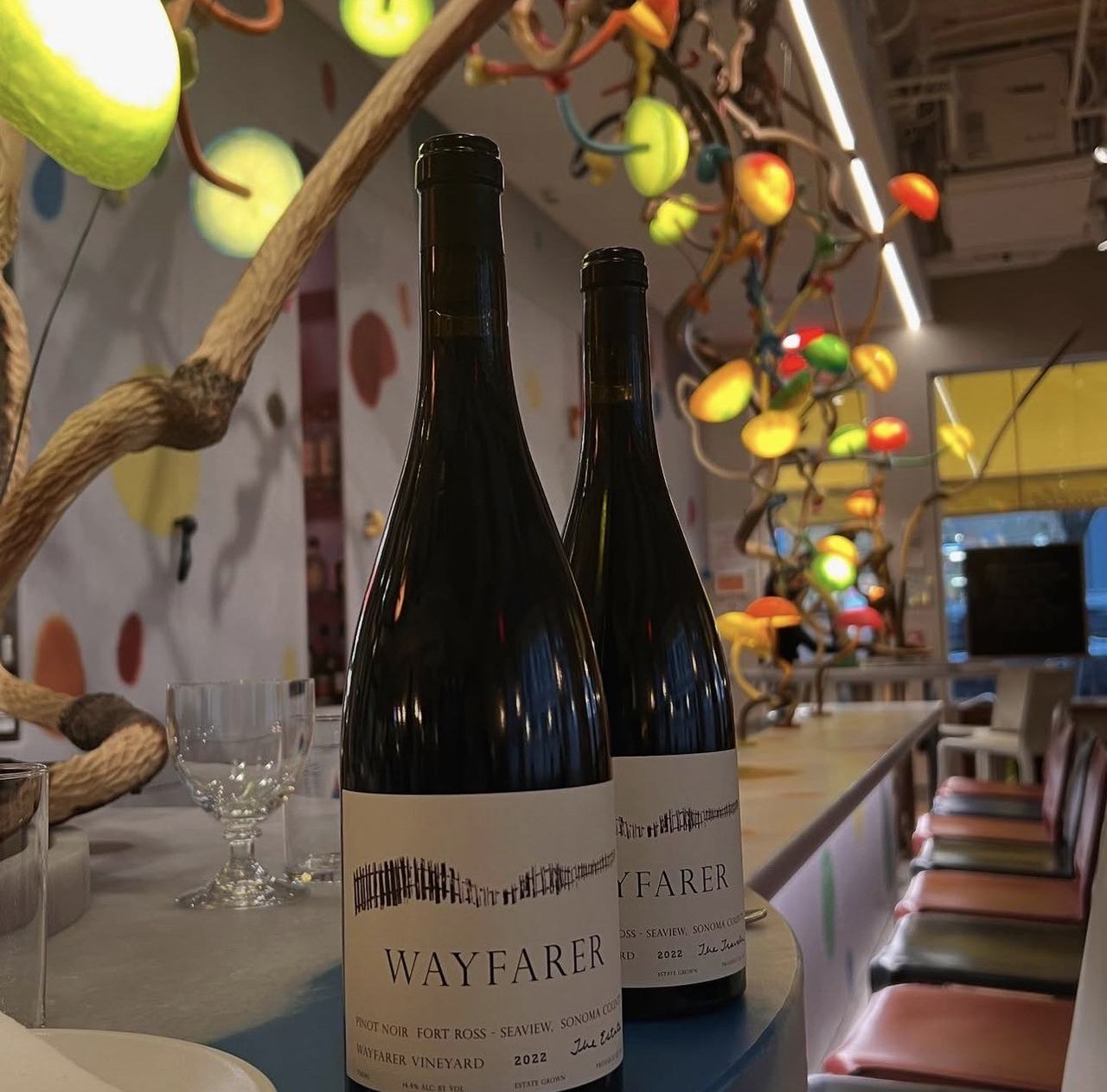
The Estate Pinot Noir is the blend of the blocks: eleven clonal selections in the 2023, mostly destemmed with a little whole cluster, native yeast, and only the free-run wine in barrel, fifteen months in French oak, a little under half of it new. Wine Spectator gave it 95 points and put it eighth in its Top 100 for 2025. Antonio Galloni gave the 2022 96.
The top of the ridge.
Mother Rock is the shallow ground at the crest, over sandstone, where the vines struggle most. More whole cluster than the Estate (13 per cent in 2021), less new oak (38 per cent), the same fifteen months. Jeb Dunnuck scored both the 2021 and the 2023 98. If you want to show someone what this site can do, this is the bottle.
05 · The cellarTasted every day, and only the free run.
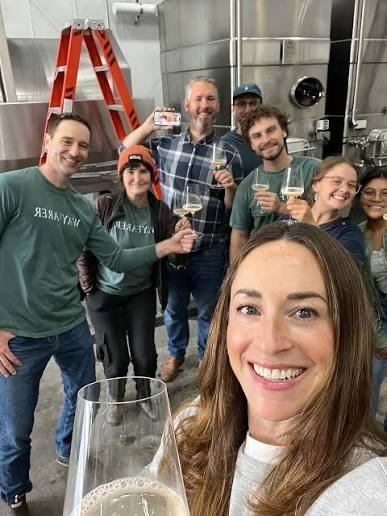
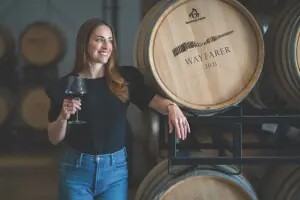
Bibiana González Rave, as consulting winemaker, made the first Wayfarer vintages from 2012. Todd Kohn joined as her assistant at the start of 2013 and took over as winemaker in December 2017, so 2018 is his first vintage in charge. The approach has stayed quiet. Pinot Noir is sorted by hand and mostly destemmed, with between four and fifteen per cent whole cluster depending on the wine and the year. Fermentation is on native yeast, and the punch-downs are done by hand, each tank tasted every day to decide how many it needs. Only the free-run wine goes to barrel.
The Chardonnay ferments in barrel on its own yeasts, goes through full malolactic, and spends about fifteen months on its gross lees before bottling, unfined and unfiltered. A second label, WF2, began with the 2019 vintage. In 2020, when the fires put smoke over the coast, the family didn’t bottle the estate Pinot Noirs at all and made only WF2. That kind of decision is the best evidence of what a house cares about.
06 · What they sayNinety-eight, twice.
James Molesworth at Wine Spectator, 95 points for The Estate 2023 and the eighth spot in the 2025 Top 100. Antonio Galloni at Vinous, 96 for The Estate 2022 and 95 for the 2023. The Wine Advocate, 98+ for the 2018 Wayfarer Vineyard Pinot Noir. Jeb Dunnuck, 98 for Mother Rock in both 2021 and 2023. Virginie Boone at Wine Enthusiast, 95 for the 2016.
The story the family tells about the start is that Helen Turley looked at the site and said it could be the La Tâche of California. That is a lot to hang on a hillside. Twenty-odd years and a run of scores like these later, it no longer sounds like a sales line.
In the vineyard
& cellar.
- Family
- Bought by Jayson Pahlmeyer in 1998 on the advice of Helen Turley and John Wetlaufer; Cleo Pahlmeyer proprietor; kept by the family when Gallo bought Pahlmeyer in 2019; tasting room at 1441 Grove Street, Healdsburg
- Vineyard
- 30 acres, about 30 one-acre single-clone blocks: ~21 Pinot Noir, 8.5 Chardonnay, 0.5 Syrah; about 1,100 ft (930–1,200); 4 miles from the Pacific; Goldridge sandy loam; planted by David Abreu, finished 2002
- Farming
- Farmed organically, uncertified; 6 × 3 ft spacing on low-vigour rootstocks; double Guyot
- Winemaking
- Bibiana González Rave from the first vintage, 2012; Todd Kohn assistant from 2013 and winemaker from the 2018 vintage
- Pinot Noir
- Hand-sorted, mostly destemmed, 4–15% whole cluster; native yeast; hand punch-downs; free-run only; 228-litre French oak, roughly 40–55% new; about 15 months
- Chardonnay
- Native-yeast barrel fermentation; full malolactic; about 15 months on gross lees; unfined, unfiltered