
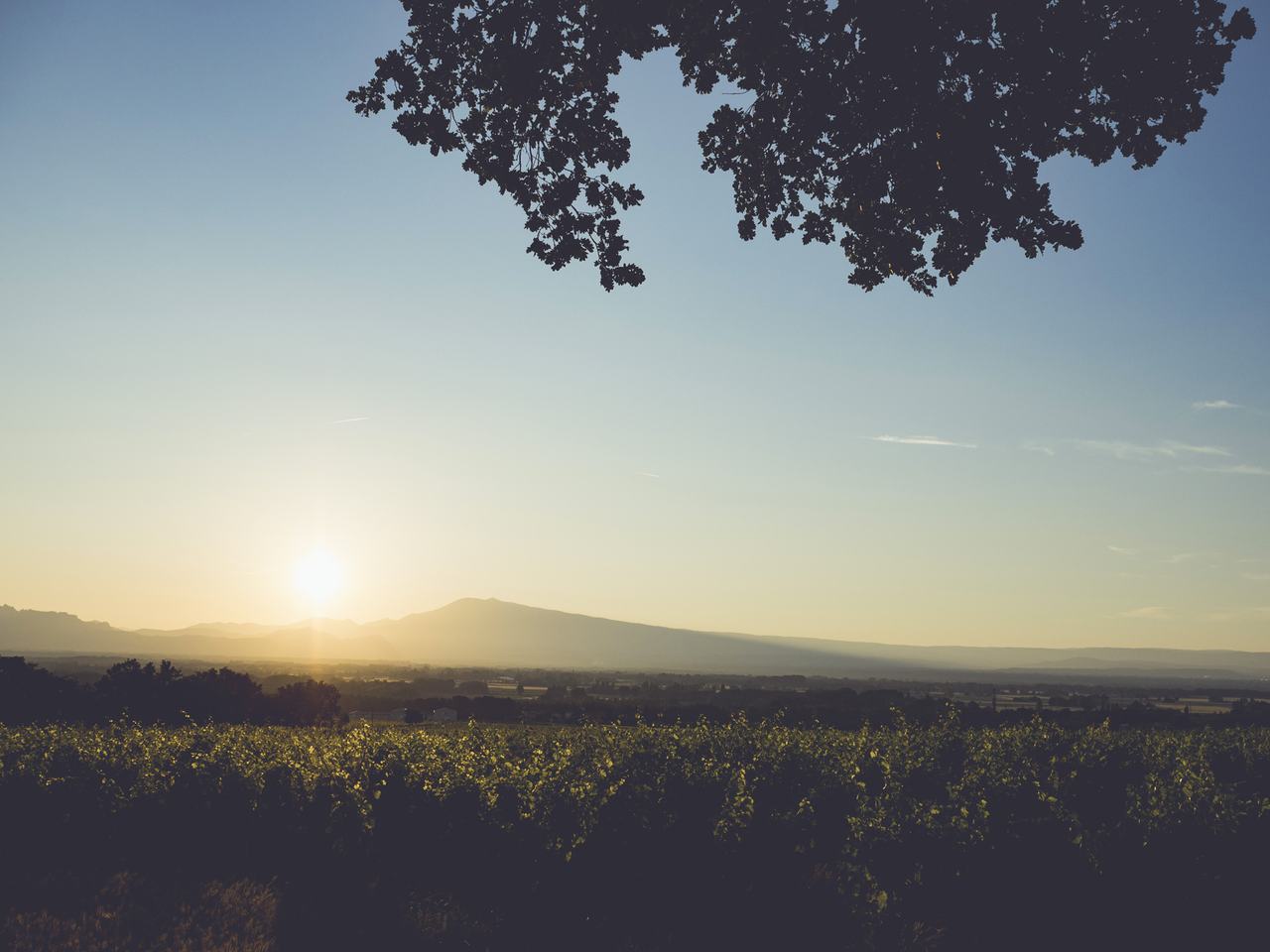
Châteauneuf grown on sand, facing north.
Everyone knows Châteauneuf as the appellation of the galets, the big rolled stones that store the day’s heat and give the wine its famous weight. Château de la Font du Loup sits on sand. Its twenty hectares lie in one unbroken block on the high ground above Courthézon, in the north-east corner of the appellation, turned north toward Mont Ventoux, with a natural spring and a water table close beneath the vines. Sand, a north face and height all push the same way, toward freshness, and that is what these wines have that their neighbours often lack.
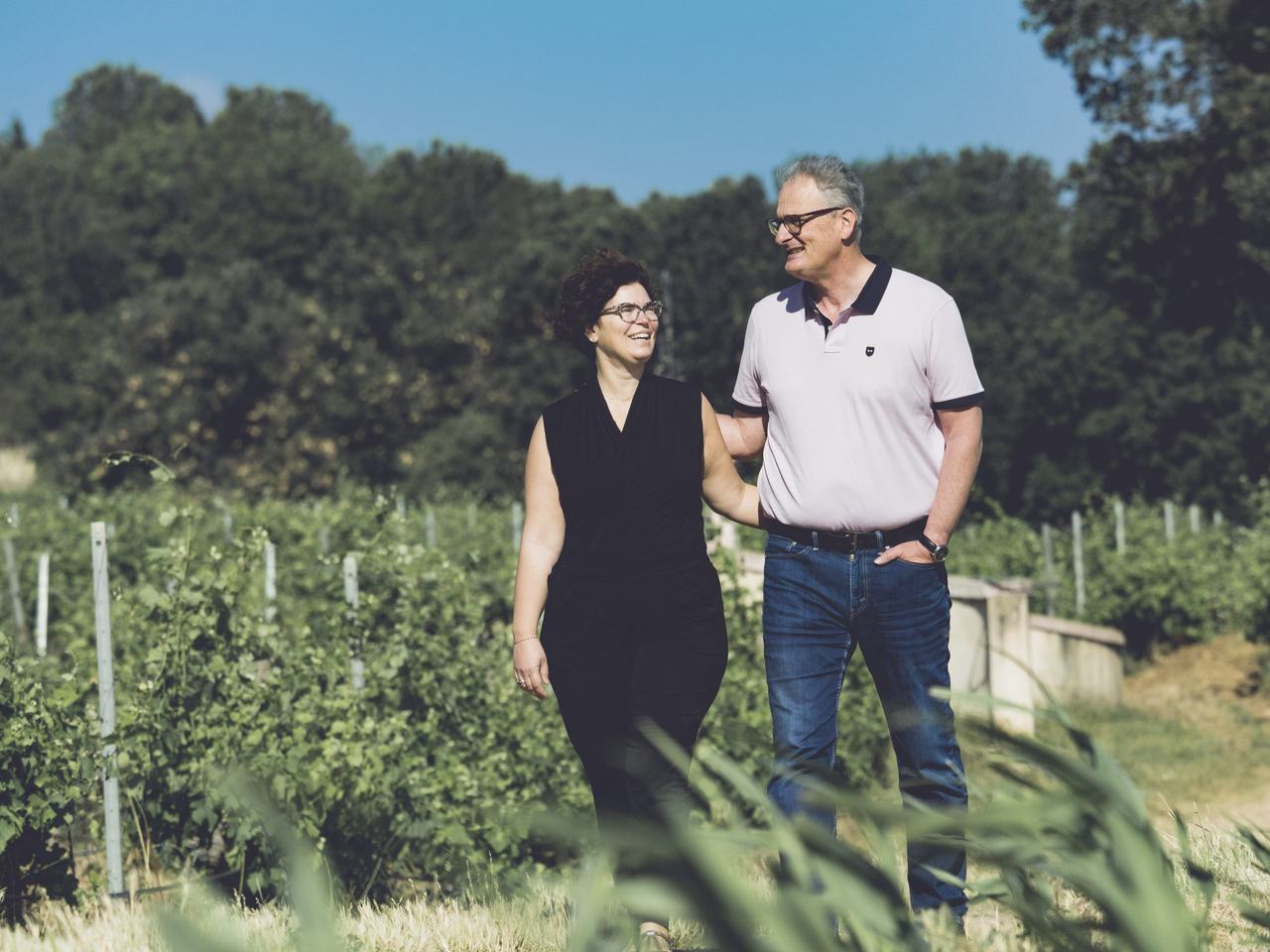
The estate has been in the Mélia family since 1942. Anne-Charlotte Mélia-Bachas runs it with her husband Laurent Bachas, and their daughter Mathilde, who studied in Beaune and worked the floor as a sommelière at Le Bon Georges in Paris, is now part of it too. They make a Châteauneuf that is perfumed and lifted, and a single-parcel Grenache from century-old vines that critics keep comparing to Rayas, the most famous sand-grown wine of the appellation.
The ground does something here that it does almost nowhere else in Châteauneuf, and the family has the sense to let it. The reds never taste overripe, even in hot years. The best of them, Le Puy Rolland, is as fine-boned and silky as Grenache gets.
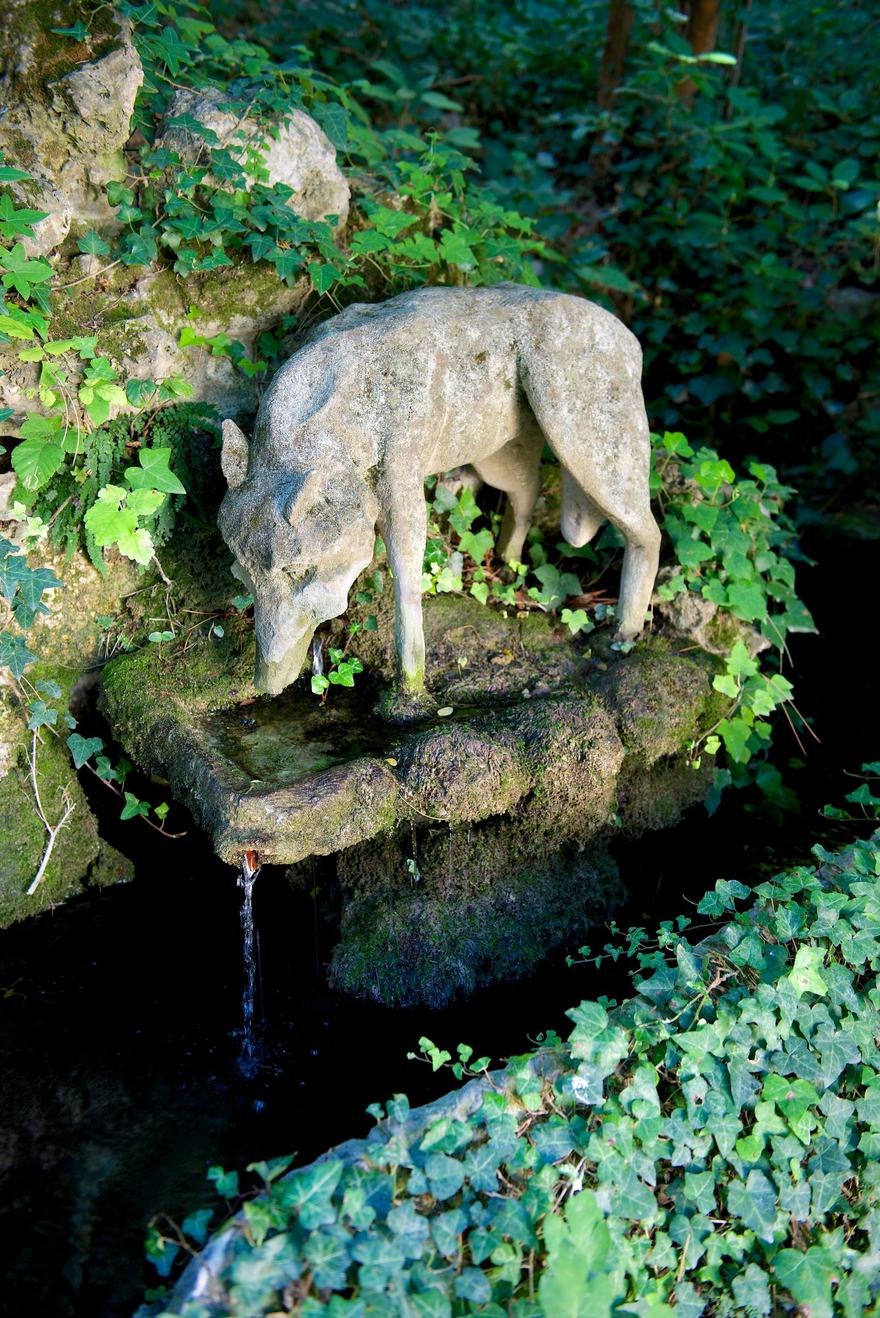
02 · The wolves’ springA château built beside the water the wolves came down for.
The name means the wolf’s fountain. The story the family tells is that the wolves of Mont Ventoux came down onto the plain and stopped to drink at the spring here; the château was built right beside it. It is an odd and handsome building for the southern Rhône, and the spring still matters, because it feeds the vines as well as the legend.
Charles Mélia’s family bought the property in 1942. For more than three decades the grapes went to the négociants, as most Châteauneuf grapes did then, and the first wines bottled at the château under its own name came in 1979. The website counts four generations of Mélias rooted among the warm stones of Provence; the current one is Anne-Charlotte, who took on the estate with Laurent, and Mathilde is the next.
It is a family estate in the plain sense: the people who own it farm it, and in October 2026 Anne-Charlotte and Mathilde came to New York themselves to pour the wines at an account dinner. The range is short, a handful of cuvées, each with a clear reason to exist.
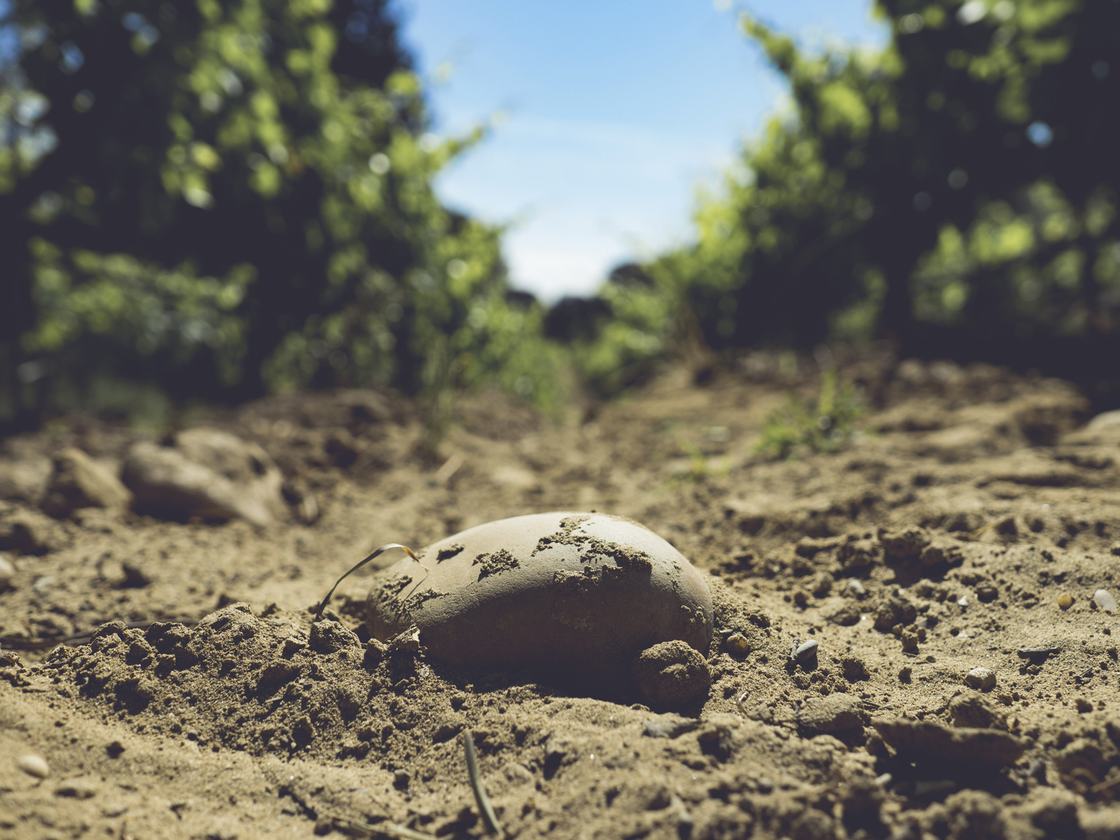
03 · Sand, not galetsOne block, fine sand under the Crau, and the mistral.
Châteauneuf-du-Pape is one of the most fragmented vineyards in France; most estates farm dozens of scattered parcels in several communes. Font du Loup’s twenty hectares are in one piece. The family says this gives the wines a unity of aroma, and it also means one set of conditions, one water table, one exposure, to learn deeply.
The soil is fine sand, lying below the plateau de la Crau, where the galets are; the estate dates the ground to about 5.3 million years. Sand drains fast and stores far less heat than the galets, and it gives Grenache a lighter frame and finer tannin than the stony plateau does. The heights are swept by the mistral. The north exposure keeps the sun from baking the grapes late in the day, and the spring and the water table keep the vines from shutting down in drought. The Revue du Vin de France put it in two lines: the domaine sits on cold ground, facing full north, and its wines never suffer from overripeness.
There is a real contrast inside the block. The Mourvèdre for Legend grows on the parcels that run up against the plateau de la Crau, and it gives a darker, more tannic wine. The century-old Grenache for Le Puy Rolland is pure sand.
Le domaine est situé sur un terroir froid, exposé plein nord. Naissant sur un point culminant de l’appellation, les vins ne souffrent jamais de sur-maturité.
La Revue du Vin de France
04 · Parcel by parcelBarrel or tank, chosen plot by plot, and time before release.
Each parcel is vinified on its own, in barrel or in tank, to keep the character of the ground and the variety. The reds get at least eighteen months of élevage and the white at least six. The large vessels dominate: foudres and demi-muids for the classic red, all foudre for Le Puy Rolland, concrete for the young-vine Les Demoiselles.
The range is short and easy to read. The Château rouge is mostly Grenache, with Mourvèdre, Syrah and a little Cinsault, from vines around forty years old. Les Demoiselles is the young vines, Grenache and Syrah, juicy enough to drink early. Le Puy Rolland is one parcel of hundred-year-old Grenache. Legend is the confidential one, eighty per cent Mourvèdre from the plots by the Crau. Grandeur Nature is Grenache and Syrah made without any sulfur, raised in concrete, to drink young. The white is Grenache blanc, Roussanne, Clairette and Bourboulenc, made in small volume, floral and fresh, and it ages. Two Côtes du Rhône, Signature by la Font du Loup, red and white, round out the book.
In the vineyard the estate is certified HVE level 3 and has been converting to organic farming since the spring of 2021. Beehives sit among the vines, and sheep graze the rows for a few months each year to keep the soil fertile. The family has long kept the hedges and verges, limited tractor passes and chosen every input with care.
05 · Rayas-likeCritics keep reaching for the same comparison.
The comparison critics reach for is Rayas, the sand-grown Grenache that sets the standard for finesse in Châteauneuf. Jeb Dunnuck wrote that the 2016 Le Puy Rolland was “Rayas-like with its elegance and purity”. The Wine Advocate called the same wine “the best Font du Loup I’ve ever tasted”, and Dunnuck described the 2018 as being in “the more elegant, translucent, seamless style of the domaine”. The Revue du Vin de France gave the domaine a star in its guide and admitted a soft spot for Le Puy Rolland, for its velvet and finesse, and for a note of sugared strawberry that gave it a Burgundian accent.
Those descriptions match what is in the glass. Font du Loup is the Châteauneuf for people who love Grenache for its perfume: red cherry, raspberry, orange zest, a little garrigue and pepper, silky tannin, and enough freshness to make the second glass easier than the first. Legend is the exception that proves the rule, built on Mourvèdre, deeper and more structured, a wine to put away.
If you only open one, open Le Puy Rolland. It shows what sand does to old Grenache better than any explanation can.
In the vineyard
& cellar.
- Holding
- About 20 ha in a single block on the heights of Courthézon, north-east Châteauneuf-du-Pape
- Family
- Mélia family since 1942; first estate bottling 1979; Anne-Charlotte Mélia-Bachas and Laurent Bachas, with their daughter Mathilde
- Soil
- Fine sand below the plateau de la Crau; natural spring and a high water table; north-facing, swept by the mistral
- Grapes
- Grenache, Mourvèdre, Syrah, Cinsault; Grenache blanc, Roussanne, Clairette, Bourboulenc
- Farming
- HVE level 3; in organic conversion since spring 2021; sheep and beehives in the vines
- Cellar
- Parcel by parcel in barrel or tank; reds at least 18 months, whites at least 6
- Top cuvée
- Le Puy Rolland: 100% Grenache from one parcel of century-old vines, raised in foudre