
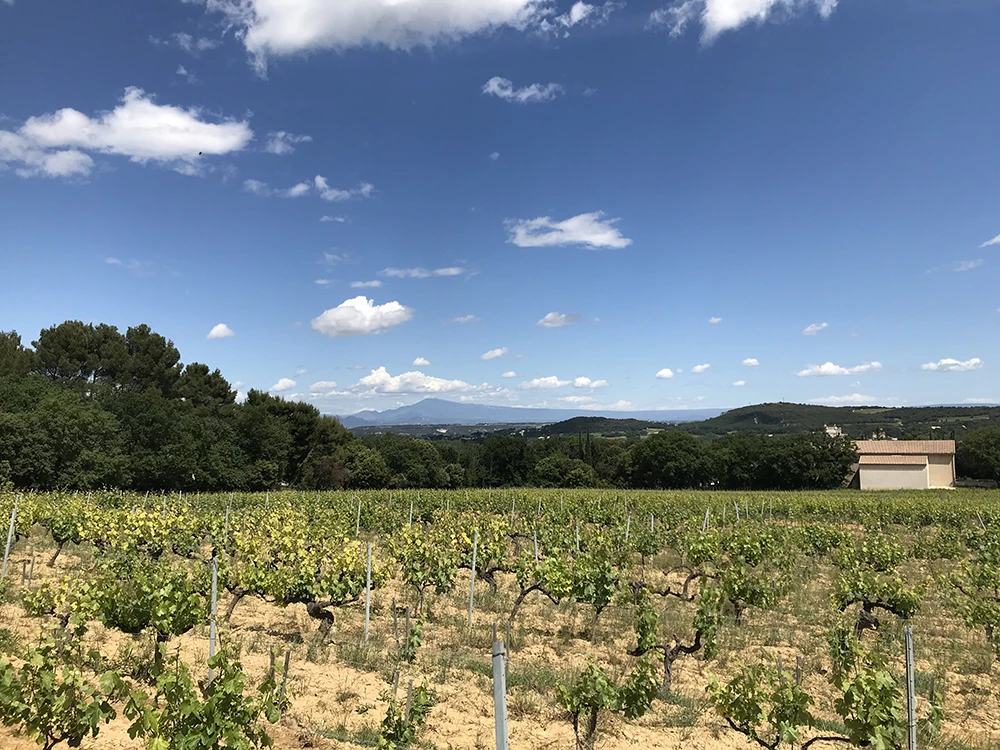
No weedkiller since the 1960s, biodynamic since 2004.
At the end of the 1960s a vigneron from the Oran region of Algeria cleared scrub and woodland at Saint-Laurent-des-Arbres, across the Rhône from Châteauneuf-du-Pape, and planted vines. He never used herbicides or chemical fertilisers. In the southern Rhône of that time it was an odd choice, and he kept to it. The estate was certified organic in 1992, began its biodynamic conversion in 1996 and was certified by Biodyvin in 2004: dates that put it a full generation ahead of its neighbours, most of whom are only now getting round to it.
In 2014 Morgane and Jean-Frédéric Bistagne bought the vines and the cellar and named the place Maravilhas, Occitan for “wonders.” They were working in Switzerland, outside wine, when they decided to change their lives. Today they farm twenty-four hectares, eighteen of them planted, across Saint-Laurent-des-Arbres, Saint-Victor-la-Coste, Orange and Châteauneuf itself: rolled flint pebbles and red clay in one place, galets and sand in another.
Soil that has gone fifty years without chemicals is rare anywhere, and rarer still in a region built on volume. You taste it in the wines, which are elegant and garrigue-scented with a mineral, often salty edge. Wild-yeast ferments, concrete and old wood, sulphur and copper both held down. This is the southern Rhône with its shoulders relaxed.
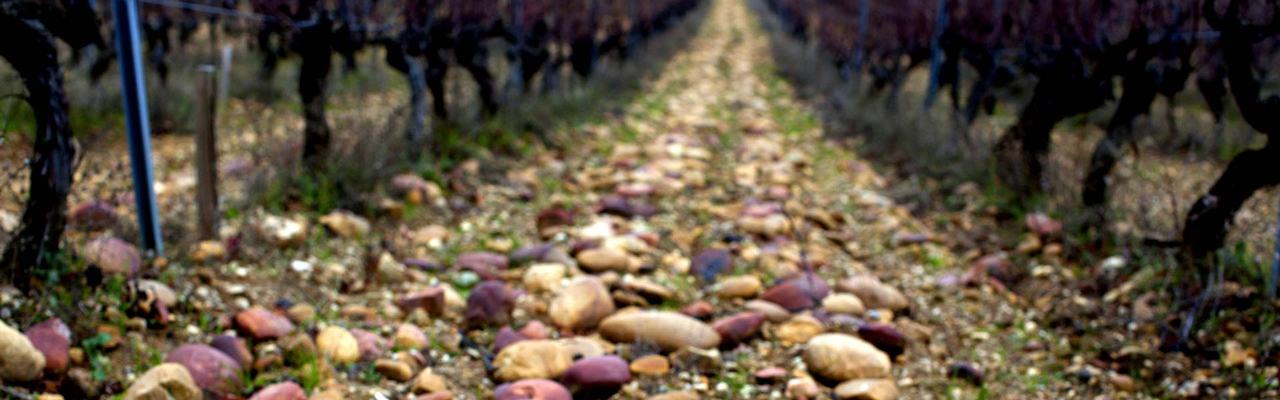
02 · The founderA vigneron from Oran, and fifty years without weedkiller.
The first owner arrived from Algeria with a conviction that this scrubland would make great wine. He cleared it himself and planted the southern Rhône’s classic grapes: Grenache, Syrah, Mourvèdre and Cinsault for the reds, Bourboulenc, Clairette and Grenache blanc for the whites. He had been taught by older growers to work the vines with their future in mind, which meant protecting the soil above everything. So no herbicides and no chemical fertilisers, at a time when nearly everyone around him was using both.
The rest followed from that. Organic certification came in 1992, the biodynamic conversion in 1996, the Biodyvin certificate in 2004. When the Bistagnes went looking for an estate, it was this history that decided them. The domaine’s own account is clear that Maravilhas is the fruit of the work done since 1967 by their predecessor, and the couple talk about carrying it on more than starting again.
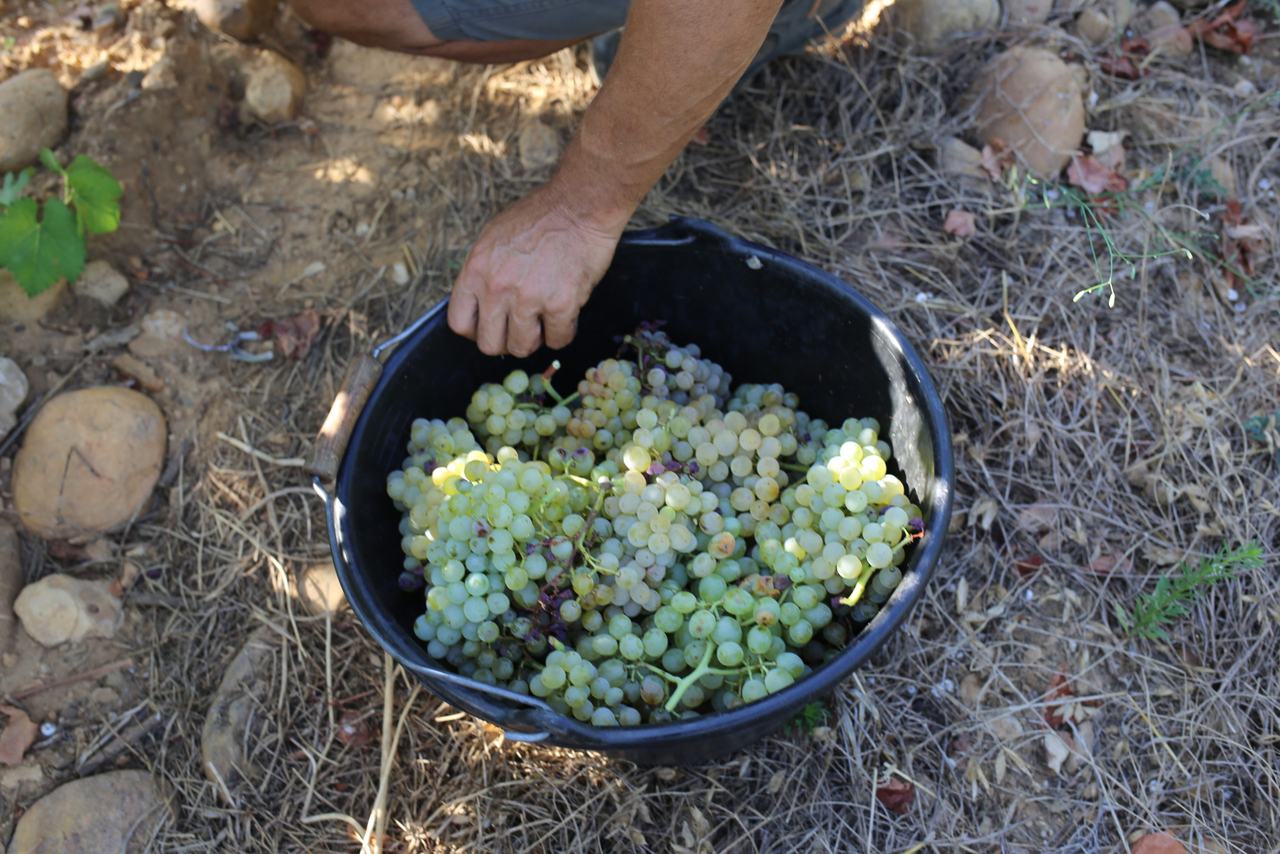
03 · Galets and red clayLirac across the river, and Châteauneuf since 2015.
Lirac is one of the southernmost crus of the Rhône, spread over four communes on the Gard side of the river. Its reds are powerful and structured, with a fine acidity that helps them age, and its whites, the domaine says, are “sunny and mineral with saline notes and lovely bitters.” Maravilhas’s Lirac vines grow on galets roulés, the river’s rounded stones, over clay and limestone. The Côtes du Rhône parcels sit on rolled flint pebbles and red clay over a bed of sand. Laudun, where the Romans kept watch over the Rhône from Caesar’s Camp, became a named village in 1967, the same year the first vines went in here.
Since 2015 the estate has also farmed three plots of Châteauneuf-du-Pape, one in Orange and two in the quartiers of Four à Chaux and Palestor: limestone, sand, red clay and the big pebbles the Isère carried down from the Vanoise. Espirito blends them, with Syrah added from 2018; Santo, born in 2019, became pure Grenache in 2020. The vines across the estate average around forty years old, many older, planted at about four thousand to the hectare.
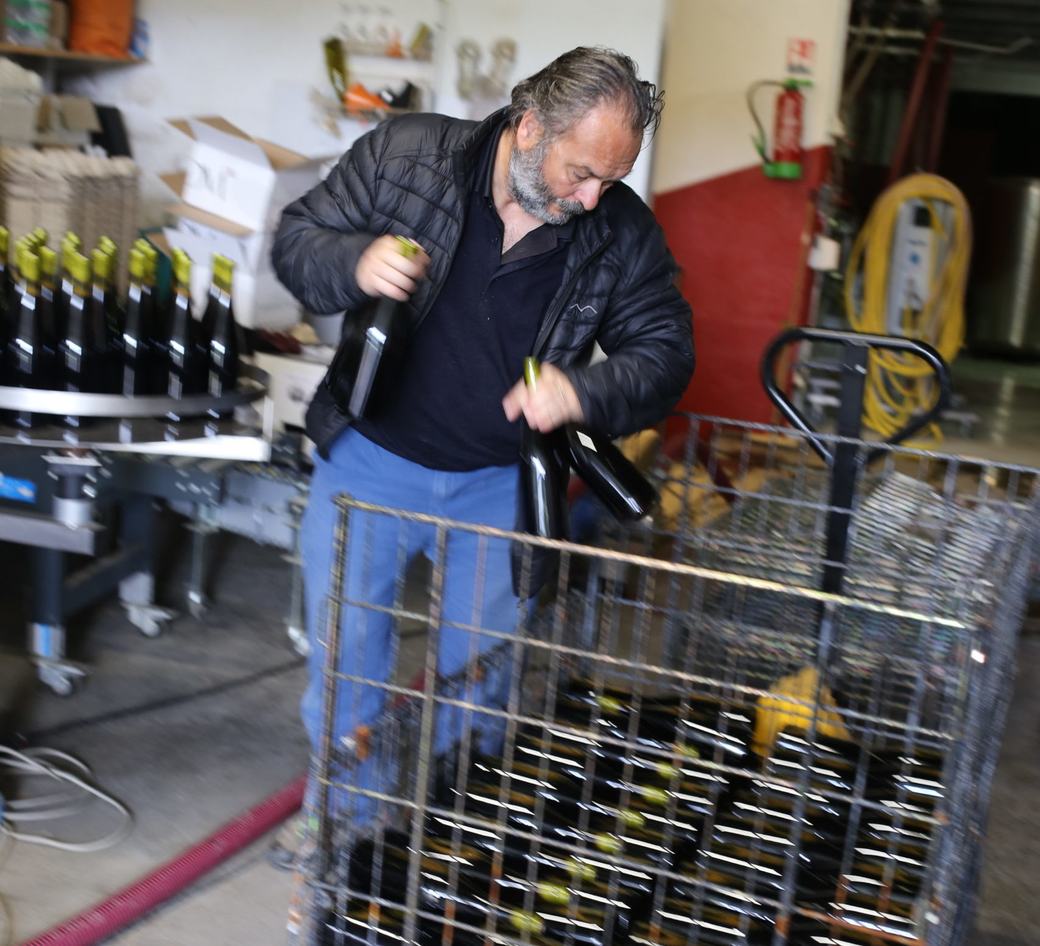
04 · Morgane and Jean-FrédéricNewcomers who learned from the neighbours.
Morgane is from Brittany and Jean-Frédéric from Marseille. Jean-Frédéric trained with growers of the region he had come to know since 2010, and the team now includes Michel Sinard and Lila Schneider, and Zico, whom the domaine lists as its guardian.
They kept everything that made the place worth buying. Treatments are plant and mineral preparations, meant to build the vine’s own defences and send its roots deep. Everything is picked by hand. Ferments start with the yeasts on the grapes and in the cellar; the wines are raised in concrete vats, with oak only where a wine asks for it. Healthier fruit lets them keep sulphur and copper low. In the wooded strips between parcels they have put up nesting boxes for bats and tits, small allies against vineyard pests. Yields on the reds run twenty-five to thirty hectolitres a hectare.
For them, biodynamics is an essential support tool.
Domaine des Maravilhas
05 · The winesCinsault for pleasure, Syrah for the cellar, and a white with salt in it.
Alice is pure Cinsault: three days on the skins, four months in concrete, no oak, bottled as Vin de France. The domaine calls it a “gourmandise onirique,” and it drinks like one, light, bright and fragrant, the bottle to put in the fridge for half an hour in summer. Pradau Rouge is the estate’s Lirac in its classic form, Grenache and Syrah in equal parts, ten days of maceration and two years in concrete before it sees a bottle. It is the best value of the four. Pradau Blanc is Bourboulenc and Grenache blanc, pressed as whole bunches and fermented in concrete; the Bourboulenc gives it structure and the salinity the domaine calls typical of Maravilhas.
La Pierre de Josette is the serious one: Syrah from Lirac, eight days of maceration, three months in concrete and nine in demi-muids, the only wine in our selection that sees wood. It has the depth of autumn undergrowth and blackberry and will reward a few years in the cellar. The Châteauneufs, Espirito and Santo, stay mostly at home for now, along with a Clairette called Maestral and a Mourvèdre-led Canto Bruno. Put our four together and you have a fair picture of what the southern Rhône tastes like when nobody pushes it.
In the vineyard
& cellar.
- Holding
- 24 ha, 18 ha planted · Saint-Laurent-des-Arbres, Saint-Victor-la-Coste, Orange, Châteauneuf-du-Pape
- Since
- Vines planted from 1967 · Morgane and Jean-Frédéric Bistagne since 2014 · Châteauneuf plots since 2015
- Farming
- Never herbicides · certified organic 1992 · biodynamic (Biodyvin) since 2004
- Soil
- Galets roulés over clay-limestone in Lirac · flint pebbles and red clay over sand · limestone, sand and galets in Châteauneuf
- Cellar
- Hand harvest · indigenous yeasts · concrete vats; demi-muids for La Pierre de Josette only
- Yields
- 25–30 hl/ha on the reds, 35–40 for Alice