
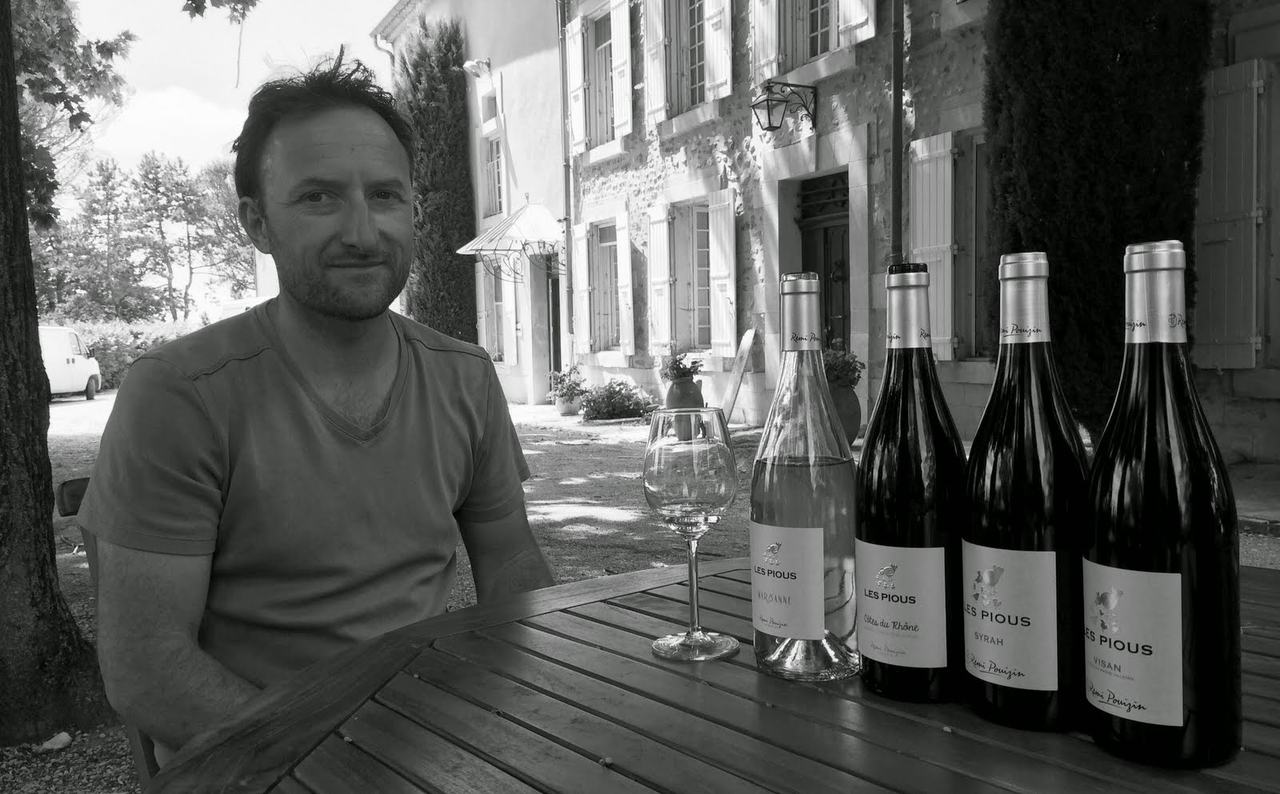
A fifth-generation Visan grower who left the family firm to farm his own way.
Rémi Pouizin is a fifth-generation grower in Visan, a hill village at the northern edge of the southern Rhône, between the Dentelles de Montmirail and Nyons. His grandparents grew fruit and vegetables organically in the 1960s, long before anyone sold wine on the strength of it. Rémi ran the family's Domaine La Fourmente organically from 2000. In 2014 he left to set up on his own in the same village, and he now makes the wines with his wife Géraldine at Domaine Dieu-le-Fit. Vignoble Rémi Pouizin is the name they travel under.
Demeter has certified the vineyards as biodynamic since 2016. That certification is not easy to hold and not cheap to keep, and nobody drinking the wine would ever know if he stopped. He hasn't. The vines are spread over three kinds of ground around the village, at about 180 metres: a family block in one piece by the old farm, a section on the garrigue, and small hillside plots near the woods.
The reason to drink them is honesty. These are textbook southern Rhône wines, fresh and unforced, and they taste of the place before they taste of any technique. Berry Bros. & Rudd, who buy from the Pouizins for their own-label Côtes du Rhône, put it simply: “Rémi and Geraldine Pouizin of Domaine Dieu-le-Fit are at the top of their game.”
02 · La FourmenteA family domaine, a split, and a biscuit factory.
The Pouizin family's domaine in Visan was La Fourmente, and its wines were sold in Britain and France for years under that name. In 2014 the British importer Dreyfus Ashby reported that differences between Rémi and his father had led Rémi to leave and set up on his own in the village. Under the arrangement they described, Rémi would go on managing the family vineyards with the same biodynamic preparations as before, and pay his father a commercial rate for the grapes. Berry Bros. & Rudd now write that Rémi inherited most of his vineyards from the Fourmente property.
The new cellar was not a winery to begin with. Domaine Dieu-le-Fit is a long set of buildings just outside the centre of Visan, a large house and its annexes, built in the nineteenth century as a biscuit factory by the Bedouin family. In the summer of 2014 Rémi and Géraldine were restoring the house, with a plan to open an inn, while installing tanks in the old biscuiterie in time for the harvest.
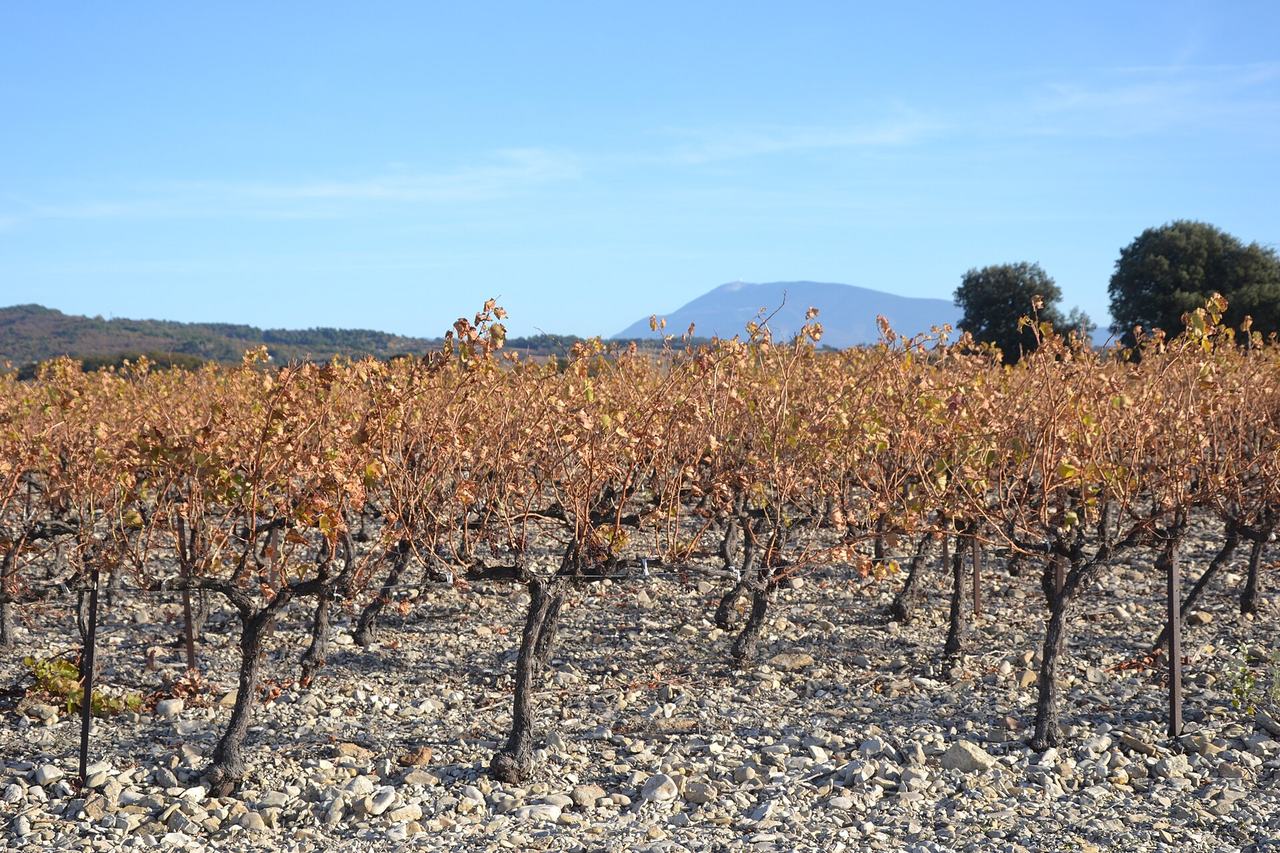
The first wines under the new arrangement carried the label Les Pious, with a hen and her chicks on it for the couple's five children. One of them came from five hectares of red clay strewn with boulders, vines planted by Rémi's great-grandfather.
03 · VisanRed clay below, saffre above, garrigue on the plateau.
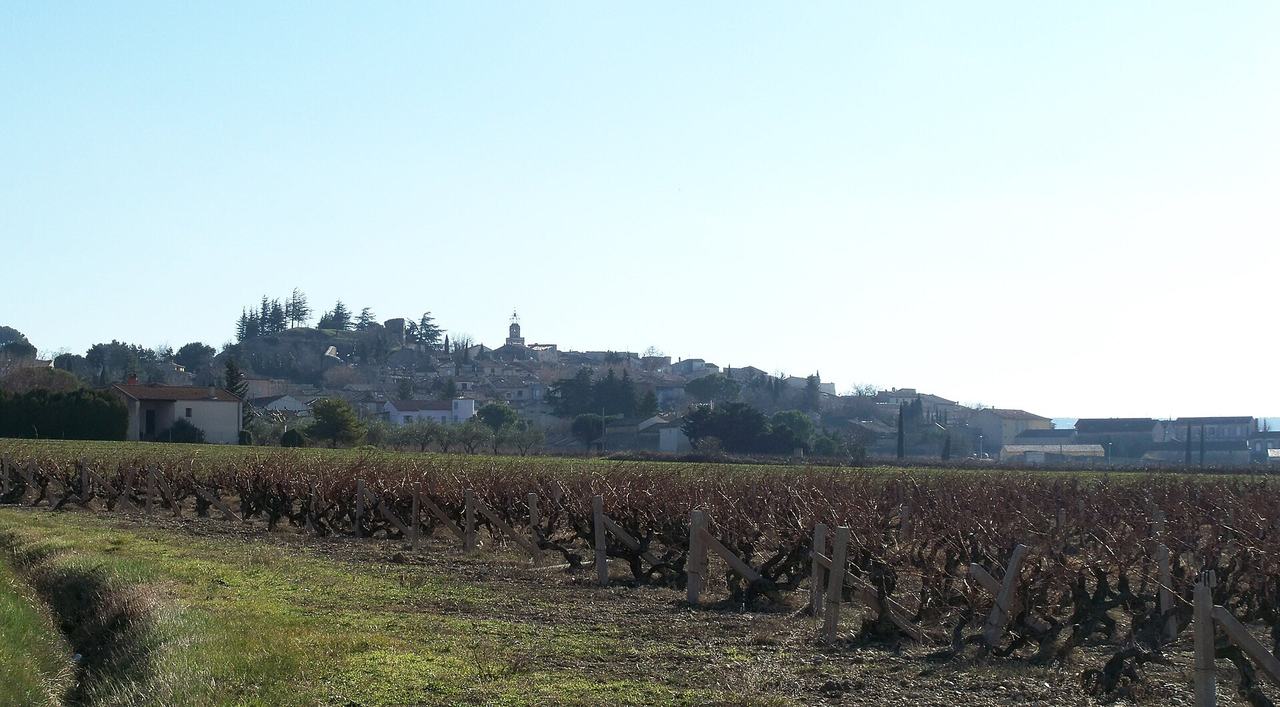
Visan sits at about 180 metres with hills on every side: the Dentelles de Montmirail to the south, the Nyons valley and Vaison-la-Romaine to the west. It is one of the named villages of the Côtes du Rhône Villages appellation. By the estate's own description, it farms about 35 hectares around the village, about 30 of them vines, in three parts: a 15-hectare family block in one piece near the historic farm, 8 hectares on garrigue soils, and 7 hectares of smaller hillside plots close to the woods.
Those three parts sit on different ground. Lower down there is red clay with pudding stones, a conglomerate of rounded pebbles. Just above the village comes saffre, a soft sandstone. Up on the plateau, toward Rasteau, the soils are more varied and strewn with garrigue. Because the wines are blends of plots, the cuvées carry names of their own instead of a single vineyard.
Grenache is at the heart of the blends. Syrah, Mourvèdre and Carignan temper it and lift the aromas, Cinsault adds spice, and there is Viognier and Marsanne for the whites. Around the vines the farm keeps other crops, ancient grains, meadows and lavender, so the vineyard is one part of a working farm rather than a monoculture.
04 · DemeterIf he wouldn't drink it, it doesn't go on the vines.
Rémi's rule for the vineyard is the one he gave Berry Bros. & Rudd: if he can drink a product, he is happy to put it on his vines. The work follows from that. The vines are fed with home-made compost and sprayed with plant teas, the calendar follows the moon, and the biodynamic preparations he used at La Fourmente came with him. Demeter certified the domaine in 2016.
In the cellar the approach is traditional for the southern Rhône and deliberately light. The reds are aged in large foudres, where the wood breathes without flavouring the wine: around ten to twelve months for Les Estoubles, twelve to fourteen for the Visan. The early Les Pious wines were raised only in cement and stainless steel, and even a Syrah with a tenth of its volume in barrique showed no trace of the wood, by Dreyfus Ashby's account.
If I can drink a product, I am happy to put it on my vines.
Rémi Pouizin, to Berry Bros. & Rudd
05 · The two winesLes Estoubles and Piemont Volabis.
Two of the Pouizin reds are in this book. Les Estoubles is Côtes du Rhône from Visan: Grenache, Syrah and Mourvèdre from vines around twenty-five years old, aged in foudres and old oak. It is the wine the house opens most often. Piemont Volabis is the Côtes du Rhône Villages Visan, from the hillside plots, with vines around thirty years old and a longer stay in foudre. Piemont means the foot of the hills, and this is the more serious of the two.
Decanter's Christelle Guibert gave 90 points to the domaine's Native 2015, a Visan red, and called it “a serious food wine which has depth and complexity.” Berry Bros. & Rudd, who work with the couple on their own-label Côtes du Rhône, wrote that there is “honesty and integrity in everything the couple does.” That is the right praise for a grower like this: a modest village, careful farming, and wines that do not pretend to be anything else.
In the vineyard
& cellar.
- Holding
- About 35 ha around Visan, about 20 ha of vines across three plots: the family block, the garrigue parcels and the hillside plots · ~180 m
- Since
- Fifth generation in Visan · his own domaine, Dieu-le-Fit, since 2014
- Ground
- Red clay and pudding stones below · saffre (soft sandstone) above the village · garrigue on the plateau toward Rasteau
- Grapes
- Grenache, Syrah, Mourvèdre, Carignan, Cinsault · Viognier, Marsanne
- Farming
- Certified organic (Bureau Veritas) · biodynamic since 2016 · home-made compost, plant teas, lunar calendar
- Cellar
- Reds in large foudres, 10–14 months
- Press
- Decanter (Christelle Guibert): 90 points for Native 2015