
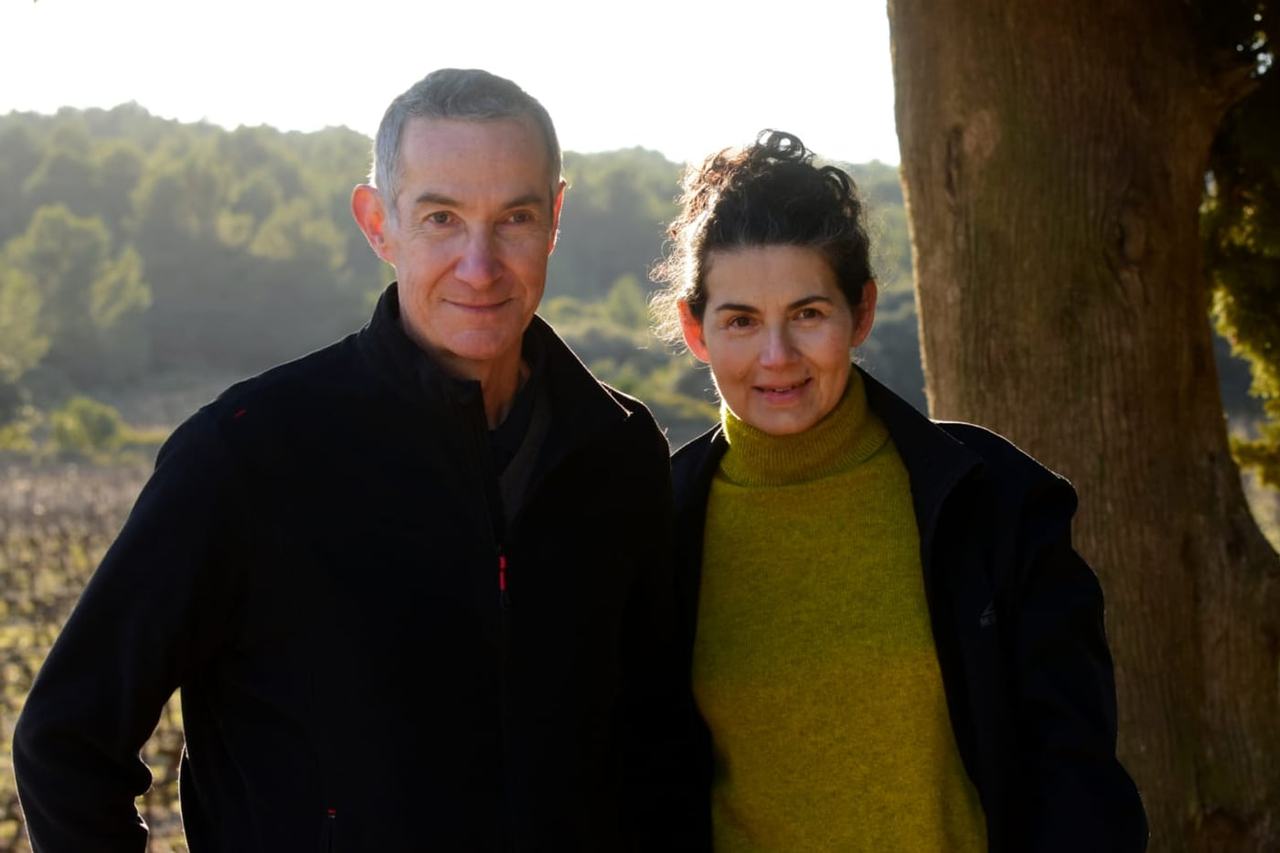
This is what Corbières can actually do.
A doctor and a hydrogeologist run this (Jean and Anne Lignères, fifth generation), and if that sounds like a joke about terroir, consider that the hydrogeologist can read the water table under the Montagne d'Alaric and the physician has spent a career deciding when not to intervene. A hundred hectares of vines with another twenty of garrigue, woods and olives left deliberately unfarmed for the biodiversity. Some of the Carignan is over a hundred and twenty years old. Organic since 2007, biodynamic since 2012, everything picked by hand. Corbières has spent decades being sold by the litre. This is what it can actually do.
02 · Médecins-vigneronsA family of doctors, a château bought in 1957, and a fire in July 2025.
The Lignères have sold wine since the nineteenth century (Louis founded the house and shipped his cuvées across France; his son Paul and Clémence carried it on), but the château came with the doctors. André Lignères, a country GP, and Suzette, a pharmacist, bought La Baronne at the foot of the Montagne d’Alaric in 1957, after their studies, and began bottling under its name in the 1970s; for twenty years they pushed the domaine toward quality, with their three children beside them. The Hachette put it neatly: “a whole family devoted to medicine… and to wine — André and his son Jean are physicians, Paul a dentist, Geneviève a pharmacist-biologist.” The company still carries Suzette’s name.
Jean is the village doctor at Moux and the author of the wines (“Jean’s art is to imagine, several years ahead, his ideal of the wines”), and Anne, a hydrogeologist by training, runs the estate, which is to say the water. Stefano Chioccioli, the Tuscan oenologist, has advised them since 2002. The harvest crew is Andalusian, Portuguese from the Douro and local, in its second generation. On the 5th of July 2025 a car burning on the hard shoulder of the A61 set the hill alight, and thirty to thirty-five hectares of La Baronne burned, old vines among them; the estate lost about forty per cent of the harvest and chose not to make the Pièce de Roche that year rather than risk smoke in it. Terre de Vins, visiting in December: “Anne and Jean Lignères are more combative than ever, and already turned toward what comes next.”
Ici, la vigne se cultive comme on soigne un être cher, avec respect, écoute, observation, analyse et le sens du détail.
Château La Baronne
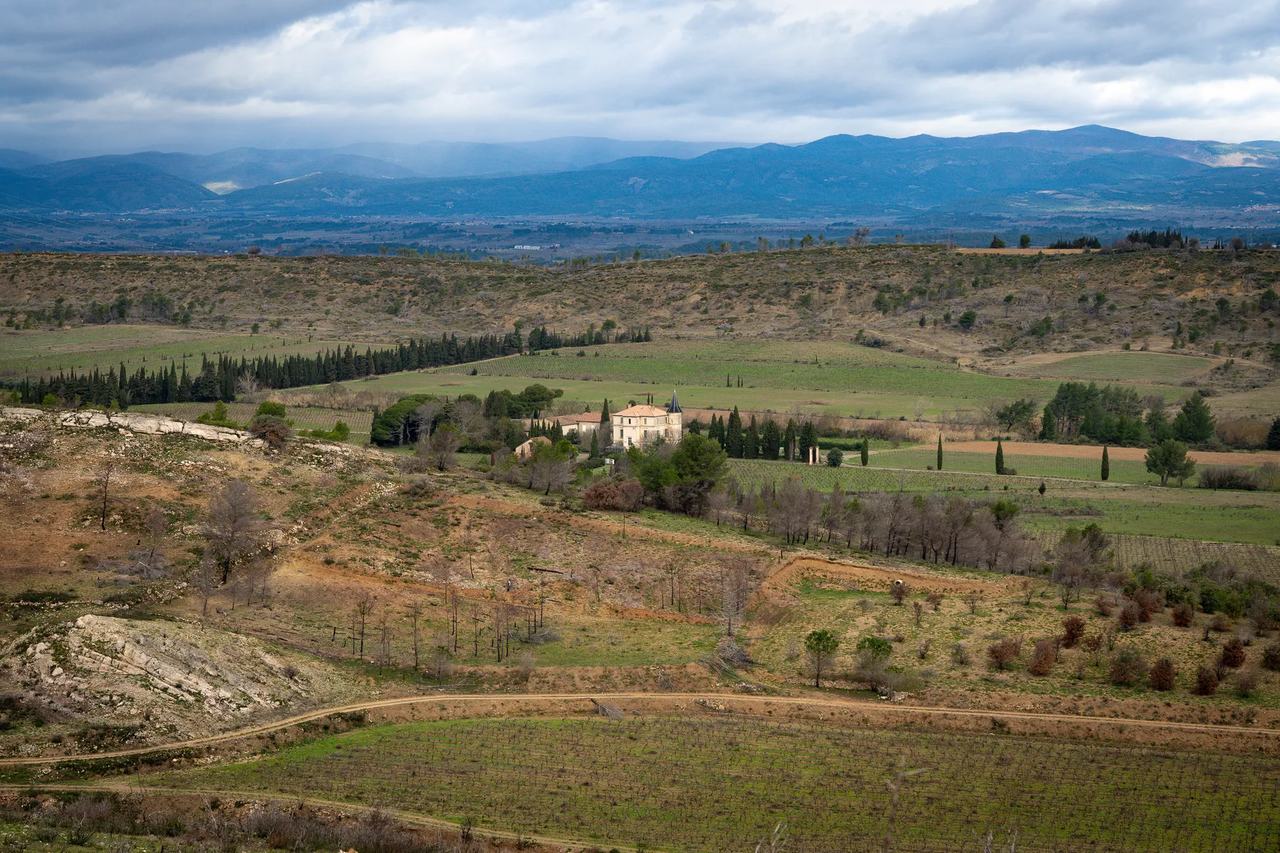
03 · AlaricFour geological eras on one hill, water at nineteen degrees, and a clos of Carignan planted in 1892.
The Montagne d’Alaric is the northern wall of the Corbières, between Narbonne and Carcassonne, and the estate’s vines lie on its north flank between a hundred and two hundred metres, on terraces, little valleys and slopes of clay, limestone and sandstone; the hill, the family likes to say, shows all four great geological eras. What matters as much is underneath: the massif collects the rain into a deep network of groundwater that surfaces in the village of Fontcouverte at nineteen degrees, and the estate credits that water, and the living soil that holds it, with the freshness in the wines. The hydrogeologist was not a joke.
The grapes are the Corbières grapes (Carignan above all, Grenache noir, Mourvèdre, Syrah, Cinsault; Grenache blanc and gris, Vermentino, Roussanne), and the parcels have names. Pièce de Roche is the crown: a clos of Carignan planted in 1892 by a Monsieur Roche on fine gravel over clay-limestone, still on its original rootstocks, cropped at seventeen hectolitres, seven thousand bottles. Les Chemins gathers the hillside parcels (Carignan of sixty years, Grenache, Mourvèdre, Syrah on blue marl and gravel) into what Biodyvin calls the estate’s postcard. En montant l’Alaric is the Syrah-led slope wine; Les Lanes the old Carignan and Grenache; Las Vals the fluvial terraces of sandstone pebble for Mourvèdre and a skin-macerated Roussanne; and two sulphur-free wines, Les Chemins de Traverse from forty-five-year Cinsault and Cayrelières from young Grenache.
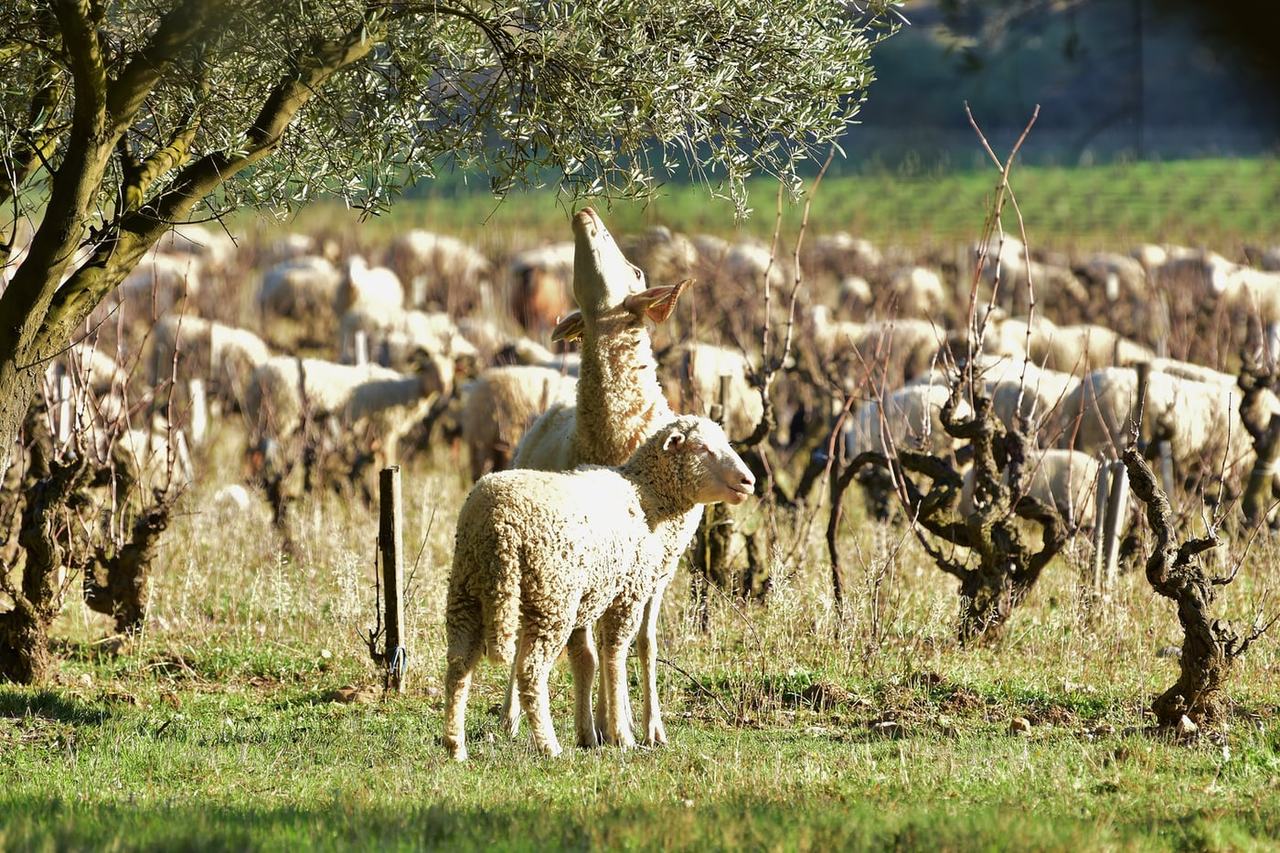
04 · A biodynamics of common senseHedges in the rows, two hundred and fifty nest boxes, sheep in winter, and ceramic eggs.
Not using synthetic chemicals had always been, for a family of doctors, “the tacit rule, a bare minimum”; Jean formalised it with organic certification in 2007, after reading in the medical press about environmental disease, and went to biodynamics in 2012 after a visit to Meinklang in Austria; Demeter, and Biodyvin since 2019. “We have to find answers to the imbalances we see, make the terroir and the grapes speak more, compensate for the monoculture of the vine with even more biodiversity.” So: native trees and hedges planted between and at the ends of rows, stone piles for habitat, ponds, more than two hundred and fifty nest boxes and bat hotels (nearly all occupied, the ornithologists of Aude Nature report), and the local shepherds’ flocks through the vines from November to February. Gobelet vines, one row in two ploughed and the next grassed, dry-farmed. The estate says the soils now buffer the summers: the vines no longer show water stress, and the grapes ripen earlier, fresher, with less sugar. “We work with the stars,” Jean says, and does not apologise for it.
Every parcel is picked by hand, sorted in the vineyard and the cellar, destemmed, and fermented and raised on its own, on its own yeasts, with the least sulphur the year allows and nothing else: in cement and steel, in truncated wooden vats, in terracotta jars and the large ceramic eggs Jean designed, lying on their sides. Long, gentle macerations, twenty-five to thirty-five days for the reds; a dozen for the sulphur-free Cinsault. The Pièce de Roche spends thirty days on skins with most of the volume in amphora, a year in dolia and another in barrel and egg. Everything is bottled unfined and unfiltered. The goal, in their own capitals: de l’EMOTION.
Il faut compenser la monoculture de la vigne par une encore plus grande biodiversité.
Jean Lignères
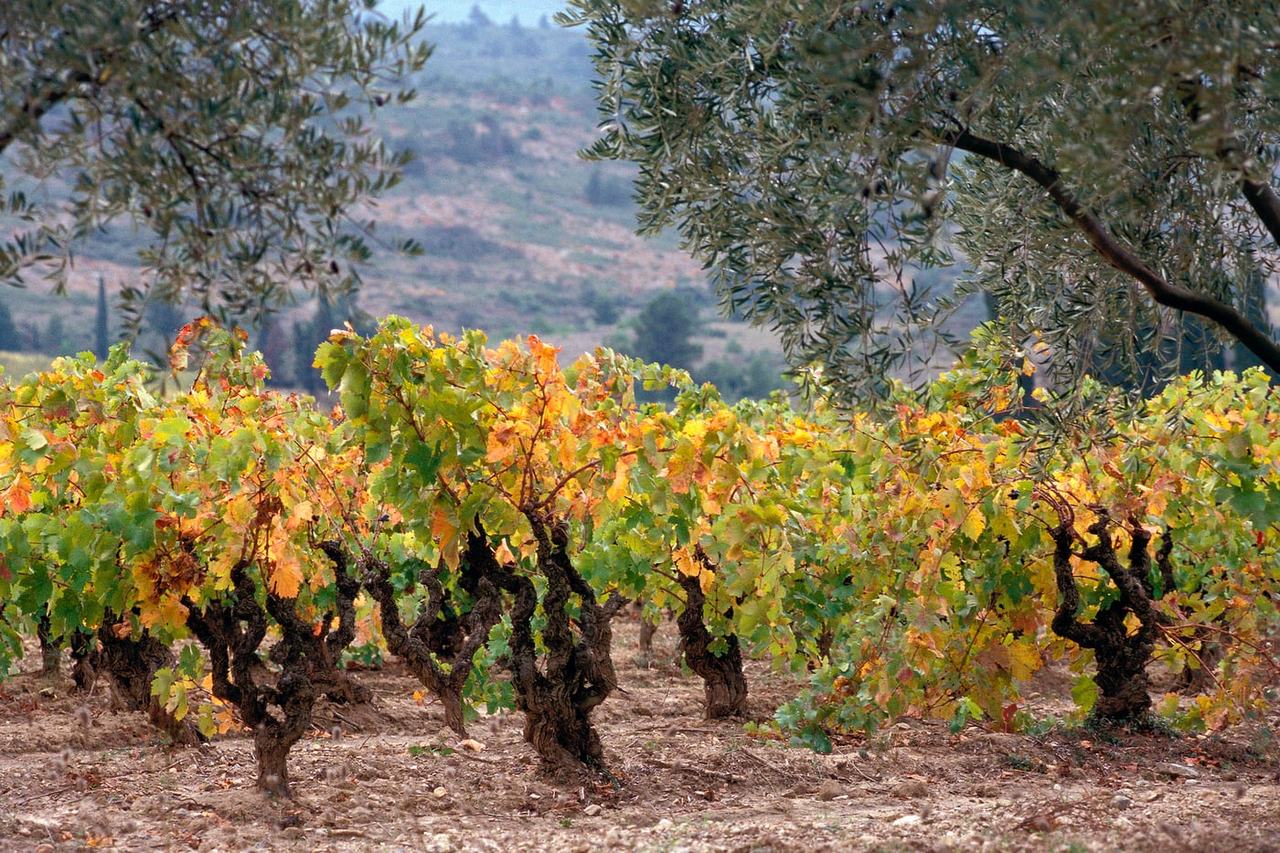
05 · What they say“Certainement un des meilleurs carignans jamais goûtés.”
La Revue du Vin de France gives the estate two stars in its guide, 92 to the 2018 Pièce de Roche and 91 to the 2020 Les Chemins, and in its December 2025 report on the burned Corbières described freshness and minerality as the house signature. The Guide Hachette has listed the property since the Vigne La Prière white of 1998 (“calm, poised, sure of itself… of a strong originality, a wine that leaves no one indifferent”) through a star for Las Vals and the family entry on Les Chemins. Meininger calls the estate a pioneer of agroforestry; the Wine Scholar Guild notes “five generations of the family have run the estate, each as doctors who became winemakers.” Of the 1892 Carignan, an American retailer’s line is the right one (“more or less the crown jewel”), and a French taster’s is the honest one: “certainly one of the best Carignans ever tasted.”
Anne et Jean Lignères s’avèrent plus que jamais combattifs et sont déjà tournés vers l’après.
Terre de Vins, December 2025
In the vineyard
& cellar.
- Holding
- Around 90–100 hectares of vines and 20 of garrigue, woods and olives on the north flank of the Montagne d’Alaric at Fontcouverte and Moux, 100–200 m; clay, limestone and sandstone; 30–35 ha burned in July 2025
- Since
- Lignères wine merchants since the nineteenth century; André and Suzette Lignères bought the château in 1957; Jean Lignères (physician) and Anne Lignères (hydrogeologist) today; Stefano Chioccioli consulting since 2002
- Vines
- Carignan (Pièce de Roche planted 1892), Grenache noir, Mourvèdre, Syrah, Cinsault; Grenache blanc and gris, Vermentino, Roussanne; gobelet; dry-farmed
- Farming
- Organic certified 2007; biodynamic since 2012, Demeter; Biodyvin since 2019; hedges and trees in the rows, 250+ nest boxes, sheep in winter; hand harvest, sorted twice
- Cellar
- Parcel by parcel; indigenous yeasts; cement, steel, wooden vats, terracotta jars and ceramic eggs; 25–35-day macerations; unfined, unfiltered; two cuvées with no added sulphur
- Honours
- La RVF two stars; 92 for Pièce de Roche 2018; Guide Hachette star, Las Vals 2003