
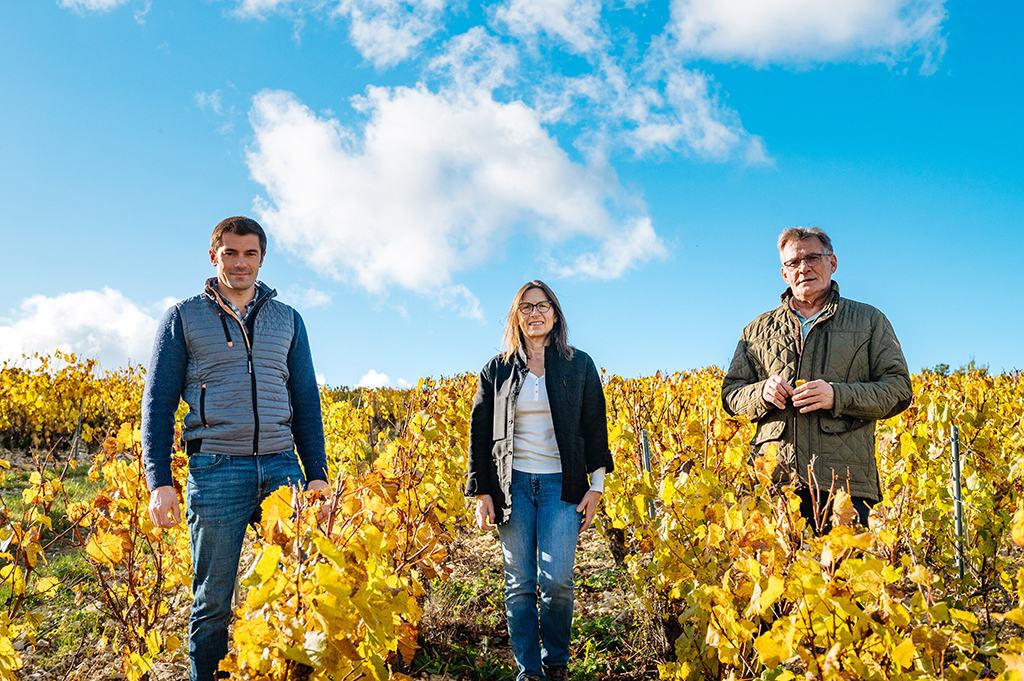
They planted them, parcel by parcel.
Agnès and Didier didn't inherit these vines; they planted them, parcel by parcel, from 1987 onward. In Burgundy that is close to unheard of, and it tells you something about the stubbornness involved. The soil is Kimmeridgian marl with fossil oysters still visible in the dirt, and they refuse to get in its way: next to no oak, six to twelve months on fine lees, mostly in steel, and nothing added unless the vine is in real trouble. Their son Florent is on the label now. The wines are nervy, mineral, and utterly without makeup.
02 · Vineyard workers“There were not any vines in the family, so they had to start from scratch.”
The surname is the most famous in Chablis and it did them no good at all. Didier Dauvissat is a distant cousin of the Vincent Dauvissats on the other side of the river, distant enough that there was nothing to inherit. He grew up in Fyé, behind the grand crus, and worked other people’s vines: at Moreau, at La Chablisienne, and at the Dauvissat domaine in Chablis itself. Agnès worked in the vines too. “My parents were vineyard workers,” their son Florent says. “There were not any vines in the family, so they had to start from scratch.” In 1986 they began buying uncultivated ground at Beine, the village in the cold side-valley west of Chablis, and in 1987 they planted their first parcel: the premier cru, Beauroy, which is not where a cautious person starts. The first harvest was 1989. For years every grape went to the négociants, who sent their own pickers; the domaine bottled a little more each vintage until, by the 2020s, it sold nothing in bulk at all.
Florent came home in 2012 after a stage with his cousin Vincent, and the label now carries three names. He will tell you plainly what the ground costs (a hectare of village around a hundred thousand euros, a premier cru four times that) and that “for me, who arrived at the domaine five years ago, it is impossible to find any premier or grand cru.” So they plant what can be planted: a little Pinot Noir and a crémant block went in around 2018, and the thirteen hectares are now all their own hands’ work. The Hachette put it best: a couple who “understood that improving quality also meant work in the vines,” and went back to ploughing every one of them.
My parents were vineyard workers. There were not any vines in the family, so they had to start from scratch.
Florent Dauvissat
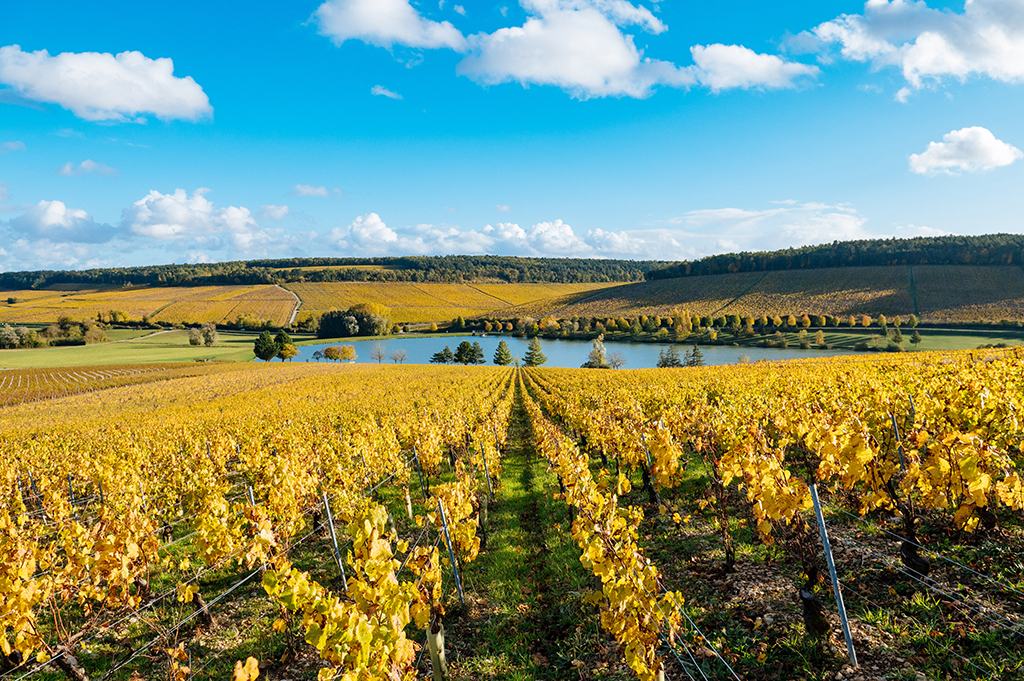
03 · The lake, the plateau, the slopeBeauroy above the water, Fyé beside Blanchot.
Beine sits in the valley of its own stream, and in 1978 the stream was dammed into a reservoir, the Étang de Beine, whose water now runs the frost sprinklers on the neighbouring slopes. The Dauvissats do not use them; they use candles and late pruning and nerve. What the lake does for them is the air: “The pond definitely has an impact on the microclimate,” Florent says: morning mists curling off the water, a slower ripening, a tension in the wine. Their two hectares of Beauroy are a single parcel at the climat’s eastern end, in the Côte de Savant, above the lake, planted in 1987. Most of it is raised in steel; a barrel or three of it, from a lieu-dit called Le Verger, goes to old 500-litre wood as Le Caractère du Verger.
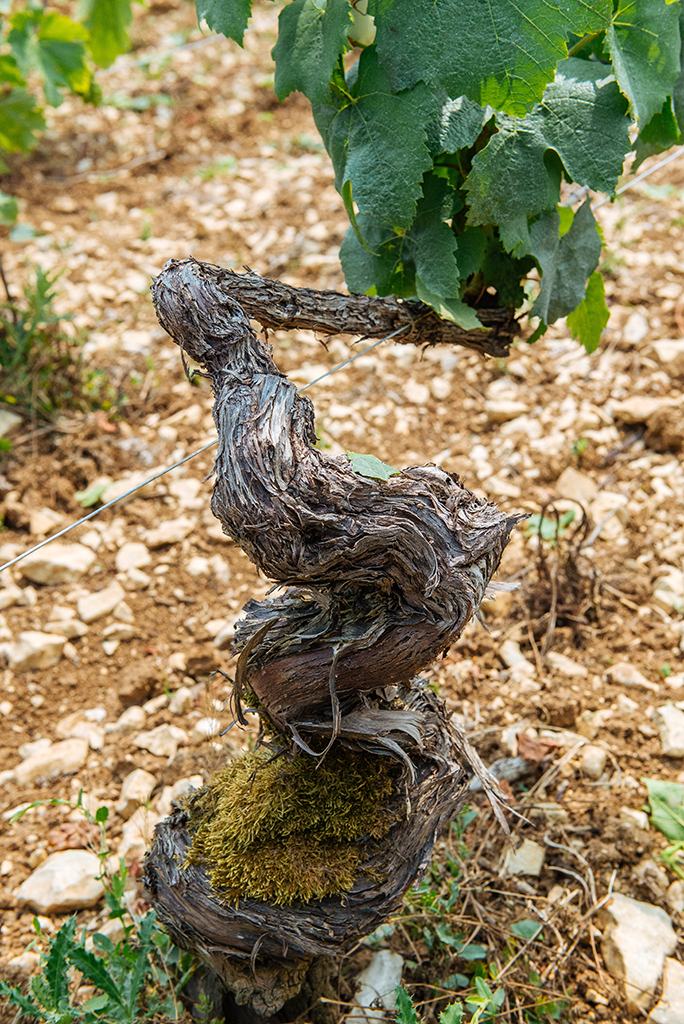
The village wine, Les Brèches de Fyé, is three hectares on the south-facing slope above Didier’s home village, in the lieu-dit Bréchains, which is the continuation of the grand cru Blanchot below the Petit Chablis plateau. Les Petits Vignerons (the cuvée of the family’s children) is half a hectare of the oldest vines, planted 1987 at Courgis near the Chaume de Talvat, hand-picked, a third of it raised in used demi-muids; it is not made when a small year leaves too little to fill a tank. And the Petit Chablis is called Les Deux Terres because it comes from two soils: the clay plateau at Beine near Vauligneau, and the hard Portlandian limestone full of marine fossils on the grand cru plateau above Fyé. Everything was planted with Chardonnay by the family, “on soils of clay-limestone marl and small fossilised oysters.” Thirteen hectares: a third Petit Chablis, four and a half of Chablis, the two of Beauroy, and the young reds and crémant.
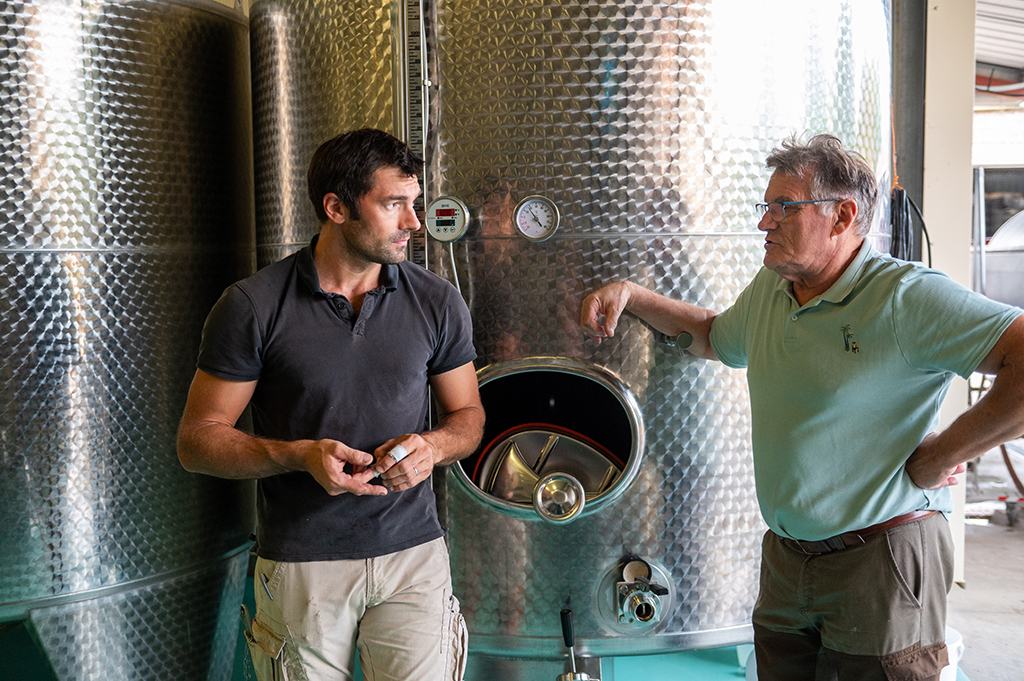
04 · Steel, and not much else“Vinification at the domaine is very traditional.”
Every hectare is ploughed. “We are close to lutte raisonnée,” Florent says: organic fertiliser, seven or eight sprays a year against mildew and oidium, none against rot, and no illusions: “It is difficult to be organic when you are as far north as Chablis.” The domaine is HVE level 3. Most of it is picked by machine, as nearly all of Chablis is, with a second sort at the press; the Petits Vignerons by hand. A short maceration, a press, and then the part that matters, which is doing nothing: tank, native fermentation, six to twelve months on the fine lees, no oak on anything but the one Verger cuvée, where “the barrels are used to gain some weight and aromas,” and they average seven years old. No acidification, even in 2022, because the picking was timed so there was no need. Diam closures on the village wines, natural cork on the crus, the savings on one paying for the other.
The frosts are part of the record. 2016 took a third; 2019 hit the plateau and the candles saved the cru; 2021 took every red grape and most of the Petit Chablis. The wines are made anyway, and they taste like the place: chalk, salt, green apple, a long cold finish.
Vinification at the domaine is very traditional.
Florent Dauvissat
05 · What they say“Could Florent Dauvissat be the next great winemaker to bear that famous surname?”
Neal Martin, Vinous: “Could Florent Dauvissat be the next great winemaker to bear that famous surname?” On the 2022 Chablis: “just the right amount of tension and salinity on the finish to keep you coming back for more.” Julia Harding MW gave the 2022 Brèches de Fyé 17 points: “inviting leesy richness on the nose and palate… deep, crisp and even, with a long salty finish,” and the Petit Chablis 16.5, “complex and inviting… chalky, too.” Andy Howard MW in Decanter on the 2021 Beauroy, 90: “plenty of purity and precision on show.” Bill Nanson of the Burgundy Report, who has followed them for a decade: “always one of the best producers,” “one of the top addresses for Petit Chablis,” and of the 2019 Beauroy, “a super Beauroy — but give it time again!” The Guide Hachette gave the 2021 Petit Chablis Les Deux Terres its coup de cœur, and Jasper Morris sums the house up in three words: “precise, mineral, clean-cut.”
Which is why they are here. This is Chablis that tastes like Chablis, from a family that earned every row of it, at a price that remembers they started as hired hands.
Precise, mineral, clean-cut.
Jasper Morris MW, Inside Burgundy
In the vineyard
& cellar.
- Holding
- Thirteen hectares at Beine, Fyé and Courgis, all planted by the family from 1987: Petit Chablis (about a third), 4.5 ha of Chablis, 2 ha of 1er Cru Beauroy, young Pinot Noir and a crémant block
- Since
- Land bought from 1986, first vines 1987, first vintage 1989; Florent from 2012; the label now Agnès, Didier et Florent Dauvissat
- Soils
- Kimmeridgian clay-limestone marl with fossil oysters; Portlandian limestone on the Fyé plateau for part of the Petit Chablis
- Farming
- All parcels ploughed; lutte raisonnée, organic fertiliser; HVE level 3; candles and late pruning against frost, no sprinklers
- Harvest
- Mostly by machine with a second sort at reception; Les Petits Vignerons by hand
- Vinification
- Short maceration, press, stainless steel; native fermentation; six to twelve months on fine lees; no oak except Le Caractère du Verger in old 500-litre barrels; no acidification
- Closures
- Diam on the Petit Chablis and Chablis, natural cork on the premier cru