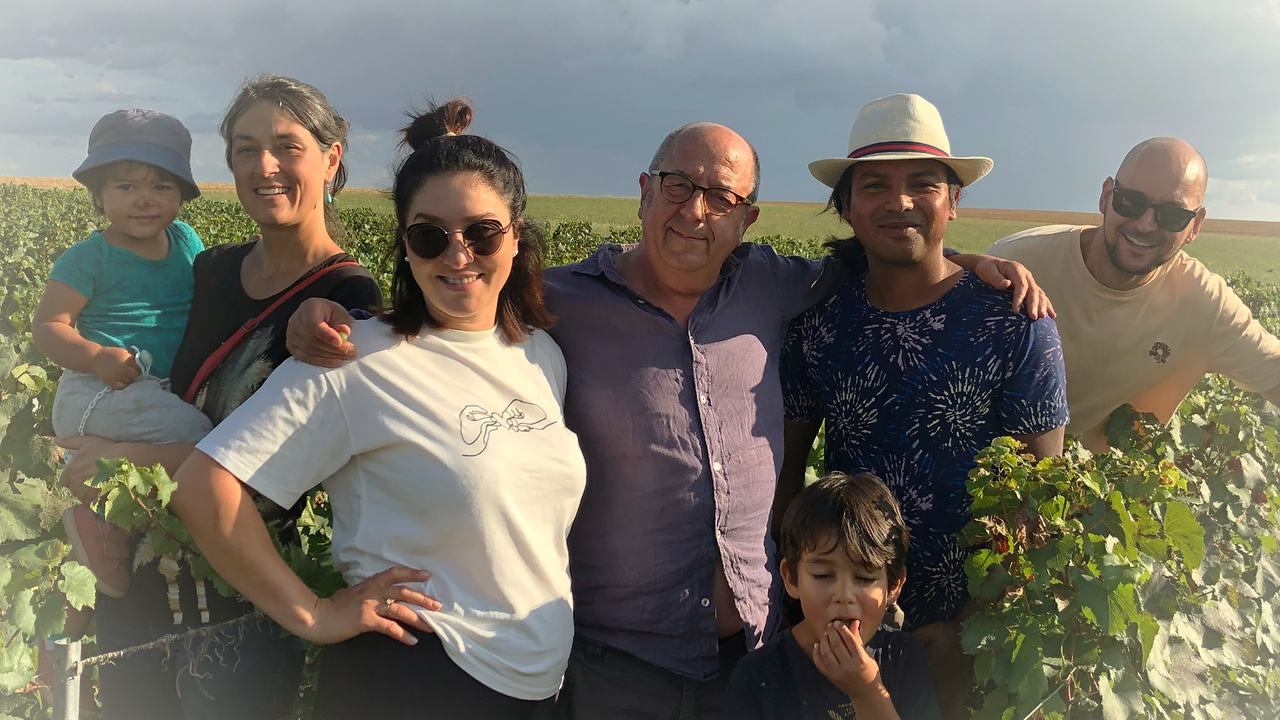
He left it to farm two hectares. Two.
He ran the vineyards at Laroche, one of the biggest names in Chablis: a proper career, the kind of job you're supposed to keep. He left it to farm two hectares. Two. Three cuvées, organic, hand-picked, and a harvest date he sets by eating the grapes rather than reading a number off a machine. "The less you handle the wine, the better it feels" is roughly his creed, and the wines are exactly that: taut, saline, unmanipulated Chablis that keeps overdelivering against bottles at twice the price. I find the whole thing quietly heroic.
02 · A hundred hectares, then twoTwenty-seven years as chef de culture at Laroche, and a first vintage at fifty-five.
Yannick Cadiou grew up on a farm in the Loire, the son of polyculture peasants (vines, fruit trees, vegetables, “a vegetable Noah’s Ark where everything grows”), and he describes his family’s way in the sixties as producing à l’ancienne: small crops, and therefore concentrated, tasty, perfumed ones. A vocational baccalauréat, then a first job running chemical trials on melons outside Toulouse, which taught him, he says, to measure the real impact of the products rather than believe in them; his organics have been “scientific, not ideological” ever since. At twenty-four he went to Domaine Laroche in Chablis as a cellar hand, and two years later was made chef de culture: ninety hectares, then a hundred, for twenty-seven years. In 2013 he left to run the organic conversion of Pascal Jolivet’s forty hectares in Sancerre, with the geologist Yves Hérody, parcel by parcel.
The vines he came home to he had planted himself: a Petit Chablis parcel at Lignorelles put in in 1996 while he was still at Laroche. From 2015 he farmed what he had organically; the 2016 frost delayed the certificate to the 2018 vintage. The first wine he sold under his own name was a 2017 Chablis: one cuvée, picked on the thirteenth of September, bottled the following August, and taken to Millésime Bio in Montpellier. “At fifty-eight,” he told a visitor, “I am discovering selling.” He is un homme du dehors, a man of the outdoors, and the company is Cadiou et Fils, which says what he intends.
Je travaille ici comme dans un jardin.
Yannick Cadiou
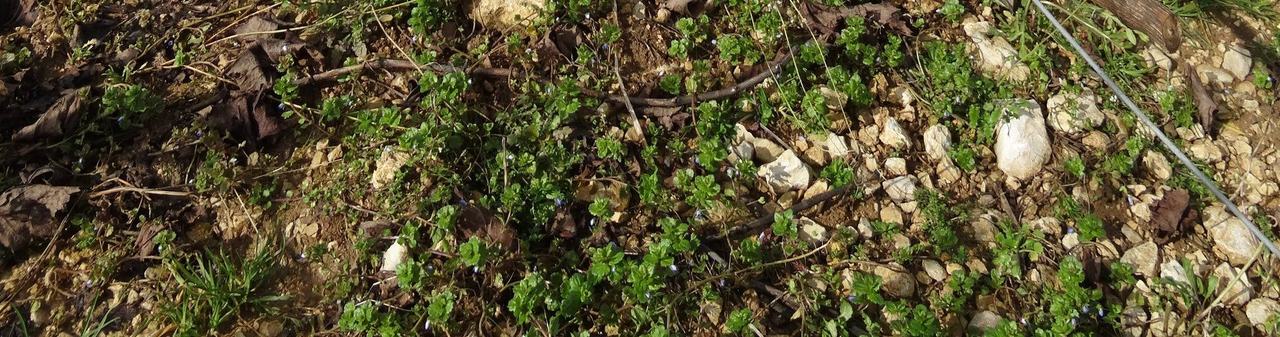
03 · Across from VaillonsUnder Montmains, facing Vaillons, and a stony plateau at Lignorelles.
A hectare and eighty-six ares in three pieces, two of them on the left bank south-west of Chablis among the premiers crus. The Chablis is seventy-eight ares directly across from Vaillons, Kimmeridgian marl, planted to a selection “as close as possible to the old vines that shaped the Chablis vineyard.” La Côte d’Or (the cadastral name of the lieu-dit, nothing to do with the Côte d’Or; he reads it as terre de soleil) is a parcel of great Kimmeridgian purity tucked under Montmains behind Les Forêts, planted on a deliberately unproductive rootstock. And the Petit Chablis, “my first vine,” from 1996 at Lignorelles on the hard, stony limestone of the plateau, poor ground that gives small crops. He runs the yields near fifty hectolitres, closer to a premier cru’s than to his appellations’, by counting bunches and by sheer attention; the French critic who found him first said it exactly: “Yannick Cadiou works his vines the way other people work their gardens.”
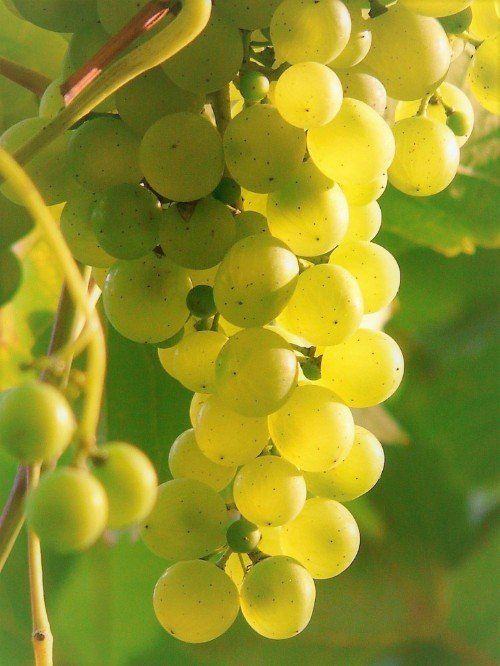
04 · Only the palate decidesNo settling, no added yeast, no chaptalisation, very little sulphur.
Organic since 2015, certified from 2018. “A living soil to express its terroir” (he cites Peter Wohlleben’s Hidden Life of Trees on the website), worked like a garden, the crop set by bunch count for full ripeness. The picking date is the one real decision and he takes it by mouth: “Only tasting the fruit counts. Our palate is better qualified to judge ripeness than the analytical systems.” Hand harvest; the clusters go whole into the press; and then nothing: no chaptalisation, no added yeast, and no settling at all, zéro débourbage, “because the grapes are healthy.” The Chablis and Petit Chablis stay a year in steel on their lees; the Côte d’Or sees some wood, used 500-litre barrels with a touch of new in the early years. Very little sulphur in élevage, a light earth filtration, twelve and a half degrees every year. Patience, the site says, beaucoup de patience. “The less you handle the wine, the better it feels. Interventions are limited to the strictly necessary, to preserve the finesse of the Chardonnay.” At Millésime Bio in 2026 he poured a tank blind, got a polite reaction, and said he would sell it off in bulk. That is the standard.
Moins on manipule le vin, mieux il se porte.
Yannick Cadiou
05 · What they sayDecanter gold, and a Hachette coup de cœur for a Petit Chablis.
The 2018 Chablis took a gold medal and 95 points at the Decanter World Wine Awards: “classic floral aromatics with a limey freshness and an allure of zesty minerality, a pink grapefruit acidity and an elegant structure; long-lasting and memorable.” Jamie Goode, 93 on the 2018 Côte d’Or: “very interesting with a lot of personality, but it tastes like Chablis.” The Guide Hachette gave the 2020 Petit Chablis a coup de cœur (rare for the appellation): “a newcomer to the Chablis vineyard, Yannick Cadiou pulls off the perfect shot… a Petit Chablis that is the very expression of its terroir… ample, rich and lively, drawn out into a long mineral finish,” and said of the first vintage, the 2017: “fresh, saline and long, it seduces.” Les Buvologues scored the 2019 Chablis 96, “a pure Chablis nose of shells as if dressed in sea spray… one of the finest Chablis tasted in this vintage,” and asked of the Petit Chablis, “but where are the oysters?”
Two hectares, three wines, and already a gold medal and a coup de cœur.
Yannick Cadiou fait ses vignes comme d’autres font leur jardin.
Guillaume Baroin, Les Buvologues
In the vineyard
& cellar.
- Holding
- 1.86 hectares: Chablis (0.78 ha facing Vaillons), Chablis La Côte d’Or (under Montmains), Petit Chablis (planted 1996 at Lignorelles); cellar at Bleigny-le-Carreau
- Since
- Twenty-seven years at Domaine Laroche, chef de culture of a hundred hectares; Pascal Jolivet in Sancerre from 2013; own first vintage 2017
- Farming
- Organic since 2015, certified from the 2018 vintage; yields near 50 hl/ha by bunch count; harvest date by tasting; hand-picked
- Vinification
- Whole clusters to the press; no settling, no added yeast, no chaptalisation; Chablis and Petit Chablis a year in steel on lees; Côte d’Or partly in used 500-litre barrels
- Finishing
- Very little sulphur; light earth filtration; 12.5% every vintage