
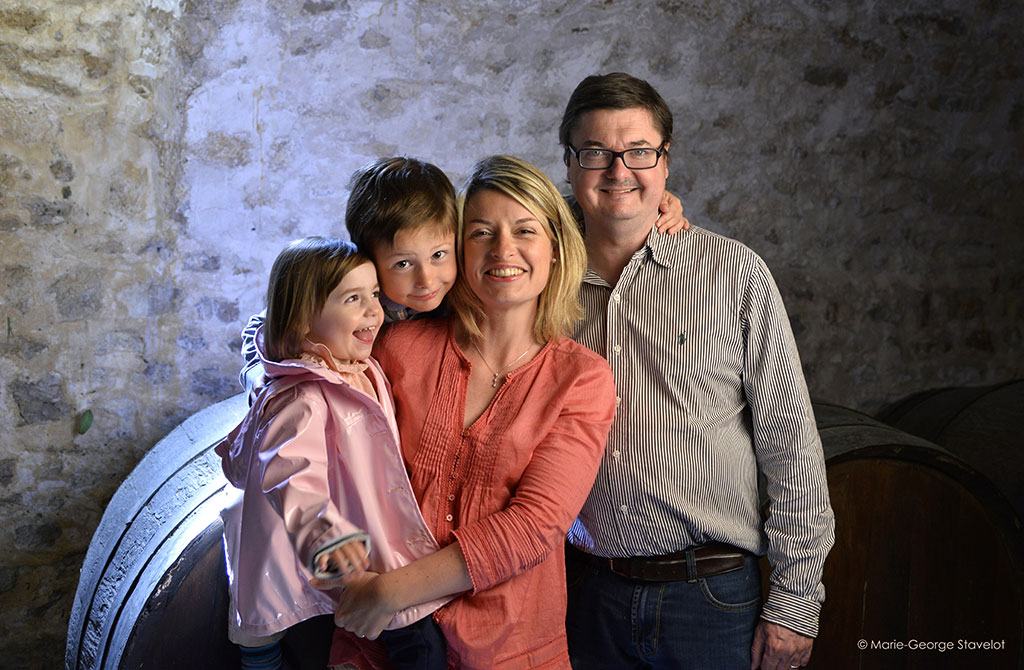
It takes real courage to start again at forty.
She was born into an Irancy winegrowing family and gave sixteen vintages to it. Then, at forty, she went out on her own: 3.8 hectares of her own vines, a new cuverie built at Villy in 2018, and the freedom to bottle Les Cailles and Côte du Moutier as themselves rather than blend them into a house style. Irancy is the northernmost serious Pinot Noir in Burgundy, and it tastes like it: spiced, high-toned, a little wild-edged, structured in a way that surprises people who came expecting a curiosity. Hand-picked, destemmed, nothing showy. It takes real courage to start again at forty. You can taste that too.
02 · A village of grapes and cherriesSixteen vintages at home, and then her own name on the label.
Irancy is the village where the cherry orchards run between the vines, and Stéphanie Colinot was born there in 1977 into the family that, with the Soufflot who built the Panthéon somewhere in its tree, has been its reference for more than ten generations. Domaine Colinot was among the first in the appellation to bottle its climats apart (Palotte, Les Mazelots, Côte du Moutier), and she grew up “at the rhythm of the work of the vine and the wine.” A commercial baccalauréat, then the lycée viticole at Beaune for two diplomas, one in the wine trade and one in viticulture and oenology, with stages in the Côte d’Or “in the greatest domaines, where I learned to make and raise the marvellous Pinot Noir.” She came home in 2001, at twenty-four, and from then on ran the vines, the cellar, the élevage and the selling; the Hachette noted her first vintage, the 2000 Côte du Moutier, as ses premières armes, and the Revue du Vin de France would later write that she “vinifies Pinot Noir like no one else in the Yonne.” Her Cuvée Soufflot took the Hachette’s coup de cœur two years running.
She says the rest herself, on her own website, and we will not improve on it: “Despite my constant investment, I understood a little late that working in family was not for me. In 2017, at forty, confident in my experience, I decided to take my independence. Not wanting to break with my roots, I set myself up alone on my Irancy vines.” She took a little over three hectares with her (Les Cailles, La Comme, Côte du Moutier, and parcels at Cravant), and in 2018 fitted out a cuverie at Villy, north of Chablis, with stainless tanks, a destemmer, a pump and harvest crates bought one by one: “I brought in my first grapes on my own in 2018.” Villy is her husband’s side of the Yonne; Jean-Paul Durup makes Chablis at the Château de Maligny, and she signs herself “a little Pinot Noir vine in a Chardonnay vineyard.” She thanks her grandmother Rosa for the teaching. Bourgogne Aujourd’hui named her one of the four best hopes in Burgundy at the end of her second vintage.
Petit pied de Pinot Noir dans un vignoble de Chardonnay, je reste la même pour vous transmettre tout mon amour des vins rouges.
Stéphanie Colinot
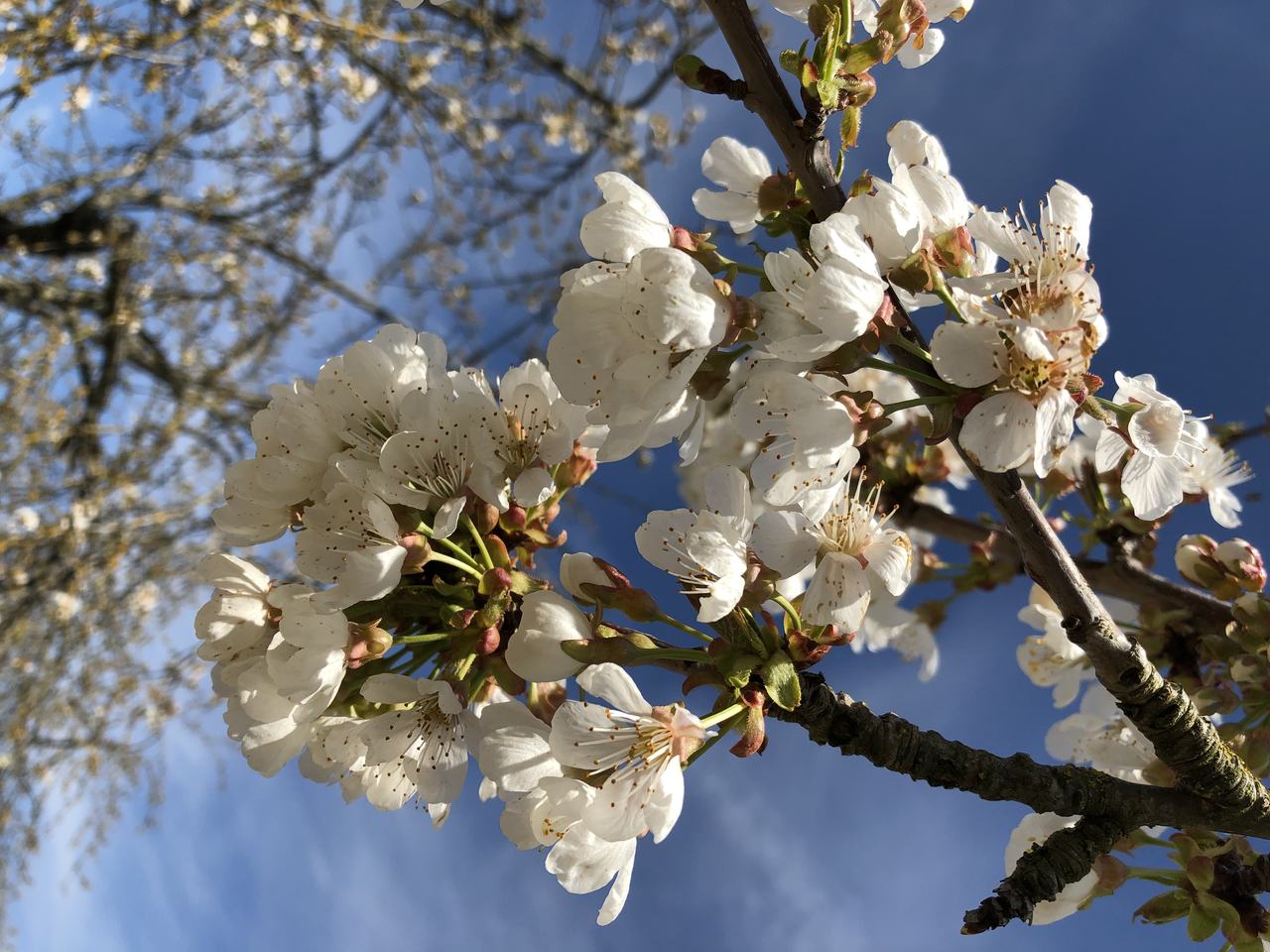
03 · The amphitheatreKimmeridgian marl, a south-west bowl, and up to a tenth of César.
Irancy was promoted from a regional Bourgogne to its own appellation in 1999, the Yonne’s only red village name, across Irancy, Cravant and Vincelottes: something under two hundred hectares in a natural amphitheatre of four hills opening to the south-west, on the same Kimmeridgian marl as Chablis, drier and warmer and far less prone to frost: “à Irancy, on gèle peu.” Pinot Noir, with up to ten per cent of César, the old Yonne grape that nobody else in Burgundy grows and that she describes with affection and no illusions: “capricious, difficult to work, but fully ripe it gives very beautiful things.”
Her three climats are three temperaments. Les Cailles (the name means pebbles) is sixty-eight ares on the Vincelottes side, south-east, stonier and cooler: “in summer it is less hot in this part of the vineyard,” and the wine is the tense, mineral one, pure Pinot. La Comme is seventy-eight ares on the lower slope in the heart of the village, south-west on the Mazelots hill, the generous one, fruit and flesh. Côte du Moutier, the monks’ slope, once the property of the abbey of Saint-Germain d’Auxerre, is a quarter-hectare facing full south with about eight per cent César in it, the smallest and the most serious: tannic, spiced, atypical, the one she holds back a year. And La Cerise sur le Coteau (the cherry on the slope, a pun she calls “a tribute to the past, with humour”) is an assemblage of south-facing parcels at Cravant. All of it planted at 7,500 vines to the hectare, the vines now twenty to thirty years old. Palotte and Les Mazelots stayed with the family; she has planted new ground at Poncelles and Veaupessiot to fill the gap.
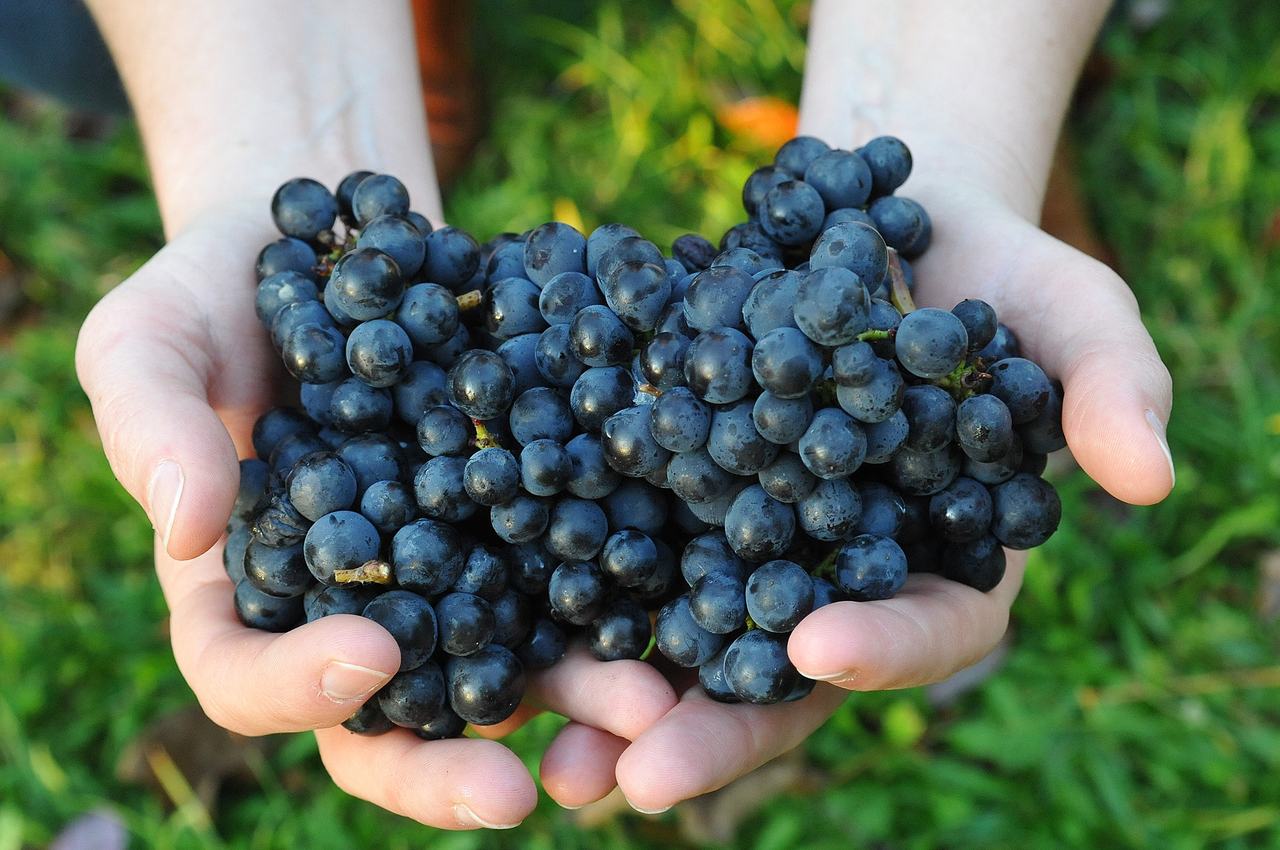
04 · No wood“I am not convinced by the marriage between oak and Irancy.”
The vines are worked traditionally (no synthetic fertiliser, copper and sulphur for the plant protection, a contractor for the tractor, no certificate) and picked by hand into crates and driven the thirty-five kilometres to Villy. Then everything is destemmed, chilled and punched down for four days before the fermentation is allowed to start, and from there she pumps over rather than punches: “I lengthened the cuvaisons and I do more pump-overs than before, to gain softness and suppleness. The pump-overs round off the angles of the tannins.” A fortnight in vat, no chaptalisation, free-run and first press only, and then nothing but stainless steel for ten or eleven months. “All my wines are raised in tank. I am not convinced by the marriage between oak and Irancy.” Bottled early, the July after the harvest, “to keep the fruit and the colour,” through a cross-flow filter chosen because it puts nothing into the wine.
Her thesis for the appellation is the one the essay above describes: “We don’t make tannic wines here; wines on fruit and elegance.” Bettane and Desseauve, giving her a star, note that the warming years are ripening the skins and putting “perhaps more tannic matter than before” into her Irancys, “but always with finishes of fine freshness where a liquorice note often asserts itself.” And her own summary of what she does, laughing: le vin rouge, c’est la cuisine; le vin blanc, c’est la pâtisserie.
Le vin rouge, c’est la cuisine ; le vin blanc, c’est la pâtisserie.
Stéphanie Colinot
05 · What they say“Carton plein pour Stéphanie Colinot.”
The Guide Hachette has given her three coups de cœur in four editions, two of them in the same year. On the 2023 Côte du Moutier: “Full marks for Stéphanie Colinot, whose 2023 multiplies the distinctions… with its eight per cent César, a model of a wine for keeping, rich and deep, which arrests at once with its spiced, chocolate palette. The mouth? Delicate, ample, velvety, long and fleshy, dominated by black fruit. Quite simply irresistible.” On the 2023 La Comme: “fresh, fleshy, generous and gourmand, carried by magnificent red fruit.” On the 2019 Les Cailles, the first: “harmonious and very elegant, it capsized the jury’s heart… the mouth straight, gourmand, of a great purity. Irresistible.” Bettane and Desseauve score the Côte du Moutier 92 and the Cailles 91 two years running; the Revue du Vin de France gave the 2019 Cailles 92 (“a clean, sappy juice, sharp and crunchy, freshness and suavity in this finely acidulated fruit”) and the Moutier 91, “a style that is asserting itself.” Bill Nanson of the Burgundy Report, who drove to Villy to taste: the 2019s “just hit the sweet spot,” the 2019 La Comme “completely excellent.” Libération, on the same wine: “a little like that person who doesn’t look like much at a party and turns out to be fascinating, if only you take an interest.”
The three-star sommelier in Joigny who said “Colinot” without pausing was talking about the family domaine. Stéphanie made those wines for sixteen years. Now she makes her own, and they are the ones in our book.
Tout simplement irrésistible.
Guide Hachette 2026, on the 2023 Côte du Moutier
In the vineyard
& cellar.
- Holding
- 3.8 hectares of Irancy across Irancy, Vincelottes and Cravant: Les Cailles (0.68 ha), La Comme (0.78 ha), Côte du Moutier (0.25 ha), the Cravant parcels for La Cerise sur le Coteau, and new plantings; about 15,000 bottles with a small négoce line from the Grand Auxerrois
- Since
- Sixteen vintages at Domaine Colinot from 2001; own domaine from November 2017; first solo harvest 2018 in her own cuverie at Villy
- Soils
- Kimmeridgian clay-limestone marl in a south-west-facing amphitheatre; 7,500 vines per hectare
- Grapes
- Pinot Noir; about 8% César in the Côte du Moutier
- Farming
- Traditional, lutte raisonnée: no synthetic fertiliser, copper and sulphur; hand harvest into crates
- Vinification
- Fully destemmed; four days cold with punch-downs; then pump-overs; about fifteen days in temperature-controlled steel; no chaptalisation; free-run and first press only
- Élevage
- Stainless steel only, ten to eleven months, no oak; bottled the following July (Côte du Moutier a year later); cross-flow filtration, nothing added