
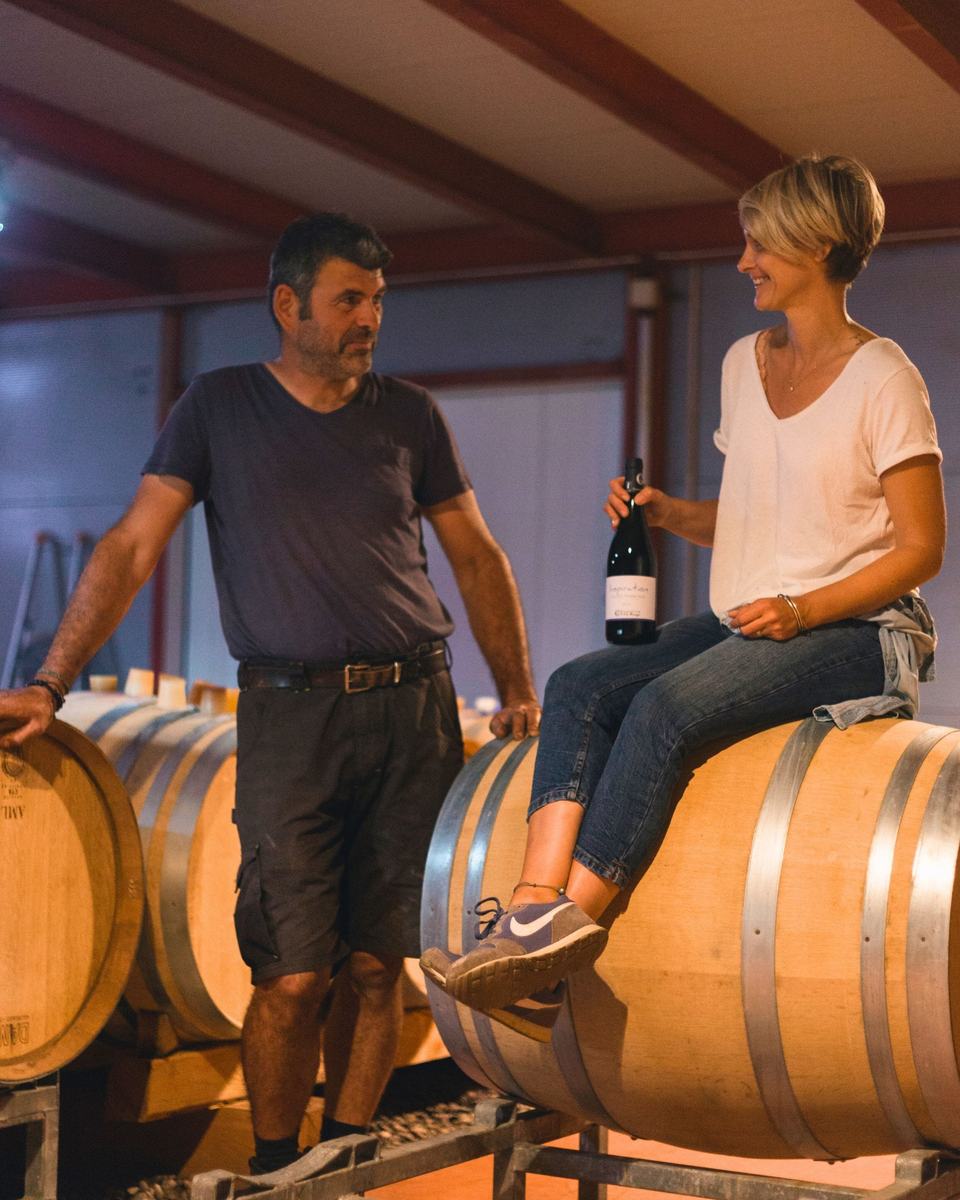
Fruit growers who left the cooperative and farmed their way to Biodyvin.
Crozes-Hermitage is the biggest appellation of the northern Rhône, and much of it is farmed by families who grow grapes and leave the winemaking to someone else. The Girards of Mercurol started that way. Paul Girard founded the family holding in 1919, growing fruit as well as vines, and helped found the cooperative at Tain. Only in 2006 did the family begin making all of its wine itself. Three years later they started converting to organic farming, and in 2013 the whole domaine went over to biodynamics; the certificates followed, organic in 2012 and Biodyvin in 2018.
That sequence matters. It is one thing for a famous estate on the Hermitage hill to farm biodynamically, and another for a family with twenty hectares on the flat land south of Mercurol, in an appellation where the pressure is to farm for volume and sell by the tank. Sébastien and Audrey Girard, the fourth generation, took the harder road, and the wines show it: Syrah with northern Rhône structure and an aromatic lift, from rolled pebbles and red clay.
They are curious in the cellar too. Alongside tank and barrel there are amphorae and stoneware eggs, and one Roussanne is even bottled in stoneware. Our wine from them is the plainest of the range, the young-vine Inspiration, and it is the address for people who think they already know what Crozes-Hermitage tastes like.
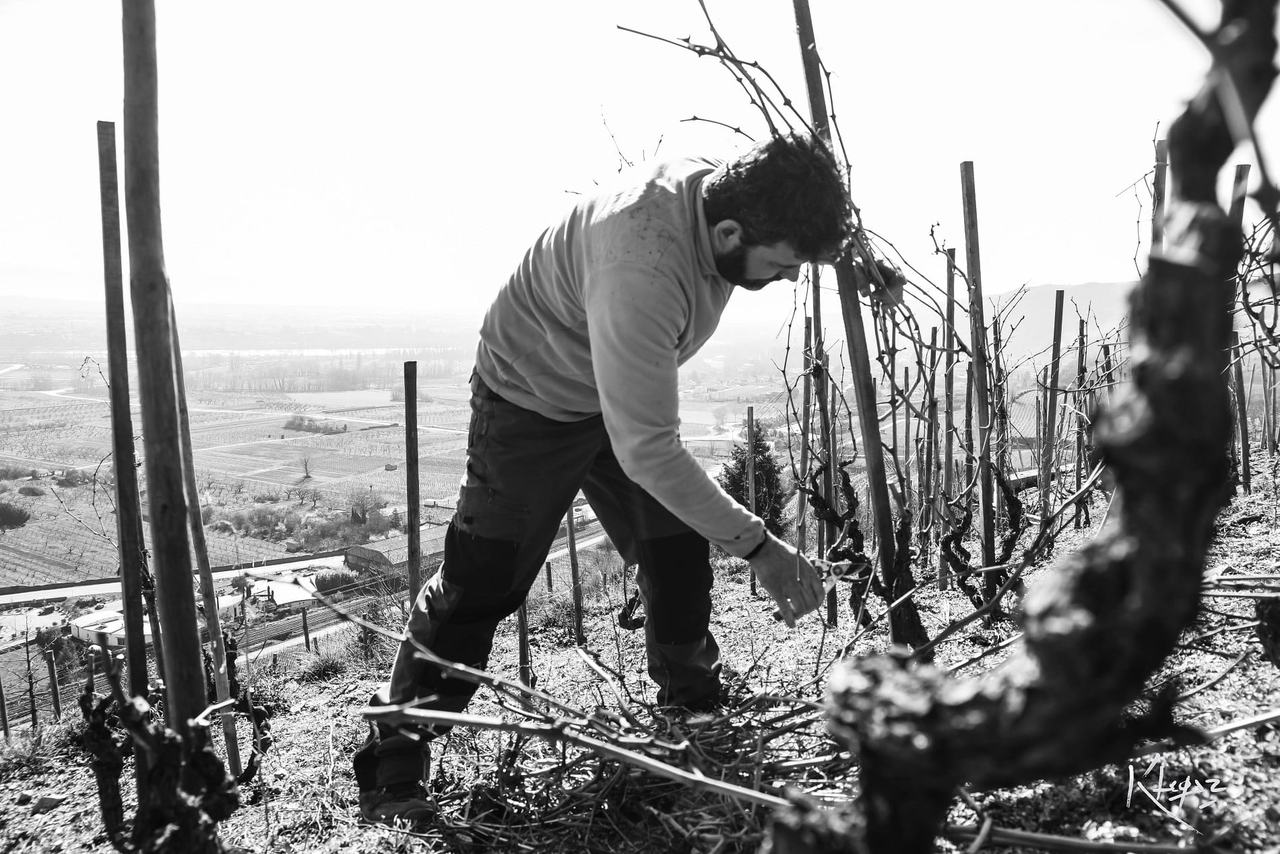
02 · Paul Girard, 1919Orchards first, then vines, then the cooperative, then a cellar of their own.
The domaine’s own history is short and specific. Since 1919, it says, four generations of viticulteurs-arboriculteurs, vine and fruit-tree growers, have followed one another at Mercurol. A British merchant’s profile adds the start of it: Paul Girard took over his stepfather’s orchards that year and began to plant vines, and he was among the founding members of the cooperative at Tain l’Hermitage. For a small family in the Drôme that was the sensible life. The cooperative made and sold the wine; the family grew fruit.
The turn came in 2006, the first year the whole crop was vinified at the domaine. Sébastien Girard makes the wine; Audrey, co-manager, runs the visits and the tastings and does most of the explaining, and the visitors who write about the domaine mostly write about her. The two of them describe the place as à taille humaine, human-sized, and it is: twenty hectares at Mercurol, plus a little Saint-Joseph across the river.
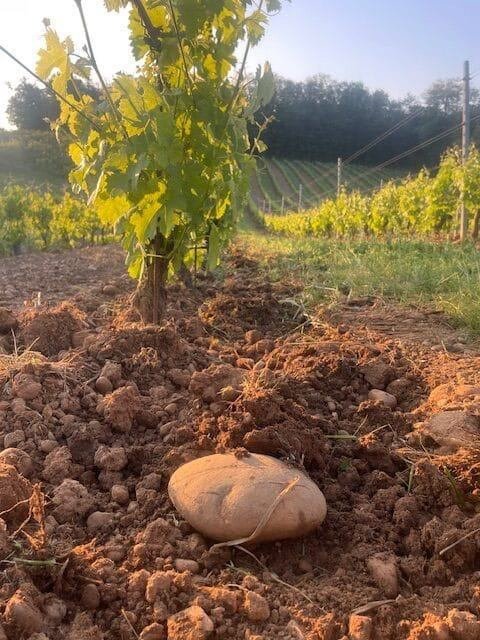
03 · The Mercurol terracesRolled stones and red clay on the flat land south of the hill.
South and east of the Hermitage hill the old courses of the rivers left broad terraces of rounded stones, the cailloutis roulés, bedded in red clay. This is where most of the domaine’s Crozes-Hermitage grows, on what the Girards call the plains at the south of the appellation: gentle relief, free-draining stony ground over clay that holds water through the summer. It gives Syrah roundness and fruit more than the granite of the northern Crozes slopes does, and the family’s aim is to keep that fruit fresh.
Higher up, on the wooded clay hills of Mercurol, are the parcels for their IGP wines: Viognier and Chardonnay for a white, Syrah, Marselan and Pinot Noir for a red, more aromatic and easier. Across the river, the Saint-Joseph is a different world again. The red, Cuvée du Potier, comes from vines over eighty years old on the slopes along the “chemin de Saint-Joseph” at Tournon, the cradle of the appellation; the white, Lenny, is Marsanne and Roussanne from granite hillsides, “aussi fin que le granit qui l’a vue pousser,” as fine as the granite it grew on.
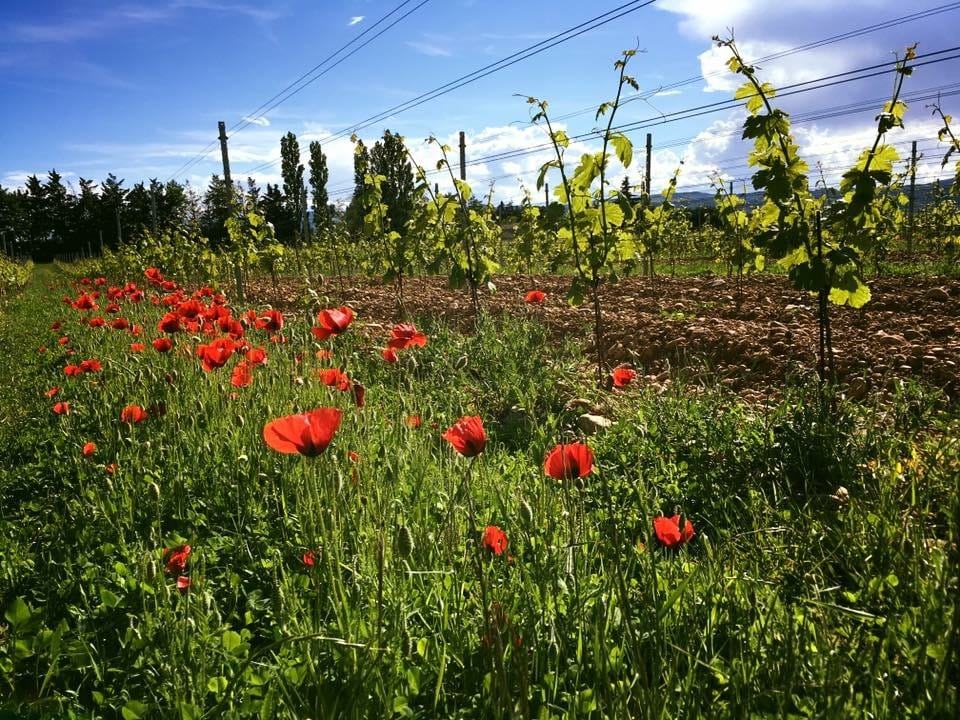
04 · BiodyvinCompost, the preparations and the calendar, and as little as possible added in the cellar.
The conversion began in 2009 with organic farming, certified for the 2012 vintage. In 2013 the Girards went further and converted the whole domaine to biodynamics, certified by Biodyvin in 2018. Their own summary of what that means is practical: watch the natural cycles instead of forcing them; strengthen the vine’s own defences instead of protecting it chemically; feed the soil with the biodynamic preparations and with composted manure only; work with the rhythms of the moon and planets. They describe it as a commitment they will pass to their children, and not as a fashion.
In the cellar they pick ripe, ferment gently and limit oenological inputs. The range shows a taste for experiment. Terre d’Éclat is Syrah from forty-five-year-old vines raised in barrel; Paul is old-vine Syrah raised in amphora; Nathan is Marsanne and Roussanne in stoneware and barrel; and Mal(grès) Tout is pure Roussanne fermented and aged in a stoneware egg and then bottled in stoneware.
Un vin doit refléter son terroir, sa saison, et les mains qui l’ont accompagné. (A wine should reflect its ground, its season and the hands that went with it.)
Domaine de la Ville Rouge
05 · InspirationThe young-vine Syrah, raised in tank, and the one to start with.
Inspiration is all Syrah from vines of about twenty-five years on the pebbles and red clay, kept away from new oak so the fruit and the place do the talking. The domaine’s own note describes black fruit and spice, a juicy palate and silky tannins, and calls it a fine picture of the appellation. That is fair. It is the wine to put on a list for people who expect Crozes to be either thin or overworked: dark-fruited, peppery, fresh, with the grip of the northern Rhône and none of the heaviness.
It is also a good argument for what the Girards did in 2006 and 2009. The same ground, farmed for the cooperative, would have produced grapes for a blend. Farmed biodynamically and bottled at home, it produces a wine you can recognise, from a family that you can visit, on appointment, five minutes off the A7.
The Syrah range is a ladder of vine age, and Inspiration sits on the second rung. Crozes j’adore comes from ten-year-old vines, cold-macerated and kept in steel for drinking young. Inspiration is the twenty-five-year-old vines, still raised in tank. Terre d’Éclat and Paul come from vines of about forty-five years, one in barrel and one in amphora, and the Saint-Joseph from vines past eighty. Tasting up the ladder shows what age does to Syrah on this ground: more depth and finer tannin, the same pepper and fruit underneath.
In the vineyard
& cellar.
- Holding
- 20 ha at Mercurol, in Crozes-Hermitage, plus Saint-Joseph at Tournon
- Since
- 1919, founded by Paul Girard · whole crop vinified at the domaine since 2006 · Sébastien and Audrey Girard, 4th generation
- Soil
- Terraces of rolled pebbles (cailloutis roulés) and red clay · clay hills for the IGP wines · granite for the Saint-Joseph
- Varieties
- Syrah · Marsanne and Roussanne · Viognier, Chardonnay, Marselan, Pinot Noir (IGP)
- Farming
- Organic conversion from 2009, certified (AB) 2012 · biodynamic from 2013, certified Biodyvin 2018
- Cellar
- Tank, barrel, amphora and stoneware eggs · limited inputs · Inspiration raised in tank