
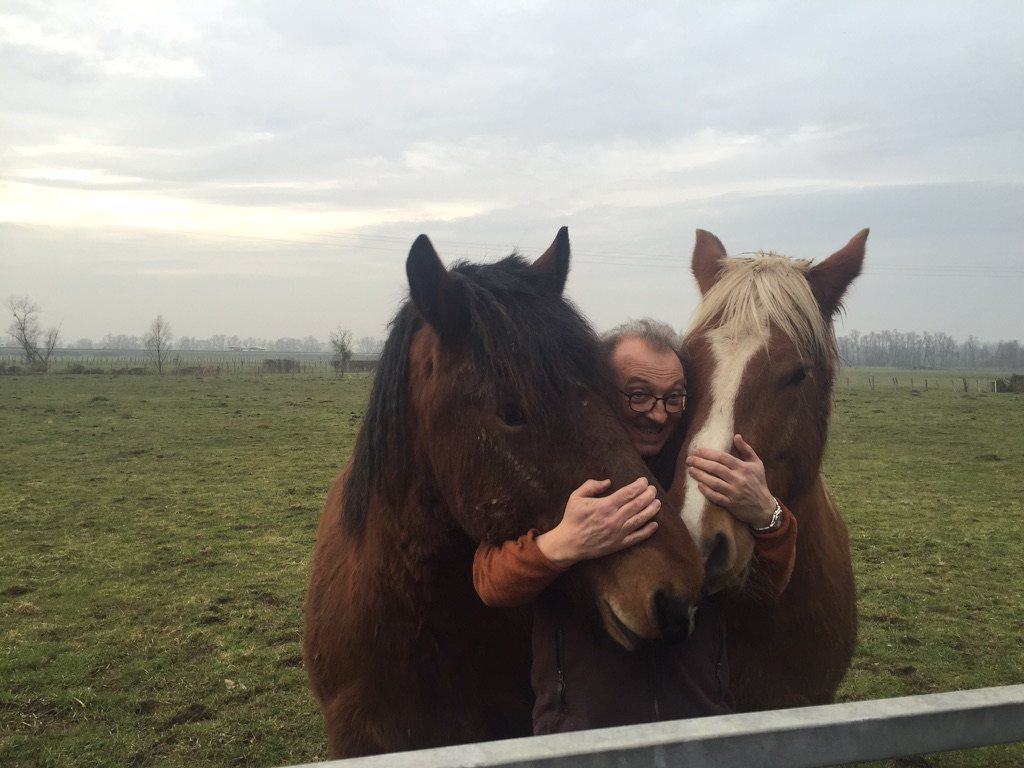
Other winemakers drink his wine. That’s usually the tell.
He built this from nothing in 1992, with no inheritance and no family climats. Deciding to become a vigneron in Burgundy is roughly as easy as deciding to become a duke. Six hectares now, organic since 2003 and certified in 2014, biodynamic since 2019, and a reputation among his peers as one of the region's flagbearers for making wine with almost no sulfur and getting away with it. The fruit is clean and fresh, and nothing sits between you and the site. Other winemakers drink his wine. That's usually the tell.
02 · The Entre-CôtesBecky’s intern, Giboulot’s disciple, and a cellar in a village with no appellation.
Demigny is in the plain east of Chagny, a village with no appellation of its own, and Jean-Yves Devevey calls himself artisan vigneron de l’Entre-Côtes (between the Côtes) because that is where he is: Beaune to the north, Rully to the west, neither. He was born in Beaune to a farming family of the plain; his father grew a few hectares of grapes and sold them. Jean-Yves studied wine marketing in 1985 and then went to work for Becky Wasserman at Bouilland, taking the place Dominique Lafon had just left. “Without Becky,” he told Jancis Robinson, “I would never have become the man I am today. I’ve always been fascinated by how she tastes and describes wine, in her own language that has nothing to do with technical stuff but is based on her sensations and emotions.” He is one of ours in a way few producers are: Becky’s house raised him, and she sent him out to make wine.
In 1992 he set up at 31 rue de Breuil in Demigny with the family’s four hectares of grapes that had always gone to the négoce, no cellar, no equipment, and rented parcels in the Hautes-Côtes de Nuits thirty-two kilometres away. He called it Domaine du Bois Guillaume. The first thing he did was join a group of young growers under Emmanuel Giboulot, who, he says, “guided me, like many other growers, onto the paths of organic and biodynamic farming twenty years ago.” The holding was reshaped around Beaune: Nantoux in the Hautes-Côtes in 1994, the Beaune premier cru Les Pertuisots in 1999, a négoce from 2002 to pay for a proper cuverie, Rully from 2006, Volnay in métayage from 2007, the Rully La Chaume slope pruned in 2010 by a crew of friends on a Saturday because he could no longer afford a vineyard employee. He wrote a blog for eight years, and it reads like him: “In cultivateur there is culture, a bodily bond between a man and his land. In exploitant there is exploit.”
The domaine is now in the middle of a handover. In 2025 Joëlle, a new owner the estate describes as enthusiastic and involved, took the presidency of the company, with Jean-Yves staying on as director and winemaker beside Laurence Goudal, who runs the team day to day. He is the one still in the vines, and the one whose name the wines carry.
Without Becky I would never have become the man I am today.
Jean-Yves Devevey
03 · Pertuisots, Nantoux, La ChaumeA Beaune premier cru below Les Aigrots, a sun-trap in the Hautes-Côtes, and a slope at Rully.
Seven and a half hectares, nearly all of it on the Côte de Beaune side. Beaune 1er Cru Les Pertuisots is the jewel: fifty-two ares on the flat mid-slope hollow (a pertuis) below Les Aigrots, between Vignes Franches and Les Sizies toward Pommard, deep clay-limestone, vines around fifty years with an old massale selection at the bottom. He has farmed it since 1999 and wrote of it, fourteen years in: “this vine is my joy as a vigneron; it is always beautiful and healthy, and the soil works well, it is balanced.” Volnay is ninety-four ares in three parcels either side of the little road up from the old N74, Gigotte, Famines and Pluchots, vines of ten to seventy years, farmed since 2007; the oldest, planted 1954, go into a small selection called Les Lopins. The Aligoté grows on the lower slopes of Volnay at 250 metres.
At Nantoux in the Hautes-Côtes de Beaune, bought 1994, is Champs Perdrix: a hectare and a third of Chardonnay facing southeast at 380 metres on limestone silt with pebbles on top, a sun-trap on the plateau; a little lower, on deeper soil, the vines he planted in 1992 for the cuvée aged eighteen months and called XVIII Lunes; and two hectares of Pinot in the Clos des Epeneaux. At Rully, La Chaume is a shared slope facing southeast at 280 metres, white marl and clay-limestone for the Chardonnay, fifty-year-old vines, and a band of red iron-rich soil planted to Pinot in 1974. Decanter found the 2014 white “almost explosive on the palate, showing unusual force and power for Rully.” And at Demigny itself, forty ares of Savagnin planted in 2012, a bow to the Jura and a bet on hotter years, bottled as Jus Rare.
04 · Homeopathic dosesWhole bunches, old barrels, eighteen moons, and the jars picked on the solstice.
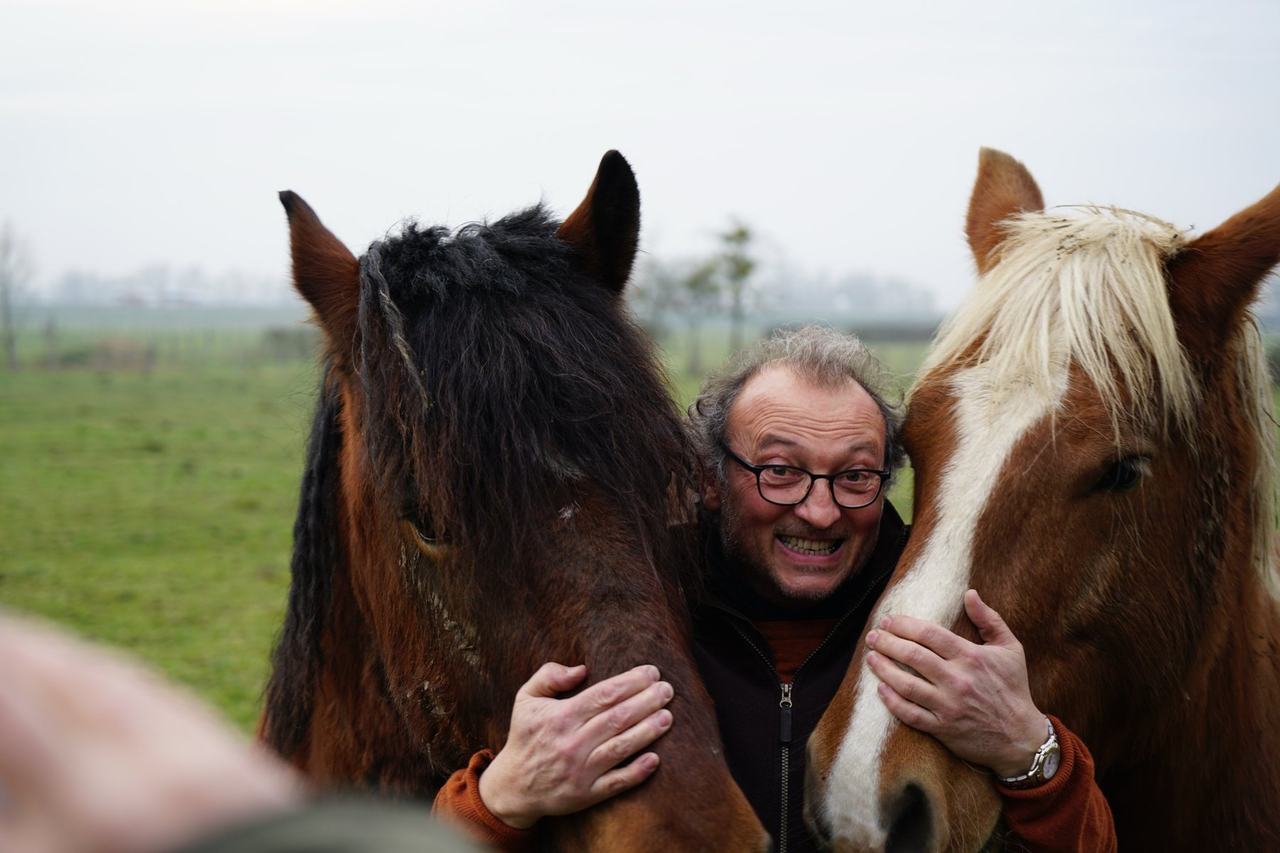
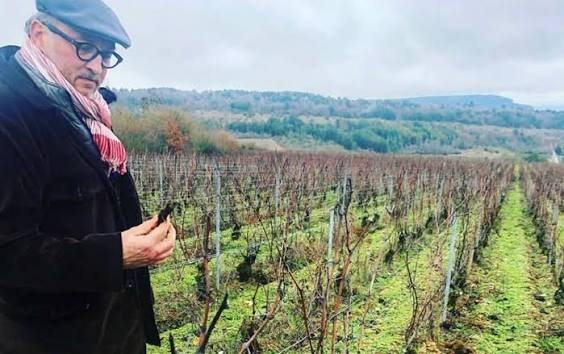
Organic in practice from 2003 (grass, ploughing, no herbicide, with the doses coming down from 1993 onward under Giboulot’s eye) and certified in 2014; biodynamic principles since 2019, uncertified, with the lunar calendar in use for rackings long before that. Some parcels are worked by horse. Short pruning and bud-thinning keep yields low, sometimes too low: “we pruned a bit too short,” he admitted of a fifteen-hectolitre Champs Perdrix. The 2016 frost took the whole of that parcel; his blog that May said only Il nous faut tenir… tenir bon!
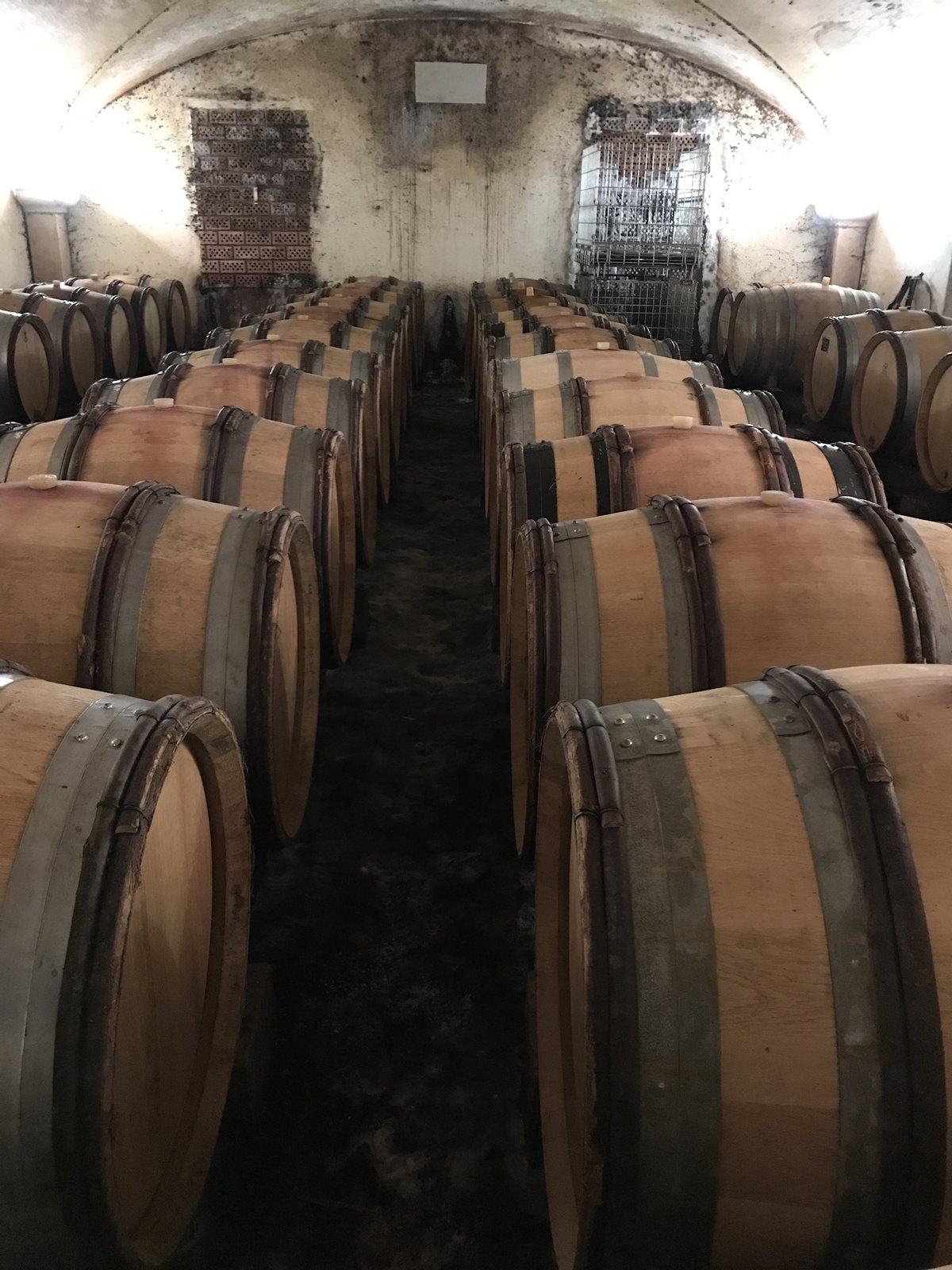
Whites are pressed whole, settled, fermented and put through malo in old barrels and left on their lees twelve months, eighteen for the Lunes, thirty for a micro-cuvée called L’Air du Temps made with no sulphur at all; then a few months in tank, a light filtration, bottling at the end of winter. He likes a trace of bitterness and says so: “bitterness is necessary to a wine’s savouriness.” Reds go in half to entirely whole-bunch (the Pertuisots all stems) into steel for about two weeks with little or no punching down, then twelve to eighteen months in used barrels. Sulphur is in “homeopathic doses,” a gram or so a hectolitre at barrel-filling and once after malo, none at the crush or the press. He has been making wine this way since before it was a category, and the reason it works is the farming.
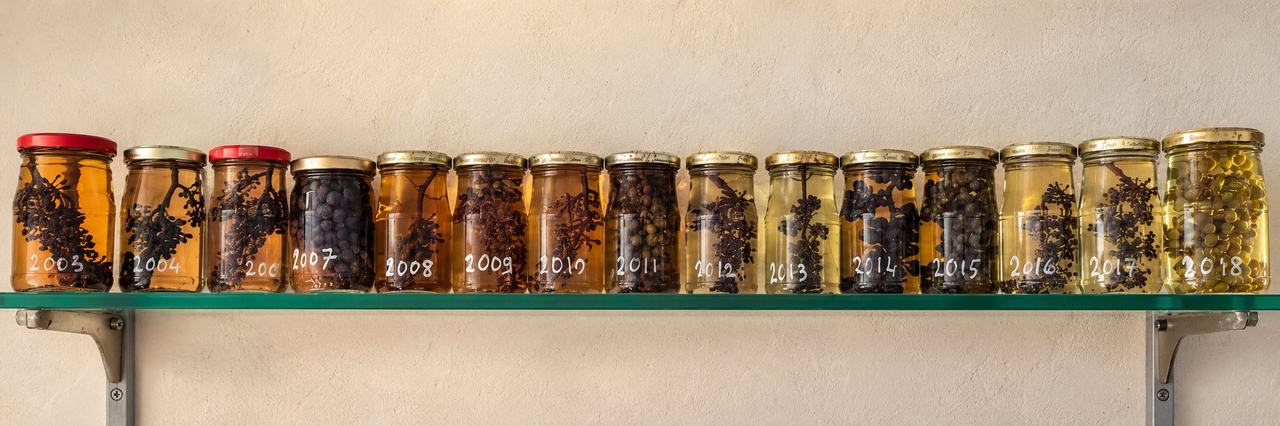
And the jars. A small line of wines ages in clay jars in the Demigny cellar, from grapes picked on the summer solstice (the same day every year, whatever the season has done), so that the jars become a record of how differently each vintage ripened. It is the kind of thing only a man who has written a blog post about the word cultivateur would think of.
05 · What they say“Best Rully blanc ever tasted?”
William Kelley, Wine Advocate, 91 on the 2019 Pertuisots: “Elegant and charming… plums, petals, sweet berry fruit, orange oil and spices. Medium-bodied, ample and perfumed, it’s elegantly fleshy, with powdery tannins and a sapid finish.” On the 2019 Volnay, 90+: “deep and velvety, with powdery tannins and a saline finish.” On the XVIII Lunes, 90: “satiny and layered… a seamless, complete profile and a long, saline finish.” Jasper Morris MW on the 2021 Volnay: “an impressive generosity of fruit through the middle… particularly satisfactory at the finish.” Decanter, 90 on the 2014 Rully La Chaume: “spicy and robust, and all tied together by fine acidity that gives drive and finesse. Long.”
Bill Nanson has been coming to Demigny for a decade. The 2013 La Chaume blanc: “Tons of character here… Best Rully blanc ever tasted?” The 2014 Pertuisots: “Really excellent wine.” The 2019 Volnay: “Great village wine.” Berry Bros, who sold him in London for years: “You wouldn’t know it from his laid-back manner, but Jean-Yves Devevey is a busy man.” His new London importer calls him “one of Burgundy’s quiet overachievers,” and the Hachette, years ago, summed up a Pertuisots in five words that still fit the whole house: démarche élégante et discrète, très personnelle.
Tons of character here… Best Rully blanc ever tasted?
Bill Nanson, Burgundy Report
In the vineyard
& cellar.
- Holding
- About 7.5 hectares: Beaune 1er Cru Les Pertuisots (0.52 ha), Volnay (0.94 ha in Gigotte, Famines and Pluchots), Rully La Chaume white and red (2.7 ha), Hautes-Côtes de Beaune at Nantoux (Champs Perdrix, XVIII Lunes, Clos des Epeneaux), Bourgogne Aligoté, and 0.4 ha of Savagnin at Demigny
- Since
- Jean-Yves Devevey, trained at Becky Wasserman’s, set up at Demigny in 1992 as Domaine du Bois Guillaume; Pertuisots since 1999, Rully since 2006, Volnay since 2007; a handover to a new owner under way since 2025, with Jean-Yves as director and winemaker alongside Laurence Goudal
- Farming
- Organic practice from 2003, certified 2014; biodynamic principles since 2019; some parcels worked by horse; short pruning, bud-thinning; hand harvest
- Whites
- Whole-bunch pressed; fermented and malo in old barrels; 12 months on lees (18 for XVIII Lunes, 30 for L’Air du Temps); 4–6 months tank; light filtration; under 10% new oak
- Reds
- 50–100% whole bunch (Pertuisots entirely); ~15 days in steel, little or no pigeage; 12–18 months in used barrels
- Sulphur
- Homeopathic: none at crush or press, a gram or so per hectolitre at barrel-filling and after malo; L’Air du Temps with none
- Jars
- A small line aged in clay, from grapes picked on the summer solstice every year