
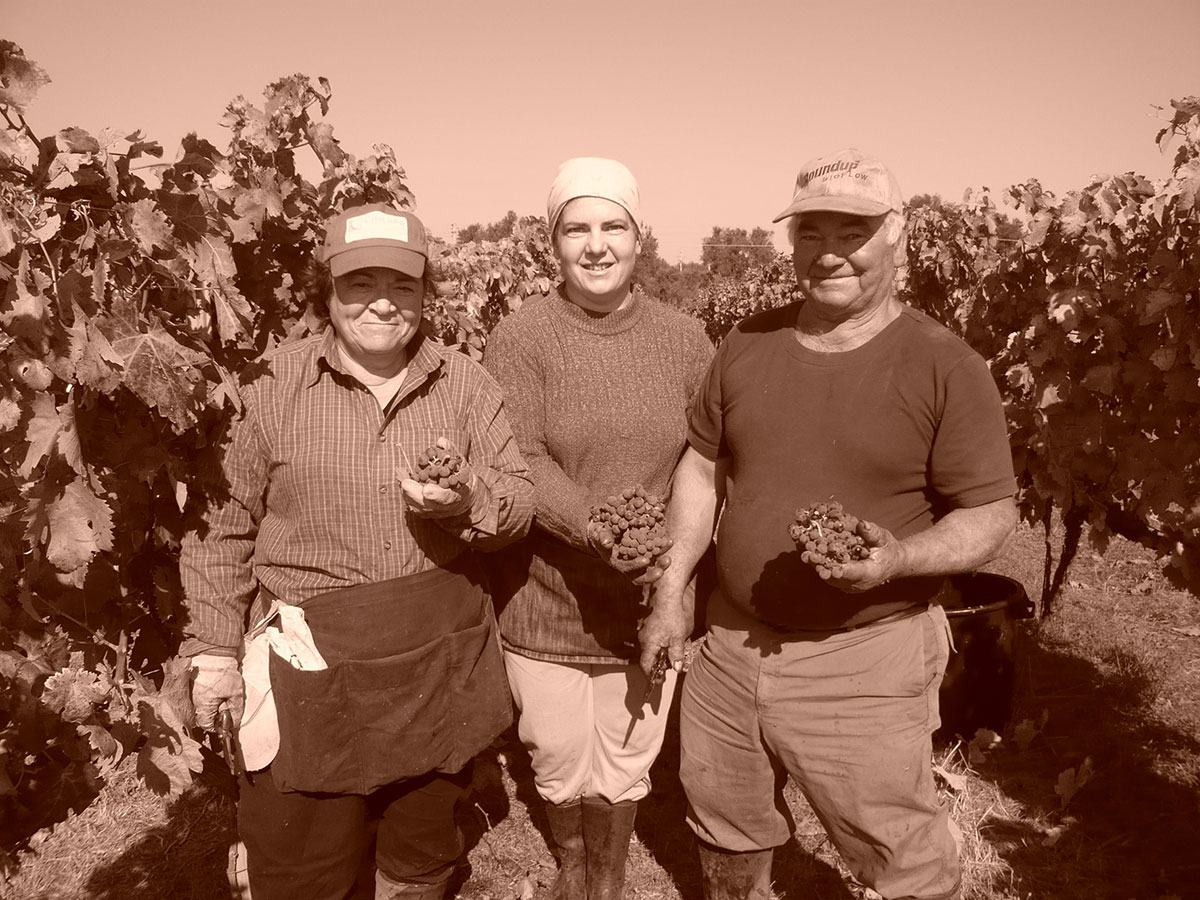
Red clay in the Golden Conch, a few kilometres from the sea.
Masserie Pizari is in the far south of Salento, the heel of Italy, between Gallipoli and Santa Maria di Leuca, in the old Feudo d’Ugento, known in antiquity as Ozan. Locals call this stretch the Conca d’Oro, the Golden Conch. The soil is red clay, rich in potassium, and the vineyards lie only a few kilometres from the Ionian coast. Finding that much open farmland so close to the sea is rare in Salento, and the sea is what keeps the heat in check.
The estate was set up in 2005 and has ten hectares: six of Negroamaro and four of Primitivo, the two grapes that have been grown here for centuries. Three hectares are old gobelet vines, bush-trained the traditional Salento way and more than sixty years old. Giordano Emo Capodilista and the agronomist Francesco Marra run it, with the Venetian oenologist Andrea Boaretti making the wine.
The point of Pizari is that it gets the south right. These are generous, sun-filled reds, kept fresh by low yields and careful fermentation, at a price that makes them one of the easiest recommendations in the book. Not every wine has to be a meditation. Some just have to be delicious and honest, and this one is.
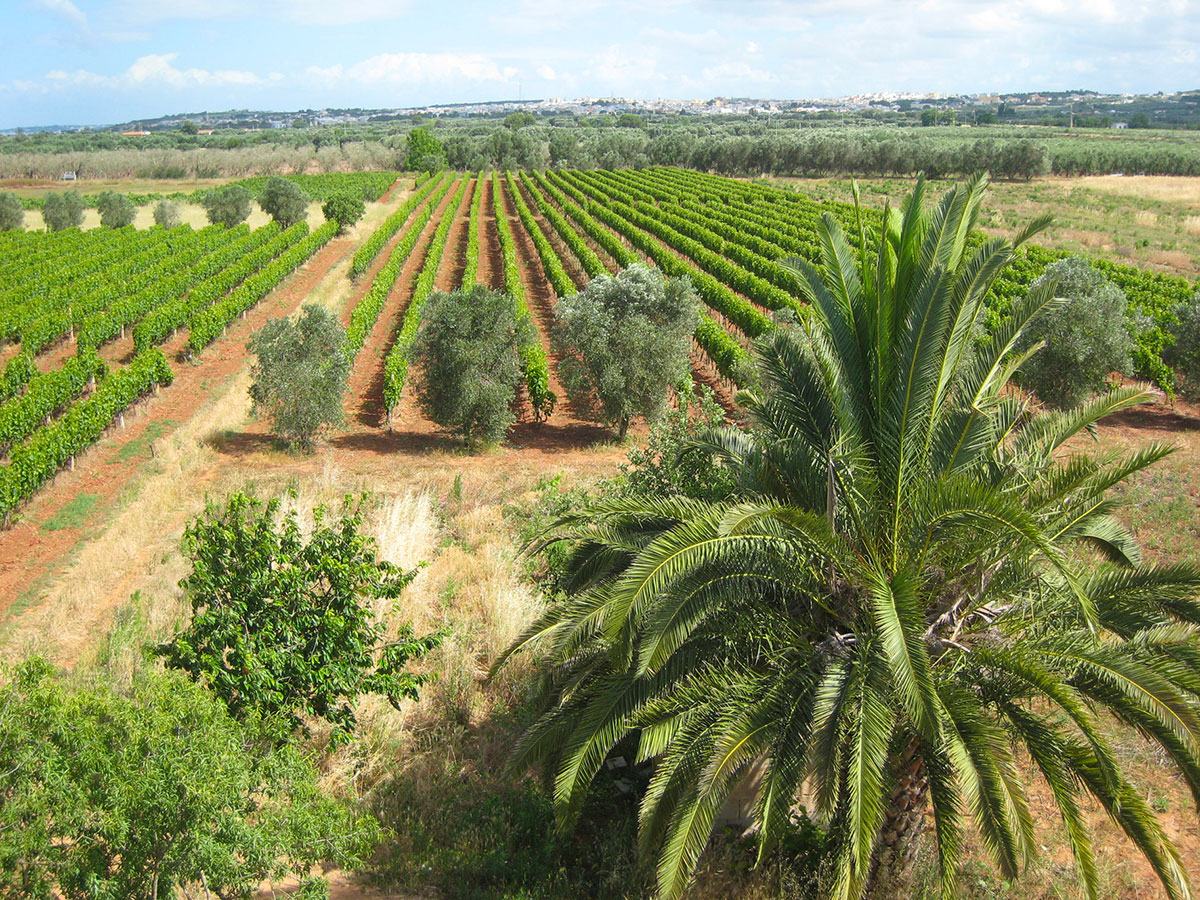
02 · The railway cellarA 1930s winery built to send grapes north.
The cellars stand right beside the old Ferrovie del Sud-Est railway line that runs down through Salento. They were built in the 1930s by a Piedmontese who grew grapes here and shipped them north, in the years when much of Puglia’s dark, sun-ripened fruit went north to deepen wines made elsewhere. The buildings have since been completely restored.
That history is the story of Salento wine in miniature. For most of the twentieth century the region sold its grapes and bulk wine to others. Estates like this one now bottle what they grow, under their own name.
The land around the cellar is flat or gently rolling, open to the breezes off the Ionian. Salento has no mountains to give height and cool nights, so a grower here has two tools: the sea, and the timing of the harvest. Pizari has the first by position and uses the second with care, picking Primitivo early in September and leaving the Negroamaro to the end of the month or into October, when the heat has broken.
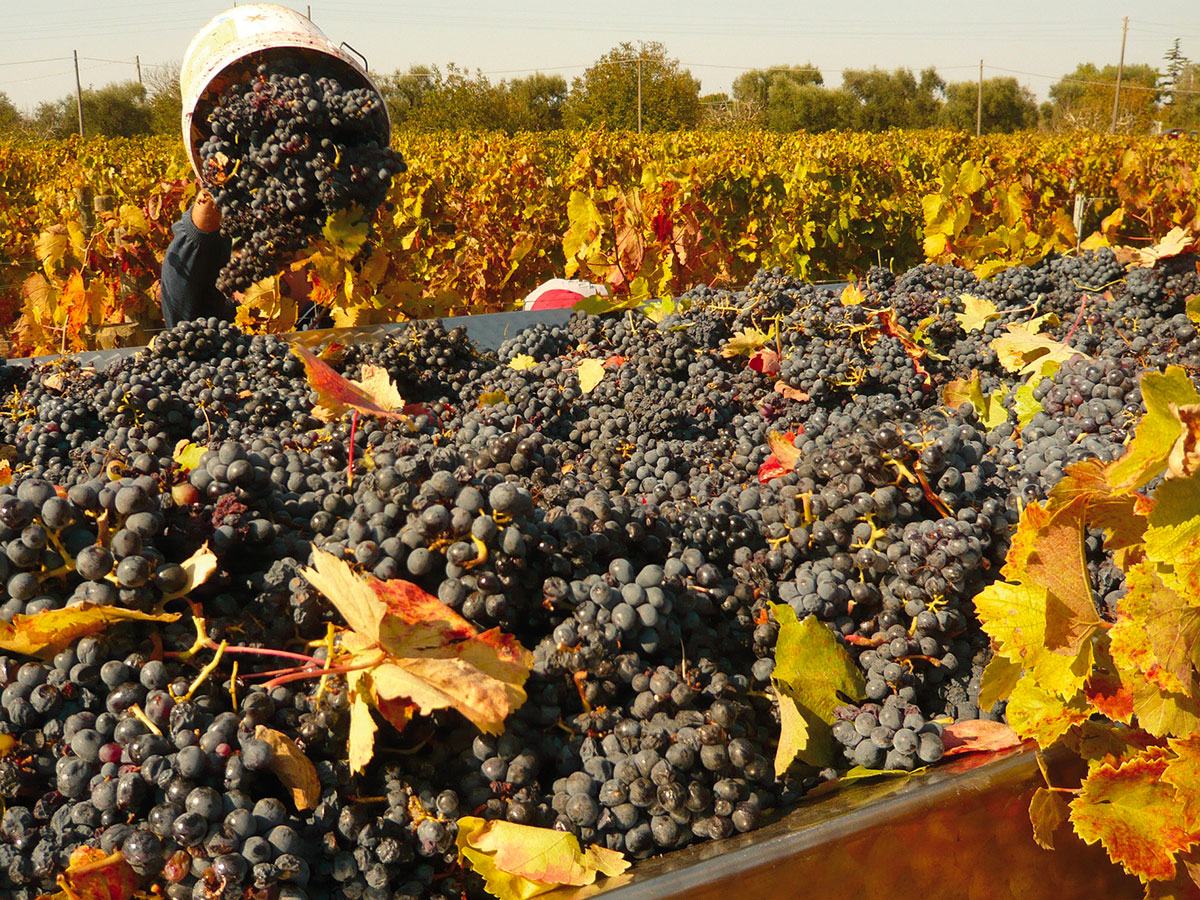
03 · Giordano and FrancescoAn owner, an agronomist and an “orthodox” oenologist.
Giordano Emo Capodilista and Francesco Marra lead the estate; Francesco is the agronomist and gives the harvest reports. The wine is made by Andrea Boaretti, a Venetian who is devoted to Salento and consults for other wineries in Puglia. Giordano calls him an “orthodox” oenologist.
Francesco’s notes from the vineyard are plain and practical. In 2013 he said the vineyard work was easy because there was no disease, and “We did not deleaf the vines in the summer.” In 2012, a dry year with little rain after May, the Primitivo was picked from 5 September and gave “very concentrated” must; in 2014, a cool one, the wines came out with “good aromatics” and “balsamic notes.”
He judges a vintage by its balance. Of 2013, a dry summer cooled by northern winds, he said the wines were “supple, well balanced, with good acidity and good tannins.” Of 2012 he wrote that the Negroamaro “benefited from a rainfall in mid September” and that “it was a good harvest. We made the whole range of wines.” Those are the remarks of a grower more interested in freshness than in power, which is the right instinct this far south.
We did not deleaf the vines in the summer.
Francesco Marra, Masserie Pizari, 2013
04 · PrimitivoThe first red grape of the harvest, kept fresh in steel.
Primitivo gets its name from the Latin primativus: it is the first red grape picked in southern Italy, usually in the first half of September here, two or three weeks before Negroamaro. It has been grown in Salento since before the Romans and has adapted to poor soils and very little water. The risk in a hot place is that it races to sugar and turns jammy and heavy.
Pizari’s answer is restraint. Only the best clusters are used and yields are kept low, about six and a half tonnes a hectare. The Primitivo vines were planted in 2001 on flat red clay. The grapes ferment on their own yeasts in temperature-controlled stainless steel at about 23°C, which, as the importer notes, is quite an achievement in so hot a climate. The wine is raised in steel, with no oak, and is vegan. The vineyards are farmed by integrated methods, without certification.
The result is deep ruby with purple glints, ripe and full, with plenty of dark fruit, and fresher than most Primitivo. It is made for the table: pasta, beans and greens, grilled meat.
05 · NegroamaroThe other Salento grape, and the old bush vines.
Negroamaro is the older of the two local grapes, traced back in Salento to pre-Roman times, around 500 BC. Its name joins the Greek mavro and the Latin nigrum, both meaning black, for the near-opaque wine it gives. The estate’s Negroamaro comes partly from vines planted in 1960, on south-facing red clay, and goes into a red and a rosato, the classic Salento pink.
Marc de Grazia, who brings the wines to America, sums up the estate this way: “fresh, fruity and flawless wines that give a pure taste of this secluded and beautiful part of Italy.” That is a fair description. The old vines, the sea air and a careful cellar keep it lively. The Primitivo is the one in our book.
Fresh, fruity and flawless wines that give a pure taste of this secluded and beautiful part of Italy.
Marc de Grazia
In the vineyard
& cellar.
- Place
- Feudo d’Ugento (Lecce), southern Salento, between Gallipoli and Leuca, a few km from the sea
- Since
- 2005; cellar built in the 1930s beside the Sud-Est railway
- Holding
- 10 ha: 6 ha Negroamaro, 4 ha Primitivo; 3 ha of gobelet vines over 60 years old
- Soil
- Red clay rich in potassium
- People
- Giordano Emo Capodilista; agronomist Francesco Marra; oenologist Andrea Boaretti
- Farming
- Integrated, not certified; low yields
- Cellar
- Native yeasts, temperature-controlled steel; Primitivo raised in steel