
Finesse before everything.
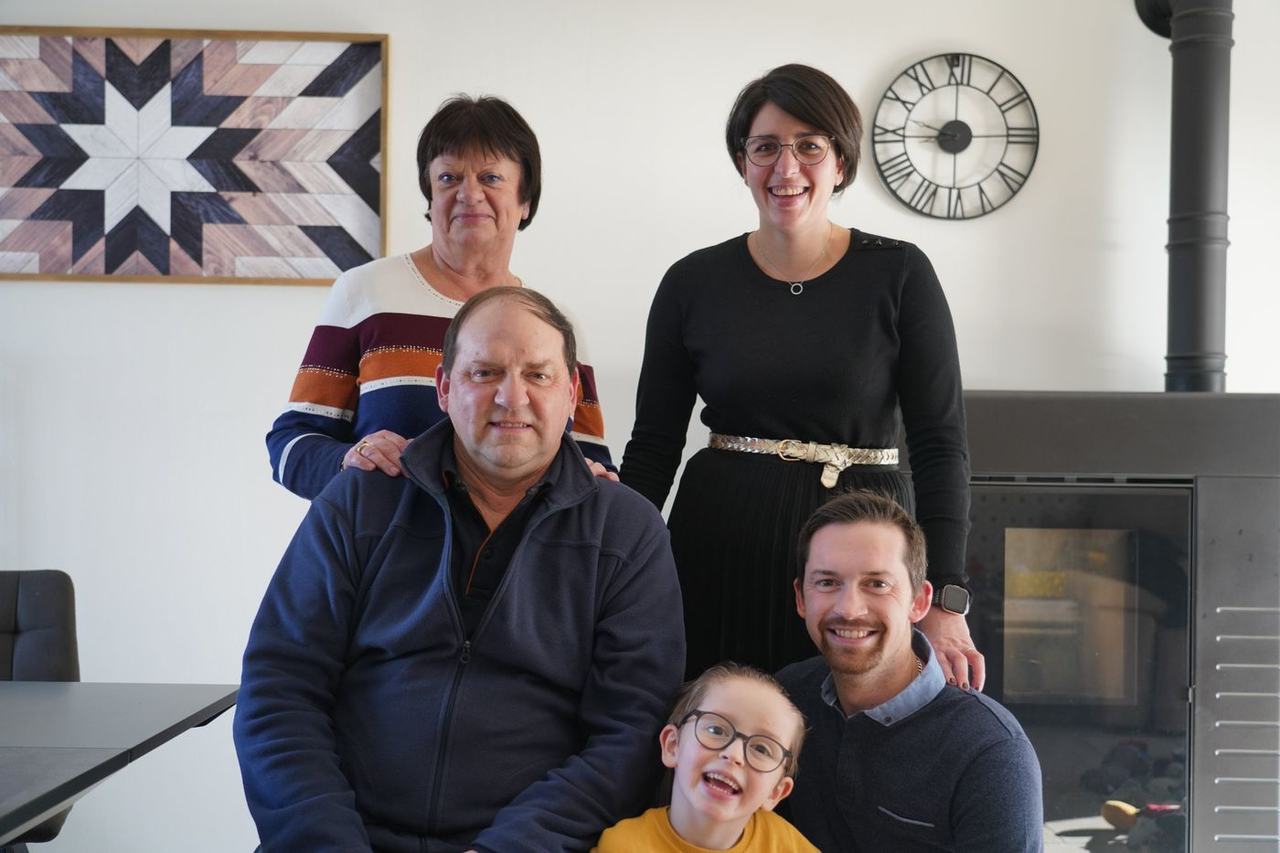
La finesse avant tout. Finesse before everything. In Gevrey, a village that can bully you with power, that is close to a moral position. Denis took over 1.8 hectares in 1983 and has crept to barely four and a half since, including two small pieces of Charmes-Chambertin and a Vieilles Vignes from vines averaging seventy-five to eighty years old. He replaces about six hundred dead vines a year rather than tearing out a block and starting over, which costs more, yields less, and is the entire reason the wine tastes the way it does. His son Nicolas joined in 2008. There is no website. There is no need for one.
02 · BelgiumA choir outing, a chemical plant, and the holidays in Gevrey.
Denis Bachelet was born in 1963 in Spy, a village in Wallonia, because his father had gone there on an outing with the Gevrey-Chambertin choir, met a local girl, and chose Belgium and the chemical industry over the family vines. The vines had been bought by Denis’s great-grandfather, a cooper. Denis spent his school holidays with his grandparents in Gevrey and fell for the vigneron’s world; the rest of the year he was a Belgian schoolboy.
At sixteen his father asked him whether he wanted to be a winemaker. “Why not?” he said, and arrived at the wine school in Beaune, as he puts it, with a Belgian accent. His grandparents had retired in 1973, so what he inherited was vines and nothing else: no cellar, no equipment. He became fully involved from 1981, just after his grandfather died; the ’81s, in a damp and difficult year, turned out to be outstanding, and the Charmes drank beautifully for fifteen years. In 1983, at twenty, he took the domaine over outright: 1.8 hectares, all old vines, all prime: Charmes-Chambertin, village and premier cru Gevrey, a parcel of Bourgogne. “The beginning was really difficult,” he says. His grandmother, delighted to have him home, was consulted on every vintage until she died at ninety-seven.
03 · Wednesday afternoonsBecky Wasserman, Le Serbet, and a sixteen-year-old with samples.
Becky Wasserman founded Le Serbet in Beaune in 1979, named for a field on her farm at Bouilland, and the estates she was first entrusted with, then little known, included Pousse d’Or, de Montille, Michel Lafarge, and Denis Bachelet. Wednesday afternoon is the French school half-day, and that is when he came.
He has stayed. When Decanter put Becky in its Hall of Fame in 2019 and Jasper Morris gave a lunch in her honour at the Caves de la Madeleine, Denis was at the table with Lafon, Mugnier, Mugneret and the Lafarges, and with Russell Hone and her sons. Her company still lists the domaine among the growers “who have been with her since the beginning.” Her motto was Non vendimus quod non bibimus: we don’t sell what we don’t drink. It is the sentence this book is built on.
I was lucky to meet Becky Wasserman at Le Serbet just when she started exporting wine from Burgundy. Wednesday afternoons after school I would bring my very first samples of my wines to her for tasting. She would introduce my wines to people like Clive Coates, Hugh Johnson and Jancis Robinson.
Denis Bachelet
There are people I’ve had for over twenty years, like Denis Bachelet. We started to work with him when he was sixteen years old.
Becky Wasserman, to Margaret Rand, Harpers
04 · The vinesFour and a quarter hectares, and six hundred replacements a year.
The domaine is about 4.3 hectares (Denis says four and a half) and makes seven reds and one white when the weather allows, around twenty thousand bottles. The Charmes-Chambertin is 0.43 hectares in two parcels of Aux Charmes, on the little rise between Gevrey and Morey near the Mazoyères line, with Dugat and Perrot-Minot on one side and Roty and Raphet on the other; the vines went in between 1907 and 1917, and his grandparents replanted six rows in the 1960s. The grapes are tiny and this parcel ripens first. Les Corbeaux, the premier cru, is 0.42 hectares in three pieces beside Mazis-Chambertin with Fonteny above; the largest was planted in 1920, part of it again in 1961.
The village Vieilles Vignes comes from six plots (En Dérée mostly, with Sylvie, Les Jeunes Rois, La Burie and La Justice), planted 1932 to 1937 and chosen for their differences: “En Dérée has lighter soil. La Burie has a bit more clay and La Justice more sand. If it is dry La Justice is difficult; with more rain you always have lots of success there. You need different types of soil to have a balanced cuvée.” Les Evocelles, 0.17 hectares at the top of the slope in Brochon against Champeaux, was bought in 2011 in the space of an hour (a phone call at four, a parcel at five) and makes three barrels in a good year; the name is old French for quarry. The Côte de Nuits-Villages, six parcels at the top of the Brochon slope with vines from 1952 and a scrap of Créole from the early 1900s, has been labelled Fixin since the 2024 vintage. Even the Bourgogne and the Aligoté are old vines, from 1977 and 1987.
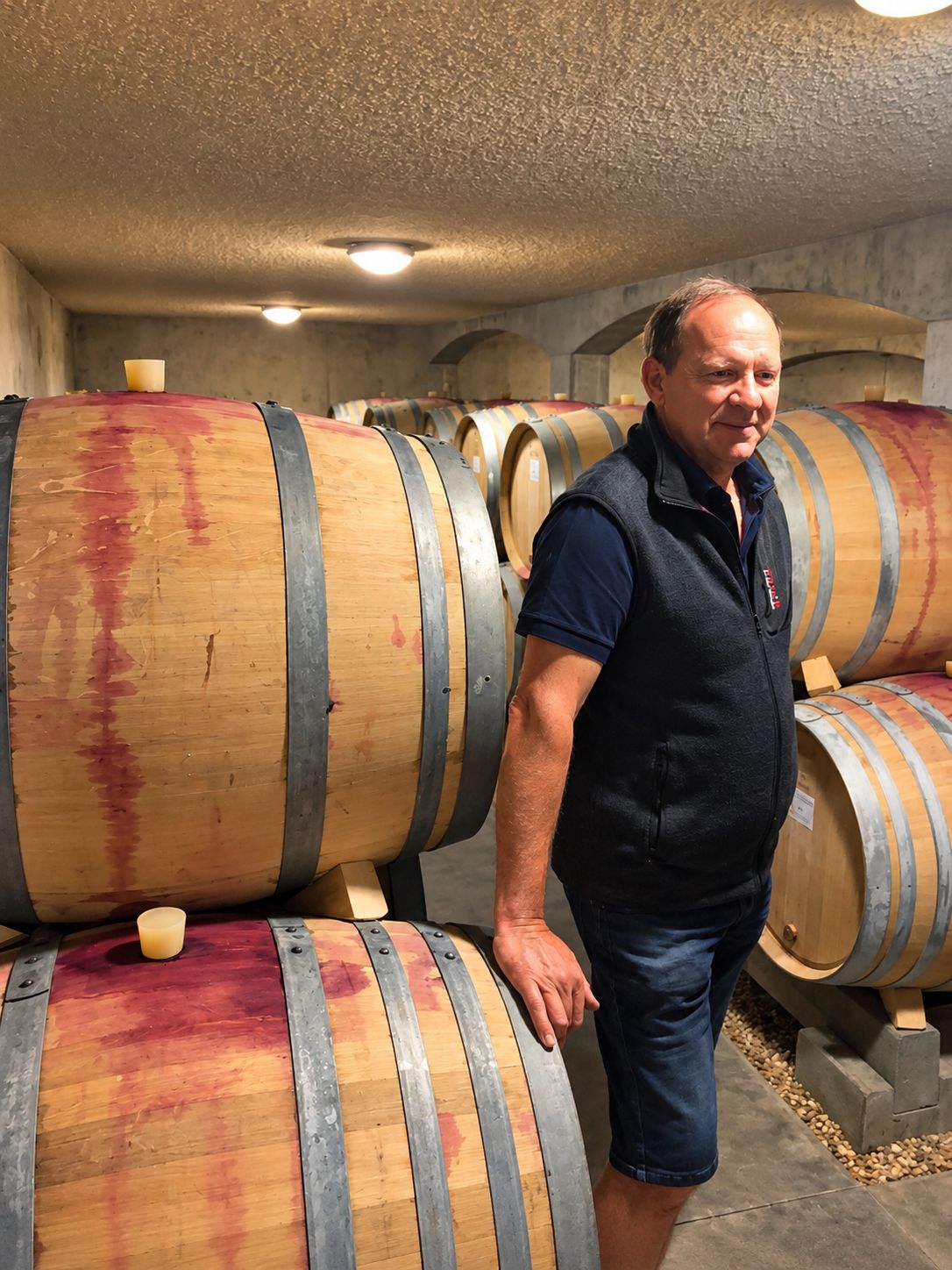
Nothing is replanted wholesale. Some six hundred dead vines are replaced each year across the estate so that the old ones can be kept as long as possible, and any vine that threatens a heavy crop is green-harvested. The cellar runs the length of a building on the corner of the main road that was built in 1740 and served for generations as the village post office; Denis’s grandfather turned it into a winery.
05 · NicolasThe second generation since 2008.
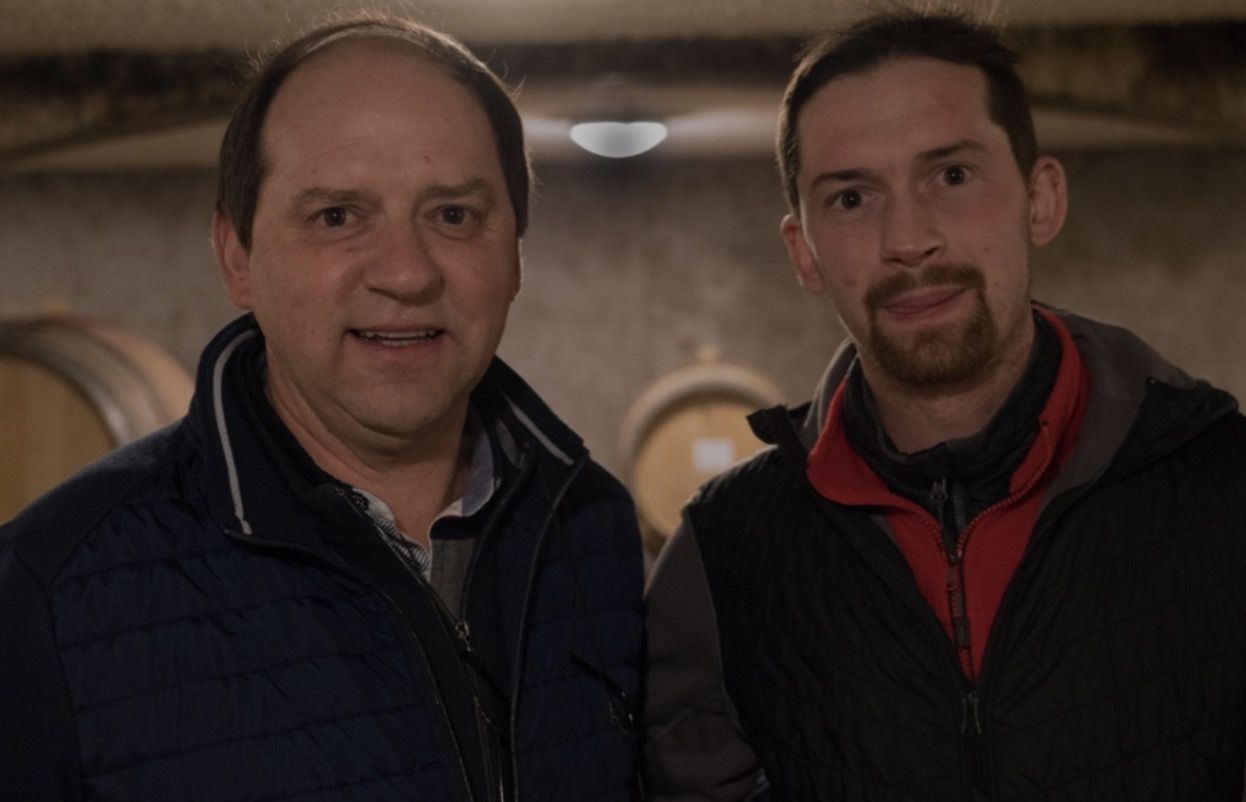
Nicolas Bachelet joined his father in 2008 after a stint in New Zealand. Jancis Robinson’s team found him “well in harness” by 2017 and celebrating his tenth year the January after. His partner Doriane has worked at the domaine since 2017. Denis’s wife Marie-Jo runs it with them. The succession is what drove the 2011 purchases; it has not changed the wine’s manners, though the oak on the crus has edged up over the years and Denis says he is working toward longer fermentations. When visitors ask how the vinification goes, his answer is “Banalement” (boringly), and the credit goes to the vines.
06 · In the cellarDestemmed, crushed, cooled, and left alone.
Everything is destemmed and lightly crushed (Denis prefers it for colour), then cold-macerated for up to a week, sometimes under dry ice. Native yeasts; cement and stainless vats; pigeage once or twice a day and pumping over almost never; a pneumatic press; a week’s settling in tank. Then the move that defines the style: the wine goes into barrel and is immediately cooled to 13°C so that the malolactic does not begin until the following summer (May, June, July, sometimes August), which keeps the carbon dioxide high and the fruit fresh all the way to bottling.
New oak is around thirty per cent for the village wine and half for Corbeaux and Charmes, fifteen to twenty for the regional wines, from Chassin, Rousseau and Remond; it is there, as Denis says, to refine Gevrey’s tannins rather than to speak. Sixteen to eighteen months in barrel, one racking in spring, no fining, no filtration, bottled by hand by the phase of the moon. The vines see no herbicides, chemical fertilisers or insecticides; the domaine is not certified and does not advertise.
- Holding
- About 4.3 hectares in Gevrey-Chambertin, grown from 1.8 hectares in 1983
- Crus
- Charmes-Chambertin, 0.43 hectares in two parcels
- Vines
- Vieilles Vignes averaging 75–80 years
- Vineyard
- Around 600 dead vines replaced each year rather than replanting blocks
- Élevage
- One-third new oak for the village, premier cru and Charmes; a quarter for Côte de Nuits-Villages
- Farming
- Practising organic and biodynamic
- Family
- Denis Bachelet, with his son Nicolas since 2008
07 · What they say“Nobody makes Charmes-Chambertin like Denis Bachelet.”
Clive Coates: wines “of intensity, great elegance, and subtlety, feminine in the best sense. They are concentrated, harmonious, pure and understated.” Jasper Morris: “one of Burgundy’s quiet masters,” whose gift for “pure, graceful wines seems to be entirely natural.” William Kelley of The Wine Advocate, on the 2016 Charmes: “Nobody makes Charmes-Chambertin like Denis Bachelet.” Neal Martin: “an innate ability to transcend the limitations of the growing season.” Allen Meadows, on a Charmes: “Buy it if you can find it.” Jancis Robinson’s team: “a particularly lovely Charmes Chambertin, as chez Roumier.”
In July 2026 the MICHELIN Guide’s first Burgundy selection gave the domaine One Grape. The wines are allocated; the Charmes, even to serious merchants in serious cities, often amounts to a single bottle.