
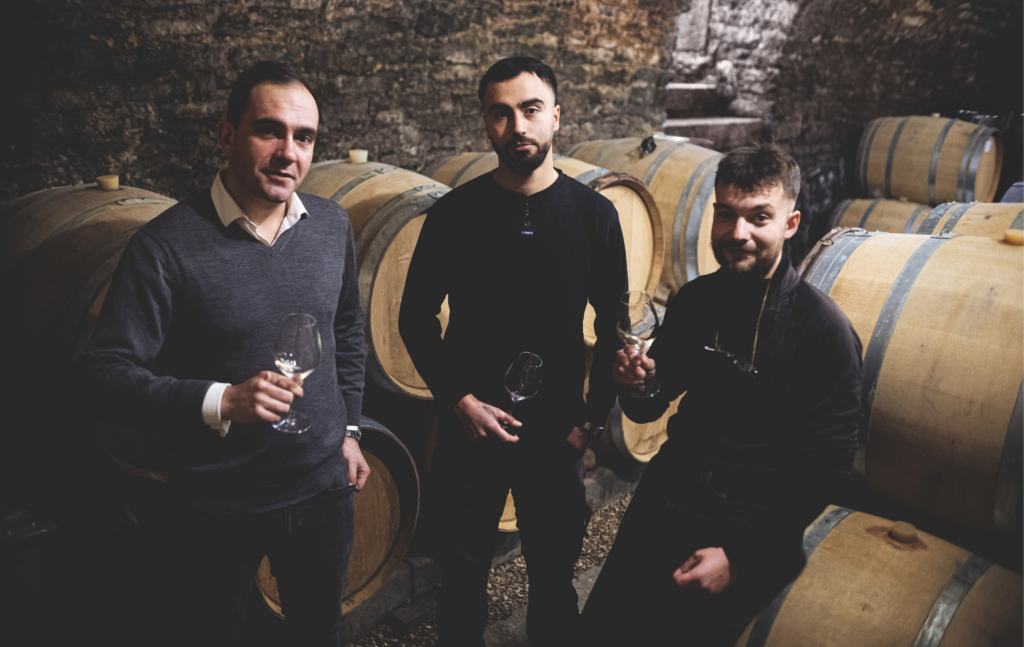
Meursault with the fat trimmed and the tension left in.
Five and a half hectares in the middle of Meursault, and every one of them white, from Aligoté up to 1er Cru, and no reds. The Bocards have been here since the 1920s; Guy built the domaine in 1976 and ran it for fifty years. It has changed hands, and gently: organic conversion began immediately, and since 2022 Philippe Pacalet has been setting the style. That means long whole-cluster pressings, wild yeasts, very little bâtonnage, almost no sulfur, and barrels kept in service ten vintages or more, because the point of a barrel is to hold wine, not to flavour it. Meursault with the fat trimmed and the tension left in.
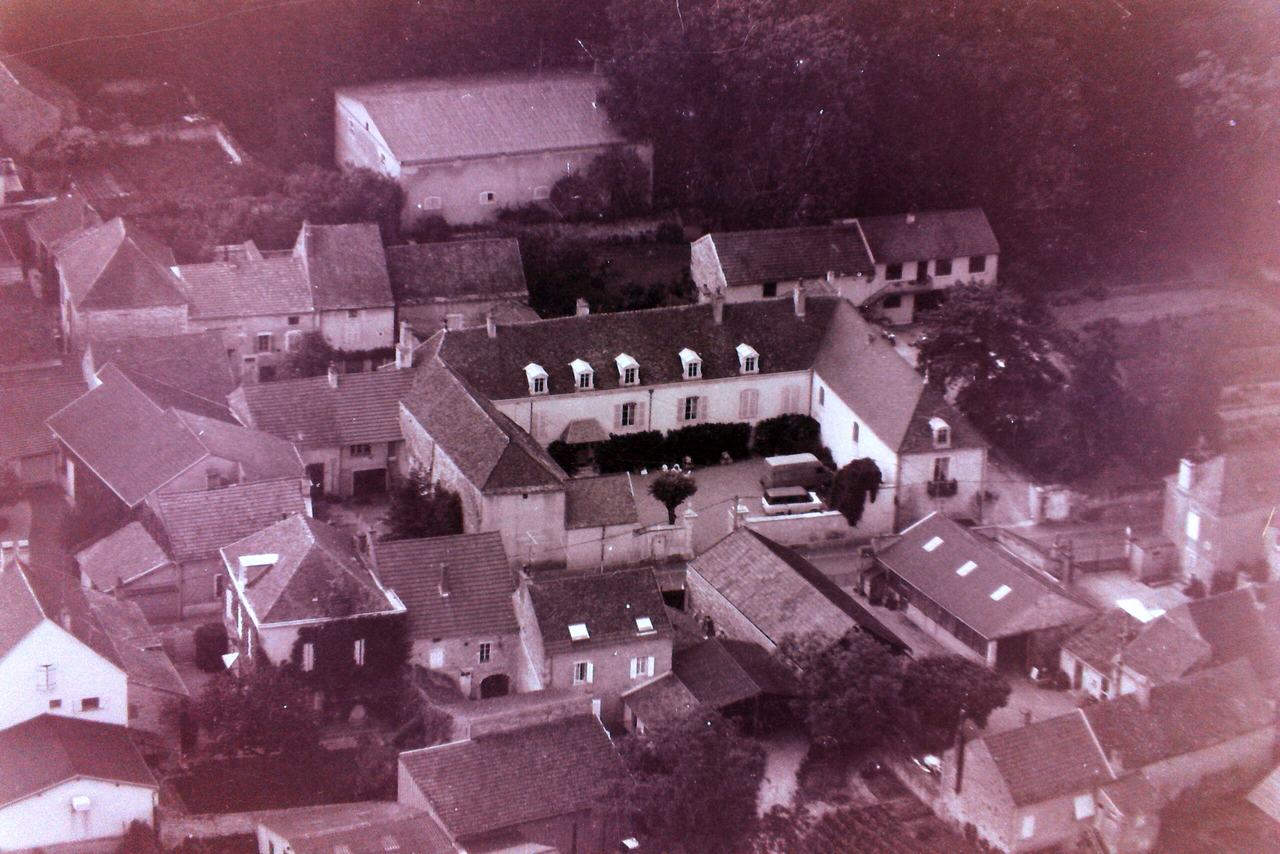
02 · Three Charleses and a GuyA horse and two hectares, then bottles from 1959.
Charles Bocard made the domaine in the 1920s, before Meursault had an appellation to its name, with a couple of hectares and a horse. His son, another Charles, replanted to Chardonnay after the war and in 1959 began putting the wine in bottle and selling it himself, which is how a Meursault grower became a Meursault domaine. Guy came in in 1976, bought parcels through the early eighties, built a first cuverie and then, in 1987, the one on the rue de Mazeray that is still the address. For four decades the house was the village’s honest address: Charmes and Limozin that the Guide Hachette kept giving stars to, with a few reds in Auxey and Monthélie on the side.
In 2018, with no successor in the family, Guy sold to the Derichebourg family, who also own Château de Crémat in Bellet and La Rose Pourret in Saint-Émilion (the latter is in our book too). The handover was slow. Guy stayed three years, through the organic conversion that started on the day of the sale, and retired at the end of 2020. His right hand René Mora, who had started as a picker and learned the cellar from Guy, carried the estate through 2020 and 2021. Then the new owners asked Philippe Pacalet, the Beaune négociant whose own wines are the reference for natural Burgundy with a classical shape, “to define the new style of vinification and train the teams.” The 2022 vintage was the first without Guy and the first entirely under Pacalet’s eye; Henri Binoche directs, and from 2024 Pierre in the vines and Thomas in the cellar have carried the day-to-day, “still guided by Philippe Pacalet.” The reds are gone. What remains is five and a half hectares of white, eight cuvées, every one made the same way “so that the terroir makes the difference.”
Cette démarche s’inspire des préceptes transmis par Philippe Pacalet.
Domaine Guy Bocard
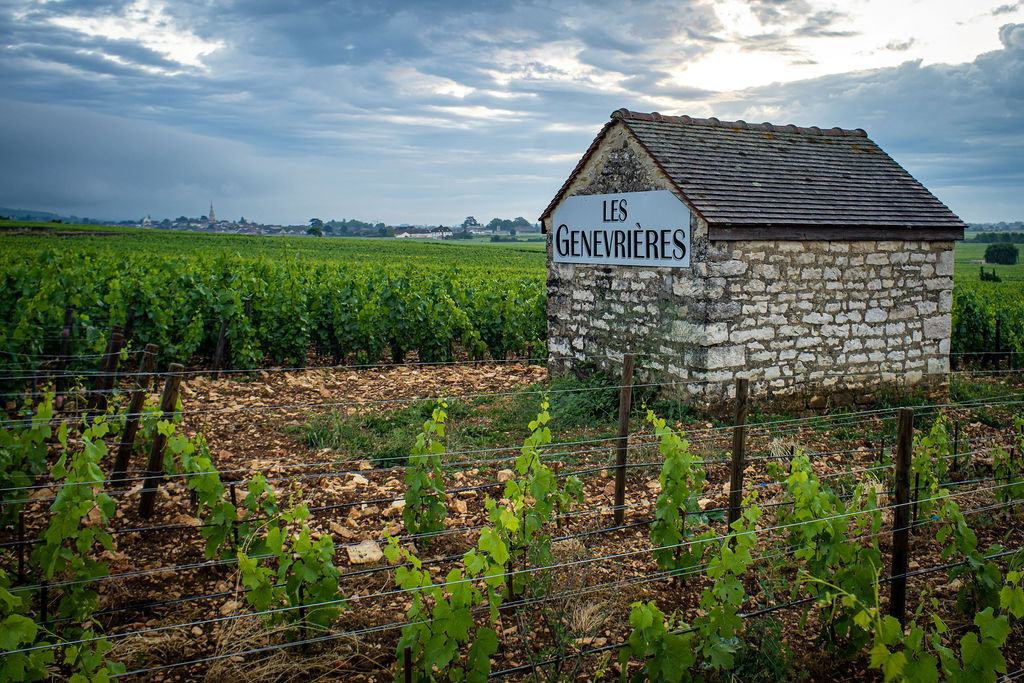
03 · Up the slope and downNarvaux at 330 metres, Limozin against the Charmes.
The clay thickens as Meursault descends toward the plain, and the domaine runs the whole slope. At the top, Les Narvaux on the heights of Montmélian: three hundred and thirty metres, south-east, steep and stony, shards of limestone through the soil, a cool site that gives the most mineral wine in the cellar, citrus and rock. Below it, Limozin, the mid-to-low slope south of the village where the lieu-dit touches Genevrières and Charmes-Dessous directly; fifty-year vines on an even balance of marl and limestone, the domaine’s deep, rich one, and the wine the Hachette kept putting up for a coup de cœur. The two premiers crus sit either side of it: Charmes-Dessus, the upper part facing the Clos des Perrières at the Puligny line, where the limestone slabs break the surface, 1960s vines with a young block added a decade ago; and Genevrières-Dessous, mid-slope on the Montmélian side just above the Limozin, a small holding the domaine thinks may be its finest wine: “une magnifique profondeur.”
North of the village toward Volnay, the Vieilles Vignes comes from Les Durots, Les Dressoles and Les Malpoiriers, dense deep soils with few stones, vines planted at the end of the forties and the start of the seventies. The Bourgogne is three parcels, Durots again and the Basses Gouttes and Grandes Coutures below Limozin, made à la murisaltienne. The Aligoté is a single north-facing lieu-dit in the low village, Les Chanterelles, planted 1973. And one parcel outside Meursault: a young-vine Auxey-Duresses 1er Cru Les Reugnes at the mouth of the Auxey valley. Everything is argilo-calcaire; what changes is how much of each, and how high you are standing.
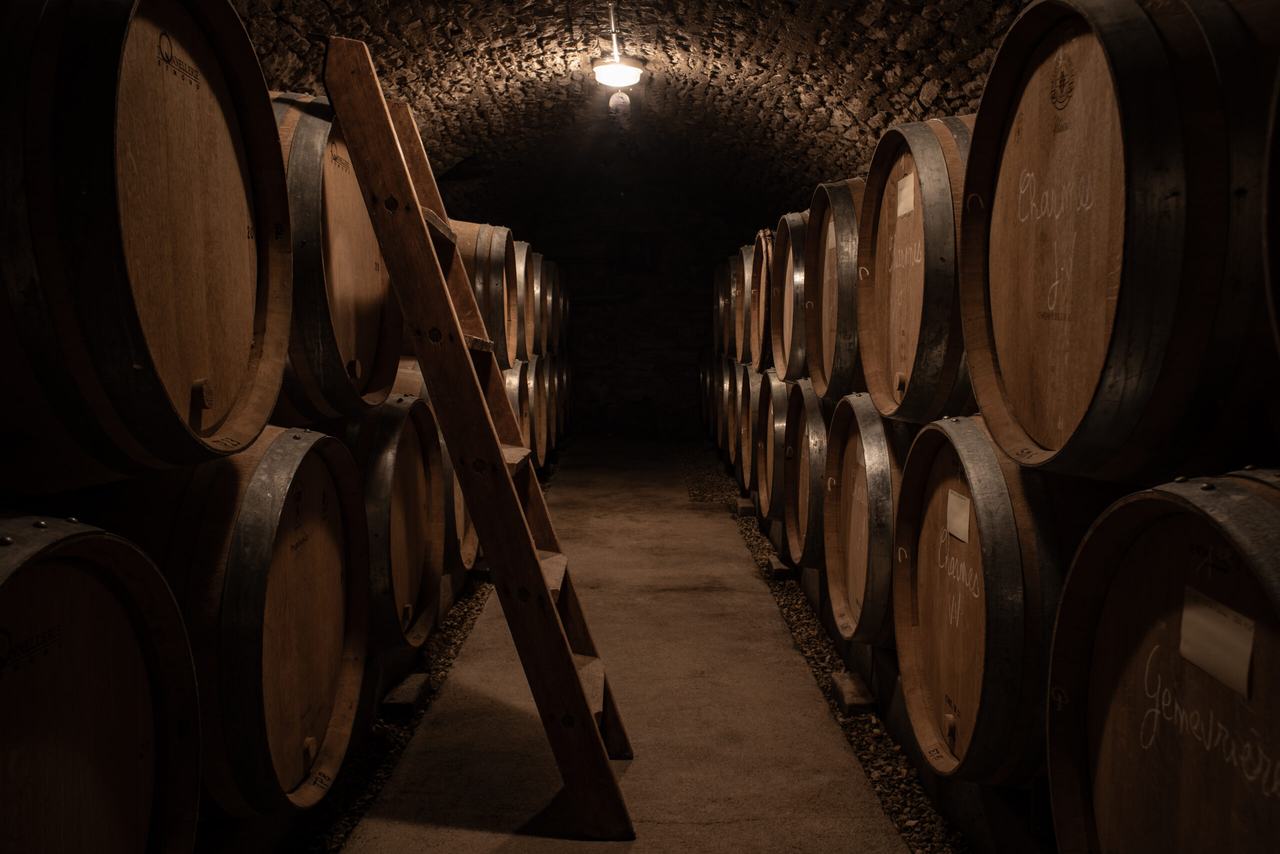
04 · Whole bunches, old barrelsThe barrel is there to hold wine, not to flavour it.
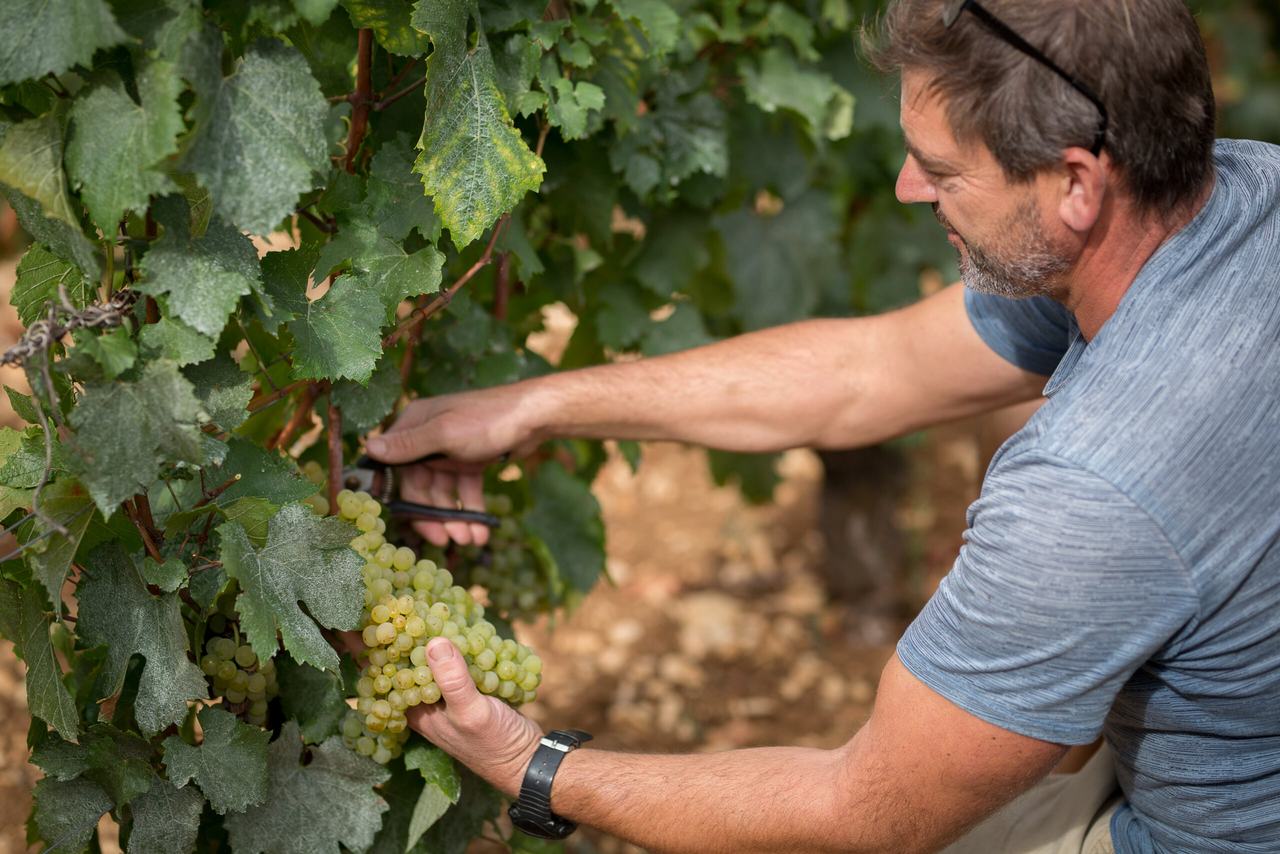
Organic from the sale, certified from the 2022 vintage, with light ploughing and regular hoeing, the tractor kept off the ground as much as possible to spare it compaction, pruning in two late passes on the Simonit & Sirch method and grafts from the Bérillon nursery. Treatments “limited to the strict necessary, and always conceived with respect for living things.” Hand harvest into twenty-kilo crates, sorted on the vine.
Then the Pacalet method, which is less a technique than a refusal of several. The bunches go whole into the press, parcel by parcel, and the pressing is long and progressive, slow enough to take only the finest of the bitter elements. The juice settles cold and goes to 228-litre barrels before it starts to ferment on its own yeasts; every cuvée goes through its malolactic. Then a year on the fine lees with very little stirring, and four months in steel to settle. New oak touches only the blended cuvées (fifteen per cent on the Bourgogne, the Vieilles Vignes and the Charmes) and none at all on the single-parcel wines, Narvaux, Limozin, Genevrières, the Aligoté; the barrels are chosen carefully and kept in service “sometimes more than ten vintages,” a tenth of them replaced each year, with trials in stone casks from the Tonnellerie de Mercurey that the domaine calls conclusive. Sulphur “very moderate and as late as possible”; a light fining or filtration only when a vintage asks for it. The estate’s own description of the 2022s, the first of the new era: “pure, straight, precise, but generous.” Of 2024, the hard year: “a cry of terroir, more than ever.”
Pure, straight, precise, but generous.
Domaine Guy Bocard, on the 2022s
05 · What they say“A powerful comeback at the very top of the appellation.”
The new era is young, and the big English-language critics have not yet caught up with it; the French have. The Revue du Vin de France put the domaine among its new entries for the 2025 Guide des Meilleurs Vins de France and scored the 2022 Charmes 95: “fresh, ripe and precise, it reveals impressive complexity, vibrant energy and perfectly balanced concentration.” Manuel Peyrondet, Best Sommelier of France in 2008, on the 2023s: ni trop riches, ni trop simples — ils sont vivants, nuancés, élégants; on the Narvaux, “high on the slope, which gives a little more brilliance to this famous terroir”; on the Limozin and the Charmes, a level he called “quite exceptional.” The Ventealapropriété committee: “breathing new life into Meursault, making a powerful comeback at the very top of the appellation.” From the Guy years, the Hachette on the 2002 Limozin, in its coup de cœur pages: ce beau chat de race somnole, s’étire et ronronne: a fine pedigree cat, dozing, stretching, purring.
This is Meursault at the weight of the village rather than the weight of fashion: lean where it should be, long where it counts.
Ils sont vivants, nuancés, élégants.
Manuel Peyrondet, on the 2023s
In the vineyard
& cellar.
- Holding
- 5.6 hectares, all white: Meursault Vieilles Vignes, Narvaux, Limozin, 1ers crus Charmes and Genevrières; Bourgogne Côte d’Or; Aligoté Les Chanterelles; Auxey-Duresses 1er Cru Les Reugnes
- Since
- Charles Bocard in the 1920s; estate bottling from 1959; Guy Bocard from 1976, cuverie built 1987; sold to the Derichebourg family in 2018; Philippe Pacalet consulting from 2022; Henri Binoche directing, Pierre in the vines, Thomas in the cellar
- Farming
- Organic from 2018, certified from the 2022 vintage; light ploughing and hoeing; late two-pass pruning (Simonit & Sirch); Bérillon grafts; hand harvest into 20-kg crates, sorted on the vine
- Pressing
- Whole bunches, long and progressive, parcel by parcel; cold settling; to 228-litre barrels before fermentation
- Vinification
- Indigenous yeasts; full malolactic on every cuvée; twelve months on fine lees in barrel with very little bâtonnage, then four months in steel
- Oak
- 15% new on the blended cuvées (Bourgogne, Vieilles Vignes, Charmes), none on the single parcels; barrels kept up to ten vintages or more; trials in Burgundy-stone casks
- Sulphur
- Very moderate and as late as possible; light fining or filtration only if a vintage requires it