
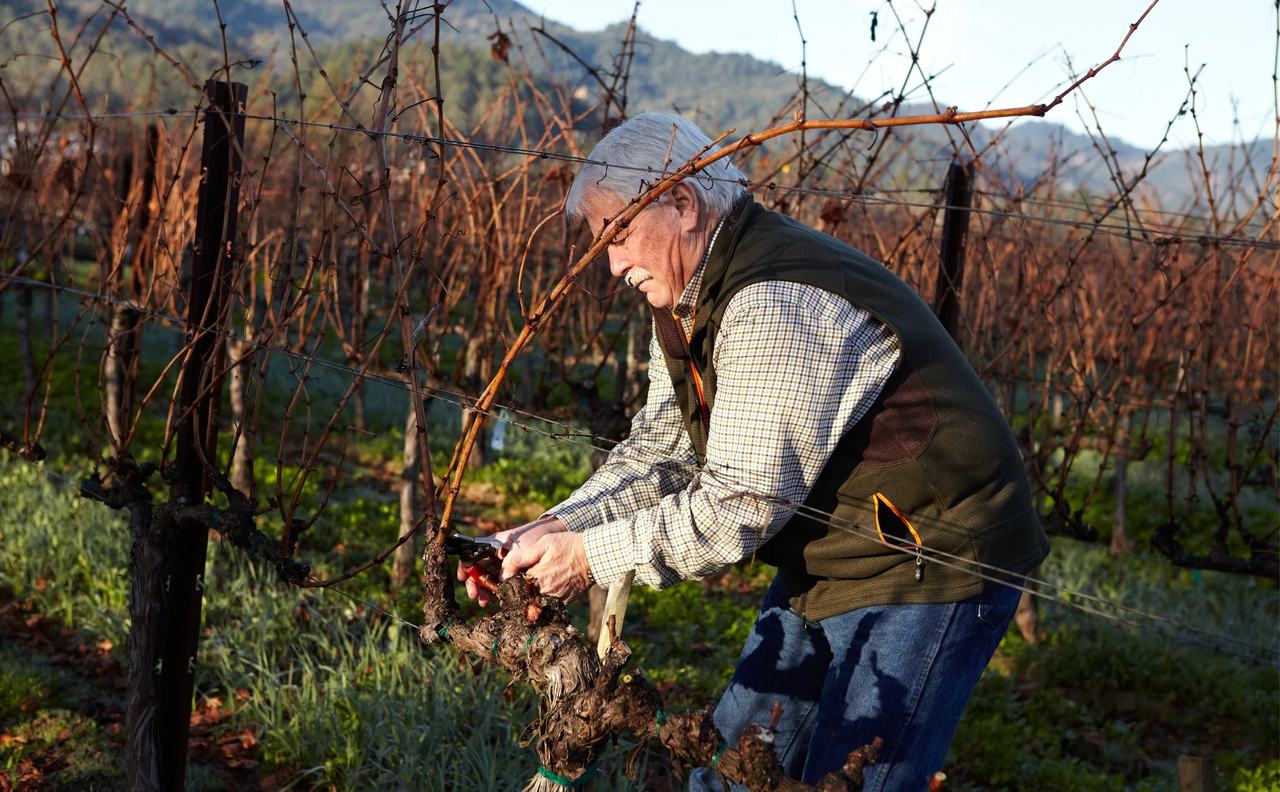
The vineyard manager’s own vineyard, dry-farmed since 1992.
Jim Barbour has spent more than forty years planting and farming other people’s famous vineyards in Napa: Grace Family, which he planted in 1976, Hundred Acre, Checkerboard, Blankiet, Keever, Dr Stephens and many more. In 1992 he planted four acres for himself on gravelly loam just south of St. Helena, with Cabernet budwood he took from Grace Family and budded onto each vine by hand. He made fifty cases from it in 1995. Today it makes about three hundred, and it is still dry-farmed.
Celia Welch makes the wine. She has made Scarecrow, Staglin and Keever, and she is one of the most respected winemakers in the valley. The label is Jim’s, though, and so is the idea behind it: a grower who has seen the best ground in Napa, keeping a small piece of it the way he thinks Cabernet should be farmed.
Dry farming in this valley is close to a political act now. Most growers stopped because irrigation is easier and the yields are more predictable. What you lose is the depth that comes from vines that have spent thirty years finding their own water, and this Cabernet has it. There is very little of it. There will be very little of it.
02 · RutherfordA ranch boy, a dead Oldsmobile, and the hillsides nobody else would take.
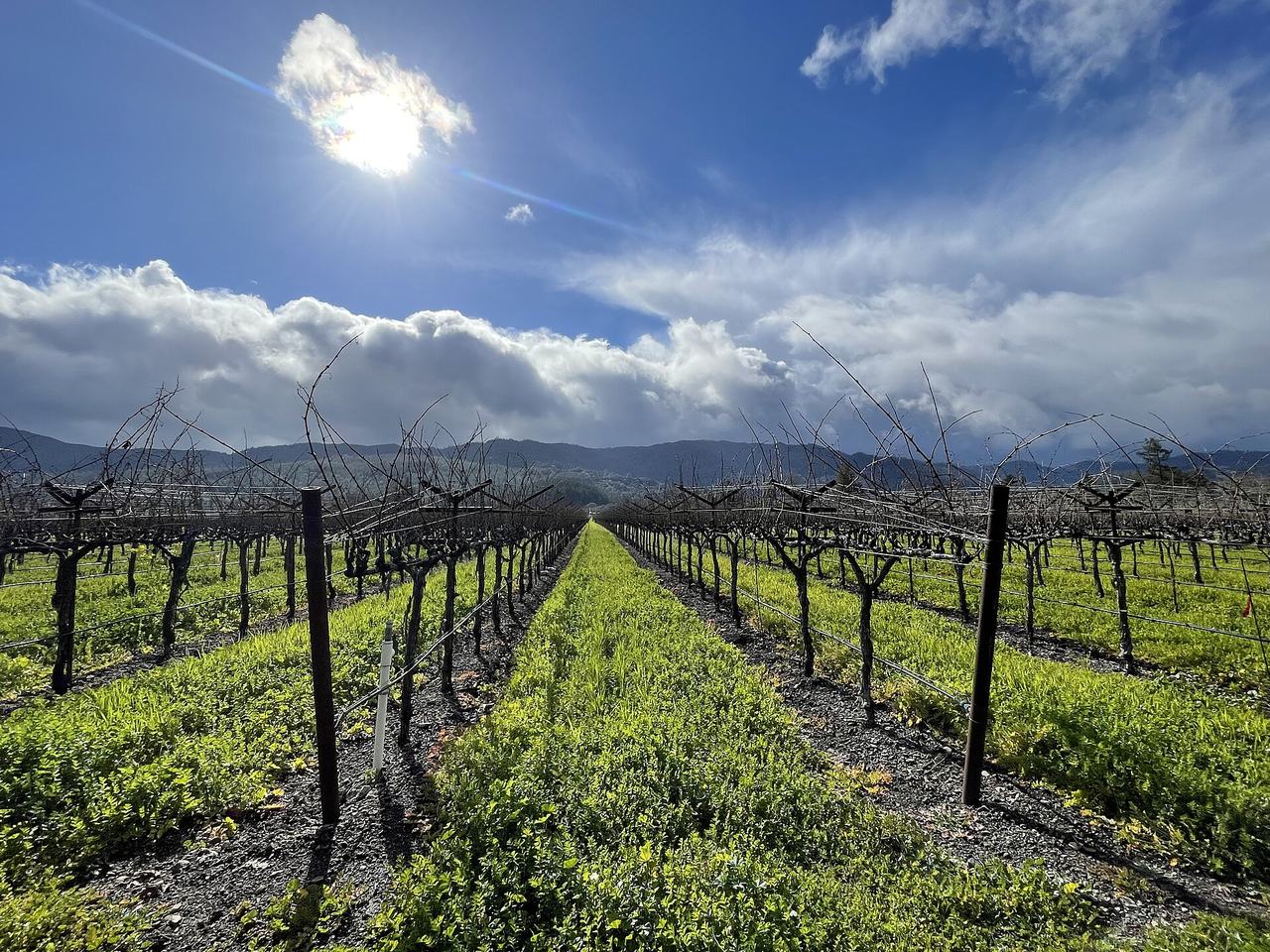
Jim’s family moved up from San Francisco in 1962 to a ranch in Rutherford, on the land where Sequoia Grove stands today. They grew prunes, apples and grapes (Gamay, Mondeuse, Petit Bouschet) and sold the grapes to Gallo; Jim talked his father into five acres of Chardonnay, and when it sold faster than they could grow it the whole farm went to vines. His father taught by making him earn things. When Jim wanted a car, he was handed the keys to a 1963 Oldsmobile that didn’t run and told to rebuild the engine, which came in useful years later when his company couldn’t afford a mechanic.
He went to Chico State to become a parole officer, rode along with one for a few days, learned about the pay, and transferred to UC Davis. On weekends he drove a tractor for Laurie Wood, one of Napa’s pioneering vineyard managers, and after graduating he worked for him from 1975 to 1989. They planted much of Spring Mountain and took on the steep, difficult sites. Grace Family’s first vines, in 1976, went in on Wood’s watch with Jim doing the work. When Wood retired in 1990, Jim started Barbour Vineyards; it now farms over 400 acres for the valley’s top names, and its team works in conventional, organic and regenerative farming.
We were either brave or crazy but became well-known for developing difficult vineyard sites, including hillside projects no one else would take.
Jim Barbour
03 · The narrow waistGravelly loam where the valley pinches to half a mile.
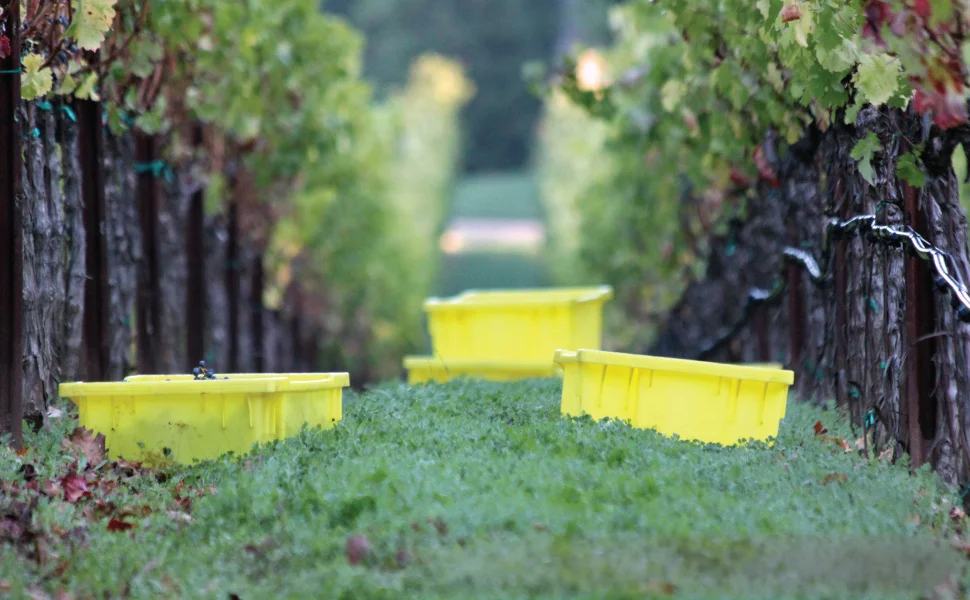
In 1992 Jim bought seven acres on Tokay Lane, just south of St. Helena, and planted four of them to Cabernet Sauvignon. It is old vineyard country: the Lewelling vineyard, one of the longest-planted in Napa, is nearby, and so are Corison and HALL. The vineyard sits on the west side of the valley floor near the foot of the Mayacamas, where the valley narrows to as little as half a mile between the two ranges. Warm air lingers and reflects off the western hillside in the afternoon; mild marine wind comes in at evening. The soil is gravelly and loamy, the kind of ground Jim says he can read by its colour and by what lies on the surface.
He chose clone 7, which he calls one of his favourites, and took the budwood from Grace Family, the vineyard he had planted sixteen years before. Rather than buy grafted vines, he had each one field-budded in place. It is slow, labour-intensive work, and he did it because it gave him the flavours he wanted. The estate now speaks of two St. Helena vineyards in the wine.
A great vineyard starts with a good piece of ground and nothing can compensate for a lack of good soil.
Jim Barbour
04 · Dry-farmedOne to two tons an acre, and a bucket for the heat waves.
The vineyard is dry-farmed. In a serious heat event the vines get water by hand, from a bucket; otherwise they live on what the gravel holds. It is hand-farmed too, like all of Jim’s client vineyards, and it yields one to two tons an acre, which is very little for the valley floor. The first harvest, in 1995, came to three-quarters of a ton. Jim’s explanation of why he does it is a farmer’s: dry farming makes tiny berries, and they taste more intense and sweeter than fruit from irrigated vines.
Celia Welch takes it from there. The fruit is picked by hand, destemmed and sorted, and fermented on its skins for about three weeks before a gentle pressing. It spends 22 months in French oak, 65 per cent new, and is bottled without fining or filtration. The 2023 made 329 cases.
Dry-farming creates tiny berries, and they’re intensely flavored and sweet in a way I don’t taste in grapes from irrigated vineyards.
Jim Barbour
05 · The winemakersMade first at Grace Family, then by Heidi Barrett, now by Celia Welch.
Jim nearly didn’t make wine at all. He was farming about a thousand acres around the valley at the time, and he wasn’t sure he would have anything left for his own vines at the end of the day. The first several vintages were made in the small winery at Grace Family, and he built production up to a hundred cases there. For fifteen vintages Heidi Peterson Barrett, who made the early Screaming Eagles and with whom Jim has worked more closely than with any other winemaker, made the Barbour Cabernet.
Celia Welch has made it since. She grew up in Medford, Oregon, helping her father, a collector and home winemaker; she graduated from UC Davis in 1982 in the same years as Heidi Barrett and Pam Starr, worked harvests in the Pacific Northwest, New Zealand and the Barossa, then came to Napa: Silverado Vineyards in 1987, assistant winemaker at Robert Pepi, and from 1992 her own consulting practice, starting with Staglin. She prefers to work for people who own their vineyards. This is one of those, and it may be the purest case of it in the valley: a man who farms for a living, and the wine from the one vineyard he farms for himself.
The commitment to quality is immeasurable, especially if your name is on the bottle.
Jim Barbour
In the vineyard
& cellar.
- Proprietor
- Jim Barbour, viticulturist, founder of Barbour Vineyards (1990)
- Vineyard
- Planted 1992 on Tokay Lane, just south of St. Helena; four acres of Cabernet on a seven-acre property
- Vines
- Clone 7 budwood from Grace Family Vineyards, field-budded vine by vine
- Soil
- Gravelly, loamy valley-floor soil near the foot of the Mayacamas
- Farming
- Dry-farmed and hand-farmed; the estate calls it sustainably grown. One to two tons an acre
- Cellar
- Celia Welch. About three weeks on skins, 22 months in French oak (65% new), unfined and unfiltered
- Production
- 50 cases in 1995; about 300 today