
A vineyard at the narrowest point of the valley, saved by a son who played guitar.
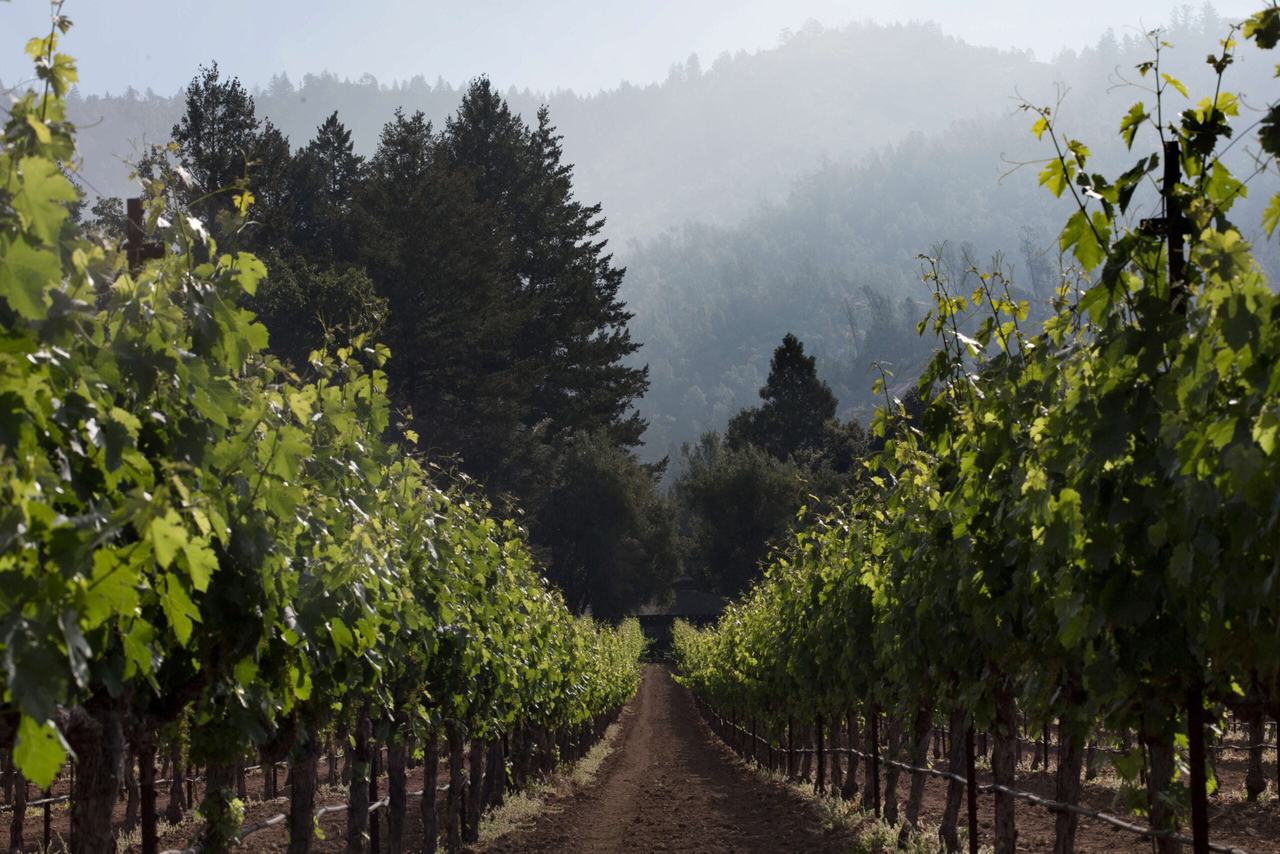
Two miles north of St. Helena a spur of the Mayacamas pushes east into the Napa Valley and pinches it nearly shut. Seen from the air, the valley there has the waist of an hourglass. On a knoll at the narrowest point sits a four-acre vineyard of Cabernet Sauvignon on Hambright soil, a fractured volcanic bedrock usually found high in the mountains. Afternoon air from the bay bottlenecks through the gap and cools it. Jeff Smith’s father bought it in 1976 and kept it for himself; Jeff named it Hourglass in 1992.
The second vineyard, Blueline, is twenty acres at the mouth of Dutch Henry Canyon south of Calistoga, on river gravel left by two old streams. Between them the family has all five red Bordeaux grapes, a winery dug into the hill behind Blueline, and since 2012 one of the most respected winemakers in Napa, Tony Biagi.
The Blueline Cabernet Franc is where the place shows most clearly: aromatic, iron-spined, with a violet and graphite note that the valley floor seldom produces. The Estate Cabernet has genuine depth without the extracted density that makes so much Napa Cabernet exhausting. And I open the HG III for accounts that need the quality without the allocation conversation.
02 · Ned SmithThe real-estate man who kept one parcel for himself.
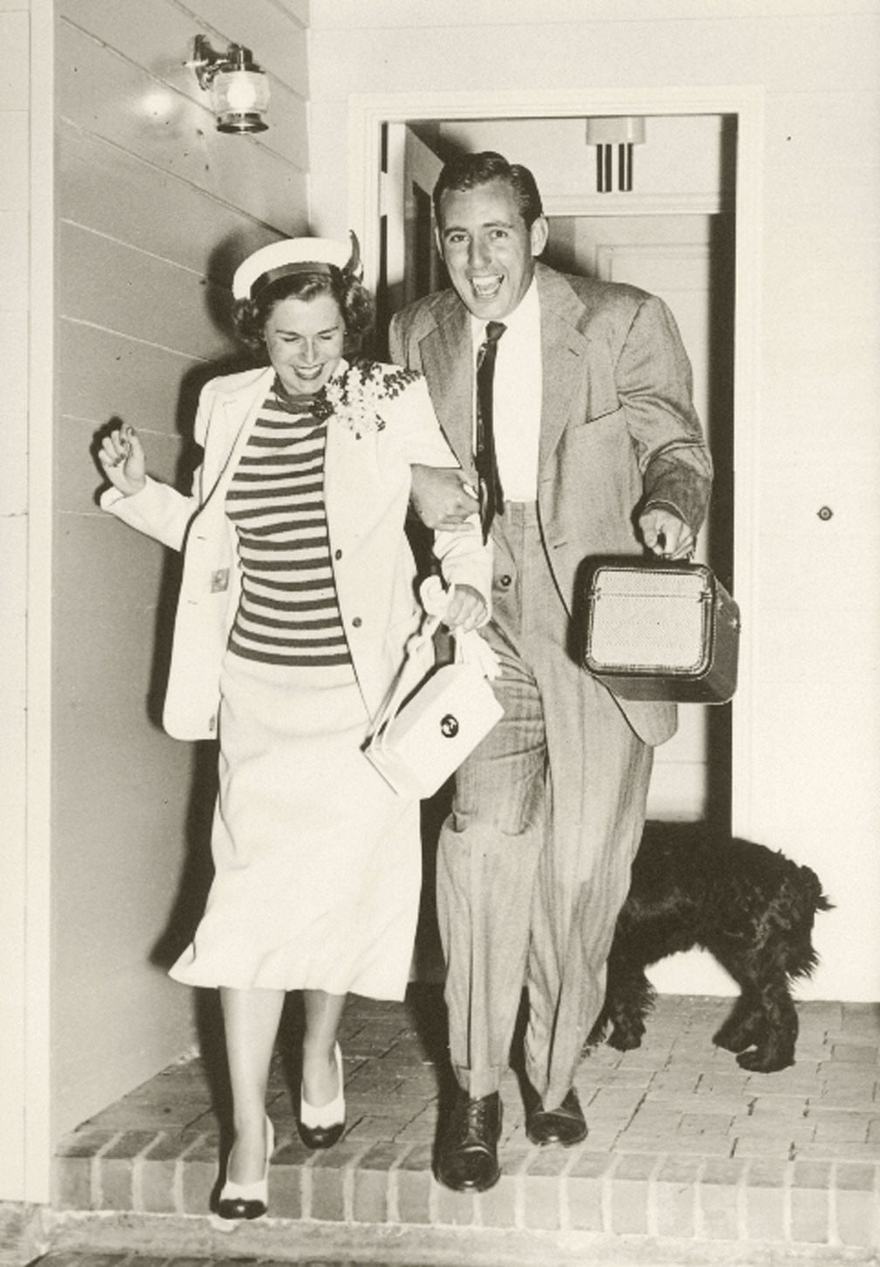
Ned Smith was a San Francisco advertising man who, in 1964, cashed out, packed up a family of seven and moved to a Napa Valley that almost nobody yet wanted. He became only the second real estate agent in the valley. Over the next decade he showed land to the people who built its first modern wineries: Jack and Jamie Davies, who bought the old Schramsberg estate; Dick Grace; Carl Doumani at Stags’ Leap. His son Jeff grew up at their dinner tables.
In 1976 Ned found a six-acre parcel he would not show to anyone. It sat on the knoll at the narrowest point of the valley, and he bought it. He planted an orchard first, and the fruit trees died within months. His neighbour Dan Duckhorn suggested vines. Ned planted the grape he loved, Zinfandel, and the four acres gave good fruit for nearly fifteen years.
Then, in the early 1990s, everything went at once. Ned died of cancer, and phylloxera, the root louse that tore through Napa vineyards planted on the AxR1 rootstock, took the vines. His widow Marge called Jeff, then playing guitar in a rock band in San Francisco after a few years at the Robert Mondavi Winery, to say it was time to sell. He talked her out of it.
03 · The pinchHambright rock on a knoll, and a debut that sold out in days.
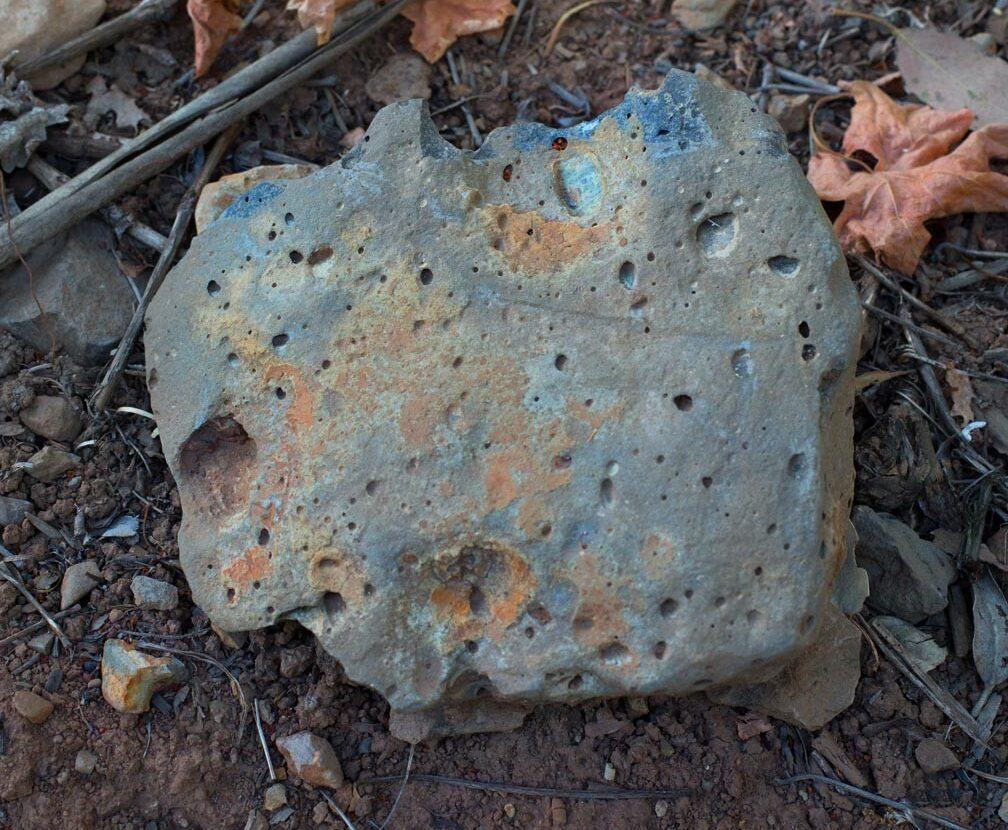
Jeff brought in Dr. Mark Kliewer, the viticulture professor from UC Davis, to look at the dead vineyard. Kliewer picked up a handful of red-brown, crushed-rock soil and recognised it at once: Hambright, a thin, stony series formed where volcanic force pushed bedrock up out of the Mayacamas. It drains hard and feeds the vines very little, so the berries stay small and the skins thick. With the afternoon breeze through the gap, and fog that lingers here later in the morning than elsewhere, Kliewer said the site could be one of the signature Cabernet vineyards in Napa.
In 1992 Jeff replanted the four acres to Cabernet Sauvignon and named it for the shape of the valley. One Chardonnay vine survives among the rows, and its few grapes still go into the Cabernet every year. The first wine was the 1997. Jeff asked his friend Bob Foley to make it: they had met in 1981 in the Yountville Saloon, two guitarists in a farming town, and Foley was by then the winemaker at Pride Mountain.
Before it was even released, the 1997 went on a whim into a tasting of cult Cabernets alongside Screaming Eagle, Harlan and Bryant Family, and held its own. The five hundred cases sold out within days. Every vintage since has come from the same knoll, and the Estate Cabernet is still 100% Hourglass Vineyard, aged twenty-two months in new French oak.
04 · BluelineTwo old streambeds below Dutch Henry Canyon, and a winery rebuilt after the fire.
Jeff and his wife Carolyn spent years looking for a second site as good as the first. One Sunday in December 2005, driving south of Calistoga on the Silverado Trail, he saw a For Sale sign at the mouth of Dutch Henry Canyon, between Switchback Ridge and Duckhorn’s Three Palms Vineyard. Two meandering streams, the kind marked with a blue line on survey maps, framed the property, and piles of river rock sat among the vines. With their friends the Chilton and Clark families they bought it in 2006 and called it Blueline.
It runs from the valley floor up a transitional bench to about two hundred feet. Below are the Cortina soils, cobbly river-wash gravel and loam that drain fast; on the bench, decomposed volcanic ash. The two canyons above rise to some two thousand feet, and as the day warms the hot air climbs them and cooler air slides in underneath. Merlot and Cabernet Franc were first planted in 1991, and Block 1 of the Franc is still those vines; several blocks were replanted in 2007 to all five red Bordeaux varieties.
The architect Olle Lundberg dug the winery into the curve of the hillside at the top of the property: ‘The mountain is the hero,’ he told the Smiths. In the 2020 wildfires it burned to its steel frame. The vines in both vineyards came through almost untouched, the 2019 barrels were saved in the cave, and the team made the 2021 and 2022 vintages in a temporary winery on the site while the new one went up.
05 · Tony BiagiPuzzle pieces, picked one by one.
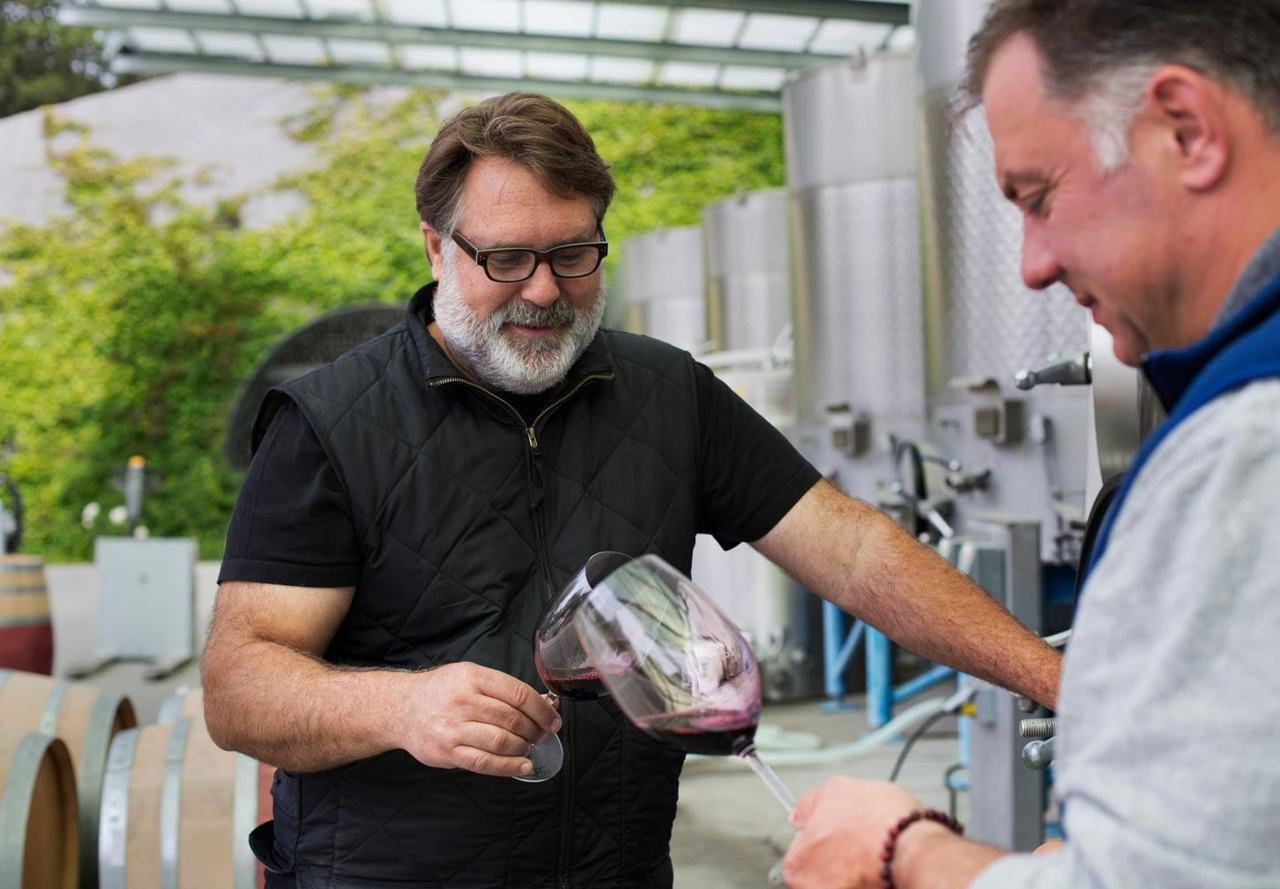
Once Blueline’s vines came of age, Hourglass needed a full-time winemaker, and Bob Foley had his own label to run. Tony Biagi took over with the 2012 vintage. He trained at UC Davis, worked at Duckhorn in the mid-1990s, spent nearly a decade with the PlumpJack group and has since consulted for Odette, Sinegal and Clos du Val; he also has his own label, Patria. He and Jeff met in a tasting group of young Napa winemakers and call what they have a ‘mutual mentorship’.
Biagi describes his job as assembling a puzzle: a pure black-fruit piece for depth, a tangy acid piece for lift, a colour piece fitted to a tannin piece, one for texture, one for length, one for aroma. The pieces are married as early as possible and then given their long barrel time together. The aim, as Jeff puts it, is to pick at ‘very precise moments when grape chemistry is in balance’.
The range now runs from the Estate Cabernet through the Blueline Cabernet Sauvignon, Merlot (from those 1991 vines) and Cabernet Franc, to two wines made with other growers: Mabon, Hyde Vineyard Chardonnay and Hudson Vineyard Syrah from Carneros, and HG III, a Napa blend from Switchback Ridge, Hudson and Thornton built for restaurant lists. Lisa Perrotti-Brown MW, who has tasted the wines across both winemakers, found them since 2012 ‘brighter, purer, better defined, and with rock-solid backbones for aging’.
Coming after Bob Foley at Hourglass, Tony Biagi had big shoes to fill. Tony has filled those shoes, wore them bare, and bought a new pair.
Lisa Perrotti-Brown MW, The Wine Independent
In the vineyard
& cellar.
- Holding
- Hourglass Vineyard, 4 acres of Cabernet Sauvignon at the Lodi Lane narrows, St. Helena; Blueline Vineyard, 20 acres of the five red Bordeaux grapes, Calistoga
- Since
- Land bought 1976; Cabernet planted 1992; first vintage 1997; Blueline bought 2006
- Ground
- Hourglass: Hambright series over fractured bedrock, east-facing knoll. Blueline: Cortina river-wash gravel and loam on the valley floor, decomposed volcanic ash on the bench
- Farming
- Not published by the estate
- Winemakers
- Bob Foley from 1997; Tony Biagi since 2012
- Cellar
- Estate Cabernet 22 months in new French oak; Blueline reds 20 months, 75 to 80% new; winery rebuilt after the 2020 fires
- Owners
- Jeff and Carolyn Smith, with the Chilton and Clark families