
One hillside on the Silverado Trail, planted in 1980, and the fire it outlived.
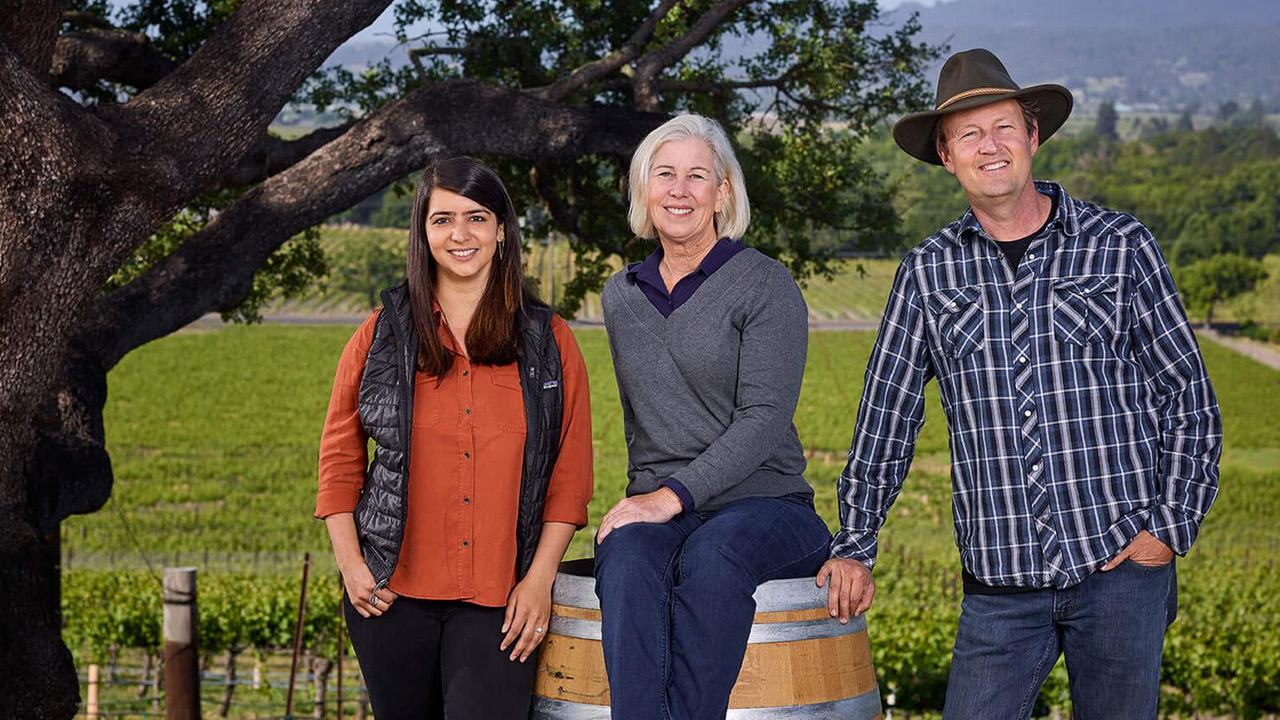
The Signorello family has been on the Silverado Trail since 1977, which in Napa means they were there before most of the money arrived and before the appellations became marketing tools. Ray Signorello Sr. bought a hundred acres in the southeastern corner of the valley, east of Oak Knoll, and with his son Ray Jr. spent the first years as growers. The first vines went in in 1980. Everything under the estate name still comes from that one hillside.
The site is the reason to pay attention. It is all hillside, volcanic and rocky, cooler than the famous middle of the valley, and the estate farms it itself. Steve Matthiasson advises on the farming, and Celia Welch, one of Napa’s most respected winemakers, directs the winemaking. The wines are fermented with native yeasts and bottled unfined and unfiltered, under five thousand cases a year.
Hope’s Cuvée is the California Chardonnay I return to most often when I need to remember what the state can do with the grape: restrained, long, and mineral in the way only a vineyard with decades of root depth produces. Padrone, from the rockiest blocks, carries four decades of knowledge about one piece of ground. You can taste it, and you can’t add it in the cellar.
02 · Ray Signorello Sr. and Jr.Growers first, then winemakers, from the same hundred acres.
Father and son bought the land in 1977 and planted from 1980. For the first few years they sold their grapes. When they began to make wine, it was Cabernet Sauvignon and Chardonnay, all from their own vines, and the style they wanted was French: lower yields, wines made for the table, a light hand in the cellar. The original winery, ivy-covered and wood-framed, went up in the mid-1980s on the hilltop above the Silverado Trail.
Padrone is named for his father, “an homage to our charismatic founder,” in the winery’s words. The “S” Cabernet goes the other way: it was born, the winery says, of a wish to work with fruit from beyond the estate, from Howell Mountain, Rutherford and St. Helena, and its label comes from the monogrammed cufflinks Ray Sr. gave his son. Edge and TRIM, also in our book, are Ray Signorello’s labels too.
03 · The estateVolcanic hillside east of Oak Knoll, cooler than the valley’s middle.
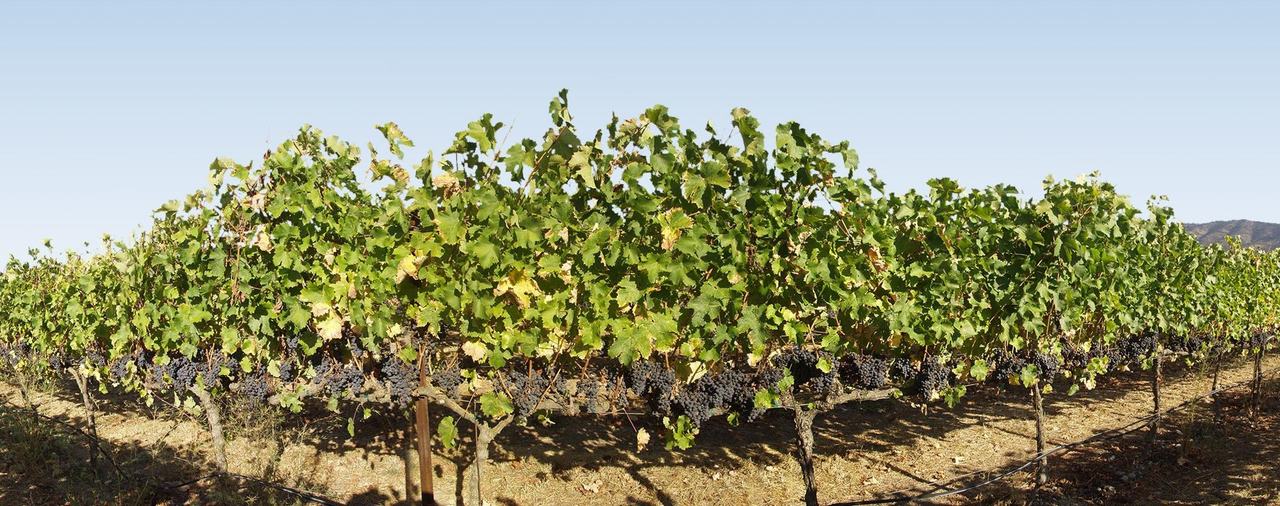
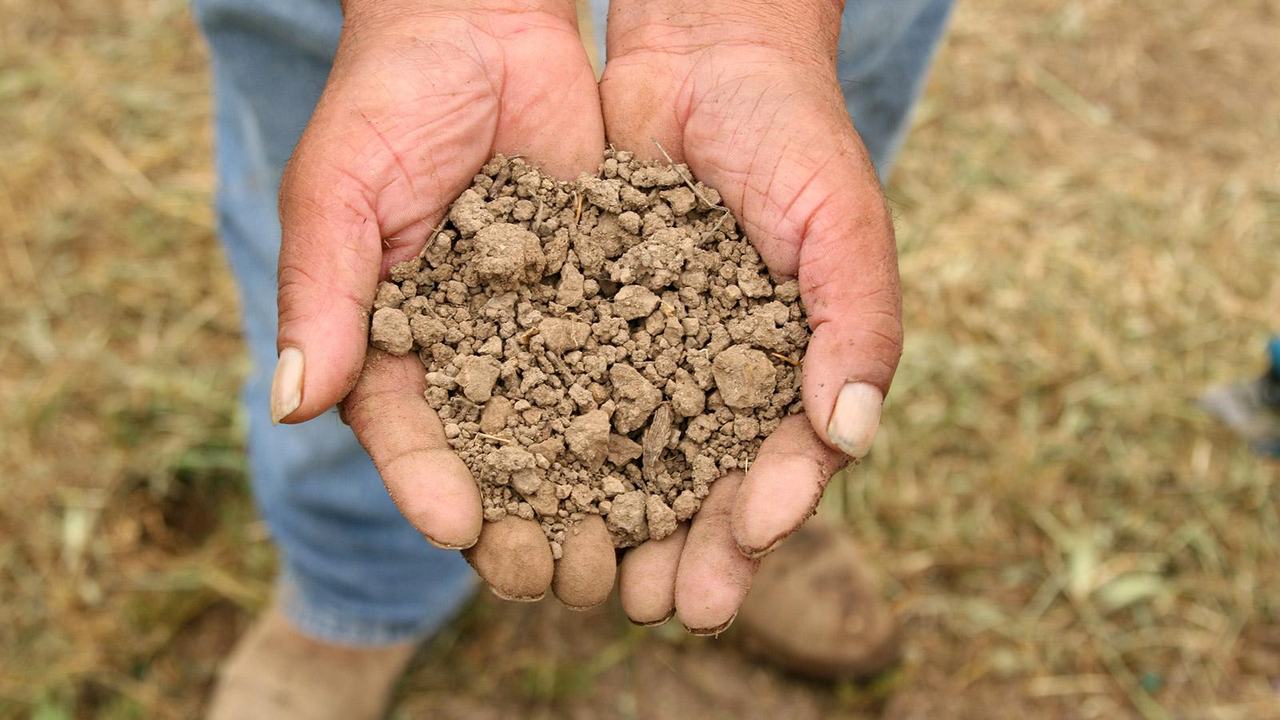
Signorello Estate is a single block of vineyard on the eastern side of the valley, just east of Oak Knoll on the Silverado Trail, about thirty planted acres by the estate’s count. All of it is hillside, from gentle to steep, on well-drained volcanic rock and soil; the best blocks for Padrone are, in the tech notes’ words, extremely rocky. It is a slightly cooler site than the Cabernet heartland of Oakville and Rutherford, which suits the fresher style the estate wants. Vines are closely spaced and vertically trellised. Cabernet Sauvignon, Merlot, Cabernet Franc, Malbec, Petit Verdot and Chardonnay are planted.
The age of the vines is the estate’s pride. The Chardonnay for Hope’s Cuvée comes from the oldest block, with original vines from the 1980s alongside younger replantings; Signori comes from the east-facing blocks of the first plantings. Those older vines, the estate says, are trading youthful exuberance for subtlety and nuance, and they need more careful handling, which is why it does not outsource its vineyard work. The fruit is picked and sorted by hand.
We coax exceptional fruit from our vines, harvest it when perfectly ripe, and sort it by hand.
Ray Signorello
04 · October 2017The winery burned. The vines did not.
On 9 October 2017 the Atlas Fire swept over the estate and destroyed the winery, the hospitality building and the family’s house. The vineyards came through unscathed. Ray Signorello Jr. predicted it would take about two years to rebuild. It took nearly seven, three of them in permits, with a pandemic in the middle. From 2018 the family poured wine in a construction trailer next to the ruins.
The new winery opened in June 2024 and looks nothing like the old one. It is steel, concrete and glass, built into a newly dug 11,000-square-foot cave, entirely solar-powered and off the grid, with two wells, fire pumps, storage for another 100,000 gallons of water and every power line buried. “We’re built into the side of a hill,” Signorello told Sonoma Magazine, “and the roof line would act like a ski jump for fires coming from the east.” Inside, the fermenters are sized to each vineyard block, the whites and reds have their own rooms, and the cave holds his library of two thousand bottles gathered over forty years. He designed it, he said, with the winemakers, like a restaurant letting the chef design the kitchen.
05 · The winesHope’s Cuvée from the oldest block, Padrone from the rockiest.
Hope’s Cuvée is picked in three passes: the original 1980s vines first, then the younger replanted vines, then a lot picked for clonal differences, so that each part comes in ripe. It is pressed in whole clusters, fermented in barrel with its native yeasts, and the malolactic is stopped at half to keep the acidity. Eight months on the lees follow, with stirring, in a mix of Burgundy barrels and larger 500-litre puncheons. The oak is there to carry the wine and never takes over. Jeb Dunnuck gave the 2022 98 points.
Padrone is the estate’s proprietary Cabernet, mostly Cabernet Sauvignon with a little Cabernet Franc, Malbec and Merlot, fermented in steel with long maceration and raised eighteen months in French oak, half of it new. Antonio Galloni gave the 2021 97 points at Vinous. Signori is the blend from the east-facing estate blocks, 60% new oak. The vintages we carry, 2019 to 2021, were made by Priyanka French, who joined in 2019, with Celia Welch; since the new winery opened, Michael Costley has been winemaker. The hill and the vines are the same.
The “S” is the exception to the estate rule, and the winery says so. Ray Signorello wanted to work with fruit from beyond his own hill, so the 2019, the first vintage, draws on Howell Mountain, Rutherford and St. Helena: mostly Cabernet Sauvignon with a little Merlot and Petit Verdot, fermented with native yeasts, eighteen months in French oak, half of it new, unfined and unfiltered. It was the first vintage for Priyanka French’s team. It shows what the house style does with valley and mountain fruit.
In the vineyard
& cellar.
- Location
- 4500 Silverado Trail, east of Oak Knoll · southeastern Napa Valley
- Since
- 1977, Ray Signorello Sr. and Ray Jr. · first vines 1980 · new winery and cave 2024, after the 2017 Atlas Fire
- Vineyard
- About 30 planted acres, all hillside, volcanic rock and soil · estate-farmed, not outsourced
- Grapes
- Cabernet Sauvignon, Merlot, Cabernet Franc, Malbec, Petit Verdot · Chardonnay
- Team
- Celia Welch, consulting director of winemaking · Steve Matthiasson, viticulture · Michael Costley, winemaker (from 2024)
- Cellar
- Hand-picked, hand-sorted · native yeasts · unfined, unfiltered · under 5,000 cases · solar-powered, off the grid