
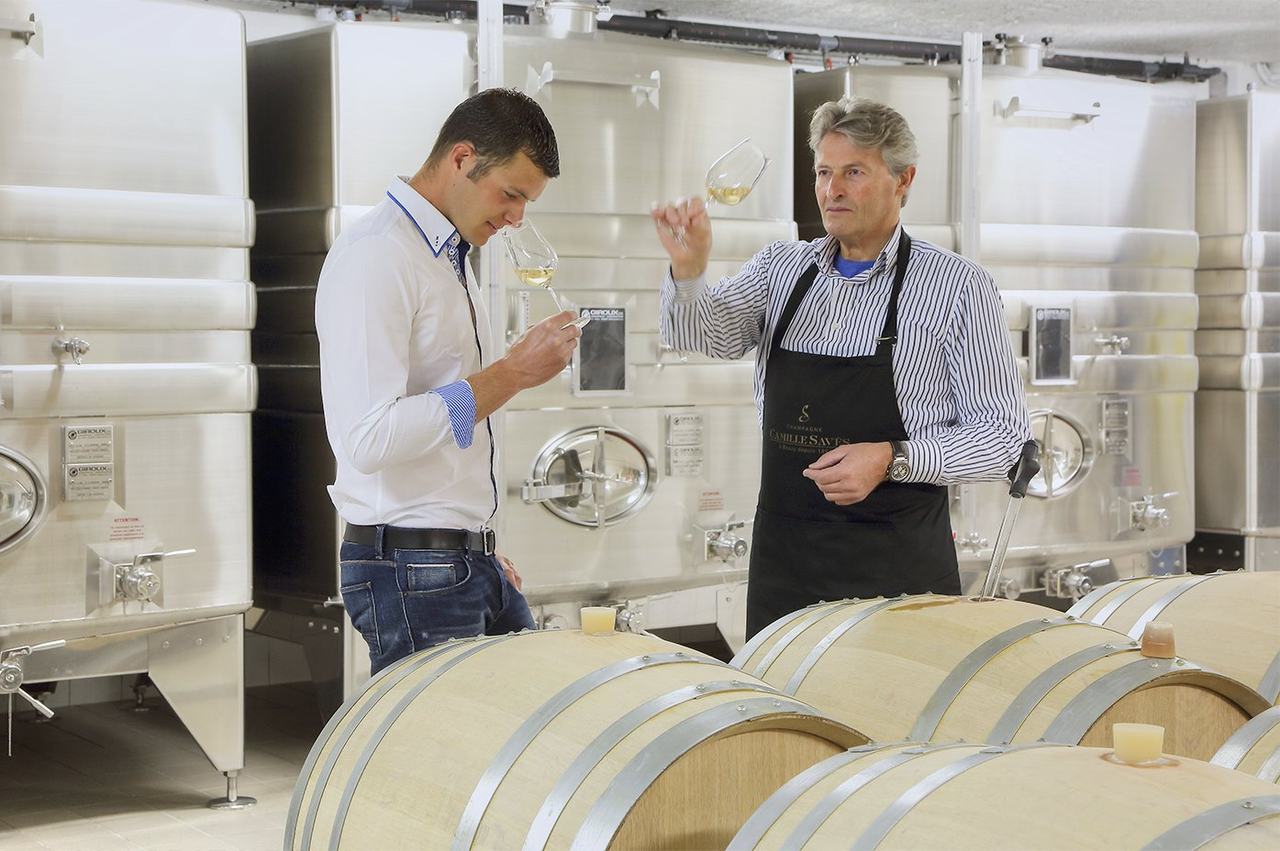
Where Pinot Noir goes to be taken seriously.
Bouzy is where Pinot Noir goes to be taken seriously: the warm southern shoulder of the Montagne. The Savès family have worked it since 1894. Vines past thirty-five, farmed organically and biodynamically, and a house style built on structure rather than sugar: low dosage and wines that carry themselves like red Burgundy in a Champagne bottle. They still make a still Bouzy Rouge from forty-year-old vines, a tiny production mostly drunk by people who live within walking distance. If you ever wondered what the fuss about Bouzy was, that bottle is the argument.
02 · Eugène & AnaïsAn agronomist marries into Bouzy, 1894.
The house begins with a marriage. In 1894 Eugène Savès, an ingénieur agronome (a trained agricultural engineer, which in nineteenth-century Champagne was an unusual thing for a vigneron to be), married Anaïs Jolicœur, the daughter of a Bouzy grower, and began making his own wine from her family’s vines. The village registers still record it. The estate describes him as homme de caractère convaincant et véritable amoureux de la terre: a persuasive man, and a man in love with the land.
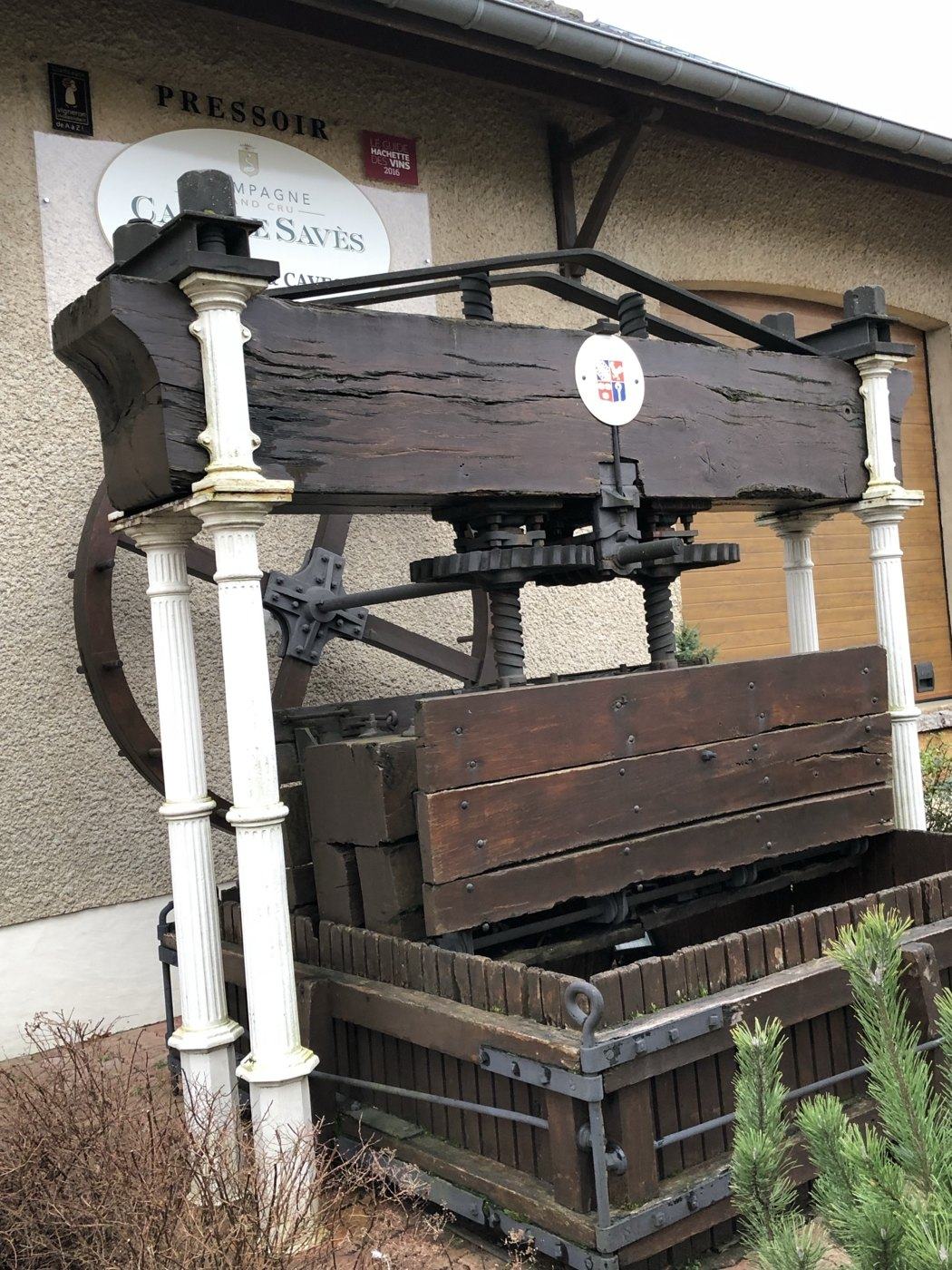
He brought the engineering with him. Guide Hachette credits Eugène as the first in Bouzy to trellis his vines on wires, when the whole village still grew them en foule, staked and sprawling. He was estate-bottling by 1910, decades before most growers thought of it, and the first press he used still stands outside the winery on rue de Condé, where the family keeps it as a kind of signature.
Four generations since: Eugène, then Louis, then Camille (whose name is on the label), then Hervé, Eugène’s great-grandson, who came in in 1982 and took over from his father. Hervé’s son Arthur joined him in 2012. The two of them run the house with Hervé’s wife, and the blends are still settled every year at a family tasting around one table. Seventy per cent of what they make leaves France; a quarter of that comes to the United States.
03 · Bouzy“The Chambertin of Champagne.”
Bouzy faces due south off the Montagne de Reims, and it is the warmest grand cru on the mountain: the village where Pinot Noir ripens first and fullest, and the one place in Champagne with a serious tradition of still red wine. Hervé Savès calls it “the Chambertin of Champagne,” and he means it: power, structure, dark fruit, a wine that needs taming. His answer, he told Tyson Stelzer, is Chardonnay, a quarter of the blend in the house wines, to temper Bouzy’s “strength and dominance.”
The family farms about ten hectares, all grand or premier cru: roughly three-quarters of it in Bouzy itself, mid-slope, on limestone, with parcels in neighbouring Ambonnay and Tours-sur-Marne, both grand cru, and in Tauxières, premier cru. The vines average thirty-five years. The Bouzy lieux-dits have names, and the family uses them: Les Cercets, Les Pierres, Le Bas de la Haie de la Lue, Les Loges and La Poivresse are the five parcels behind the Anaïs Jolicœur cuvée; Les Loges on its own, a shade under half a hectare of forty-year-old Pinot Noir mid-slope, gives a blanc de noirs; Le Mont des Tours, a third of a hectare of Chardonnay, gives a blanc de blancs. Peter Liem’s verdict on the whole range: “deliciously expressive of the Bouzy terroir.”
One of the finest sources for Brut Rosé out there today.
John Gilman, View from the Cellar
04 · No malo, low sugarStructure over sweetness.
Two decisions make the house, and neither is fashionable. The first is that no Savès wine goes through malolactic, ever. Most of Champagne lets the sharp malic acid soften into lactic because it makes a young wine easier to like; Hervé keeps it, because Bouzy Pinot is ripe enough to carry it and because that acid is the spine the essay above is talking about. The second is sugar, or the lack of it: four grams on the extra-bruts and the parcel wines, five on the house cuvées, seven on the rosé. Nothing is rounded off for you.
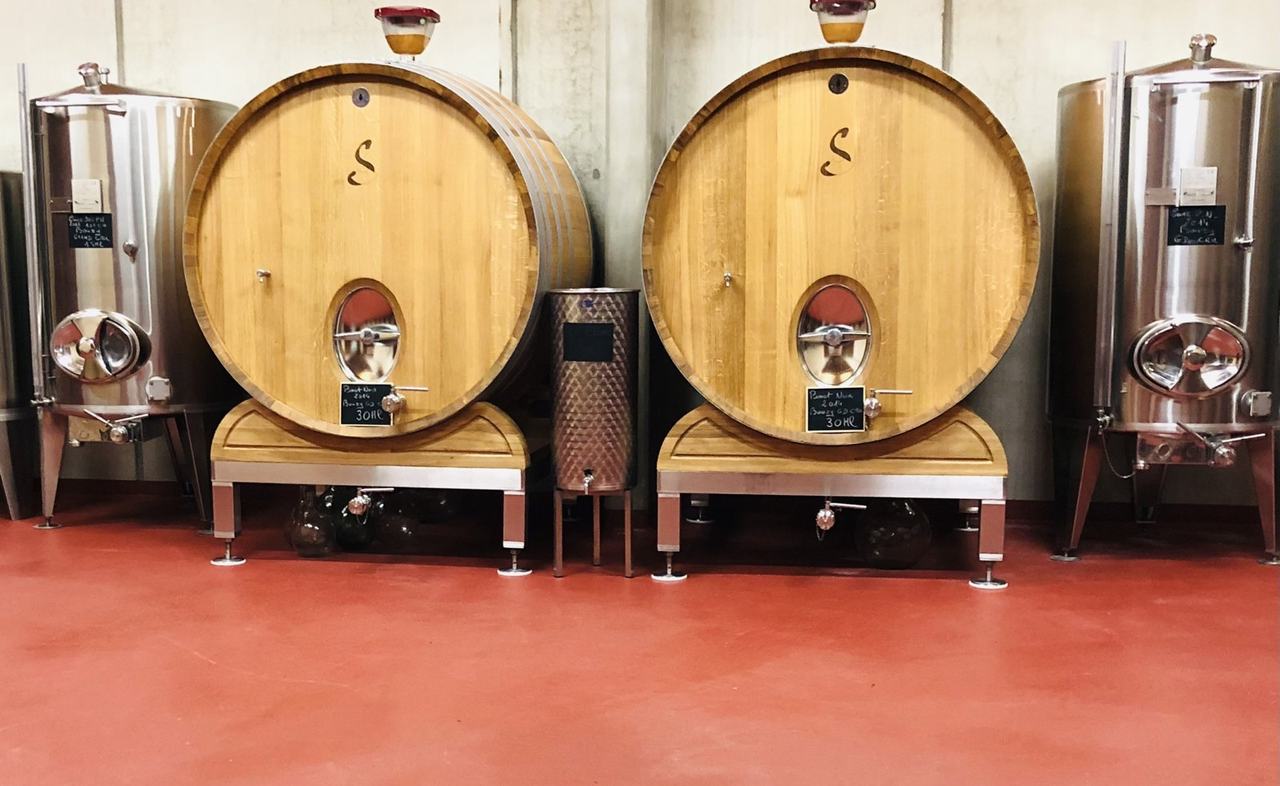
Nothing leaves the property until it is finished. Gentle press, first juice only; cold settling; fermentation at eighteen degrees, steel for the house wines, barrel and foudre for the parcel wines and the Anaïs Jolicœur, with no added yeast and nobody stirring the lees. Then the chalk, three to seven years of it at a constant ten degrees, and Hervé, still turning bottles by hand in an age of gyropalettes. The disgorgement date is laser-etched on the base of every bottle, which tells you how he thinks about the trade: he assumes you will want to know.
Antonio Galloni, on the Carte Blanche: “This is without question one of the best Champagnes on the market in its price range.” Tyson Stelzer, same wine: “scintillating energy and electric acidity.”
In the vineyard
& cellar.
- Village
- Bouzy, grand cru, on the south face of the Montagne de Reims, with Ambonnay, Tours-sur-Marne (grand cru) and Tauxières (premier cru)
- Holding
- About 10 hectares, all grand or premier cru; three-quarters in Bouzy, mid-slope, on limestone; vines averaging 35 years
- Since
- 1894, when Eugène Savès married Anaïs Jolicœur; estate-bottled since 1910
- Farming
- No herbicides or insecticides; soils tilled; organic fertilisers and biological treatments
- Press & cellar
- Gentle pressing, cuvée juice only; cold settling; fermentation at 18°C in steel, or in barrel and foudre for the parcel wines; malolactic blocked on every cuvée; chalk cellars at 10°C; hand riddling; disgorgement date etched on the base
- Dosage
- 4 g/L on the extra-bruts and parcel wines; 5 on Carte Blanche and the vintage; 7 on the rosé and Prestige
- Reserve
- 40% in Carte Blanche; 25% in the Extra Brut; 25% barrel-aged reserve in the Prestige