
Imagine submitting your work to the neighbours.
Jean-Pierre Vazart is the most meticulous record-keeper I know in Champagne: reserve wines held in solera, every disgorgement dated on the label, nothing left to the vagueness that most houses hide behind. Chouilly's chalk sits shallower than Oger's, and you can taste that: rounder, riper, more immediately kind to you, but with the same vertical spine underneath. He's a member of the Club Trésors, which means his Special Club bottles are tasted blind by his peers before they're allowed out. Imagine submitting your work to the neighbours for judgement. Imagine wanting to.
02 · Three geeseA brick house on the main street, and a village that honked.
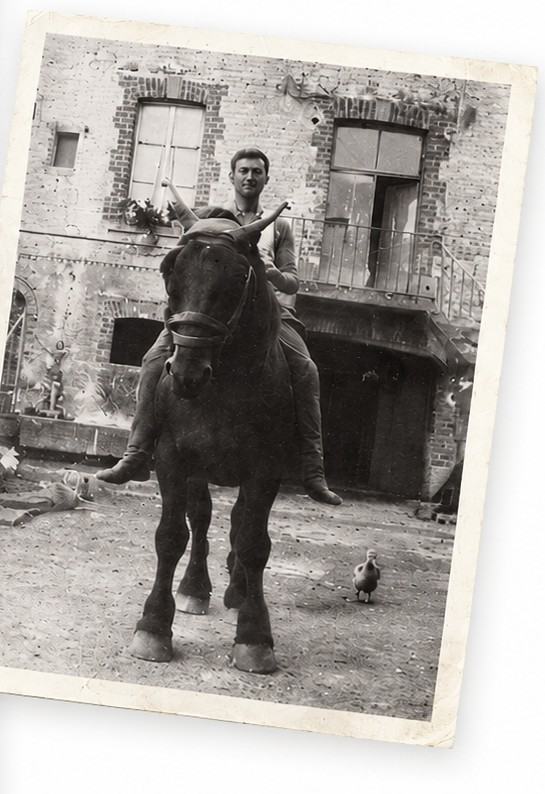
The Vazarts had grown grapes in Chouilly for generations (a Camille Vazart was tending vines here in the 1880s) and sold them, like everyone, to the houses. In the early 1950s Jacques Vazart, the young man on the horse above, talked his father Louis and his brother René into keeping some back and making champagne themselves. The first bottles are from 1954. The brand was “Louis Vazart” at first; Louis and his wife Marie Coquart soon joined their two surnames, and Vazart-Coquart it has been since.
The house is the red-brick one on the main street, built in 1865 by Louis-Victor Coquart, and the family still lives in it. The three geese on every label are the three generations (Louis, Jacques, Jean-Pierre), and a fourth will be drawn in when Jean-Pierre hands over. Why geese: Chouilly kept so many of them in the middle of the last century that the flocks stopped traffic, and the neighbouring villages called the people of Chouilly bilots, goose in the local patois. The Vazarts took the insult and put it on the bottle.
Jean-Pierre came in beside his father in 1991, after viticulture school in Avize and a first passion for computers that never quite left him (hence the record-keeping), and took the house over in 1995. Jacques died in 2006. Jean-Pierre’s wife Caroline joined him, and for fifteen years the two of them have carried the wines abroad themselves. Eighty thousand bottles a year; what the cellar cannot use goes to Veuve Clicquot.
03 · ChouillyThe top of the Côte des Blancs, with Chardonnay on every side.
Chouilly is the northernmost village of the Côte des Blancs, the first grand cru you reach coming down from Épernay, and it has been grand cru only since 1985, which is late for a village that is ninety-nine per cent Chardonnay on belemnite chalk. The topsoil is a little deeper than at Oger or Le Mesnil, and the wines are a little rounder for it; Tom Hewson’s phrase is “a nice substance and Chouilly-esque bite.”
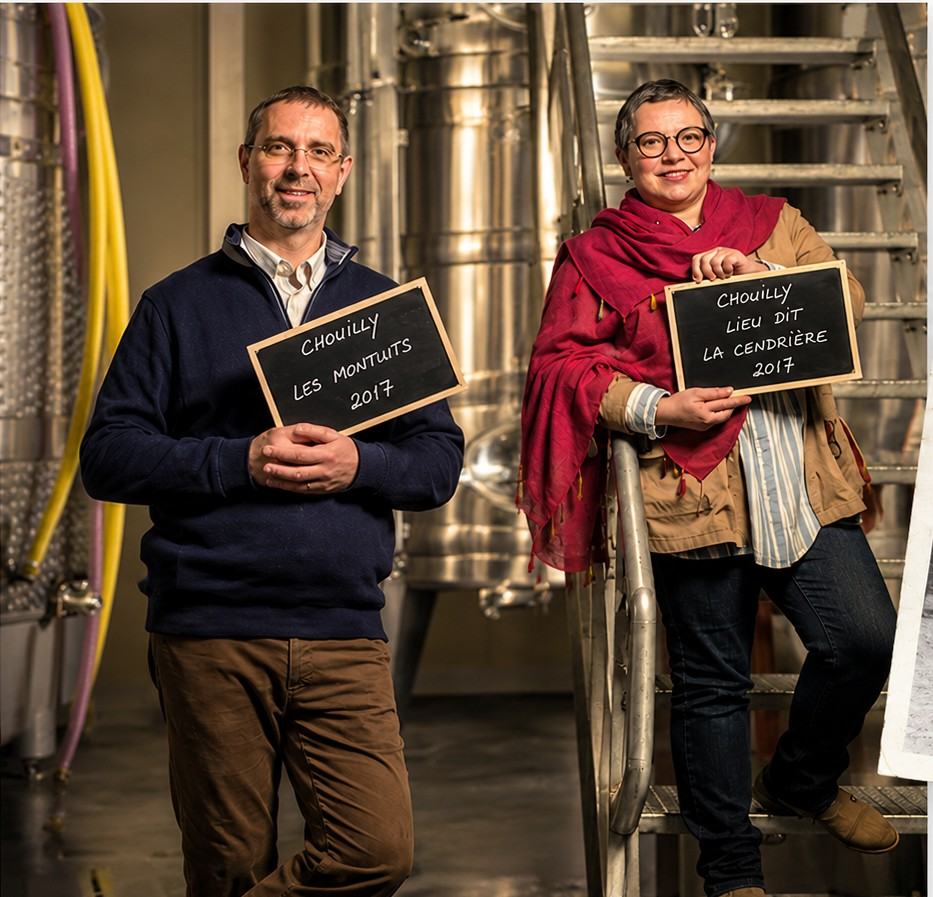
The family farms eleven hectares in thirty parcels, all inside Chouilly, ninety-four per cent Chardonnay with two small parcels of Pinot Noir; the vines average forty-five years. The lieux-dits that make it onto the labels are Le Mont Aigu, a small mound with vines on every side and a Moët vineyard lodge on top, where the chalk is more compact; La Cerisière, right by the village, parcel number AD 191 on the cadastre; Les Aventures; and Le Revers de Plumecoq, the Pinot Noir parcel behind the saignée rosé. The chalkboards in the picture at the top read Les Montuits and La Cendrière, 2017: the parcels of that year’s vintage wines.
Peter Liem’s one-line verdict, the one every importer quotes: “the most important grower-Champagne house in Chouilly.”
The most important grower-Champagne house in Chouilly.
Peter Liem, ChampagneGuide.net
04 · The soleraEvery vintage since 1982, in one tank.
The thing the essay above calls meticulous is a réserve perpétuelle that Jacques Vazart began in 1982 and that has never been emptied. That is four years before Anselme Selosse started Substance, and makes it one of the oldest perpetual reserves in Champagne. Each year forty per cent is drawn off for the blends and the tank is topped up with the new harvest: first-press juice only, the cuvée, never the tailles. So the Brut Réserve, two-thirds of it the current year and a third solera, carries a thread of every vintage back to 1982; the Extra Brut is nearly two-thirds solera; and the prestige wine, 82/18, is nothing but the solera: thirty-six vintages, no dosage, six hundred-odd bottles. The dosage liqueur itself is made from the same reserve.
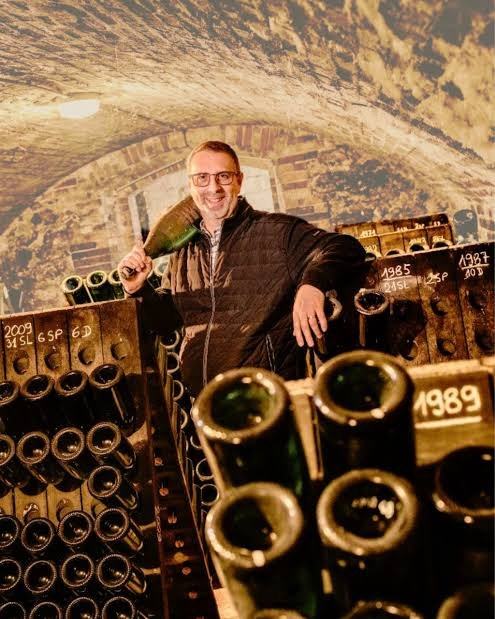
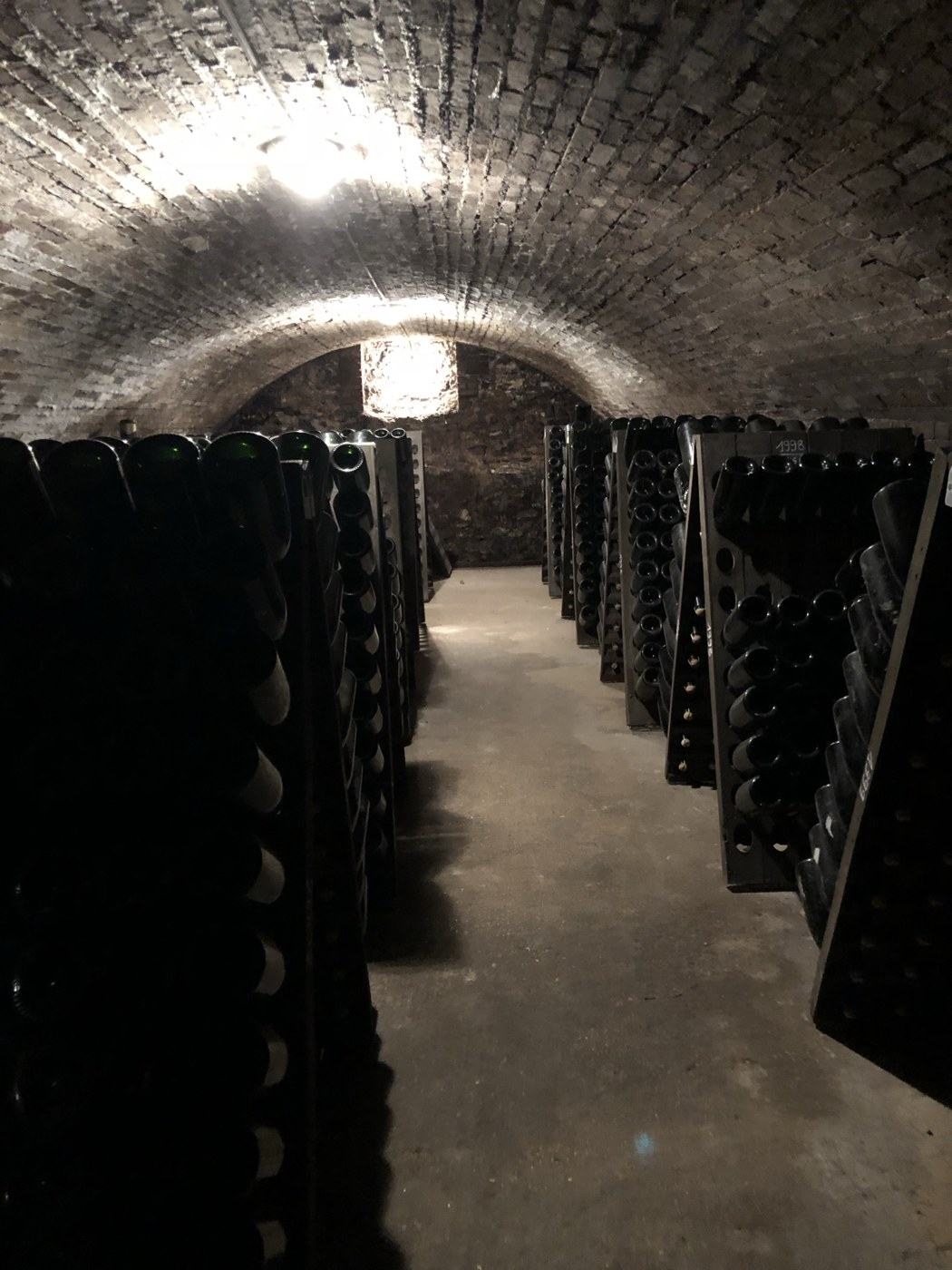
Everything else is kept deliberately plain. Stainless steel only, temperature-controlled, no oak (Jean-Pierre says it shows Chouilly better), with one exception, a terracotta egg for the single-parcel TC. Malolactic is partial on the house wines, complete on the Special Club, blocked on the parcel wines. Tirage is in May. The Special Club and TC are aged under natural cork and disgorged by hand, à la volée. Every vintage from 2009 on is still on its lees in the cellar, disgorged to order, three or four weeks from request to shipment, which is why the back label can tell you the exact date. Treve Ring on the Brut Réserve: “lovely seamless freshness across the creamy, generous form.”
05 · The ClubThirty years of being judged by the neighbours.
Vazart-Coquart joined the Club Trésors de Champagne in 1996. The Club is twenty-five or so grower houses, one per village more or less, and the rule is the one in the essay: a Special Club must be a vintage wine from the member’s own vines, and it goes before two blind juries of the other members before it may wear the squat Club bottle. Jean-Pierre’s Special Club is Le Mont Aigu and La Cerisière together, full malolactic, aged under cork, hand-disgorged, no dosage. Guide Hachette on the 2006: retenu pour son intensité, sa finesse aromatique et son équilibre. Terre de Vins gave the 2017 a gold in 2026. The Special Club Rosé, from the 2018, was the house’s first saignée: Pinot Noir from the single parcel of Le Revers de Plumecoq, bled off the skins.
The same instinct runs through the farming. In May 2012 this was the third estate in France to be certified HVE (hedges, trees, worked soils, reduced inputs), and in 2011 Jean-Pierre was a founding member of Les Mains du Terroir de Champagne, the growers’ tasting group. Organic conversion was decided in 2017 and the first certified harvest was 2020. The estate’s line on it: nous observons notre vignoble afin de le protéger uniquement quand c’est nécessaire (we watch the vineyard so as to treat it only when we must).
Die Nummer eins in Chouilly: Jean-Pierre Vazart.
Meininger Champagne Magazin, 2021
In the vineyard
& cellar.
- Village
- Chouilly, grand cru since 1985 — the northernmost village of the Côte des Blancs
- Holding
- 11 hectares in 30 parcels, all Chouilly; 94% Chardonnay, 6% Pinot Noir; vines averaging 45 years on belemnite chalk
- Lieux-dits
- Le Mont Aigu, La Cerisière (AD 191), Les Aventures, Le Revers de Plumecoq
- Farming
- HVE since 2012 (the third estate in France); certified organic from the 2020 harvest; hand harvest, parcel-by-parcel vinification
- Reserve
- Perpetual reserve begun 1982, refreshed by 40% each year with first-press juice only
- Cellar
- Stainless steel, no oak; one terracotta egg; malolactic partial on the house wines, full on the Special Club, blocked on the parcel wines; tirage in May; Club and TC under cork, hand-disgorged; vintages held on lees and disgorged to order
- Dosage
- 0 to 4.5 g/L across the range; 30 g/L on the Spécial Gourmet, 35 on the Demi-Sec
- Membership
- Club Trésors de Champagne since 1996; Les Mains du Terroir de Champagne, founding member 2011; Vignerons Indépendants
- Since
- First bottles 1954; Jean-Pierre Vazart since 1995