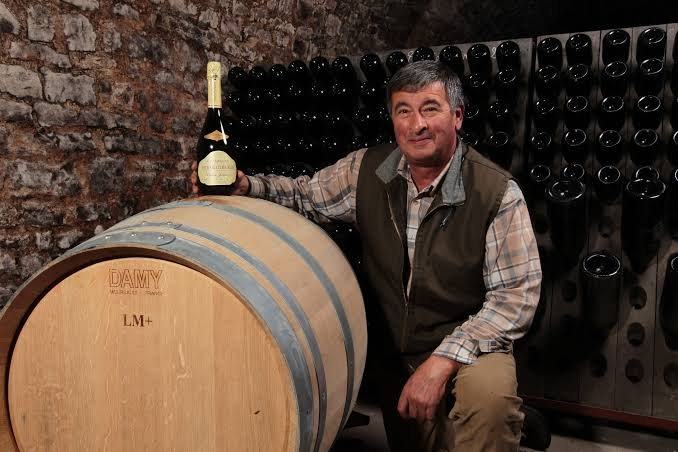
The traditionalist of the Cheurlins.
There are so many Cheurlins in this village that you have to say the first name or you’ll end up in the wrong cellar. Richard is the traditionalist of them: five generations, old oak, parcels kept separate because he can taste the difference even when the lab can’t. His rosé is made by macerating the skins (the slow way, the way that can go wrong) rather than by the tidy modern trick of splashing in a little red wine. The wines are broader and warmer than fashion currently prefers. I don’t care. They’re honest, and they’re delicious, and honesty in Champagne is rarer than it should be.
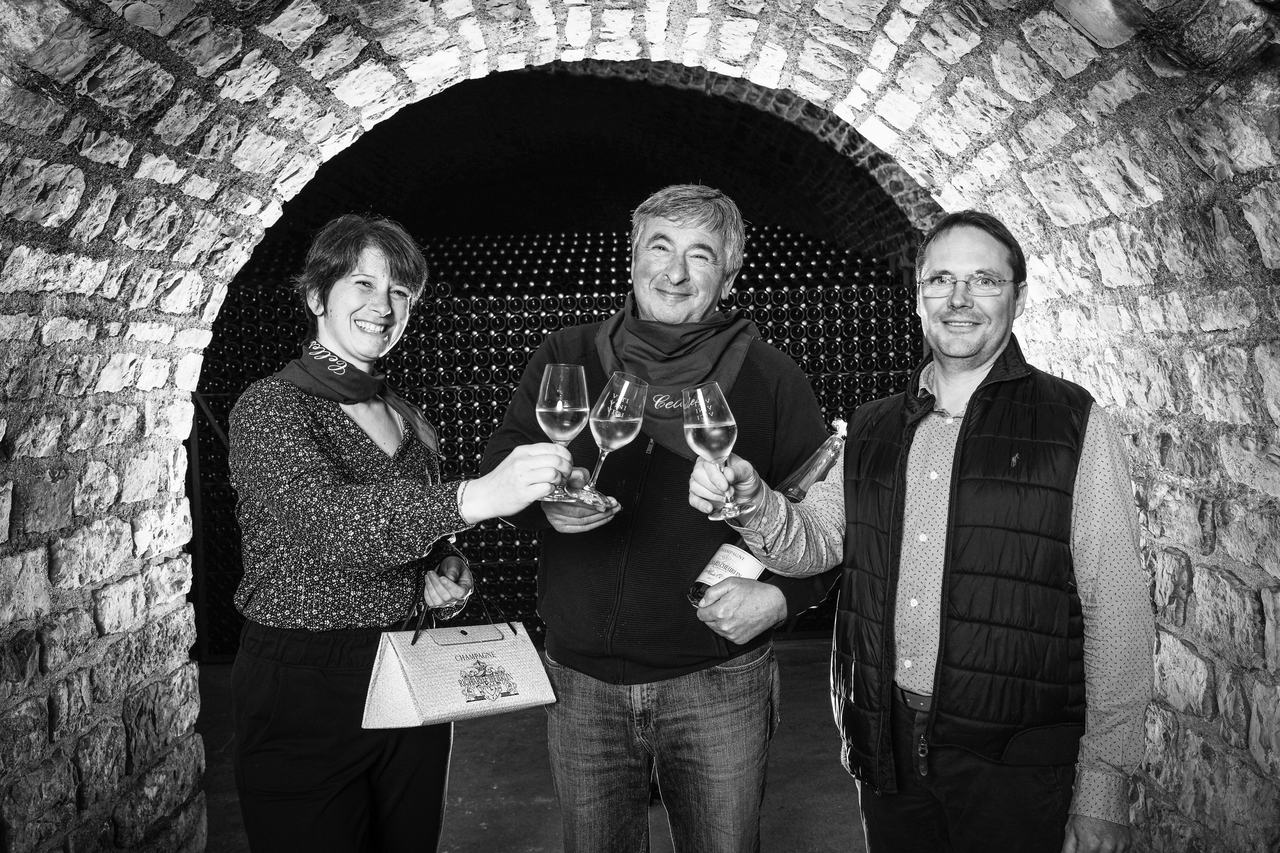
And the next generation is already at work: we are working with Lucie’s wines as well.
02 · Two centuriesA priest, a land deed, and the Aube’s long argument.
The family’s paper trail starts in 1788, with a land purchase by Joseph Cheurlin, the priest at Landreville, a few kilometres up the Ource. The vines were already there; the Barséquanais has been planted for more than a thousand years. What took time was the right to call the wine Champagne. The Aube was left outside the appellation’s first boundary in 1908, and it was Edmond Cheurlin, born 1881, who spent the years around the 1911 revolt arguing the southern hills back in. He won. His son Raymond, born 1909, was the first to make and sell champagne under the family name, and Raymond’s son André spent the 1950s, sixties and seventies buying the best-exposed slopes above the village, the parcels the family farms today.
Richard, the fourth generation, took over in 1978. He is one of four siblings (Richard, Christine, Alain and Thomas), and each of them runs their own vines in Celles-sur-Ource, which is why the village has so many Cheurlins on its signs and why you need the first name. Forty-odd growers here make their own champagne, out of a population of a few hundred. Richard’s house is at 16 rue des Huguenots, above a cellar that is two hundred years old and still holds the coopers’ tools and the old presses.
03 · The oakIn 1987, when everyone else had just bought steel.
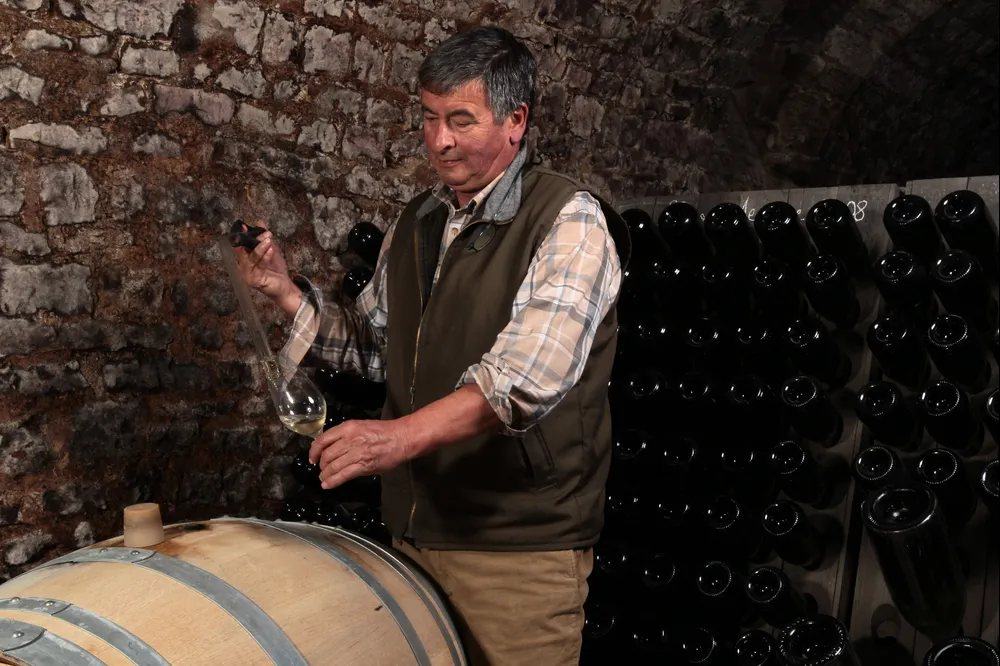
The thing that sets Richard apart from his brothers and his neighbours happened in 1987. Stainless steel had conquered Champagne; it was clean, cheap and modern, and the co-ops and the houses had all gone over to it. Richard went the other way. He launched Cuvée Jeanne, named for his grandmother, and fermented and aged it in oak barrels. By the family’s account he was the first grower in the region to do so, at a time when the barrel was being thrown out. It remains the house’s signature: a hundred per cent Pinot Noir from a single parcel, raised entirely in wood.
That decision explains the style. The wines are broader and warmer than the current fashion for razor-edged extra-bruts; they taste of the Pinot Noir and of the barrel, and they are made to go with food. Tom Stevenson, who has tasted more champagne than anyone alive, gave the Carte d’Or 19 out of 20 on a World of Fine Wine panel: “lovely, sumptuous, pure Pinot fruit of great finesse; very satisfying and classy, with a gorgeous, soft, silky mousse.” Gault&Millau, more recently, on the Cuvée H: “un champagne bien construit et accessible qui glisse comme un gilet de soie” (it slides down like a silk waistcoat).
Lovely, sumptuous, pure Pinot fruit of great finesse; very satisfying and classy, with a gorgeous, soft, silky mousse.
Tom Stevenson, World of Fine Wine, on the Carte d’Or
04 · The OurceKimmeridgian marl, like Chablis, with Pinot on it.
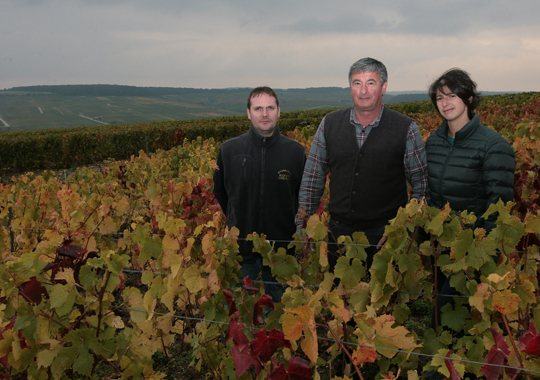
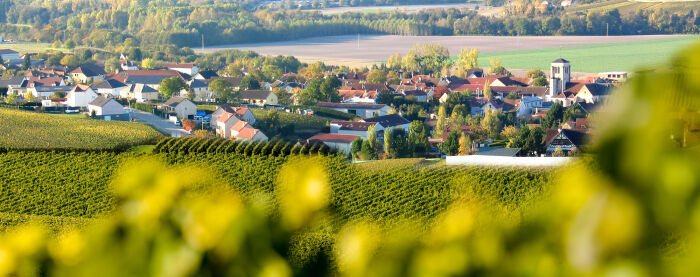
Celles-sur-Ource sits in the Côte des Bar, the Aube, a hundred kilometres south of Reims and much closer to Chablis than to Épernay, and the ground says so. This is Kimmeridgian limestone and marl, the same bedrock that gives Chablis its cut, planted here overwhelmingly with Pinot Noir rather than Chardonnay. Richard farms seven hectares, all of them on the slopes of the Ource valley: two-thirds Pinot Noir, the rest Chardonnay and a little Pinot Blanc, on clay-limestone over white marl. The exposures André chose in the sixties were chosen for ripeness, and in the Aube’s cooler, later seasons that still matters.
Pinot Blanc deserves a word. It is an old Champagne grape that most of the region pulled out, and Richard keeps a parcel of it and bottles it alone, as an extra-brut. Gault&Millau: “on adore la vivacité et la fraîcheur de la trame dominée par les agrumes et la menthe blanche.” The estate’s own note imagines a morning walk through that parcel, the white stony soil underfoot. You won’t find it in many cellars, and it is one of the reasons to stop here.
05 · Lucie & SébastienThe same roof, the next generation, and five organic hectares.
Lucie and Sébastien Cheurlin are Richard’s daughter and son, and since 2006 they have made their own wine under their own label, Champagne L&S Cheurlin, from the same address. Five hectares across the Ource, Seine and Arce valleys; Pinot Noir on Kimmeridgian soil, Chardonnay, a little Pinot Blanc, some of it planted more than forty years ago. They started trials with essential oils in the vines in 2004, took the whole estate off chemicals, and were certified organic by Ecocert from 2011; the first fully certified vintage was 2014. Herbal teas, plant macerations and biodynamic preparations are the routine, and a light tractor to keep off the soil.
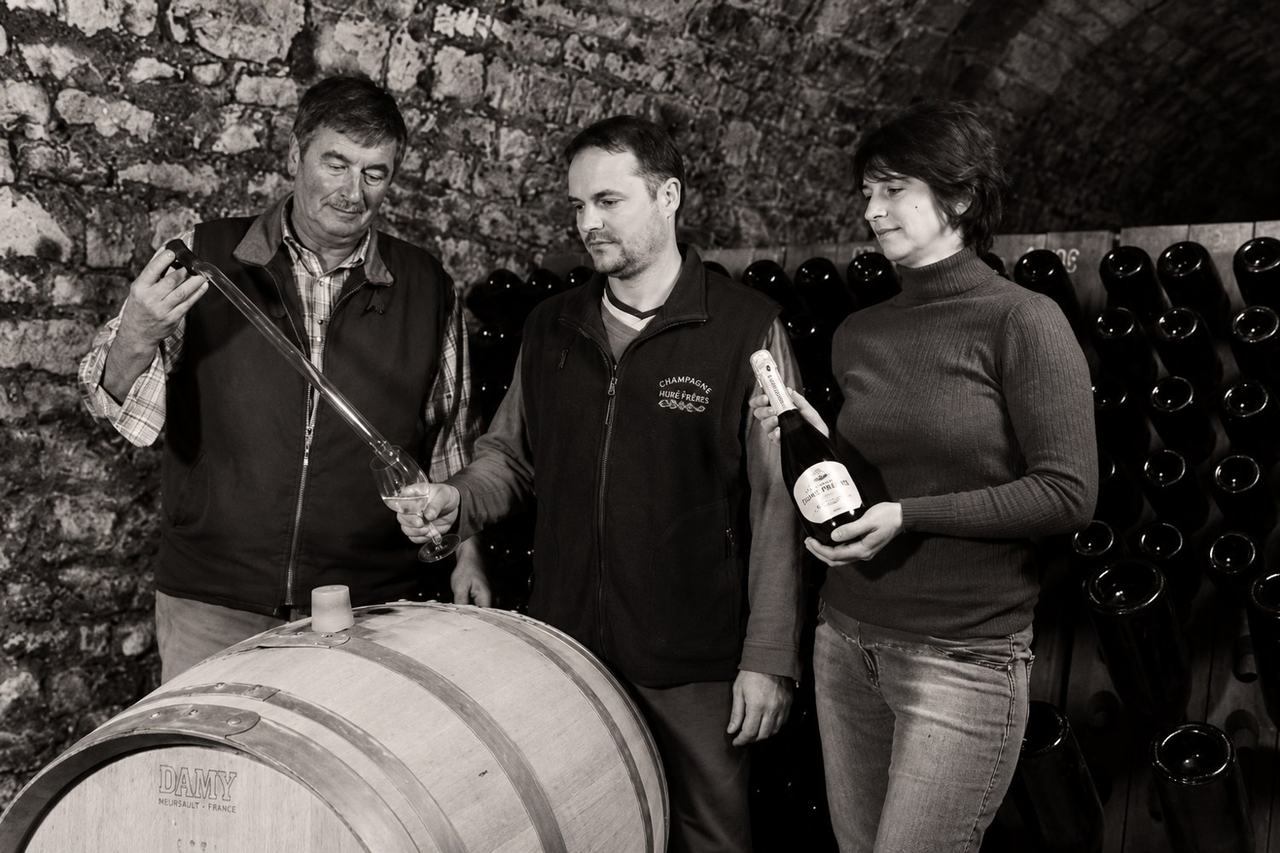
Lucie is a trained oenologist, with a degree in international business on top, and works alongside her father as well as on her own wines. What the two of them took from the house is the method: their father taught them to respect each plot and vinify it on its own. What they added is the farming, and a line from their great-grandfather Étienne, who walked Sébastien through the vines as a boy and taught him, they say, to listen to and feel nature. Richard’s own rule stands over both cellars: the plants and the animals will tell you everything about the health of the soil.
Their epigraph, from Saint-Exupéry: Nous n’héritons pas la terre de nos ancêtres, nous l’empruntons à nos enfants. We do not inherit the earth from our ancestors; we borrow it from our children. Lucie’s sign-off on the website is less solemn: buvez-en avec allégresse, drink it with joy.
C’est ainsi que naturellement nous nous sommes tournés vers une viticulture biologique.
Lucie Cheurlin
In the vineyard
& cellar.
- Village
- Celles-sur-Ource, Côte des Bar; the Aube, Champagne’s southern hills, Kimmeridgian like Chablis
- Holding
- Richard: 7 hectares on the Ource slopes, two-thirds Pinot Noir, with Chardonnay and Pinot Blanc. L&S: 5 hectares across the Ource, Seine and Arce valleys
- Farming
- Richard: no herbicides; soils scratched and ploughed in turn to keep them alive; sprinklers against spring frost; plant preparations and essential oils; treatments only when the weather stations say so; HVE certified, part of the vineyard organic for a decade. L&S: certified organic (Ecocert) since 2011, first certified vintage 2014
- Press
- Pressed on arrival: 4,000 kilos give 2,550 litres, of which 2,050 of cuvée. Settled cold overnight
- Vinification
- Each parcel on its own; temperature-controlled steel for the range, oak for Cuvée Jeanne; malolactic completed. The rosé by saignée
- Ageing
- Non-vintage 15 months to 3 years on the lees, vintages 4 to 10; neck frozen at –27°C for disgorgement; four to five months’ rest after
- Cellar
- Two hundred years old, under the house on rue des Huguenots