
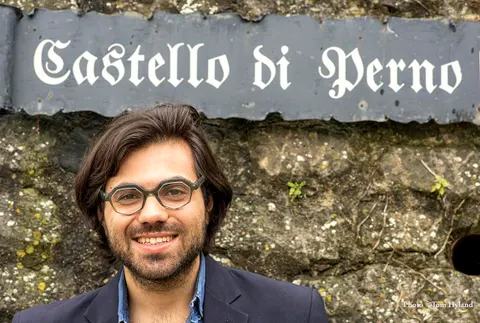
Einaudi’s castle, and Barolo from the ridge below it.
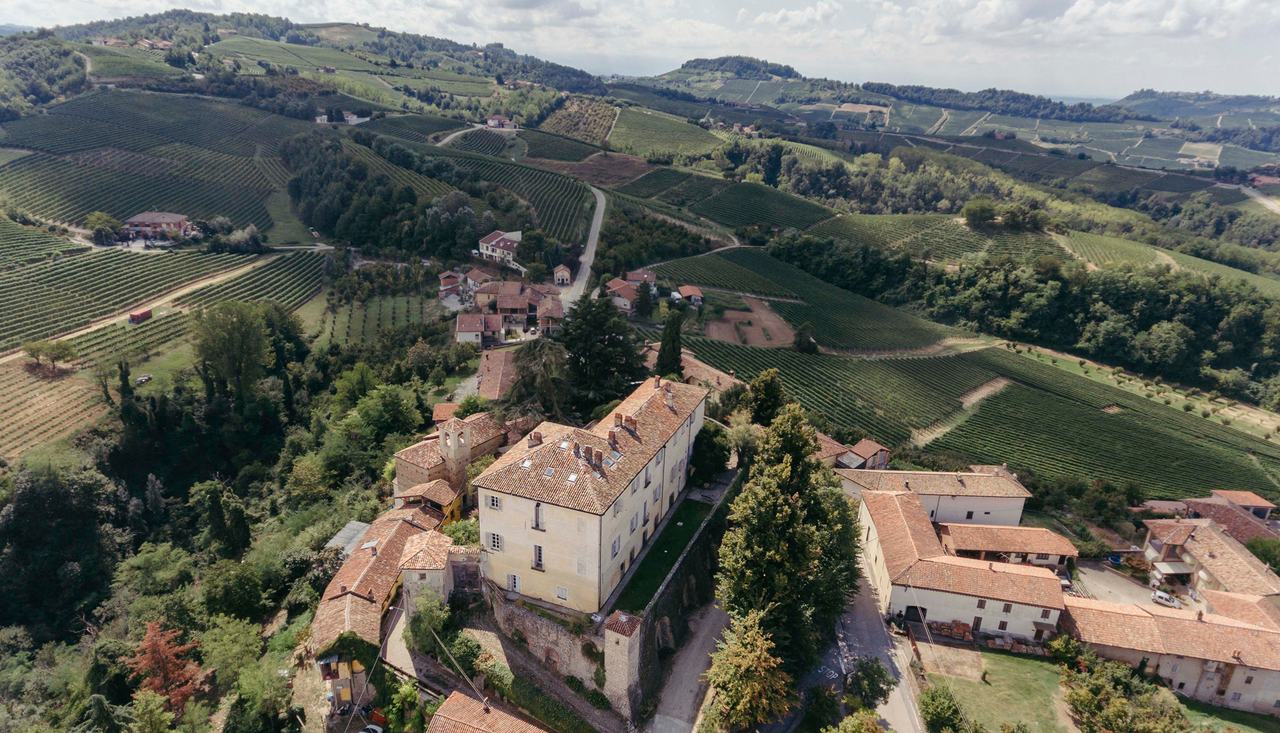
Castello di Perno sits on the top of the hamlet of Perno, in Monforte d’Alba, and for most of the last fifty years it was better known for books than for wine. Giulio Einaudi, the great publisher of postwar Italy, bought it at the end of the 1970s and made it a working retreat for his house and his writers. Primo Levi came here, and the little square under the walls now carries his name.
In 2012 the castle passed to Gregorio Gitti, a lawyer from Brescia who teaches civil law at the University of Milan. His family set out to give it back both of its histories: a house for culture, with exhibitions, music and the Einaudi library still in its rooms, and a place where the vines around it become wine. The winery followed in 2013 a short way along the ridge at Castelletto, a Barolo cru in its own right between Perno and Serralunga. Fourteen hectares, farmed organically, with Gian Luca Colombo making the wines.
New Barolo estates are often vanity projects with a famous consultant attached. This one has the sites, and it has the restraint: spontaneous ferments, long macerations, and Barolo raised in big casks of Austrian oak, with no small new barrels in the cellar. Within ten years of its first vintage, Forbes ran a piece under the headline “The Best Barolo Producer You’ve Probably Never Heard Of.” The wines earn the attention, and the Castelletto is the one to start with.
02 · The castleA Falletti fortress that spent forty years full of writers.
The Falletti family built the castle in the Middle Ages as a fortress, and between the seventeenth and eighteenth centuries it was turned into a house. Perno has been a hamlet of Monforte only since 1932. At the end of the 1970s Giulio Einaudi bought it and made it the country twin of his publishing house in Turin’s Via Biancamano. Primo Levi, Italo Calvino, Norberto Bobbio and the music critic Massimo Mila all passed through. When the Einaudi era ended, the art collection was sold and the rooms were emptied.
Gitti’s idea from the start was double. The castle hosts exhibitions, musicians and book launches again (in 2019 the library room held a debate on Nebbiolo with the mayors of Monforte and Carema), and since 2019 the chef Gennaro Di Pace has cooked for the project at his restaurant four kilometres away. The library survived. Greg St. Clair of K&L, who visited in 2022, wrote of walking over the creaking floors among the dusty manuscripts. The wine was meant to restore the castle’s oldest history, the growing of its own grapes.
03 · Castelletto and PernoTwo Monforte crus, and Barbera planted in 1940.
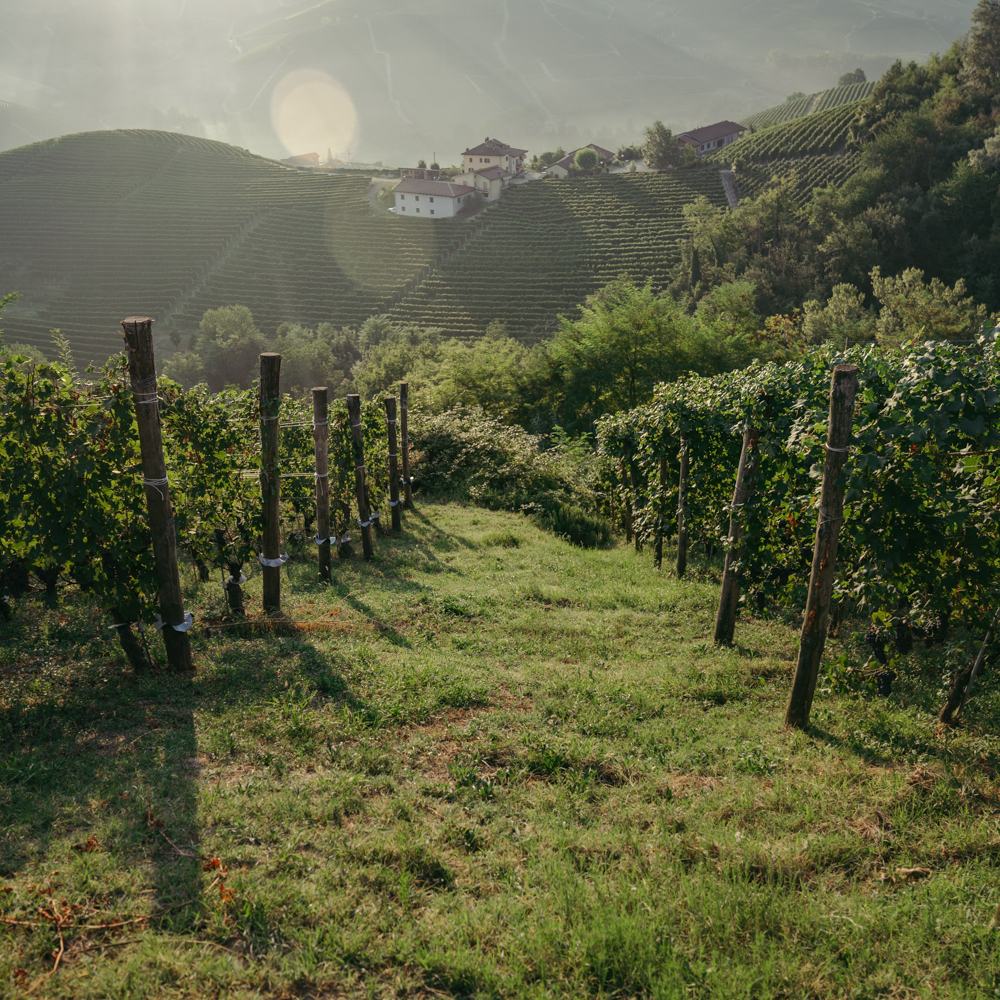
Castelletto is one of the official Barolo crus (MGA) of Monforte d’Alba, on the eastern side of the commune where the ridge runs toward Serralunga. The soils mix the compact calcareous marls of the Lequio formation with sandier layers, the combination that gives eastern Monforte its grip and its long life. Other good growers bottle Castelletto too, Burlotto and Mauro Veglio among them, which tells you the site is no marketing invention. Perno, under the castle, is a cru of its own; the estate’s Riserva comes from Vigna della Croce there, Nebbiolo planted in 1940. The Langhe Nebbiolo comes from Gramolere, another Monforte cru. Most of the Nebbiolo is around thirty years old.
The estate also looks east, to Asti. With Colombo and the marketer Gino Della Porta, Gitti built a small Barbera project in the heart of Nizza, the zone Asti set aside for its best Barbera, farmed organically from the first harvest in 2017. The Nizza in our book comes from the Bricco, from Barbera planted in 1940.
04 · Neo-classicalThirty-five days on the skins, then big Austrian wood.
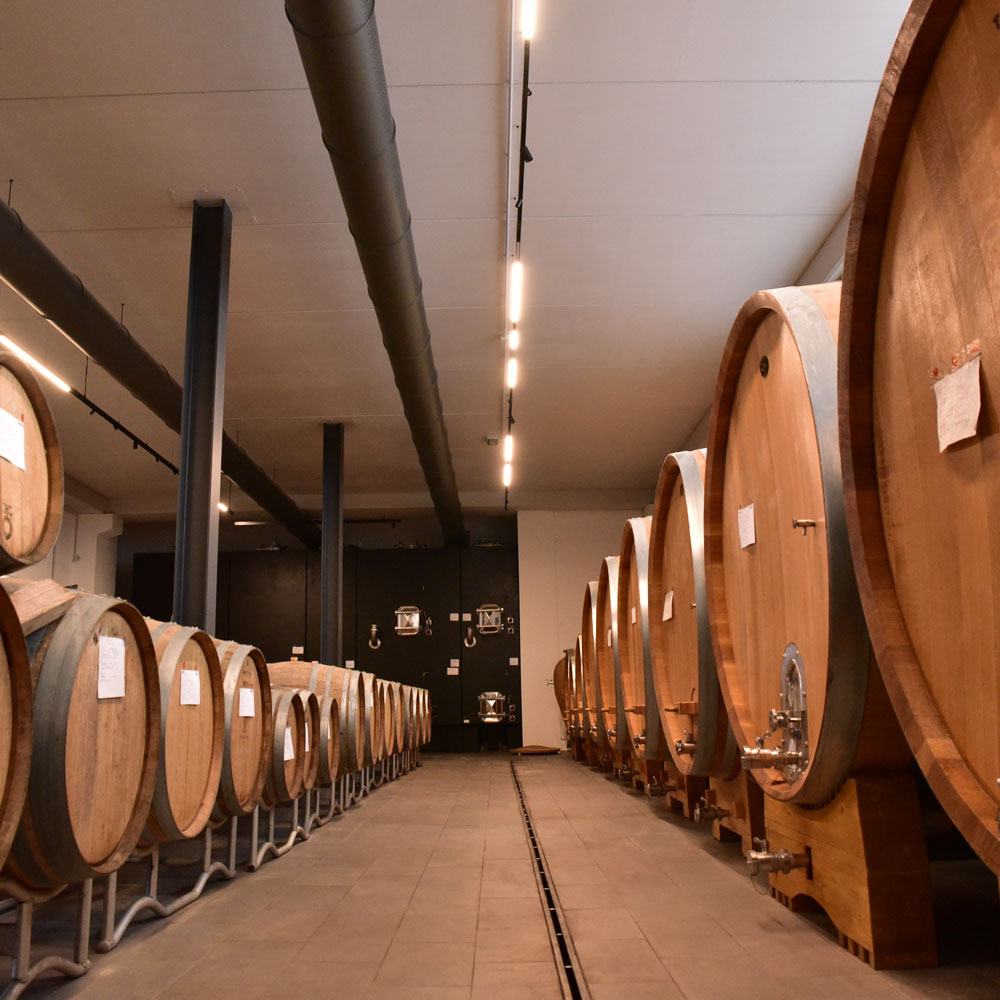
The estate calls its style neo-classical, and the cellar shows what that means. Grapes are picked and sorted by hand and fermented in large steel tanks with no added yeast. For the Castelletto, a pied de cuve is started from the vineyard’s own grapes about ten days before harvest and added to the crush; the cap is punched down and then kept submerged, with at least thirty-five days on the skins. The wine then spends a minimum of eighteen months in fifty-hectolitre casks of Austrian Stockinger oak, a short spell in concrete, and a year in bottle. The Barolo DOCG gets a two-day cold soak, thirty days of maceration and two years in the same big casks.
The Riserva Perno has two years in wood and four in bottle before release. The Langhe Nebbiolo takes twenty days on the skins and eight months in twenty-hectolitre casks, and the Nizza fourteen months in tonneaux. Nothing here is new for its own sake. The aim is Barolo you can recognise as Monforte.
Wines are living things and therefore they are born, age and improve like men who seek them as good company.
Castello di Perno
05 · What they sayClarity, brightness and focus.
The critics found the estate early. Michaela Morris in Decanter gave the 2016 Barolo 91 points and the 2016 Castelletto 92; Wine Enthusiast reviewed both. Tom Hyland’s Forbes piece came in July 2023. Greg St. Clair, the Italian buyer at K&L, put it most simply after tasting through the range at the castle: “The wines all show a remarkable clarity, brightness and focus.” He found the 2017 Castelletto “concentrated but not without balance,” rose and strawberry on the nose with a hint of Earl Grey.
Our own verdict is plain. The Castelletto is the estate’s best wine and a serious Monforte Barolo by any standard. The Barolo DOCG is a fine introduction, the Nizza is one of the deepest Barberas in our book, and the Langhe Nebbiolo, with its rose and leather, is the bottle to open on a Tuesday.
In the vineyard
& cellar.
- Holding
- 14 ha · Monforte d’Alba (Castelletto, Perno, Gramolere) and Barbera in Nizza
- Since
- Castle bought 2012 · winery at Castelletto 2013
- People
- Gregorio Gitti, owner · Gian Luca Colombo, winemaker
- Old vines
- Nebbiolo at Vigna della Croce (Perno) and Barbera at Bricco (Nizza), both planted 1940
- Cellar
- Spontaneous ferments in steel · 20–35 days on the skins · Austrian Stockinger casks of 10–75 hl · a short rest in concrete
- Honours
- Decanter 92 (Barolo Castelletto 2016) and 91 (Barolo 2016), Michaela Morris