
A family on the same sandy hills since the 1200s, and one wine for each vineyard.
The Malabailas have been on this land in the Roero for so long that the current generation is counted in the sixties, a lineage that reads more like a dynasty than a family tree. They were bankers and merchants from Asti, in the district since the 1200s, who bought the castle of Canale and began making wine. The first document in the family archive to mention a vineyard for wine is dated 1362. Lucrezia Carrega Malabaila, who runs the estate today with the winemaker Valerio Alfredo Falletti, is the sixty-fifth of her family to hold the reins.
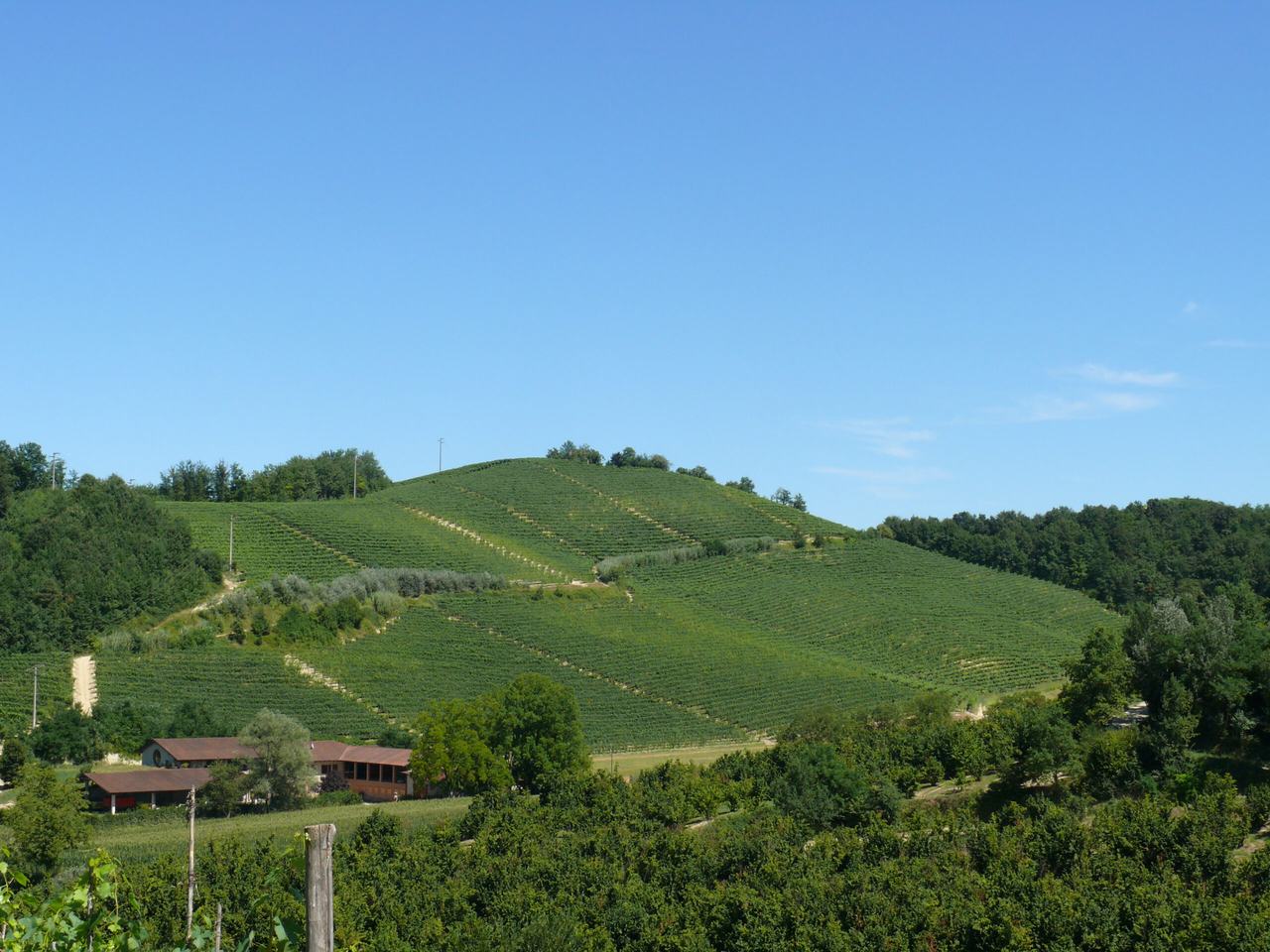
Sixty-five hectares in all, of which about twenty are vines; the rest is hazelnut and oak and chestnut wood, left to be what it is. The Roero is Pliocene marine sand, soft, permeable and full of fossil shells, and it gives Arneis of rare delicacy and Nebbiolo of perfume rather than power.
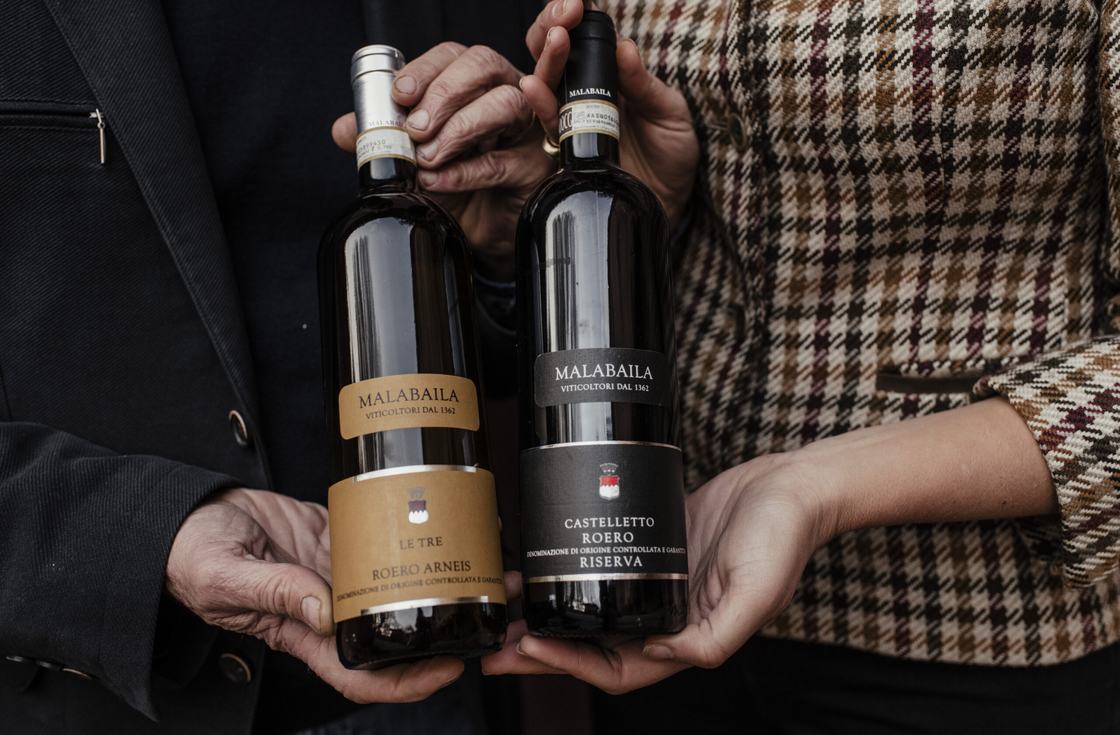
The rule here is one vineyard, one wine. Most of the names on the labels come out of the family’s own papers: a farm recorded in 1583, a hill bought in 1508, a threshing floor named in the sixteenth century. Lucrezia paints the back labels herself. It is old Piedmont, made with a light hand.
02 · Canale, 1362When the Dukes of Savoy wanted wine for a wedding, they wrote to Canale.
The Malabailas were a noble family of Asti, present around Canale since the 1200s. Their archive holds the history of Roero wine as much as of the family. After the 1362 vineyard comes a run of nine handwritten letters, the first dated 1598, in which the Dukes of Savoy and the Prince of Piedmont ask Count Malabaila for his wine for court festivities and for their children’s weddings. In the 1700s Luigi Gerolamo Malabaila, ambassador to the Austrian court, was shipping the family’s wine to the capitals of Europe.
Several of today’s wines carry those records on the label. Bric Volta is named for the Masseria della Volta, entered in Count Daniele Malabaila’s registers in 1583 as arable land with vines, bordering San Damiano and Priocca. The Favorita grows on the hill Count Daniele bought in 1508, described in the deed as ‘in montem Bonvicini, terram, gerbum, boscum et pratum cum motta ibidem existente’. Aja is the Piedmontese word for the farmyard threshing floor, recorded on the estate in the sixteenth century.
For most of that history the family grew grapes and made wine as landowners did. The turn to quality came in the 1980s, when Corradino dal Pozzo Carrega Malabaila, Lucrezia’s father, began working with the oenologist and agronomist Valerio Alfredo Falletti, whose father had also worked for the family. The wines were first made in the cellars of the family’s castle; the estate as it now runs dates from 1986.
03 · The Roero sandsFossil shells, hazelnut woods, and Nebbiolo with more scent than muscle.
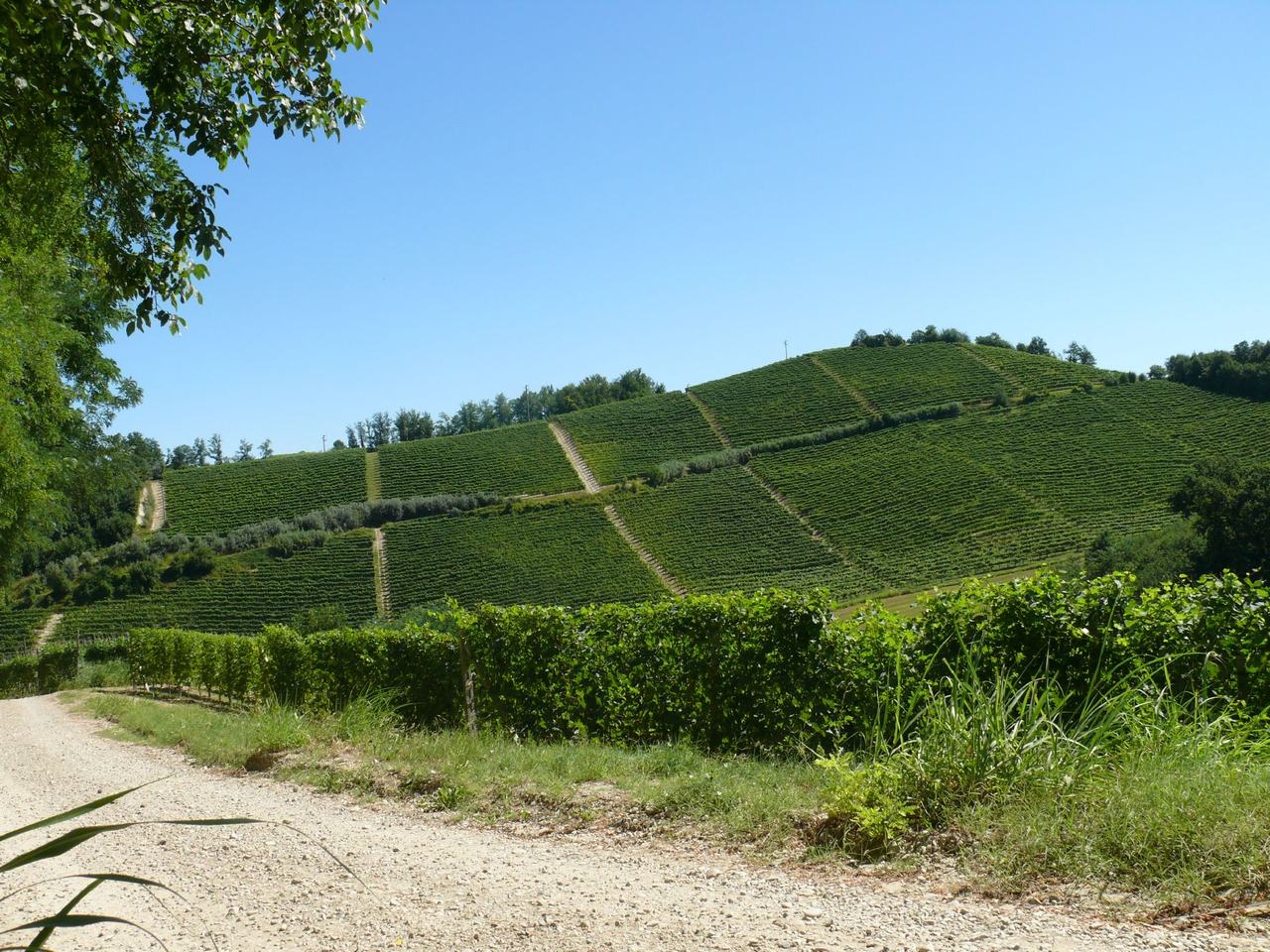
The Roero lies on the left bank of the Tanaro, across the river from the Langhe hills of Barolo and Barbaresco. In the Pliocene this was the floor of a shallow sea, and the hills are its sediment: loose marine sand over marl and clay, so soft in places that the slopes are cut by deep gullies, and full of fossil shells. The soil drains quickly and warms quickly. Nebbiolo grown in it is paler, more fragrant and earlier to drink than its cousins over the river, and Arneis keeps its lift and its bitter-almond finish.
Arneis is the Roero’s own white grape, recorded here as early as 1478, and its Piedmontese name means a stubborn, rebellious character, hard to tame. Malabaila grows about six and a half hectares of it, alongside eight and a half of Nebbiolo, three of Barbera and smaller plots of Favorita and Brachetto. The vine material is the estate’s own: Arneis, Nebbiolo and Barbera are propagated from an old family vineyard.
What sets the property apart from many in the Roero is how much of it is not vineyard. More than forty hectares are hazelnut groves and old oak and chestnut woods, which the family describes as more extensive than the vines and keeps for the life they hold. It makes for a landscape of small vineyards in clearings, each with its own aspect and its own wine.
04 · PradvajA cellar under a hill they built, and a cave cut by hand into the rock.
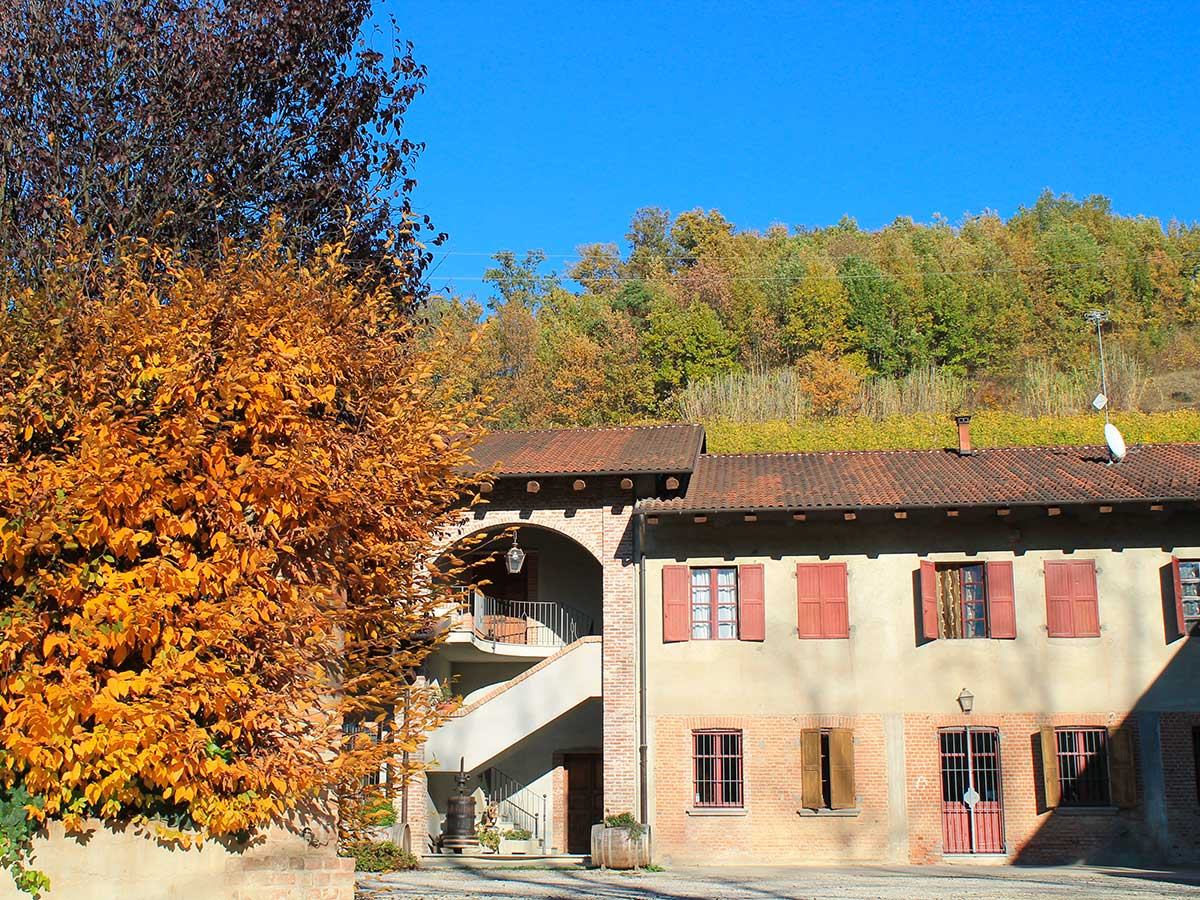
In 1990 the family built a new cellar at Cascina Pradvaj and then raised an artificial hill over it, so the earth would hold the temperature steady without machines. It is partly underground still. Inside are steel and concrete tanks and wooden casks of several sizes. The cellar also takes in a nineteenth-century cave carved by hand into the soft rock, where wine rests in silence and visitors walk through.
In the vineyard the rules are simple and old-fashioned: no herbicides, natural fertilisation, grass left growing in the rows, Guyot pruning and picking by hand from September into October. In the cellar, in the estate’s words, the work is ‘measured interventions, respect for timing’. Most of the wines never see wood at all. Le Tre Arneis ferments cool in steel for about twenty days and rests there seven months. Aja, the Langhe Nebbiolo, has a deliberately short ten-day fermentation and no oak, to keep the fruit fresh. Bric Volta, the Roero Nebbiolo, is the exception: after its months in steel it goes into wood for a year and a half, which softens the tannin without covering the sand-grown perfume.
05 · LucreziaWatercolours on the labels, and a story for every one.
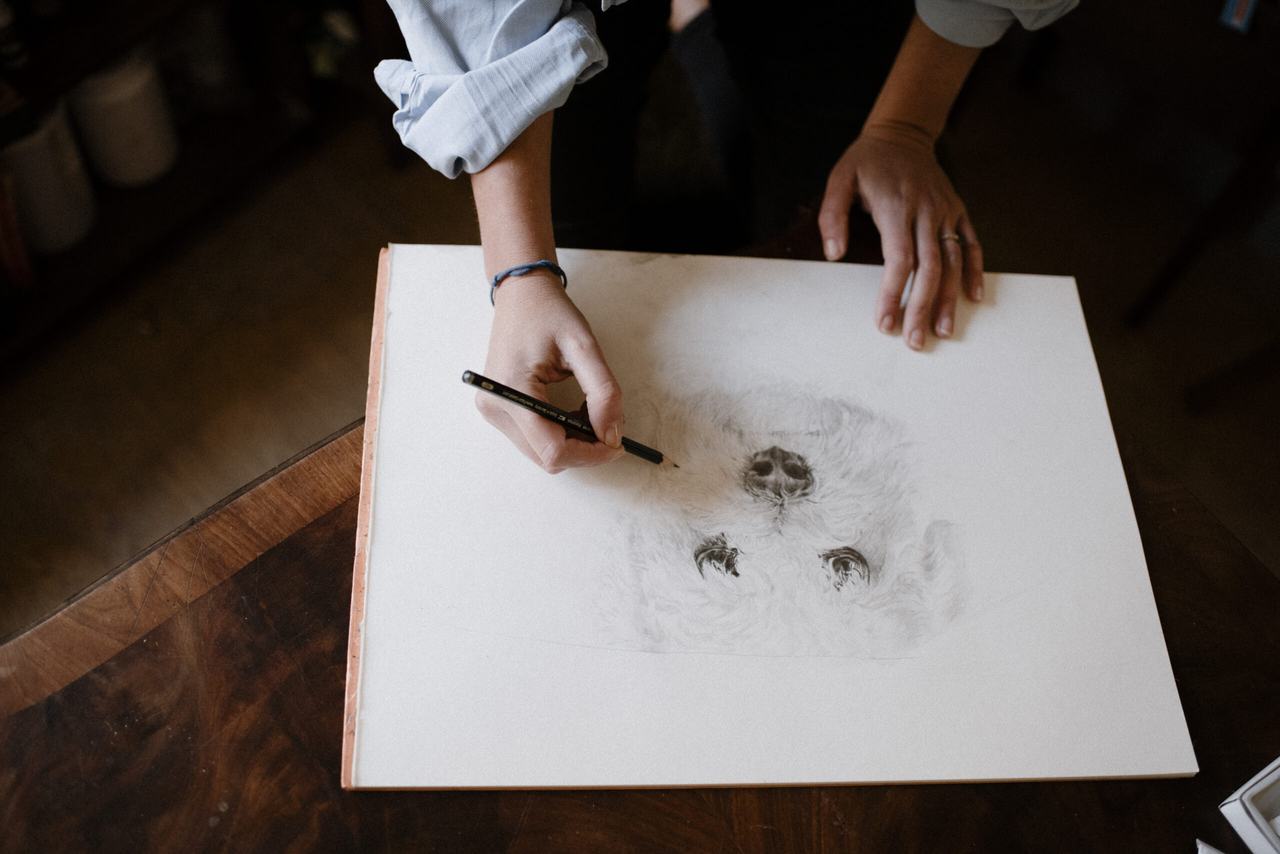
Lucrezia Carrega Malabaila is the estate’s commercial manager and, since the labels were redesigned at the start of the decade, its illustrator. Each back label carries one of her watercolours, drawn from the wine’s character, the history of its grape or a legend of its vineyard. Le Tre shows three mallards: three vineyards in the blend, three brothers, three Malabaila descendants. Cardunaj, the dry red, is Piedmontese for land thick with thistles; her label puts a swallowtail butterfly, often seen among the vines, on a thistle flower. It comes from a native red grape the Roero usually makes sweet, here made dry and aromatic.
The Favorita is the Piedmontese name for the grape Liguria calls Vermentino. It came over the mountains on the old salt road and earned its name, the family says, from the favour it found as both a table grape and a wine grape. On the 1508 hill it makes a crisp, salty white with no oak at all.
None of these wines is made to be monumental. They are made to taste of a particular hill in the Roero, and to be drunk at the table: Le Tre with an aperitivo or white meat, Bric Volta with porcini or polenta, Aja with agnolotti. That they also come with six and a half centuries of paperwork behind them is a pleasure, not the point.
in montem Bonvicini, terram, gerbum, boscum et pratum cum motta ibidem existente
Deed of Count Daniele Malabaila, 1508
In the vineyard
& cellar.
- Holding
- 65 ha estate at Canale; about 20 ha of vines (Nebbiolo, Arneis, Barbera, Favorita, Brachetto); the rest hazelnut groves and oak and chestnut woods
- Since
- Family in Canale since the 1200s; first vineyard record 1362; estate in its present form since 1986
- People
- Lucrezia Carrega Malabaila, 65th generation; Valerio Alfredo Falletti, winemaker and co-owner
- Ground
- Pliocene marine sand, marl and clay with fossil shells
- Farming
- No herbicides, natural fertilisation, grass between the rows, hand harvest
- Cellar
- Cascina Pradvaj cellar (1990) under an artificial hill; steel, concrete and wood; 19th-century cave cut into the rock. Whites and Aja unoaked
- Rule
- One vineyard, one wine