
Three and a half centuries of Nebbiolo on the sands of an ancient sea.
A notary’s deed of 1671 records Comino Sella buying vineyards in Lessona, a small hill village at the foot of the Biella Alps, with surplus cash from the family’s textile mills. The date is worth sitting with. The Sellas have been growing Nebbiolo on this ground for more than three and a half centuries, and one of their vineyards, at a place called the Zoppo, appears in a deed of 1436.
This is Alto Piemonte, well north of Barolo under the Alps, where Nebbiolo grows on the yellow marine sands of Lessona and the red volcanic porphyry of Bramaterra. The soils are among the most acid in European viticulture. The wines come out perfumed, high-toned and fine-boned, nothing like the broad Langhe style people expect from the grape.
The Sellas also helped write the rules. Venanzio Sella ran the estate from the 1930s to the 1980s and worked for the DOCs that Lessona won in 1976 and Bramaterra in 1979. Their wines are still the reference for both, and still taste like a discovery.
02 · The Sella familyWool, banking, mountains, and a vineyard bought as an investment.
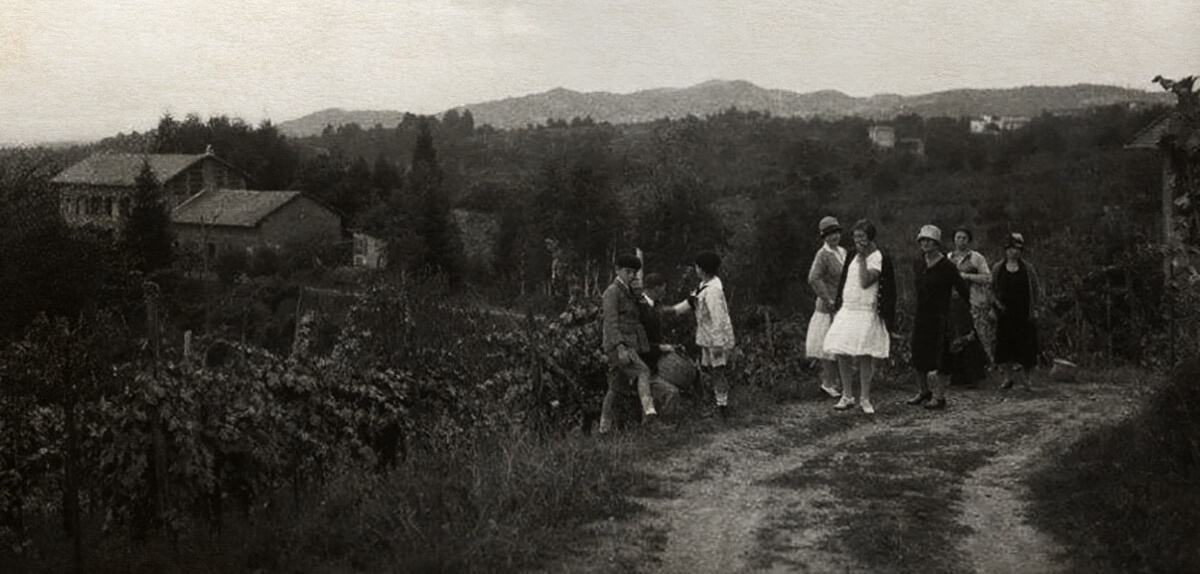
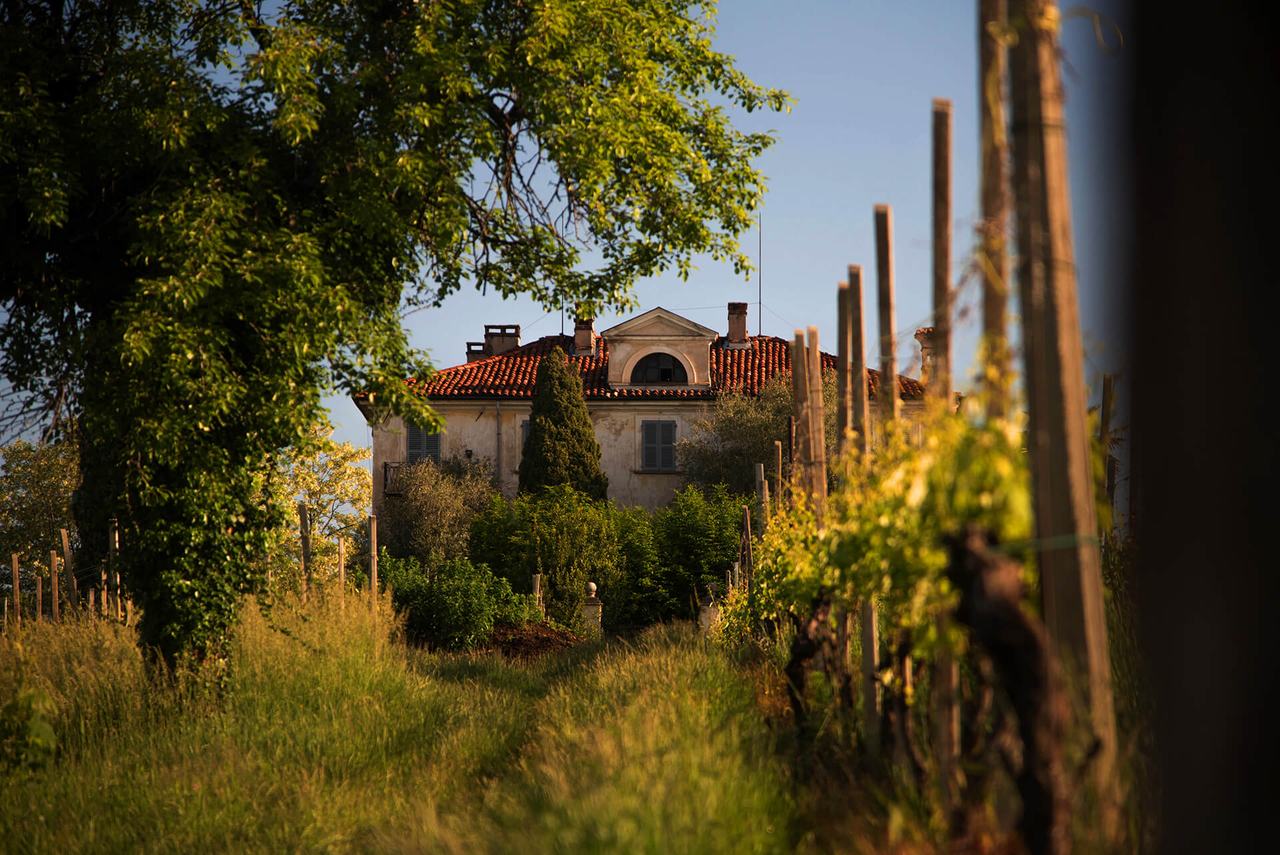
The Sellas were Biella’s great industrial family: textiles first, then banking, with Banca Sella founded in 1886. They produced Quintino Sella, the nineteenth-century statesman and mountaineer, and Vittorio Sella, the photographer of the Alps, whose 1926 picture of the Bramaterra estate is on this page. Through all of it they kept buying vineyard in Lessona. Between the 1830s and 1840s Giovanni Giacomo Antonio Sella built the villa at the very top of the Zoppo vineyard, the finest exposure on the hill. Around 1870, when Maurizio Sella’s estate was divided between his sons Gaudenzio, Quintino and Giuseppe Venanzio, the Lessona land went to Giuseppe Venanzio.
In 1882–84 Carlo Sella bought the Bramaterra property lot by lot from the commune of Villa del Bosco, then mostly rough and wild ground, and a priest and scientist, Don Paolo Antoniotti, oversaw its clearing. Gaudenzio Sella designed the Cascina Bramaterra, built in 1892–93, which still stands over the estate. Venanzio Sella (1901–1990) took over in the 1930s and his son Fabrizio (1929–2001) after him. Riccardo Giovannini is the winemaker and viticulturist today.
03 · LessonaPliocene sand, fossil shells, and a pH of 4.2.
Lessona’s vineyard hills are made of marine sand left by a Pliocene sea, with patches of clayey loess; in the valley bottoms the sand is full of fossil shells. The soil pH runs from 4.2 to 5.5, which the estate rightly calls among the most acid anywhere in European wine, and it is rich in iron and manganese, which mark the wines. The sand drains so fast that the vines depend on summer rain. Biella, fifteen kilometres west, gets about 1,500 millimetres a year; Lessona gets a little over a thousand.
The climate helps. The hills below Biella are sheltered pockets with average temperatures close to Mediterranean; winters are dry with little snow, springs mild, summers warm and dry, and autumns long, with a wide swing between day and night that slows the ripening. Riccardo Giovannini points to the early budbreak and late harvest: a long season that gives Nebbiolo its full aromatic range without heavy alcohol or tannin.
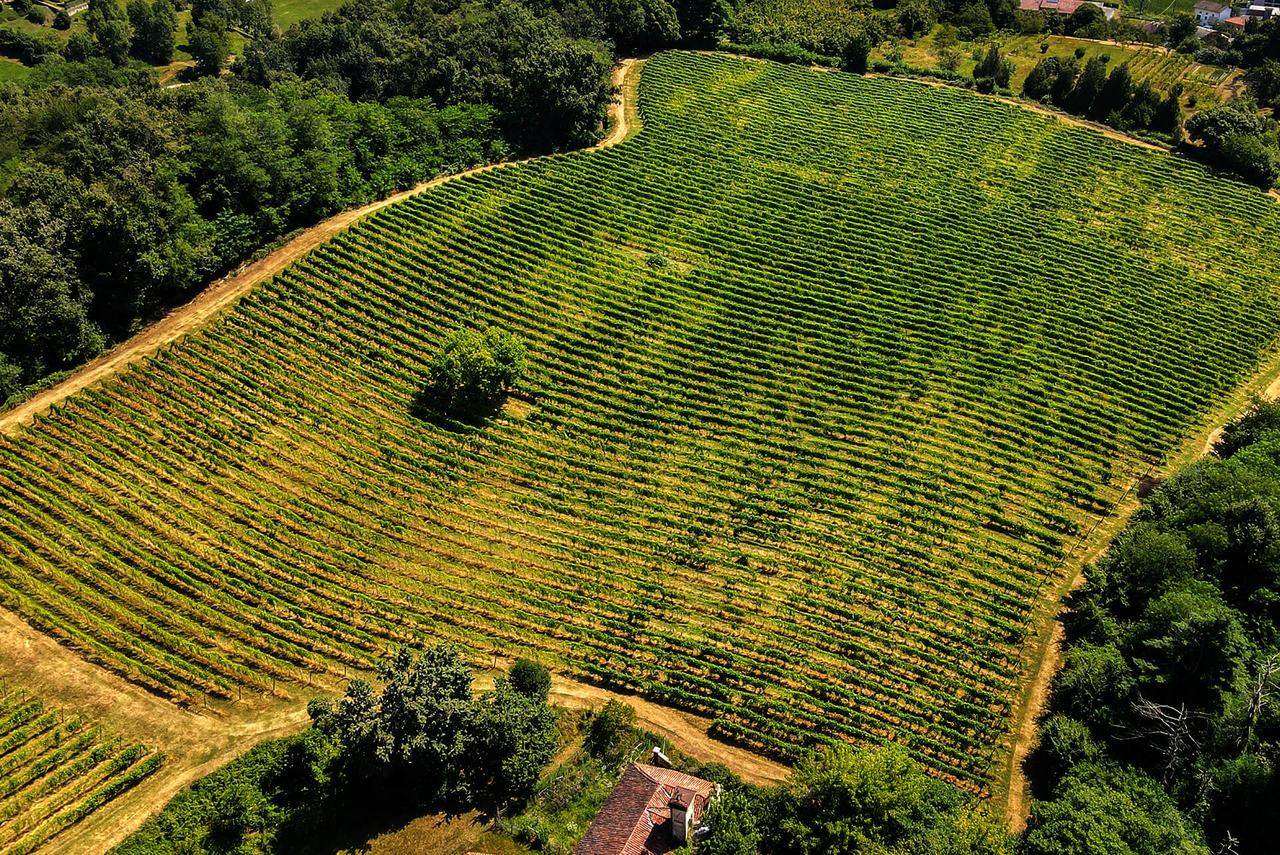
The whole Lessona DOC is tiny, under forty registered hectares. The Sella vines there average about forty years old, and each vine carries on average between 250 grams and a kilo of fruit, so there is normally no need to thin the crop. The ground is worked at most once a year, at the start of winter, to stop the sand washing away, and almost everything from pruning to harvest is done by hand. The single-vineyard San Sebastiano allo Zoppo comes from the plot named in the deed of 1436.
Lessona is mostly Nebbiolo with a little Vespolina, which adds pepper and lift. It is the more perfumed and supple of the two reds, with the finer tannin.
Lavorare con vigneti antichi comporta costi maggiori e produzioni ridotte, ma queste viti con le loro radici profonde, producono uve che rispecchiano profondamente il terroir d’origine.
Tenute Sella
04 · BramaterraOne block of weathered red porphyry, and vines from 1933.
Bramaterra lies just east of Lessona, at the southern end of the Rive Rosse, the red hills: a long, thinly peopled country of oak, chestnut and birch woods. Its geology is a ring of three islands of Permian quartz porphyry, a gassy, crumbly lava rock, with marine sands and clays to the east. The Sella estate sits on a single block of red porphyry, mostly broken down by weathering, with pockets of clay. The loose volcanic soil changes colour with its oxidation, from pale yellow to dark red to brown.
The original Bramaterra vineyard of the 1880s was a few hectares. Plantings through the twentieth century took it to about twenty hectares in one piece, between 270 and 350 metres, which makes it one of the largest single-owner vineyards in Alto Piemonte. The average vine is about forty-five years old. On the highest hill, a vein of pure red-brown porphyry carries vines planted in 1933, which make the selection I Porfidi.
Bramaterra is Nebbiolo with Croatina and Vespolina, as tradition has it here. The porphyry gives a darker, spicier, more mineral wine than Lessona, with more grip. Both reds spend two years in large French oak casks of fifty hectolitres and a year in bottle before release.
05 · Those who stayedThe family that stayed when Alto Piemonte emptied.
Alto Piemonte was once the commercial centre of Piedmontese wine. Decades of war and social upheaval cut its vineyards back to a fraction, and Lessona, Gattinara and Ghemme shrank with them. The Sellas are the family that never left, and they helped win Lessona and Bramaterra their DOCs when the region had very few champions.
That continuity is in the glass. These are wines of lift and finesse, fine-grained, high-toned and long, and they age well; our Bramaterra is the 2015 and our Lessona the 2016, both with the bottle age they need. The whites come from newer ground. Doranda, first made in 1993, is Erbaluce, the classic white of the region, known locally as Greco Novarese, kept fresh in steel with no malolactic; Piandoro is Erbaluce with Riesling from terraces at Brusnengo bought in 2014. Farming follows integrated rules, with soil cover and biodiversity at the centre of it.
For anyone who loves Barolo and thinks they know Nebbiolo, Lessona is the next bottle to open.
In the vineyard
& cellar.
- Since
- 1671, Comino Sella’s first Lessona vineyard · the Zoppo named in a deed of 1436 · Bramaterra bought 1882–84
- Holding
- Lessona, Bramaterra and Coste della Sesia · ~20 ha in one block at Bramaterra
- Soil
- Lessona: Pliocene marine sand with fossil shells, pH 4.2–5.5 · Bramaterra: weathered red porphyry with clay
- Grapes
- Nebbiolo, with Vespolina and Croatina · Erbaluce, Riesling
- Vines
- Lessona ~40 years on average · Bramaterra ~45 years · I Porfidi planted 1933
- Farming
- Integrated viticulture · one tillage a year · nearly all hand work
- Cellar
- Riccardo Giovannini · reds 24 months in 50 hL French oak casks, then 12 in bottle