
A debt being paid.
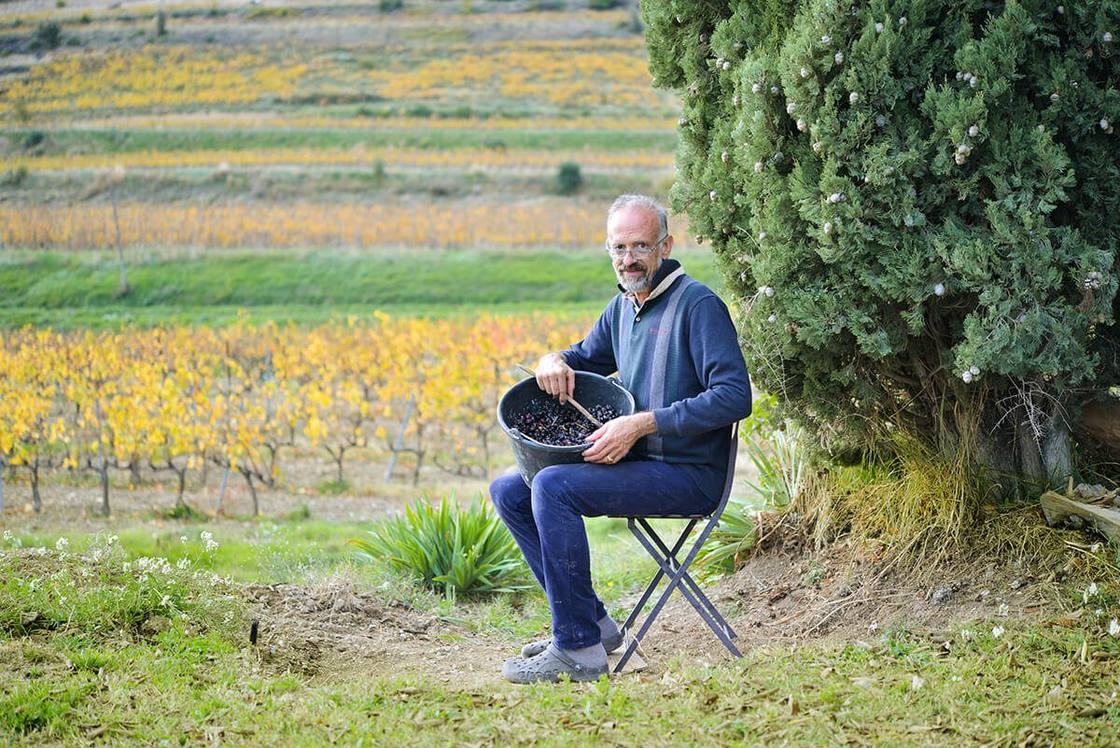
Henri Bungener was a psychologist in London. In 2004 he came back to the family's hillside in the Dentelles de Montmirail and became a vigneron full time. His father had bought the place from Steven Spurrier and converted it to organic around 1980, certified in 1989, so this was less a career change than a debt being paid. This is the highest estate in Vacqueyras, three hundred metres up on poor, well-drained clay-limestone, while the rest of the appellation sits on the plain. Henri has mapped the geology and named his cuvées for the age of the rock: twenty-four million years, twenty-seven, thirty-four. Sheep graze the vines in winter.
02 · Hush-hushSpurrier’s accident, a perfumer’s retirement, and an organic conversion the children were told not to mention.
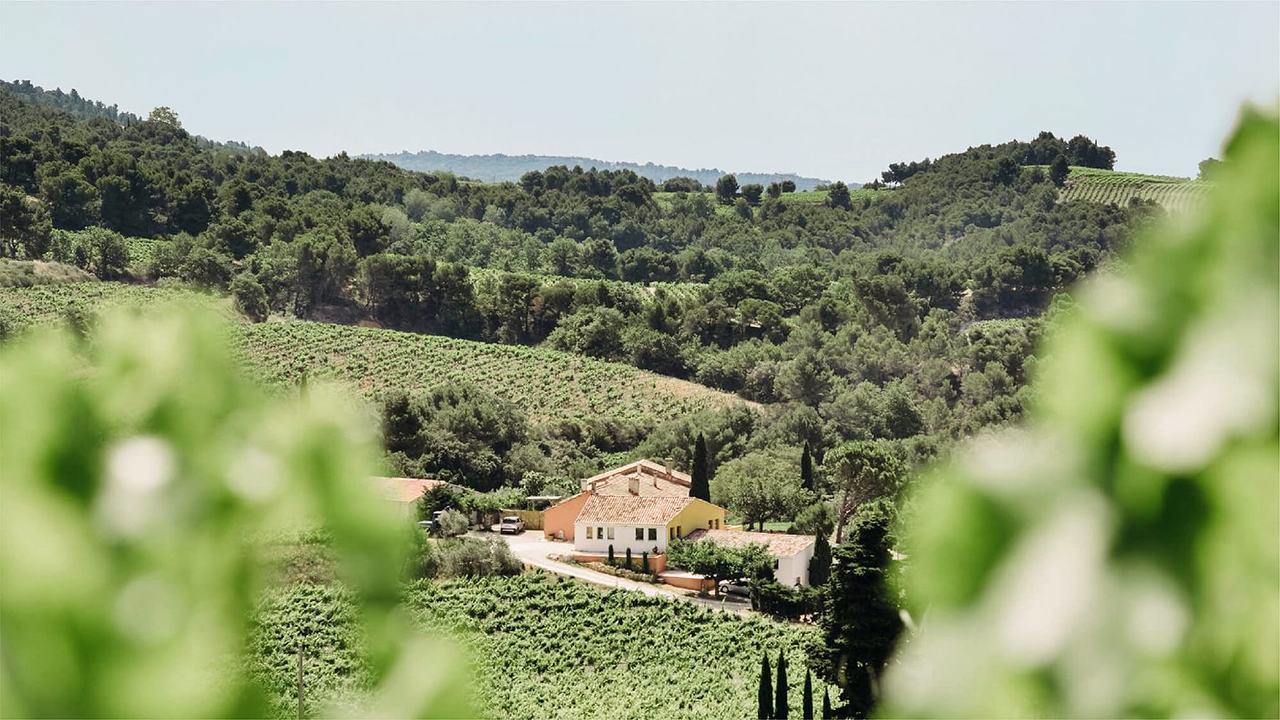
Steven Spurrier came to own half of the Clos de Caveau by accident in 1973: a Bordeaux bottling business he had invested in failed, and its owner paid him in vines on a hillside behind the Hôtel de Montmirail. “It wasn’t a planned exercise,” he wrote later. “I simply didn’t have the time to devote to it.” He sold. In 1976 Gérard Bungener, newly retired from the perfume house Houbigant, bought the clos with his wife Nicole: a seventeenth-century mas in a hidden valley of the Dentelles, Roman lime kilns in the slopes, three-quarters of the vines around the house. The first harvests went into wooden crates.
Around 1980 Gérard stopped using chemicals. It was, in the Rhône of that time, an eccentric and slightly shameful thing to do. “People thought it was crazy,” Henri says, “and warned him that he would lose his crop to the insects. What my father was doing was hush-hush, and he told us not to tell the clients.” The certificate came in 1989, among the first in the region, four years after France had a certificate to give. Henri, the youngest of three, had gone to London and become a clinical psychologist, with a doctorate on mothers and infants; he took responsibility for the estate in 1994 and moved his family to Vacqueyras in 2004. “A new kind of patient awaited him,” the website says: the vineyard. The three signature cuvées were born in 2007; half a hectare of Gigondas two hundred metres from the house came in 2017; his son Lewis joined full-time in 2025; and 2026 is the fiftieth year, with an orange wine and a sparkling rosé to mark it.
The magic is that the lovely wine in your glass comes from the ground, comes out of the dirt.
Henri Bungener
03 · Twenty-four, twenty-seven, thirty-fourThe Oligocene, read from the bottom of the hill to the top.
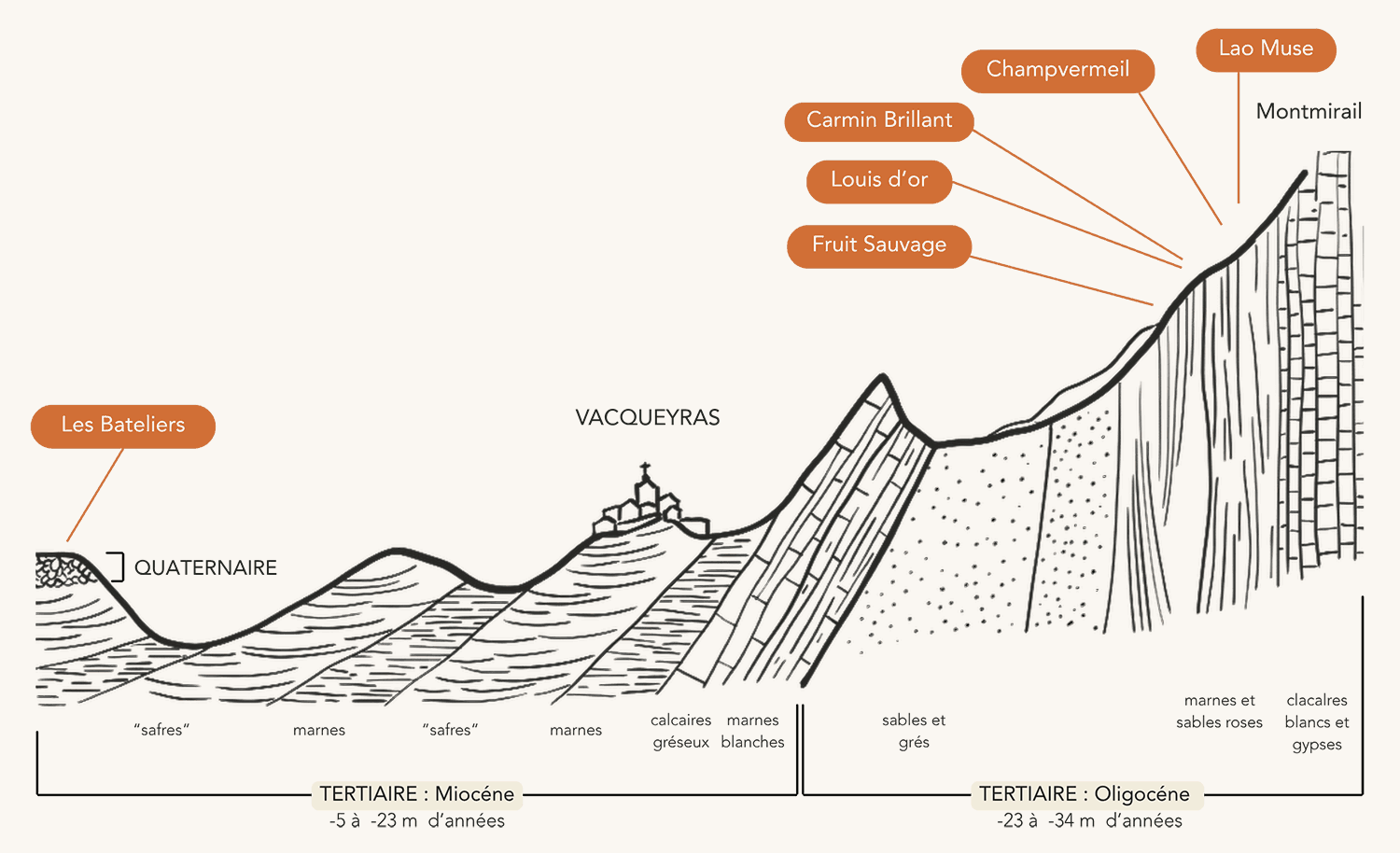
Vacqueyras (from the Latin valléa quadreria, the valley of stones) mostly lies on the plain, in the frost and the fog. The Clos de Caveau is up in the Dentelles on the Gigondas line, seventeen hectares of vines on low-fertility clay-limestone from the Oligocene, where the strata stand vertical and the roots go down, the estate says, as far as fifty metres. Henri walked it with a geologist, mapped the layers, and planted Grenache and Syrah to suit them; then he named the wines for what they stand on. Fruit Sauvage, at 160 metres around the house, is the twenty-four-million-year rock, six thousand bottles, six parts Grenache to four of Syrah. Carmin Brillant, on the flank of the hill at 200 metres, is twenty-seven million years old, with vines past ninety; the Romans burned lime there. Lao Muse, thirty-four million years, is a few rows at the summit of the hill that gave the wine its name, two thousand bottles in the years that deserve it. Over the line, Champvermeil is the half-hectare of Gigondas, sandy silt on the same clay-limestone.
Down on the Rhône plain near Violès, on twenty-five metres of Quaternary gravel over blue Miocene clay, is the Côtes du Rhône, Les Bateliers, named for the men and boys who towed the barges up the river before the railway; one of the estate’s old workers had done it as a child. The white, Louis d’Or, is Grenache blanc and Clairette on an old Châteauneuf recipe. The Mistral blows a hundred and twenty days a year, and the short-toed eagle has come back to the valley. “If they were to reopen the books,” Henri says, “I’d likely be in Gigondas.”
04 · The midwifeSheep, rotation, long slow macerations, and the sky clear before racking.
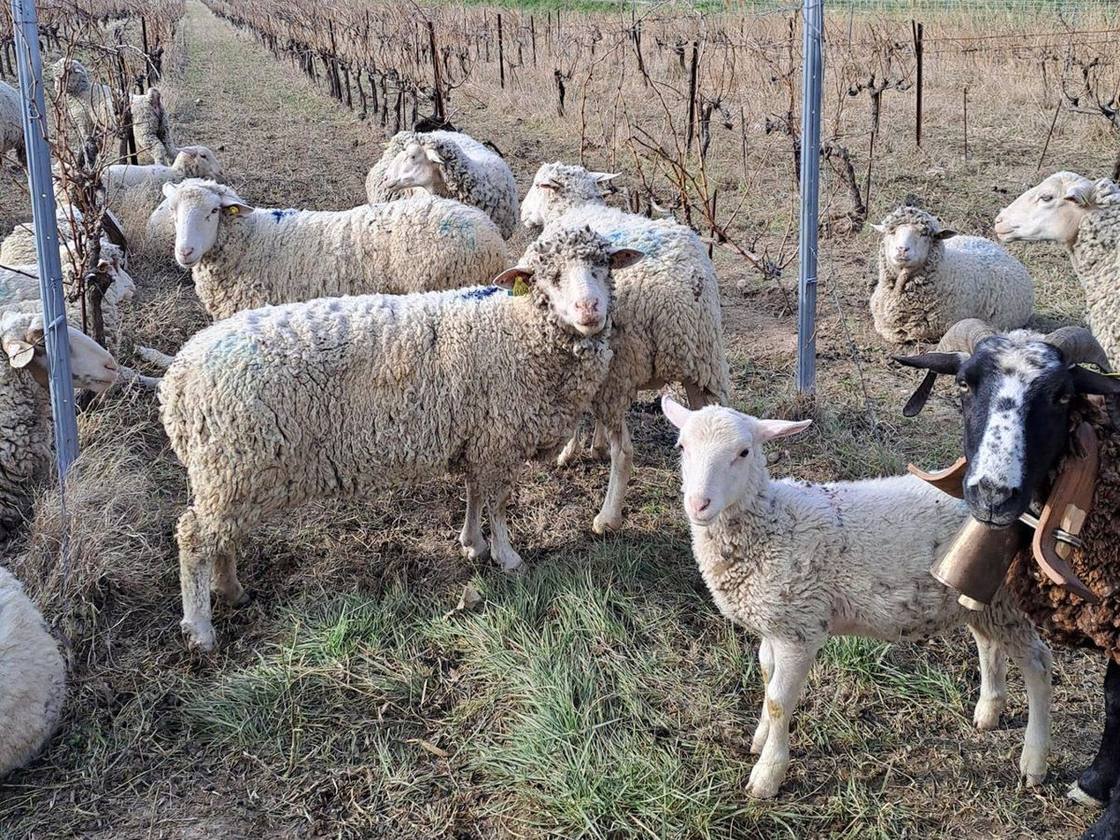
Nothing synthetic for nearly fifty years. Sheep in the rows from autumn to spring, trees planted among the vines, every fourth row left unploughed, parcels rested on an eight-year rotation, prunings laid down as mulch and the marc returned to the soil. The estate now calls it regenerative farming; Gérard simply called it farming. Yields are held to twenty-eight hectolitres and often less. Henri racks when the sky is clear, because, he says, that is when the lees settle, and keeps the biodynamic practices he has personally seen work; he does not claim the label.
Hand-picked and sorted, on the pear principle: “there is a window to enjoy that fruit, but if you wait a day or two it will be too sweet and mushy.” Indigenous yeasts, no additives, sulphur well under the organic ceiling, long gentle macerations of up to a month with the punching and pumping decided by taste. Fruit Sauvage ferments in concrete and spends a year between concrete and conical wooden vats; Carmin Brillant is raised in the wooden vats for the gentle oxygen; Lao Muse goes to barrel, one to three wines old, for twelve to eighteen months. “I am like a midwife,” Henri says, “giving birth to something that wants to come forth.”
Peu d’interventions, pas de produits chimiques, des vendanges précises, des rendements faibles. Notre objectif est simple : révéler les qualités du raisin pour obtenir la vérité du millésime.
Clos de Caveau
05 · What they say“Extraordinaire cuvée d’une très grande pureté de fruit.”
La Revue du Vin de France on Carmin Brillant: “Extraordinary cuvée of a very great purity of fruit… this wine is at the heart of the fruit, with a length full of saline flavours. Magnificent!” And on the 2023 Fruit Sauvage, 92–93: “superb… a fruit that seems infused.” The Guide Hachette gave the 2021 Carmin Brillant its rare three stars, vin exceptionnel: “a deep wine, with an intense and captivating nose of macerated blueberry, clove and menthol.” Matt Walls in Decanter, 94 on the 2022 Lao Muse: “Dark fruited, deep and soft, and the texture is velvety. An enjoyably structured and tannic style of Vacqueyras,” and 92 on the 2024 Fruit Sauvage, “a petite Vacqueyras of real interest and authenticity.” Alistair Cooper MW, 17+ on the 2019 Fruit Sauvage: “fine and elegant tannins… well-balanced acidity keeps this cool and refreshing. Delicious.” Jeb Dunnuck, 95 on the 2015 Lao Muse: “sexy and opulent… drink this big, rich, decadent beauty,” and 92 on the 2022 Carmin Brillant, “a standout in the vintage.” John Livingstone-Learmonth: “a genuine, unhurried Vacqueyras to drink with lamb in rosemary.”
A petite Vacqueyras of real interest and authenticity.
Matt Walls, Decanter
In the vineyard
& cellar.
- Holding
- Seventeen hectares in a hidden valley of the Dentelles de Montmirail on the Vacqueyras–Gigondas line, 160 to ~300 m, Oligocene clay-limestone; half a hectare of Gigondas (Champvermeil, 2017); Côtes du Rhône on the gravel plain near Violès
- Since
- Steven Spurrier a part-owner 1973–75; Gérard and Nicole Bungener from 1976; chemical-free from 1980, organic certified 1989; Henri Bungener from 1994, at Vacqueyras full-time since 2004; son Lewis from 2025
- Grapes
- Grenache and Syrah (60/40 in the three signature cuvées); Grenache blanc and Clairette; Muscat; a trial of Mourvèdre
- Farming
- Organic (AB) since 1989; sheep in winter, trees in the vines, minimal tillage, eight-year rotation; ≤ 28 hl/ha; hand harvest; biodynamic-informed, uncertified
- Cellar
- Indigenous yeasts; long gentle macerations up to a month; concrete and conical wooden vats; Lao Muse 12–18 months in 1–3-wine barrels; low sulphur
- Honours
- Guide Hachette three stars, Carmin Brillant 2021; RVF 16.5 Carmin Brillant 2012; Decanter 94 Lao Muse 2022 and Champvermeil 2024; Dunnuck 95 Lao Muse 2015