
Ninety years into a plan.
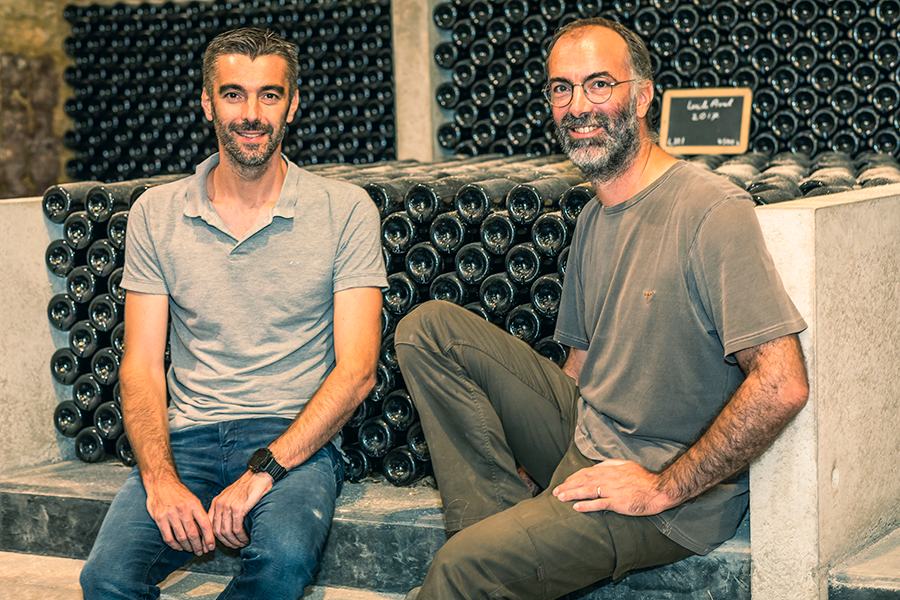
Paul Durieu built this in 1976 out of two inheritances: his father's parcels on the Plan de Dieu and his mother's co-planted Châteauneuf vines, some of which went into the ground before the First World War. He then planted five hectares of Grenache himself, in the village, in a seventeenth-century house that used to be a cooperage. His sons Vincent and François have run it since 2004. Thirty-seven hectares of Châteauneuf now, the oldest vines dating to 1914, the best of it on rocky ground that Grenache adores. The wines are warm, deep and garrigue-scented, and unapologetically classical. Nobody here is chasing a trend; they are ninety years into a plan.
02 · Lucile AvrilA mother’s vines, a father’s plain, and a house across from the chapel.
The Avrils have been in Châteauneuf since the 1500s; the Durieus farmed the Plan de Dieu, the flat, stony plateau above Travaillan on the other side of the Aigues. Henri Durieu married Lucile Avril, and in 1976 their son Paul put the two together: the Châteauneuf vines that had been Jean Avril’s, co-planted and in places pre-war, and the Côtes du Rhône of his own family. He made the first vintage that year in a house at 10 avenue Baron Le Roy, across from the old chapel of Saint-Théodoric, that had been a cooperage. He planted five hectares of Grenache himself, and in 1986 added seven hectares at Mormoiron under the Ventoux. The old parcels became the flagship, and the flagship took his mother’s name: Lucile Avril, first bottled from the 1999 vintage, with a parchment label the Hachette noticed at once.
Vincent and François, Paul’s sons, came in beside him in 2003 and took over in 2004. The Plan de Dieu wine carries their grandfather’s name, Henri Durieu; the Ventoux is called En Terrasses; and the newest Châteauneuf, from the cool northern lieu-dit of Bois Lauzon, is old-vine Grenache and Syrah from a sandy terrace with round stones. The brothers describe their aim in plain terms (to modernise, to innovate, to move the house up) and the wines as “a balanced patchwork of their terroir.”
Percer l’identité d’un vin à travers la nature géologique et microclimatique de son terroir.
Domaine Durieu
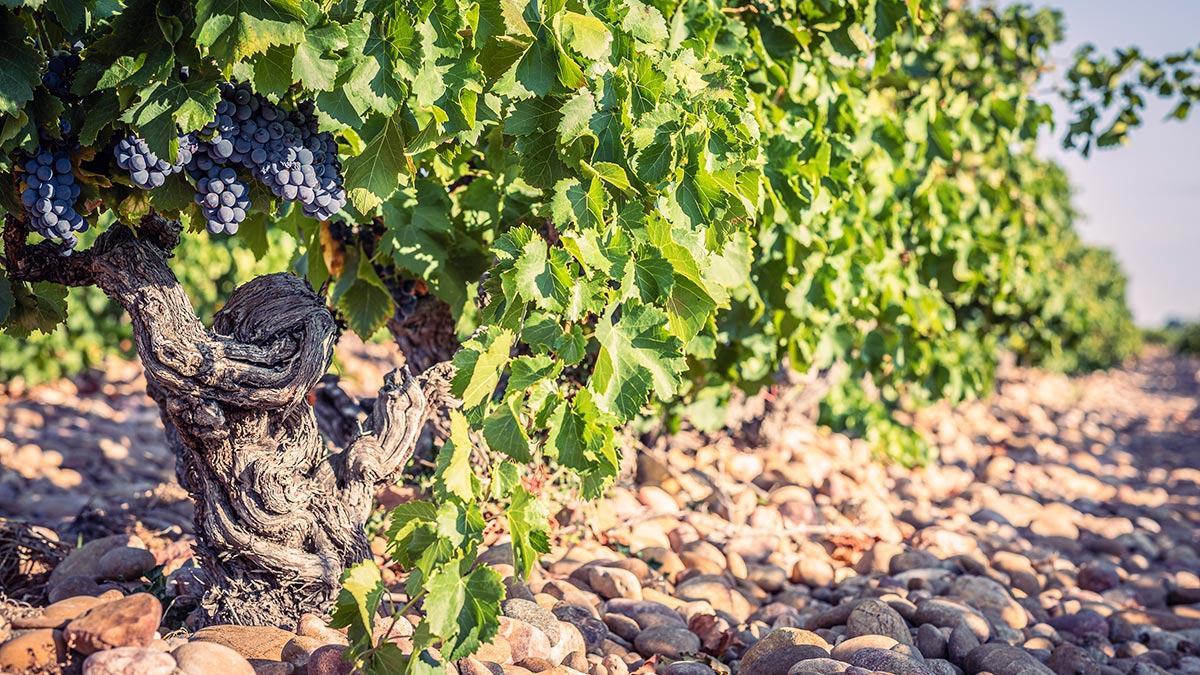
03 · Farguerol, Cabrières, Bois LauzonGalets on the plateau, old Grenache on the rock, and a sandy terrace in the cool north.
Thirty-seven hectares of Châteauneuf-du-Pape, thirty-six of them red, spread over the northern half of the appellation. The plateau of Farguerol is the great rolled pebbles, the galets roulés, and the six hectares there make the Lucile Avril: Grenache planted before the First World War, Mourvèdre of sixty years. There are old vines at Cabrières and Pied de Baud, a large piece of the Mont-Redon plateau, and the Bois Lauzon, three hectares of sandy alluvial terrace with pebbles in the far north of the appellation, the coolest corner, where the Grenache stays fresh. Half a hectare of Roussanne at Les Anglaises and a little Picpoul and Bourboulenc make the white. The best ground, the family says, is the stoniest, “which suits Grenache perfectly.”
Beyond Châteauneuf: six hectares on the Plan de Dieu, old vines on clay-limestone terraces and pebbles; twelve of Côtes du Rhône at Pont de Pierres on clay, where the blend is led by Carignan; and the Ventoux terraces at Mormoiron, clay-marl on gypsum and limestone, high and south-facing.
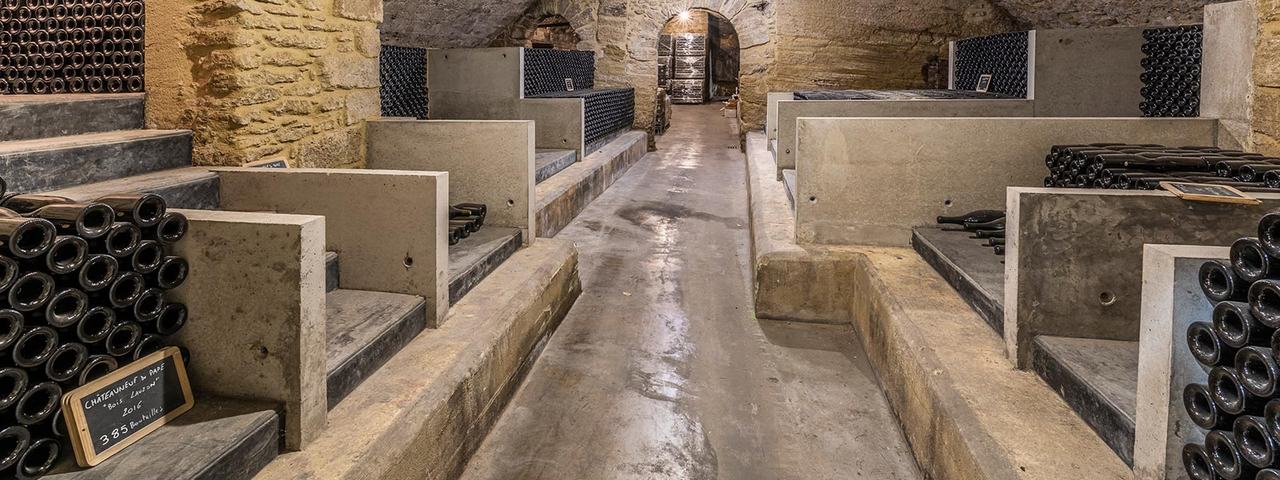
04 · Concrete and timeWhole bunches, thirty days, eighteen months in vat.
Farmed raisonnée and picked by hand at full ripeness, sorted at the vat. The Lucile Avril is the model: each variety fermented on its own, mostly or wholly in whole bunches, on its own yeasts, never above thirty degrees, pumped over once or twice a day for a month; then eighteen months in concrete, with the Syrah and in some years the Mourvèdre given a year in barrel for structure, and bottled unfined with only a light filtration. The classic Châteauneuf spends a year in concrete; Bois Lauzon, fermented cool, is given three weeks on skins and eighteen months in vat with no oak at all. The white is pressed cold and kept eight months in steel. Nothing here is unusual, and that is the point: this is Châteauneuf made the way the village made it when Grenache and patience were the whole recipe.
05 · What they say“Like gazing into a deep chasm.”
James Suckling, 97 on the 2020 Lucile Avril: “Smelling this great Châteauneuf is like gazing into a deep chasm.” And 97 again on the 2022: “A great masterpiece of elegance and finesse, with a cornucopia of wild herb, dried flower and red berry aromas.” Jeb Dunnuck, 96 on the 2020: “Pure, seamless, incredibly elegant, and full-bodied, it’s another straight-up gorgeous wine from this team.” Joe Czerwinski, Wine Advocate, 94: “layers of black cherries, dusty earth and dried spices on the nose.” Robert Parker, years before, 95 on the 2007 and 94 on the 2010: “a magnificent wine.” On the Plan de Dieu, Dunnuck: “While the Plan de Dieu can produce big, rustic wines, this is fresh, silky and complex.” Jeff Leve, 94 on the Bois Lauzon: “elegance, purity, balance, freshness and layers of sweet kirsch… that don’t want to quit.” The Guide Hachette, back at the 2005: “a very extracted wine that will need five or six years to meld”; as it turned out, that is exactly what the house has been counting on.
A great masterpiece of elegance and finesse.
James Suckling, on the 2022 Lucile Avril
In the vineyard
& cellar.
- Holding
- 37 hectares of Châteauneuf-du-Pape (36 red, 1 white): Farguerol , Mont-Redon, Cabrières, Pied de Baud, Bois Lauzon, Les Anglaises; plus 6 ha Plan de Dieu, 12 ha Côtes du Rhône at Pont de Pierres, 7 ha Ventoux at Mormoiron
- Since
- Paul Durieu, 1976, from the Avril vines of his mother Lucile and the Durieu vines of his father Henri; Vincent and François Durieu since 2004
- Vines
- Grenache-dominant; oldest Grenache planted 1914; Mourvèdre, Syrah, Counoise, Cinsault; Carignan in the Côtes du Rhône; Roussanne, Grenache blanc, Picpoul, Bourboulenc
- Farming
- Lutte raisonnée; hand harvest at full ripeness
- Cellar
- Indigenous yeasts; each variety apart; largely whole bunch; ≤ 30 °C; ~30 days; 18 months in concrete, Syrah a year in barrel; unfined, light filtration
- Honours
- Suckling 97 (Lucile Avril 2020 and 2022); Dunnuck 96 (2020); Parker 95 (2007)