
The most serious wines in the region, and they refuse to announce it.
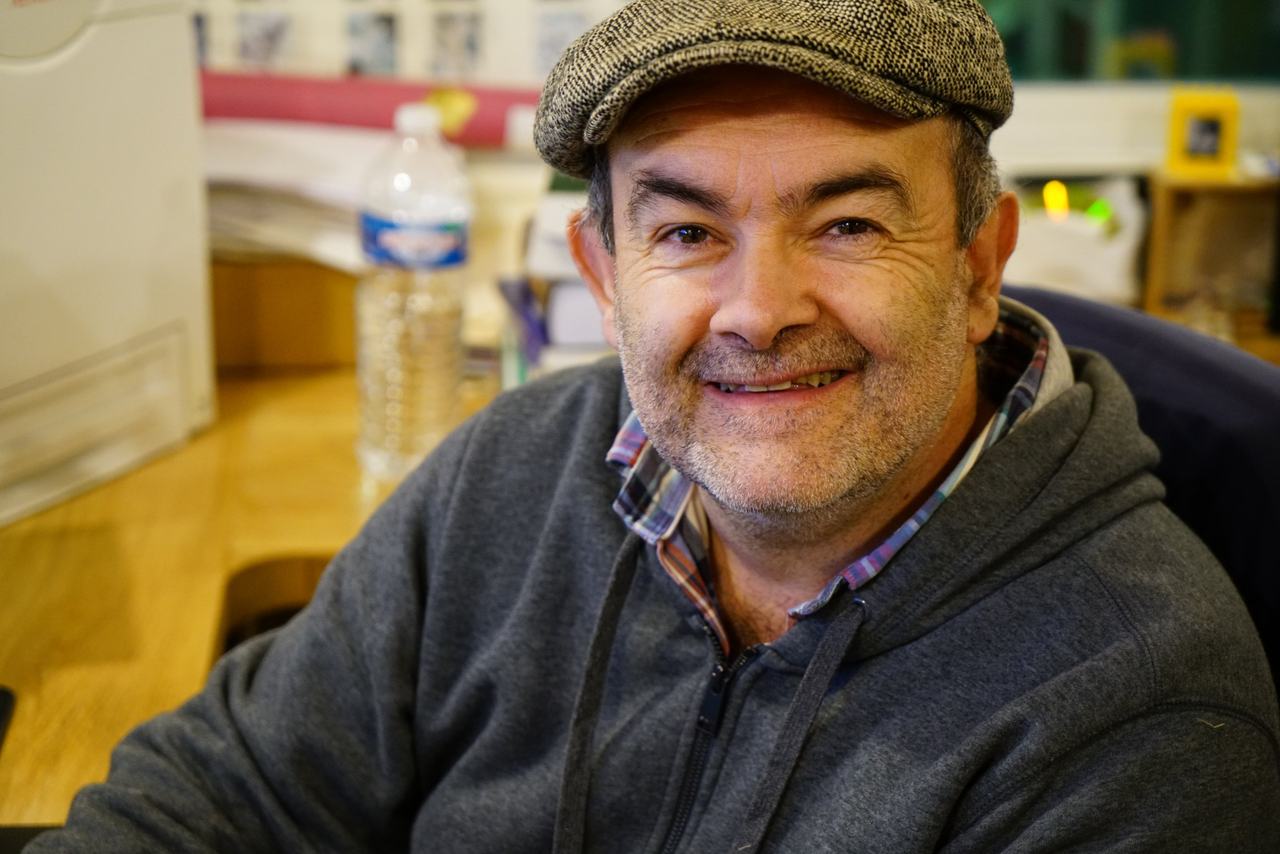
Rémy Pédréno worked with René Rostaing in Côte-Rôtie (the deep end) and then went and made his own wine in a corner of the Gard that carries no prestige whatsoever, under a humble appellation, because the limestone under Langlade told him to. Carignan leads the reds, which is a declaration of intent all by itself. Whites are led by Chenin, which in the Languedoc is close to eccentric. Whole bunches with stems, wild yeasts only, a short cuvaison, élevage in foudre and demi-muid, and almost no sulfur. Yields around thirty hectolitres. These are the most serious wines in the region and they refuse to announce it.
02 · Aimer par le vinA computer engineer, a bottle of Vacqueyras, four barrels in his parents’ garage, and Rostaing’s four hectares.
Rémy Pédréno is from Nîmes and did not drink wine until he was twenty-two. He was a computer engineer from 1990 to 1998, criss-crossing France for work, and the trips, he says, “were regularly punctuated by gastronomic stops and a great many tastings.” The first grande émotion was a bottle of Vacqueyras from Les Amouriers. In 1996 he made one barrel of Carignan from a third of a hectare he called the Clos de la Belle; in 1997 he rented some Syrah and made four barrels in his parents’ garage, and Philippe Puech, the great Nîmes caviste, noticed it at once for ageing “worthy of a great wine.” When a Toulouse tasting group opened the 1997 eight years later they found it “troublingly evocative of Côte-Rôtie.”
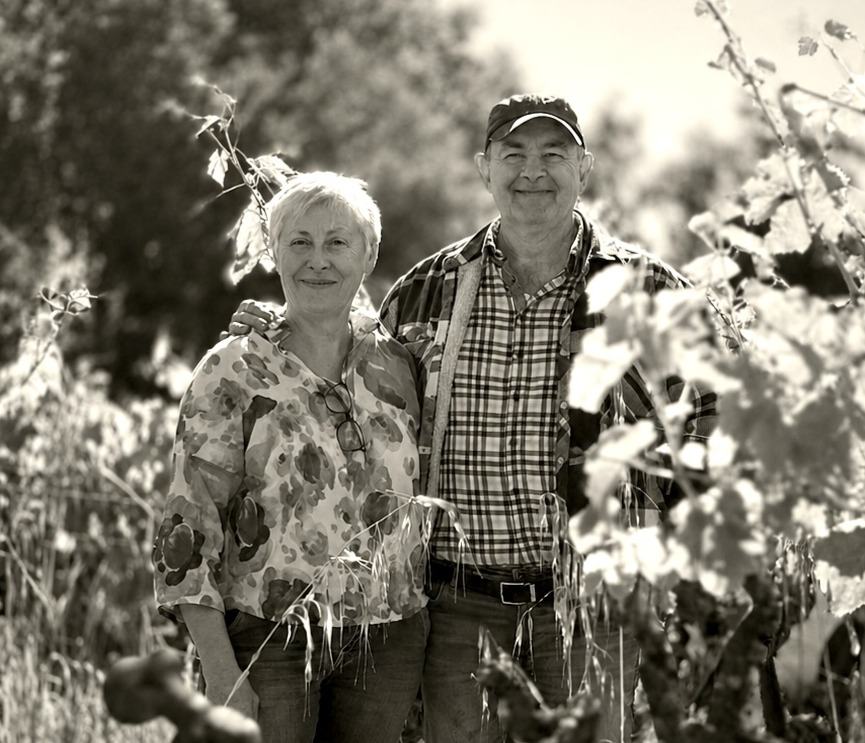
Then came René Rostaing. In 1999 the Côte-Rôtie grower bought four hectares of Syrah and Grenache from a vigneron at Langlade (he wanted vines of his own to improve a table wine) and gave Rémy carte blanche to farm and make them for four vintages. That is the founding of Roc d’Anglade, and the deep end the essay above refers to: Rémy went through the Rhône and Rostaing’s cellar on the way. He built a simple cellar in 2001 and made the first wine from his own vines in 2002, the year the grape list began to grow. Martine Guillem Pédréno, a logistician by trade, joined in 2001 as co-manager and has a hand in every blend; their son Paul helped make the 2022. The motto on the label, under the arms Louis XIV granted the village in 1696, is Aimer par le Vin. “When I was a child,” Rémy writes on the home page, “my father would say, half amused, half annoyed, ‘you think life is a burst of laughter.’ I believe it more than ever.”
Finesse, Fruit, Fraîcheur. La belle trilogie qui résonne en nous, vignerons.
Rémy Pédréno
03 · LangladeThe third cru of France, said the seventeenth century. Limestone, garrigue, and Carignan from the 1950s.
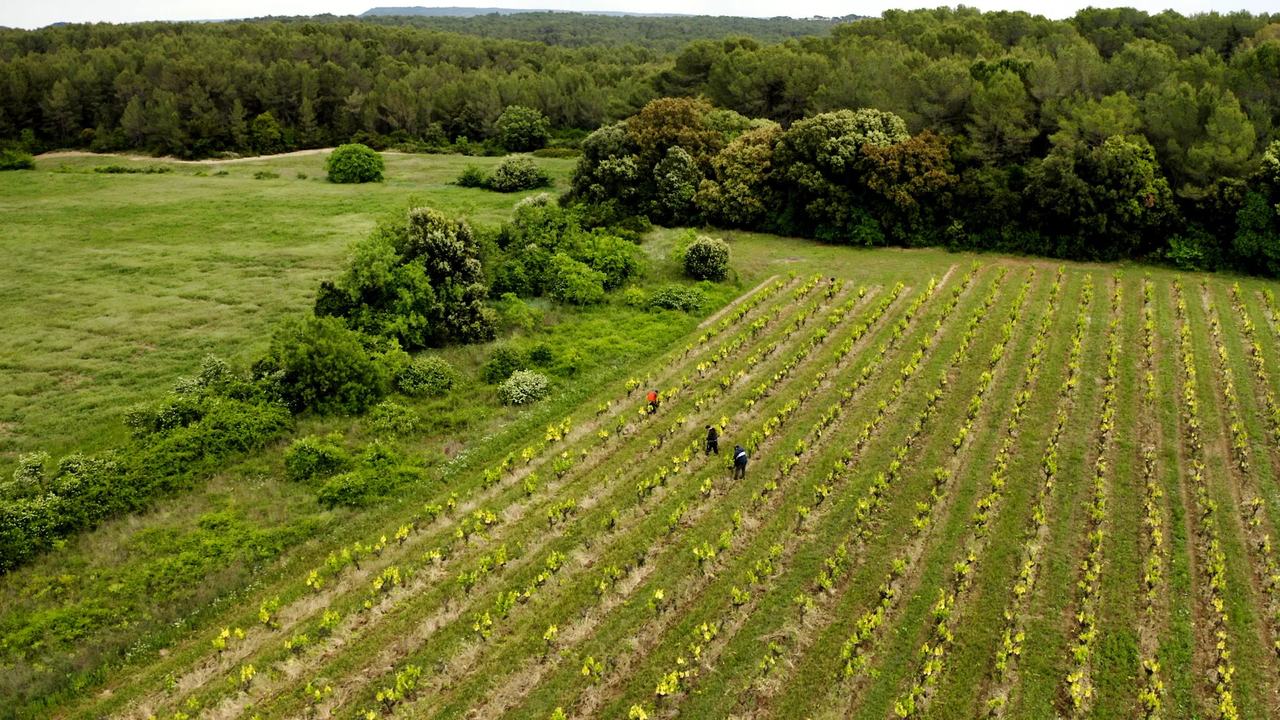
Langlade is a village between Nîmes and the first slopes of the Cévennes, and it has a past it is proud of: vines given to the church in 936, a seventeenth-century reputation (the village historian claims) as the third cru of France after the great Burgundies, a barrel of Langlade worth a barrel of Châteauneuf in 1650, arms of three vine-stakes from Louis XIV, 625 hectares and 165 growers in 1870 before phylloxera took it all. Today there are seven domaines, six of them organic, and Roc d’Anglade was the third to be founded.
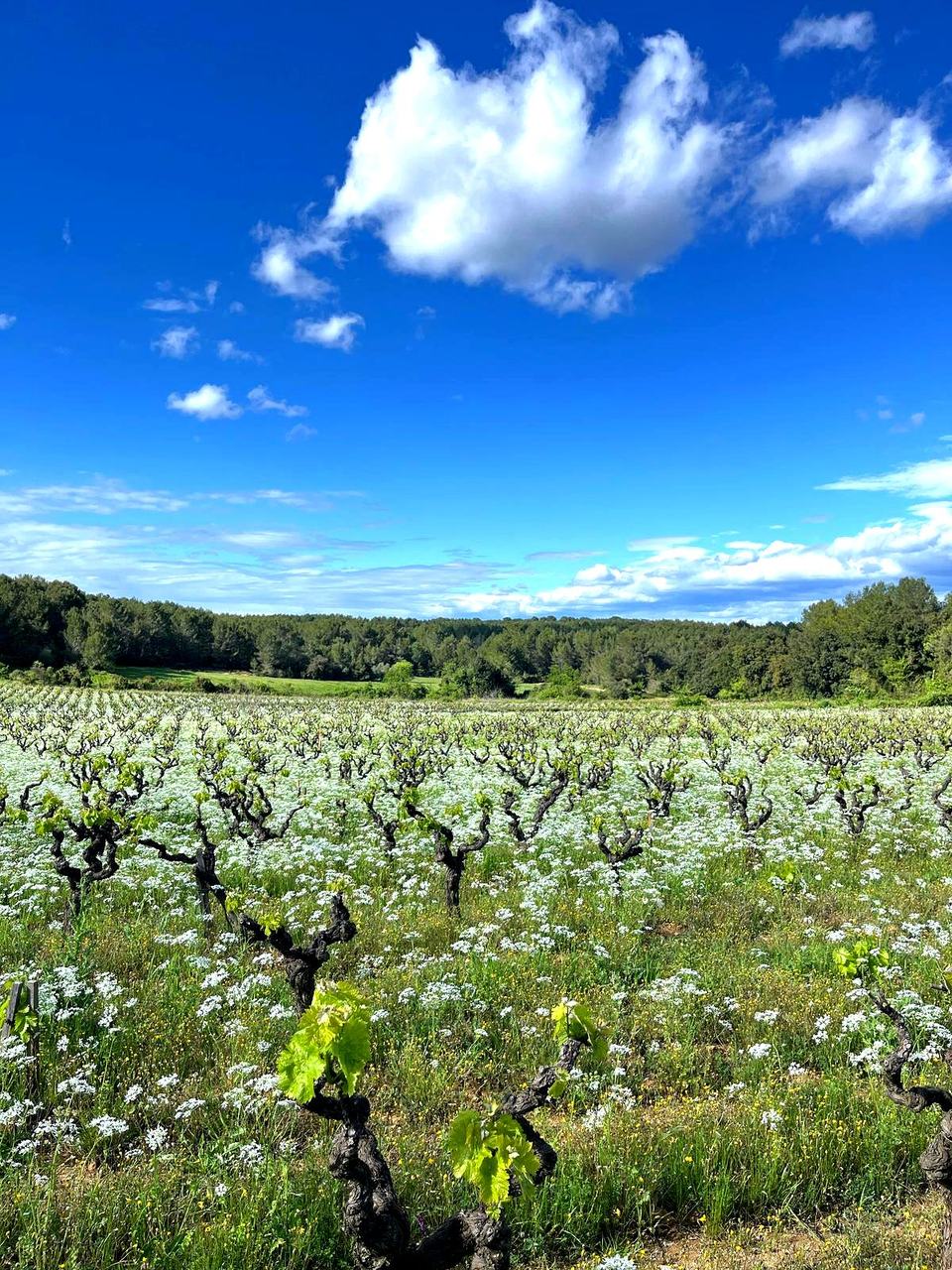
Twelve hectares in a mosaic of parcels between five and seventy-two years old, set among holm oak, Aleppo pine, kermes oak and garrigue of rosemary, cistus, thyme and wild lavender, dry-stone walls and feral olives. The bedrock is limestone, fissured, and the roots go down through it; what the soil gives above is clay, sand, silt and marl, with the slopes facing north and east, which in the Gard is how you keep freshness. The soul of the domaine, Rémy says, is the oldest Carignan, a massal selection from the 1950s; in 2016 it came in at 11.9 degrees with the acidity of a Loire red. The Chenin was planted in the mid-1980s by Henri Arnal, the pioneer of modern Langlade, and Rémy took it on; it leads the white at three-quarters, with Chardonnay and the white and grey Grenaches behind it. Appellation is beside the point: everything is Vin de Pays du Gard, by choice, because the rules of the AOC would not let him lead with Carignan and Chenin.
Nous croyons que le vin se fait à la vigne, bien avant de se faire à la cave.
Roc d’Anglade
04 · InfusionPicked early, by taste; whole bunches; ten days; old foudres; a point of sulphur and no more.
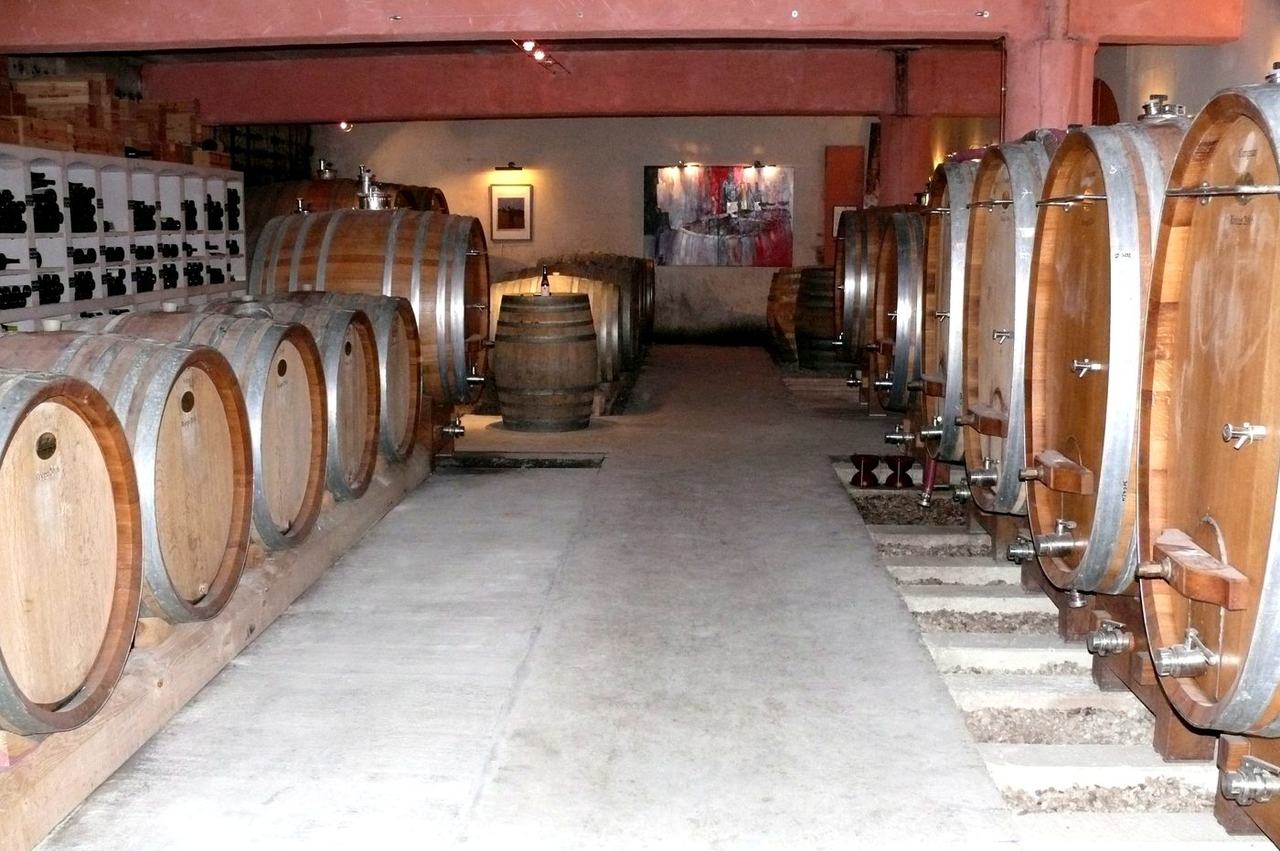
Certified organic, hand-picked early and by taste (“we love early harvests, the exact moment when the fruit is crisp and not yet overripe”), with the sorting done at the vine, each bunch handled, the family says, the way you pick table grapes. The reds go in whole, stems and all, into open vats with their own yeasts; nothing added, nothing extracted, which Rémy calls infusion; ten to fifteen days, then by gravity into foudres of twelve and thirty-one hectolitres and demi-muids, all old, “in which previous vintages came to finish their education.” Eighteen months, a year of it on fine lees, a trace of sulphur at the start of the élevage and none after, a very light filtration. The whites are pressed whole, settled a day, fermented in demi-muids and foudre, a year on lees in wood and six months in steel.
Then there is the Reserva Especial, which is the thing people ask about. It is a perpetual blend, Spanish in name and idea, begun in 2008 as a tribute to Rémy’s grandfather Laureano, who worked the vines in Spain: every year a share of the best red is set aside and blended with what was set aside before, raised on in foudre, and bottled with a number rather than a vintage. N°8 is a little of 2014 and 2015, a fifth 2016, mostly 2018; N°11, called Le fil du temps, reaches back to 2015 and is mostly 2020 and 2021: “an immense wine, a wine of history, the witness of the domaine’s evolution.” The RVF gave it 95 and a coup de cœur.
Laissez faire, laissez être.
Rémy Pédréno
05 · What they say“Des vignerons à la fois exigeants et idéalistes.”
La Revue du Vin de France gives the domaine two stars in its Guide des Meilleurs Vins de France (the rank it reserves for “very great domaines, often with fabulous terroirs, that are unmissable”), and in the 2026 edition 95 for the Reserva Especial N°13 and 94 for the 2023 red. On the 2023 white, 94: “a very great success of the region in white… the magic of Languedoc whites that know how to keep freshness and offer tension.” Bettane & Desseauve: “Rémy and Martine Pédréno are vignerons at once demanding and idealistic.” Pierre Citerne, after a vertical of every vintage: “Roc d’Anglade shows more stylistic similarity with Châteauneuf-du-Pape, though the pre-eminence of Carignan in the latest vintages gives it an original personality. The whites, rich but fresh, based on Chenin, have taken on a very interesting dimension.” Rosemary George MW records Rémy’s own line on his grape: Carignan is “the Pinot Noir of the Languedoc.”
Très grande réussite de la région en blanc pour Roc d’Anglade.
La Revue du Vin de France, on the 2023 Blanc
In the vineyard
& cellar.
- Holding
- Twelve hectares at Langlade, Gard, in parcels of 5 to 72 years among garrigue and holm oak; fissured limestone bedrock under clay, sand, silt and marl; north and east slopes; all Vin de Pays du Gard by choice
- Since
- Rémy Pédréno: Clos de la Belle from 1996; Roc d’Anglade founded 1999 on four hectares bought by René Rostaing; own cellar 2001; Martine Guillem Pédréno co-manager since 2001
- Grapes
- Reds led by Carignan (oldest a 1950s massal selection) with Mourvèdre, Grenache, Syrah, Cinsault; whites led by Chenin with Chardonnay, Grenache blanc and gris, Carignan blanc
- Farming
- Certified organic; ~30 hl/ha; hand harvest, early, sorted at the vine
- Reds
- Whole bunches with stems; indigenous yeasts; no extraction, 10–15 days; gravity to old 12- and 31-hl foudres and demi-muids; 18 months, 12 on fine lees; a trace of sulphur at the start, none after; light filtration
- Whites
- Whole-bunch press; 24 h settling; fermented in demi-muid and foudre; 12 months on lees in wood, 6 in steel
- Reserva Especial
- A perpetual multi-vintage blend begun 2008, numbered by release; N°11 95/100 and coup de cœur, RVF