Memory, and the moment.
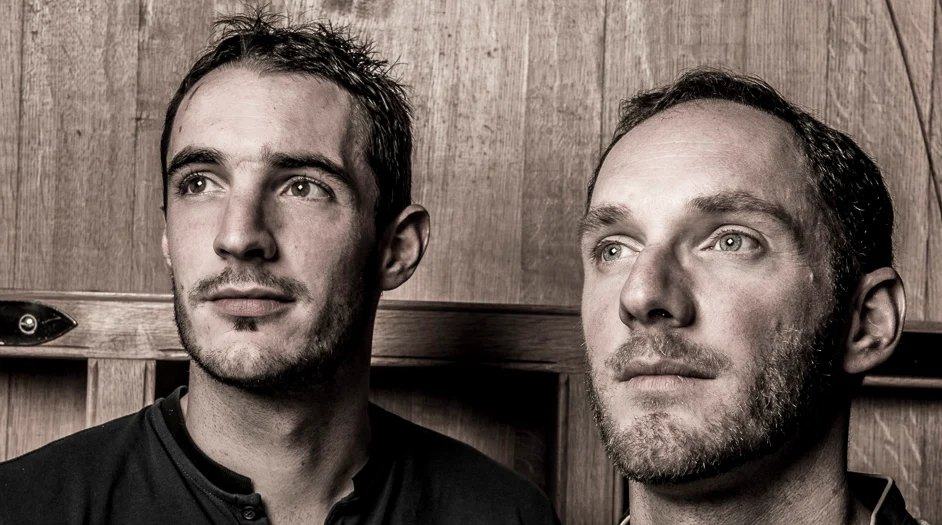
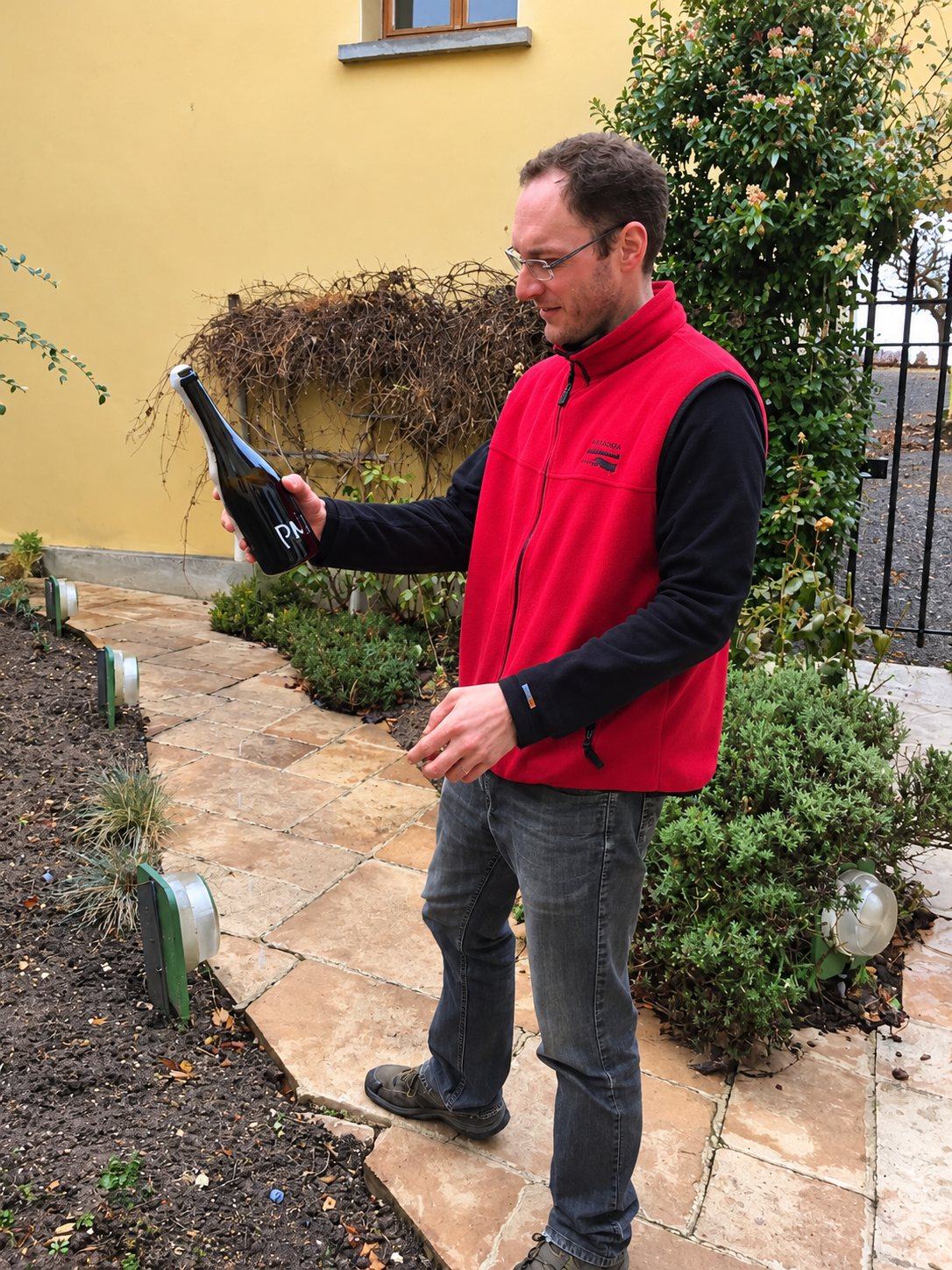
François and Pierre took over from their father Raoul and did the unglamorous thing: they broke ten hectares into small pieces and started picking, pressing and vinifying every one of them apart. It’s more work, more barrels, more chances to be wrong. Their Mémoire cuvée is a solera the family began years ago, so a glass of it holds something like thirty vintages at once; the eighties are still in there somewhere. The 4 Éléments range goes the opposite way: one parcel, one year, barrel-fermented, no malo, nowhere to hide. Both are the same idea from opposite ends. Memory, and the moment.
02 · The north faceA reluctant founder, and the slope nobody wanted.
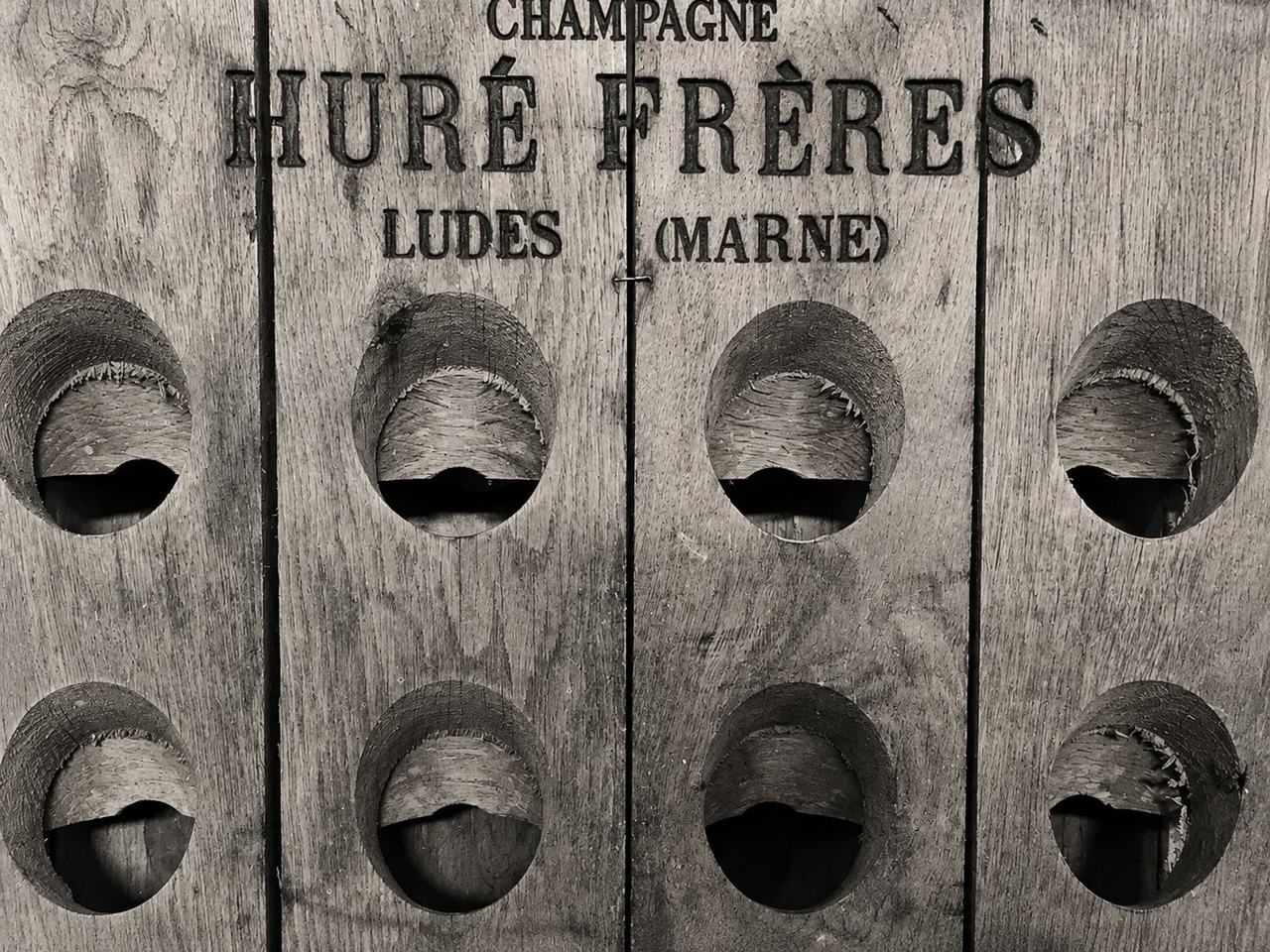
Georges Huré did not especially want to make champagne. He was born in 1911, and by 1960 he had a wife, Jeanne, who did, and so (Paul Wasserman’s word is “reluctantly”) he founded the estate to make her happy. He could not afford the south-facing grands crus, Bouzy and Ambonnay, where everyone wanted to be. What he could afford was Ludes, on the cold northern face of the Montagne de Reims, and that is what he bought. He and his sons dug the cellar into the chalk by hand. The sign on the gate still reads vignobles facent au nord: vineyards facing north. It was not a boast at the time.
In 1971 Georges handed over to his three sons, Jean-Marie, Marc and Raoul, and the house became Huré Frères. It was Raoul, starting as a grower-producer with two hectares, who stuck with it; the three brothers ran it together until 2008. François puts the geography in a sentence: “Bouzy is one of the first places to ripen in Champagne, and Ludes is one of the last.” Forty years ago that was a handicap. In a warming region it is the whole argument.
Ludes is a directly north-facing cold climate — not so sexy forty years ago as it is today!
François Huré
03 · New ZealandThe long way home to Ludes.
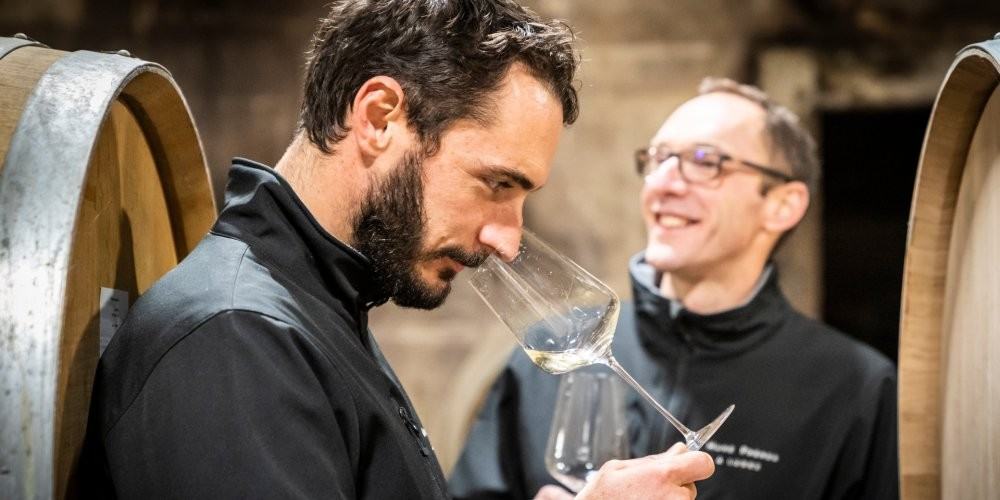
François Huré took the scenic route. Oenology at Dijon, then the Hospices de Beaune, Domaine de Montille, Chapoutier in the Rhône, Jean-Pierre Fleury in the Aube, and then the other side of the world. In Australia James Halliday introduced him to New Zealand wine, and he went: Pegasus Bay in Canterbury, then Gypsy Dancer in Central Otago, whose winemaker he married and brought home to Ludes. He took the house over in 2008. Pierre, the younger brother, trained in Beaune, worked in France and New Zealand too, and came in beside him in 2013; Pierre runs the vineyards, François the cellar.
Jancis Robinson found them in 2010, two years in, and scored the Inattendue blanc de blancs 17.5 with the dry line, “it’s always a pleasure to discover a new champagne producer and this one seems worthy of attention.” She also noted something the brothers still say: the wines need ten or fifteen minutes in the glass to open. Pour them early.
A detail of status, since the trade asks: Huré is technically a négociant-manipulant, because the vines belong to three members of the family rather than one, and a little Chardonnay is bought from Rilly and Villers-Marmery. About eighty per cent of the fruit is their own. Nothing about the way it is farmed or made changes.
It’s always a pleasure to discover a new champagne producer and this one seems worthy of attention.
Jancis Robinson, 2010
04 · Forty-five parcelsTen hectares, cut small.
Ten hectares in forty-five parcels (four of Pinot Noir, four of Meunier, two of Chardonnay, averaging thirty-five years) spread across Ludes and Villedommange on the Montagne, Brouillet and Serzy-et-Prin down the cooler Ardre valley, and Vavray-le-Grand out in the Vitryat. About ninety thousand bottles, in eight or nine cuvées. Every parcel is picked, pressed and raised on its own, which is the unglamorous thing the essay above describes, and the reason there are more barrels in this cellar than the volume would seem to justify.
The parcels have names and planting dates. La Grosse Pierre, Meunier on clay over chalk, planted 1963. La Perthe, Pinot Noir on sandy clay, east-facing, 1983. Les Blanches Voies in Rilly, eight-tenths of a hectare of Chardonnay on pure chalk facing south, 1964. Les Sentiers, Chardonnay in Ludes. Les Chemins d’Amis, old-vine Pinot Noir. Pierre’s description of the ground under all of them, after a wet winter: “a giant sponge.”
Herbicides stopped in 2006, biodynamic trials began in 2009, the estate is HVE-certified and in organic conversion. In the cellar: stainless steel, forty-five-hectolitre foudres, barriques and six-hundred-litre demi-muids; native yeasts; no stirring; the barrel-fermented wines never go through malolactic, and the share of malo across the house has been falling for a decade. Every year, every cuvée, the brothers run dosage trials in half-gram steps before they decide. The Invitation was six grams a decade ago. It is four now.
Memory, and the moment.
A reserve that never starts again.
Mémoire is a perpetual reserve begun in 1982. That was the same year, as it happens, that Jacques Vazart started his in Chouilly, which makes the two of them among the oldest in Champagne. It lives in a foudre. Each year a quarter to a third is drawn off for bottling and the cask is topped up with the new reserves, so the eighties are still in there, diluted but present. The bottled wine is roughly half Pinot Noir, forty per cent Meunier, a tenth Chardonnay, three years on the lees and around two grams of sugar.
François on how it began: after a few years in oak, the reserve “tasted impressive and complex” on its own, so they bottled it. Peter Liem: “a savory complexity imparted by the older wines without being heavy or overly mature.” William Kelley, 92+: “the solera’s age imparts an attractive patina but doesn’t overwhelm the wine.” The same reserve goes, in smaller measure, into the Invitation, so the house wine carries the memory too.
One parcel. One grape. One harvest. One vision.
Vineyard, variety, vintage, vision: the four V’s. The series began with a Chardonnay from 2010 in 350-litre casks and moved to six-hundred-litre demi-muids in 2013: fermented and raised in wood for about eighteen months, malolactic blocked, four years on the lees under cork, three grams of dosage. Les Blanches Voies for Chardonnay; La Perthe and Les Champs Pourceaux for Pinot Noir; La Grosse Pierre for Meunier. The Meunier 2016 was 1,821 bottles.
Liem again, on the Pinot Noir: “driven much more by its expression of place than by its grape variety,” which is the whole idea. Gault&Millau gave the Meunier and the Chardonnay 94 each. Where Mémoire accumulates, this series isolates.
06 · What they say“Tension, précision, verticalité et texture.”
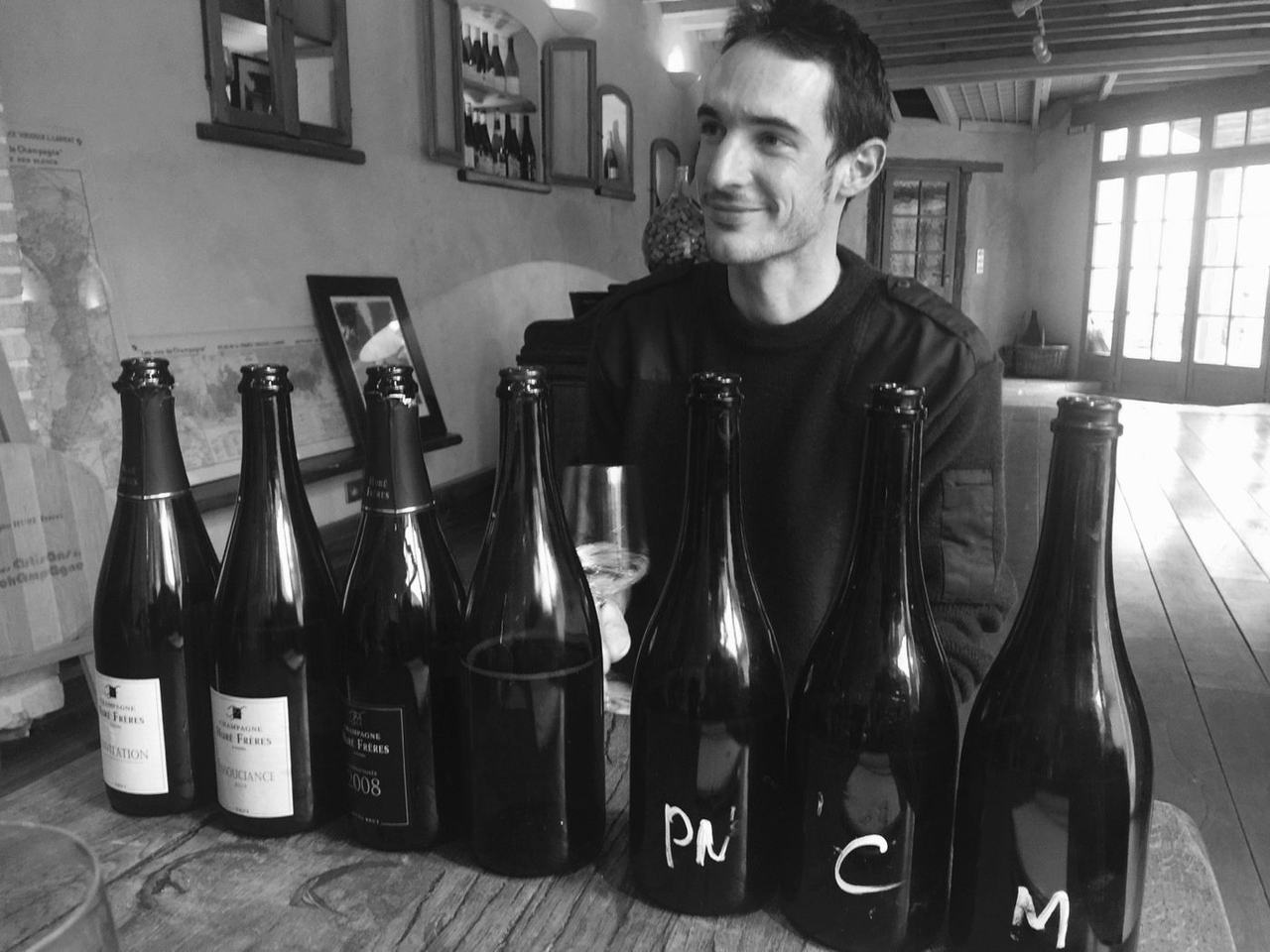
Peter Liem’s summary of the house, the one line every importer borrows: “Huré’s champagnes combine rich texture with racy acidity.” Gault&Millau, more recently: tension, précision, verticalité et texture sont les maîtres mots du domaine. Guide Hachette, giving the Invitation a star in 2011, reached for an image instead: sortant de l’ombre, l’hôtesse est belle, avec sa robe dorée et son collier de fines perles: stepping out of the shadow, the hostess is beautiful, in her golden dress and her necklace of fine pearls. Which is a critic’s way of saying that the north face, once a handicap, is now the point.
François, asked by Liem what he would have been if not a winemaker: a geologist. What he drinks when it is not champagne: Chartreuse VEP. What he pairs Mémoire with: truffle risotto. The biggest mistake he admits to: “picking too late in the vineyard planted on clay.” On the vintages, he will tell you 2019 is the best of the century so far.
Huré’s champagnes combine rich texture with racy acidity.
Peter Liem
In the vineyard
& cellar.
- Family
- Founded 1960 by Georges and Jeanne Huré; Huré Frères from 1971 under Jean-Marie, Marc and Raoul; François since 2008 and Pierre since 2013; François in the cellar, Pierre in the vines
- Holding
- Ten hectares in forty-five parcels: four of Pinot Noir, four of Meunier, two of Chardonnay, averaging 35 years. Ludes and Villedommange (premier cru), Brouillet and Serzy-et-Prin in the Ardre valley, Vavray-le-Grand in the Vitryat; a little Chardonnay bought in Rilly and Villers-Marmery
- Parcels
- La Grosse Pierre (Meunier, 1963, clay over chalk); La Perthe (Pinot Noir, 1983, east-facing sandy clay); Les Blanches Voies, Rilly (Chardonnay, 1964, pure chalk, south-facing); Les Sentiers (Chardonnay); Les Chemins d’Amis (old-vine Pinot Noir)
- Farming
- No herbicides since 2006; biodynamic trials from 2009; HVE certified, in organic conversion; Cordon de Royat
- Cellar
- Parcel by parcel; stainless steel, 45-hl foudres, barriques and 600-litre demi-muids; native yeasts, no bâtonnage; barrel-fermented wines never go through malolactic; no enzymes, no fining, the lightest filtration
- Reserve
- Mémoire: perpetual reserve begun 1982, held in foudre, a quarter to a third drawn each year; also feeds the Invitation
- Dosage
- Trialled each year in half-gram steps; 2–4 g/L across the range