
A place Burgundy is dreaming about.
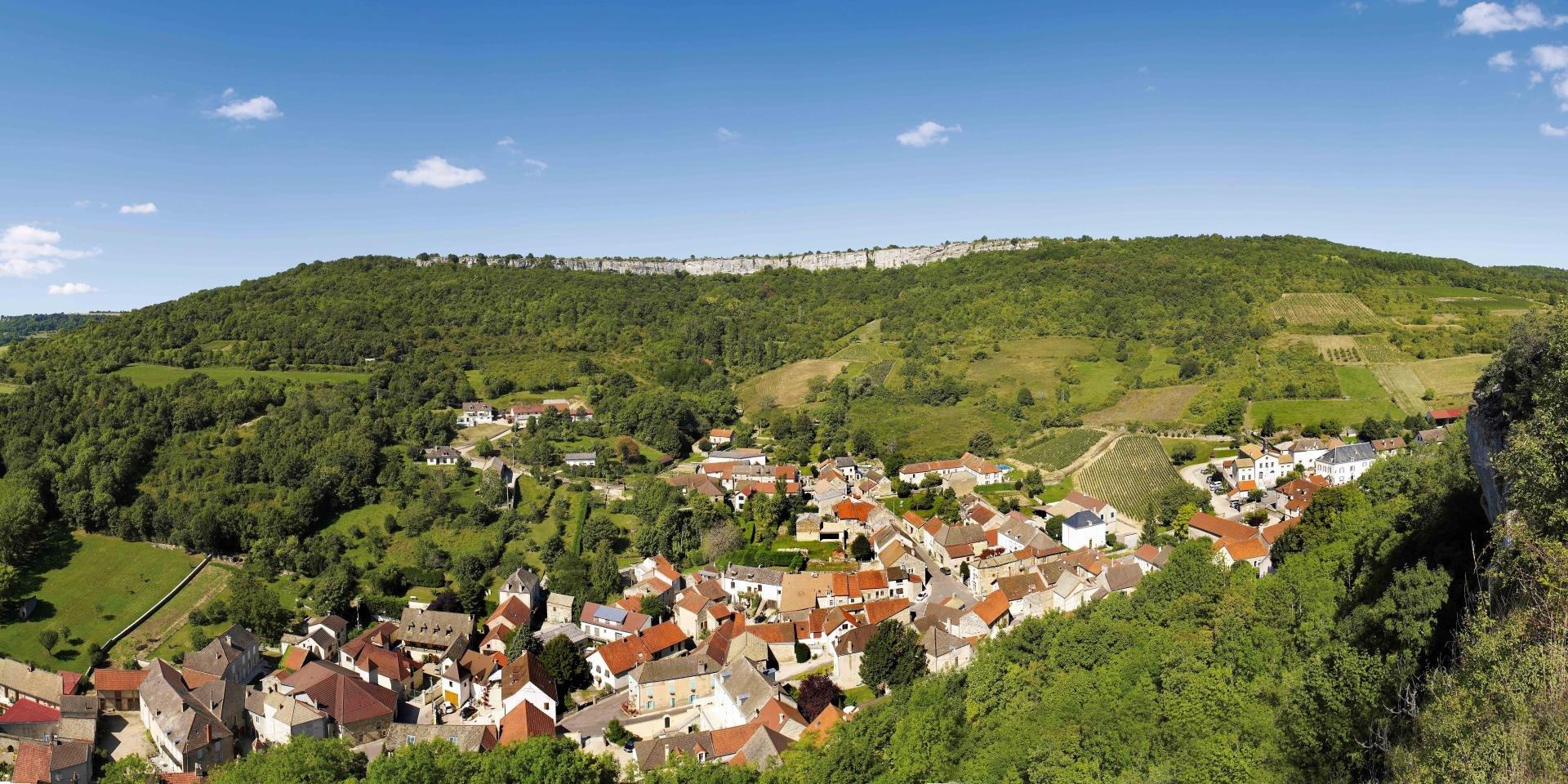
Saint-Romain sits up in the cold air behind the Côte, in a natural amphitheatre that looks less like Burgundy than like a place Burgundy is dreaming about. Bernard Germain started here in 1955, selling most of it in bulk; his grandson Arnaud arrived in 2009 and built a serious winery at the top of the village, in use since 2020. Fourteen hectares now reaching down into Auxey, Meursault, Beaune and Pommard. The whites have the cut that altitude gives you and the reds have the freshness, and neither has yet been discovered by the people who will eventually ruin the price.
02 · Three generationsFrom Nantoux in 1955 to a cuverie of concrete eggs.
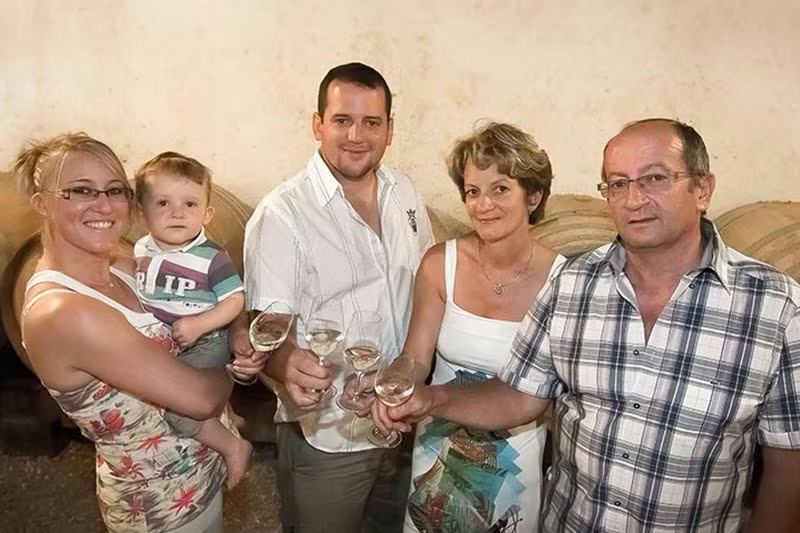
Bernard Germain came down from Nantoux in the Hautes-Côtes and settled in Saint-Romain in 1955 with his wife Jacqueline, farming only Saint-Romain at first and buying his way, parcel by parcel, into Pommard, Beaune and the Hautes-Côtes until he had six hectares. A silver medal at the Concours Général in Paris in 1968 was the first notice; most of the wine still left in bulk. His son Patrick joined in 1976 and the bottling began; in 1983 the family opened a tasting caveau and started selling to restaurants, and Patrick’s wife Marie-Thérèse took the wines on the road, to Belgium especially, salon by salon. The domaine still carries the name they made it under, Germain Père et Fils.
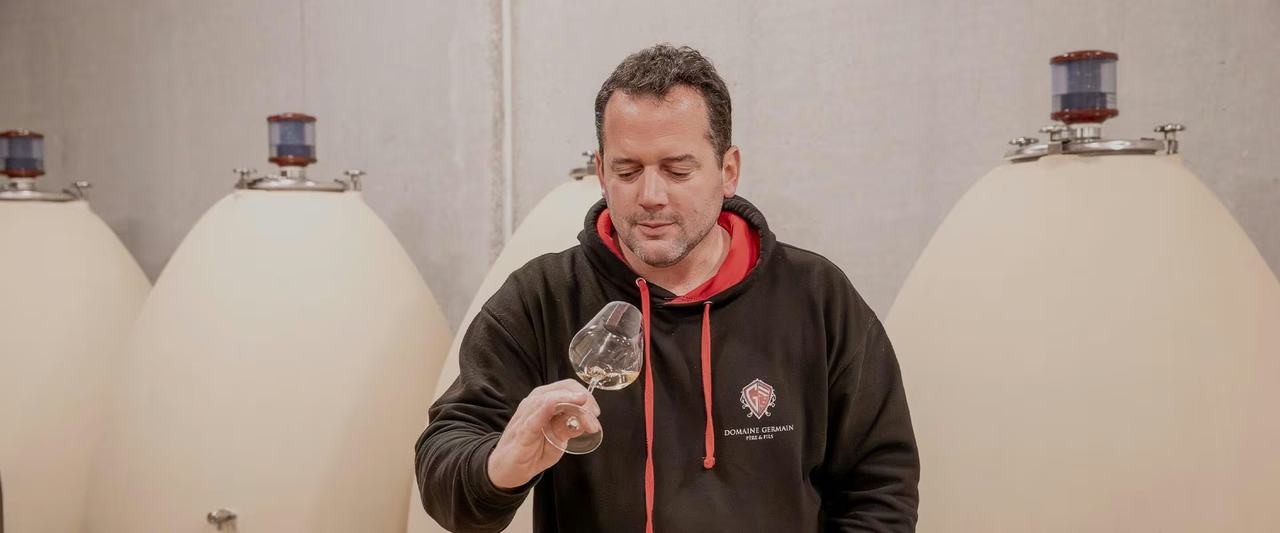
Arnaud, born 1986, came in in 2009, formally installed in 2010, and did two things at once: signed the Vignerons Indépendants charter, and started a small négoce under his own name to reach the villages the family did not own (Meursault, Puligny, Chambolle). He became manager of the domaine in 2017, took it to HVE certification in 2018, and in 2020 moved the whole operation into the new single-level cuverie at the exit of the village, where the whites are now raised largely in egg-shaped concrete tanks. In 2025 the family added parcels in Meursault and, for the first time, a premier cru of Volnay, Clos des Chênes, whose first vintage will be 2026. One of the Hautes-Côtes cuvées is called L’Empreinte, the imprint, for Bernard: “a tribute to the one who left his mark on this family vine. The earth remembers.”
La terre se souvient.
Domaine Germain, on the cuvée L’Empreinte
03 · The cirqueThree hundred to four hundred and twenty metres, under the old château.
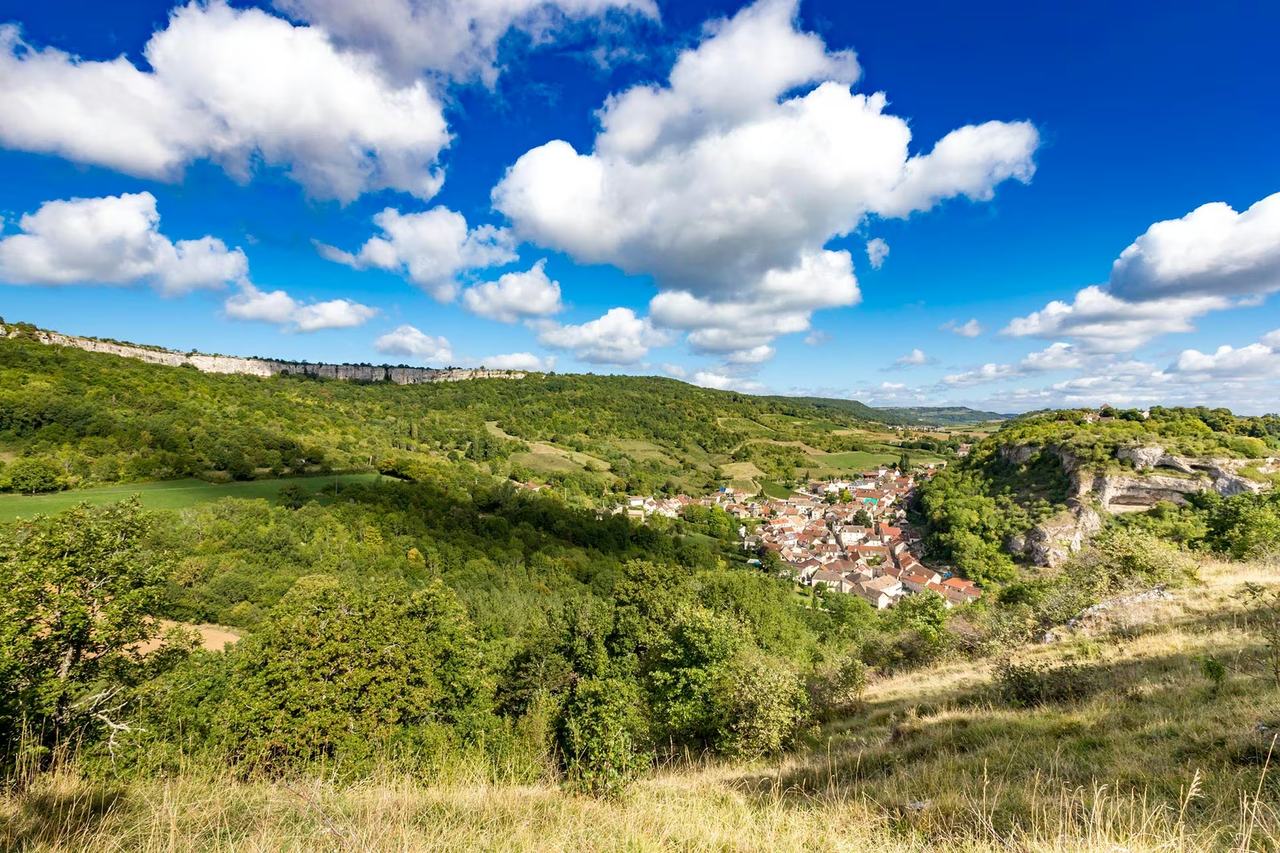
The estate’s own description of the village cannot be bettered: “In a natural cirque cut into the Jurassic limestone cliff, the village is staged between 300 and 420 metres of altitude — an unusual height for the Côte d’Or.” The subsoil is marl shot through with clay beds, and the domaine reads it in three bands: deep sandy ground at the foot of the slope for structure and complexity; thin lithosols at mid-slope for direct minerality; marl and clay at four hundred metres for freshness and tension. “Sometimes a few metres separate two parcels whose wines have nothing in common.” There are no premiers crus in Saint-Romain. There is Sous le Château, the largest climat (a fifth of the appellation), on the rocky promontory under the ruins of the old castle, visible from everywhere, where the family has a little over a hectare of south-facing Pinot and thirty-eight ares of Chardonnay at four hundred metres, the highest vines they own. Le Jarron is the opposite: the lowest and steepest, seventy-year-old vines on fine white sand, “the richest terroir in Saint-Romain.” La Croix Neuve is the valley floor on shallow limestone that holds no water, hence the minerality. The village white is a blend of forty-year vines across nearly six hectares, and there is a second red, La Périère, for earlier drinking.
Below the hill: Pommard from Les Vignots and En Bœuf, and a hectare of Pommard La Chanière held since 2018; Beaune blanc from the Montagne Saint-Désiré; two Beaune premiers crus on the Pommard side, Les Aigrots, seventy-year vines in the family since 1999, and Les Montrevenots at the Pommard line; and the Hautes-Côtes at Nantoux where the family began.
04 · Eggs for the whites“Respect the soils, the plant, and time.”
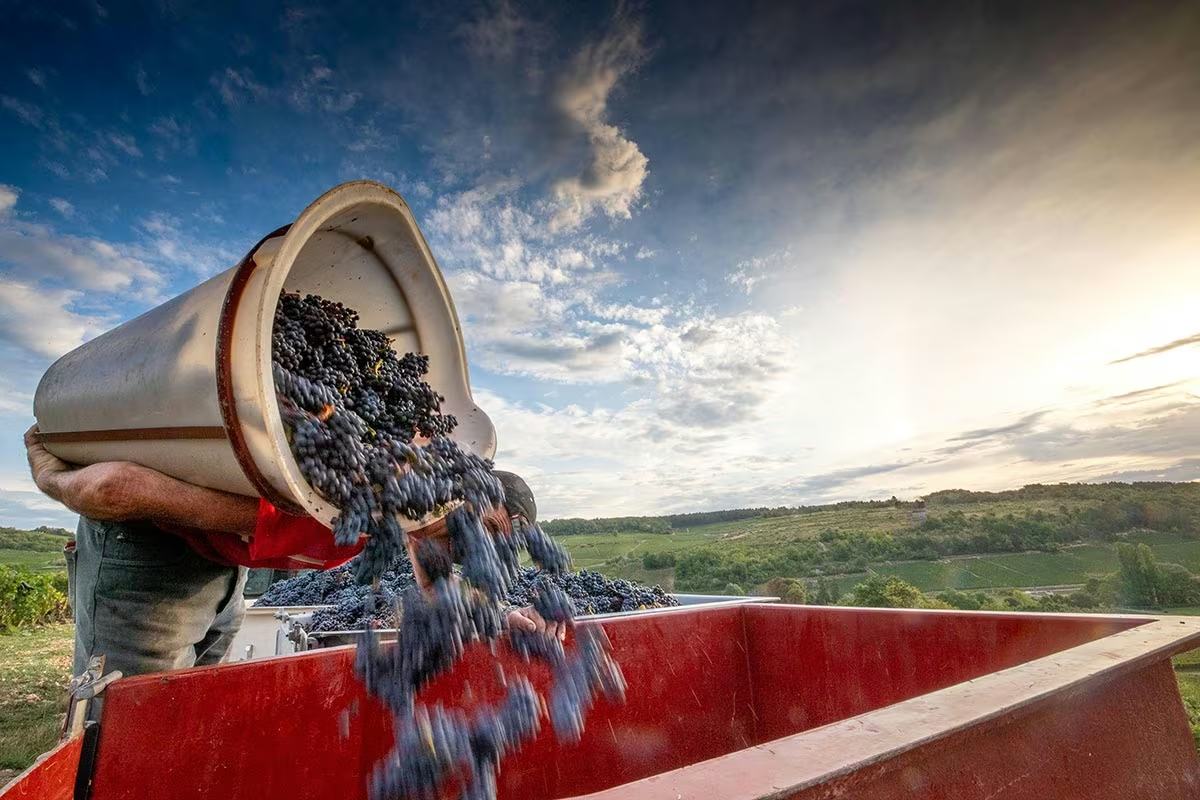
Vignerons Indépendants since 2010, HVE level 3 since 2018: the ploughing is done late “so as not to wake the vine too early,” the passes kept few to spare the soil compaction, new plantings grafted from the domaine’s own old vines, the trellis raised for more leaf and more shade in the hot years. Hand harvest, parcel by parcel, each on its own day. The reds are destemmed and given a long slow fermentation on native yeasts (about three weeks), then seventeen or eighteen months, mostly in Burgundian oak with “a measured proportion of new wood,” a fifth on the Saint-Romains and Pommards, a third on the Montrevenots. The whites are pressed whole-bunch and raised “mainly in egg-shaped concrete vats, to preserve the freshness, the energy and the purity of the fruit,” about half egg and half 500-litre demi-muid, a year and then some months in steel; the Aligoté entirely in egg on its lees. The whole thing is governed by one sentence on the website: “Respect the soils, the plant and time. Every choice is guided by observing the parcels and by the will to preserve the identity of the terroirs.”
Respecter les sols, le végétal et le temps.
Domaine Germain, Saint-Romain
05 · What they say“The only coup de cœur in Saint-Romain.”
Charles Curtis MW in Decanter, 92 on the 2022 Sous le Château rouge: “ripe plum and cherry aromas and hints of violets and liquorice. The texture was surprisingly full-bodied, with good freshness and a tannic grip that led to a lingering finish.” The Guide Hachette has selected forty-one of the family’s wines since 2001 and gave the 2015 Sous le Château the appellation’s only coup de cœur: “for once putting Pinot Noir forward… a palate of great harmony, centred on ripe fruit and carried by fine, perfectly integrated tannins.” On the 2018: “character and potential.” On the 2019: “from its rocky promontory under the ruins of the old château, this climat is visible from afar.” On the 2023 white from the same slope: “flowers and mineral notes of gunflint… a fresh, mouth-watering finale.” On the village white: “citrus and wet stone.”
What the essay above says about price is still true, and this page will do nothing to help.
Une fois n’est pas coutume, le pinot noir en avant.
Guide Hachette, coup de cœur, Sous le Château 2015
In the vineyard
& cellar.
- Holding
- About fourteen hectares in Saint-Romain, Pommard, Beaune and the Hautes-Côtes de Beaune, with Meursault and Volnay 1er Cru Clos des Chênes added in 2025; Maison Arnaud Germain for Meursault, Puligny and Chambolle from bought grapes
- Since
- Bernard and Jacqueline Germain, 1955; Patrick from 1976, bottling from then; Marie-Thérèse from 1983; Arnaud from 2009, manager from 2017; new cuverie 2020
- Farming
- Vignerons Indépendants charter 2010; HVE level 3 from 2018; late ploughing, few passes; massal replanting from the domaine’s old vines; raised trellis; hand harvest by parcel
- Reds
- Destemmed; indigenous yeasts; about three weeks’ maceration; 17–18 months, a fifth new oak (a third on Montrevenots), typically a year in barrel and six months in tank
- Whites
- Whole-bunch pressing; half concrete egg, half 500-litre demi-muid (20–40% new); a year, then three to six months in steel; Aligoté all in egg on lees