
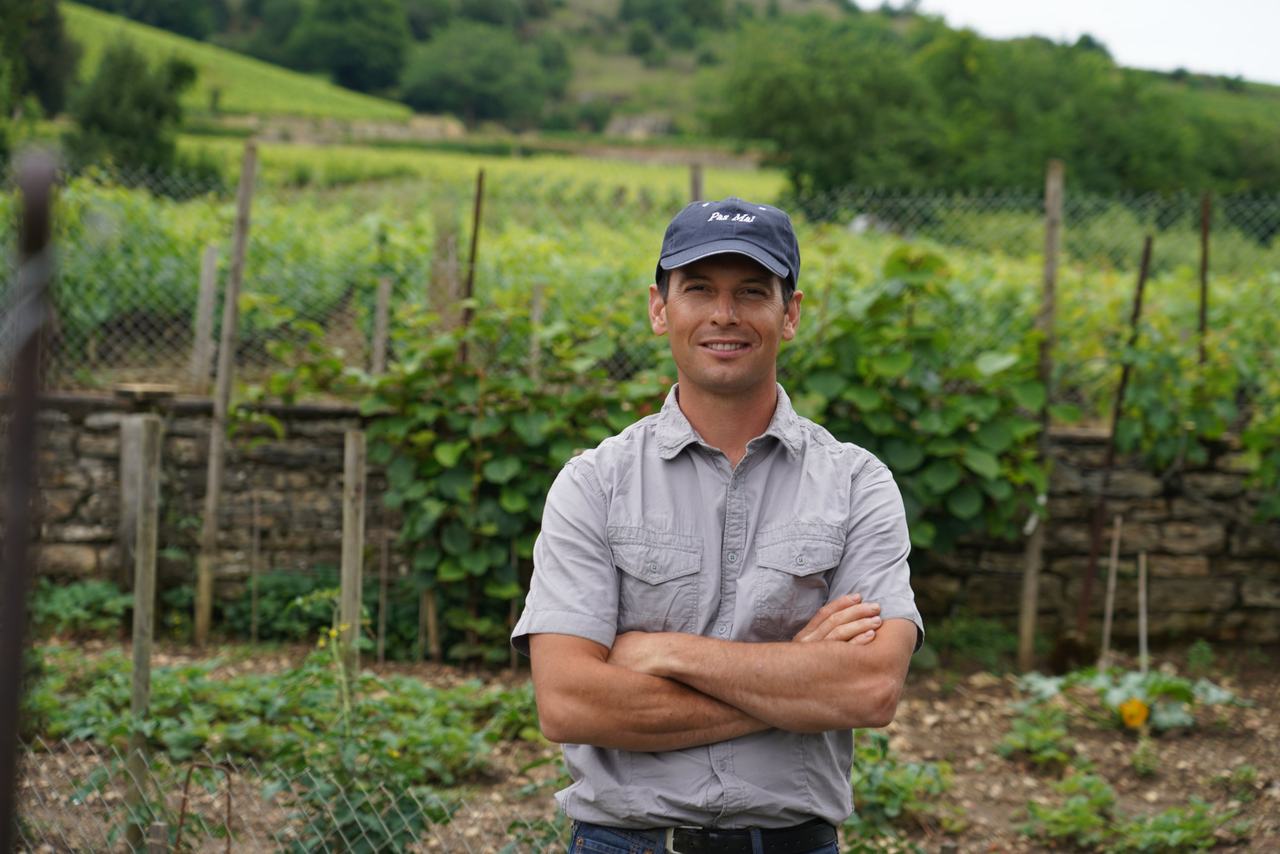
One of the last honest prices on the Côte.
Read the CV and prepare to be irritated: Beaucastel, Hubert Lamy, and then the Domaine de la Romanée-Conti. Any of those doors would have stayed open. In 2009 he went home to Santenay instead, to nine hectares his grandparents Simone and Jean had built from 1959, and started making the best wines the appellation has seen. No herbicides, no insecticides, organic in everything but the paperwork; he won't chase the certificate. Hand-picked into small crates, reds fermented in concrete, whites in 300- and 350-litre barrels, everything aged in a sixteenth-century cellar. Santenay is the last village on the Côte and one of the last honest prices on it.
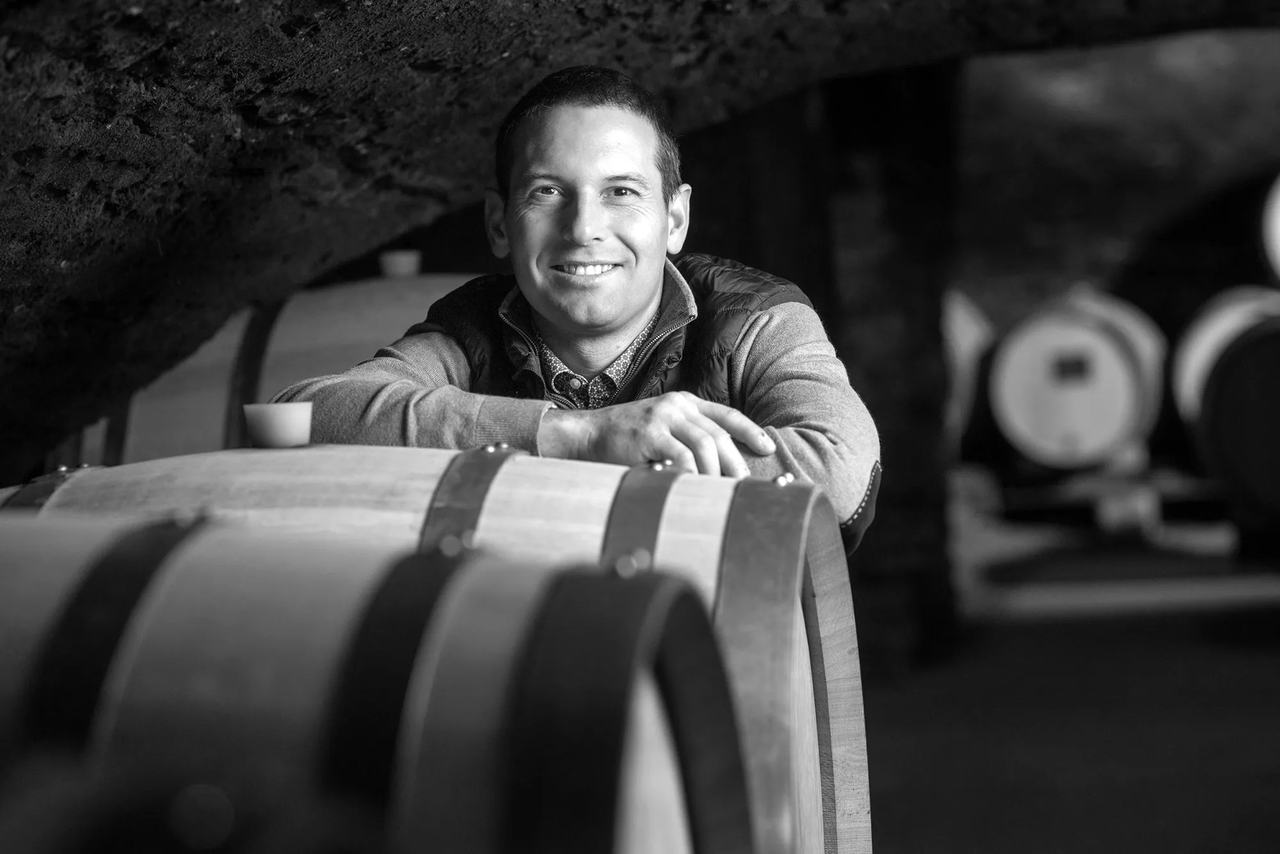
02 · A skipped generationHis grandfather stayed on until David could take the keys.
Jean Moreau’s people had a few vines in Santenay-le-Haut; it was Jean and his wife Simone who, in 1959, made a domaine of them, moving down the hill in the sixties into the old outbuildings of the Château Philippe le Hardi, on the rue de la Bussière, above a vaulted cellar the Guide Hachette dates to the fifteenth century and the family to the sixteenth. For fifty years the wine went out as Domaine de la Buissière, most of it to the négoce. The first vine the two of them planted together was Les Cornières, in 1972, and it is still the heart of the cuvée that carries Simone’s initial.
David’s father did not want the vines. “But since I was very passionate about it,” David says, “my grandfather stayed on until I could take over the domaine. When I arrived he was eighty years old.” The Hachette called it fait peu courant en Bourgogne: a domaine that skipped a generation. In between, David did his oenology at the University of Burgundy in Dijon and went to learn from people who would not have taken a Santenay boy on sentiment: François Perrin at Beaucastel, Olivier Lamy over the hill in Saint-Aubin, Aubert de Villaine at the Romanée-Conti, and Tim Finn at Neudorf in Nelson, New Zealand, where, he says, “I saw a very different way of making wine. It was a bit more scientific. Not as much feeling. In Burgundy you feel what you are doing.” He was working beside his grandfather from 2004 and took the domaine formally in August 2009, four or five hectares under his own name at first, making the rest to his grandfather’s rules until Jean retired at eighty-five and the whole nine hectares came to him in 2013. Simone kept working. “She never stops. I’m not even sure she sleeps.” She died in the autumn of 2021, at eighty-nine, the week Jasper Morris came to taste the Cuvée S.
My only aim is to explain each terroir, to get the best out of each plot.
David Moreau
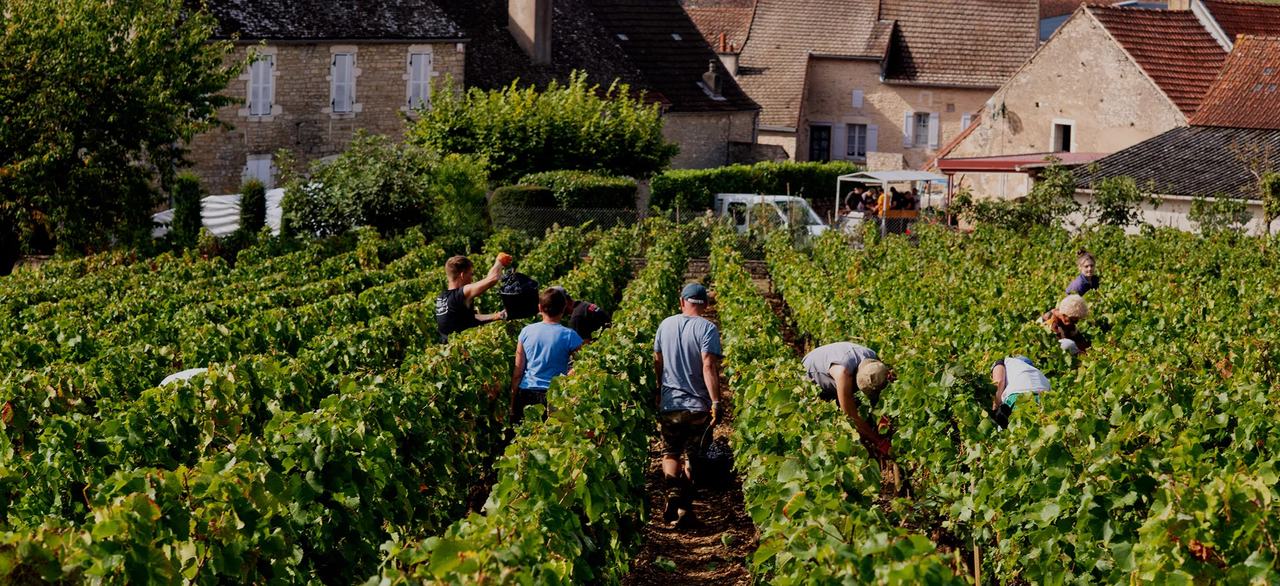
03 · Santenay, three waysThe Chassagne side, the hill above the mill, and the Maranges side.
Santenay is three villages pretending to be one. On the Chassagne side, the slope runs down toward the Dheune and the premiers crus sit on the same limestone as Morgeot: this is where the domaine’s emblem comes from, the Clos des Mouches (mouche being, in the local patois, a bee), nine-tenths of a hectare on a windy ridge between Passetemps and Beauregard, a few dozen centimetres of soil on the limestone slab, left unplanted from phylloxera until the family put vines back in 1964. The smallest premier cru in the village, and most of it is theirs. Pruned Guyot because the wind would snap a cordon, grassed between rows to keep the bunches small, and the most delicate wine in the cellar: violets and red fruit, which is why David uses the fewest stems here, “because the vineyard provides a naturally floral character.” Beside it, Les Hâtes, planted 1967 (old French for early: the sheltered ground that ripens first), kept at home only since 2016, and Les Prarons, the long fields on the river alluvium where the white grows against the Chassagne line.
Above the village, the hill rises past the old windmill: Beaurepaire, a slope of more than twenty per cent planted 1992, chalky and pure in red and a white David calls haute couture; and higher still, at three hundred and forty metres on white marl, Beauregard, from which on a clear day you can see the Jura and the Alps. Then the Maranges side, toward Cheilly, where the only premier cru is the Clos Rousseau: the family’s first premier cru, planted 1962, red with iron oxide and so thin that Bill Nanson measured ten centimetres of soil in places and David says there are corners you cannot plant at all. “It’s more masculine, more spicy and has a lot of power.” It is always the first picked. Over the line in Maranges itself, Aux Gryphées is three parcels of 1940s vines on Liassic limestone full of fossil oysters and sand washed down from the Morvan. It is the one holding the grandparents did not plant. And in Meursault, seventeen ares of Les Pellans under Charmes at the Puligny border, 1940 vines so old and virused they give tiny seedless berries. Everything is replanted from the domaine’s own massale selections, grafted by David himself; there is not a clone on the property.
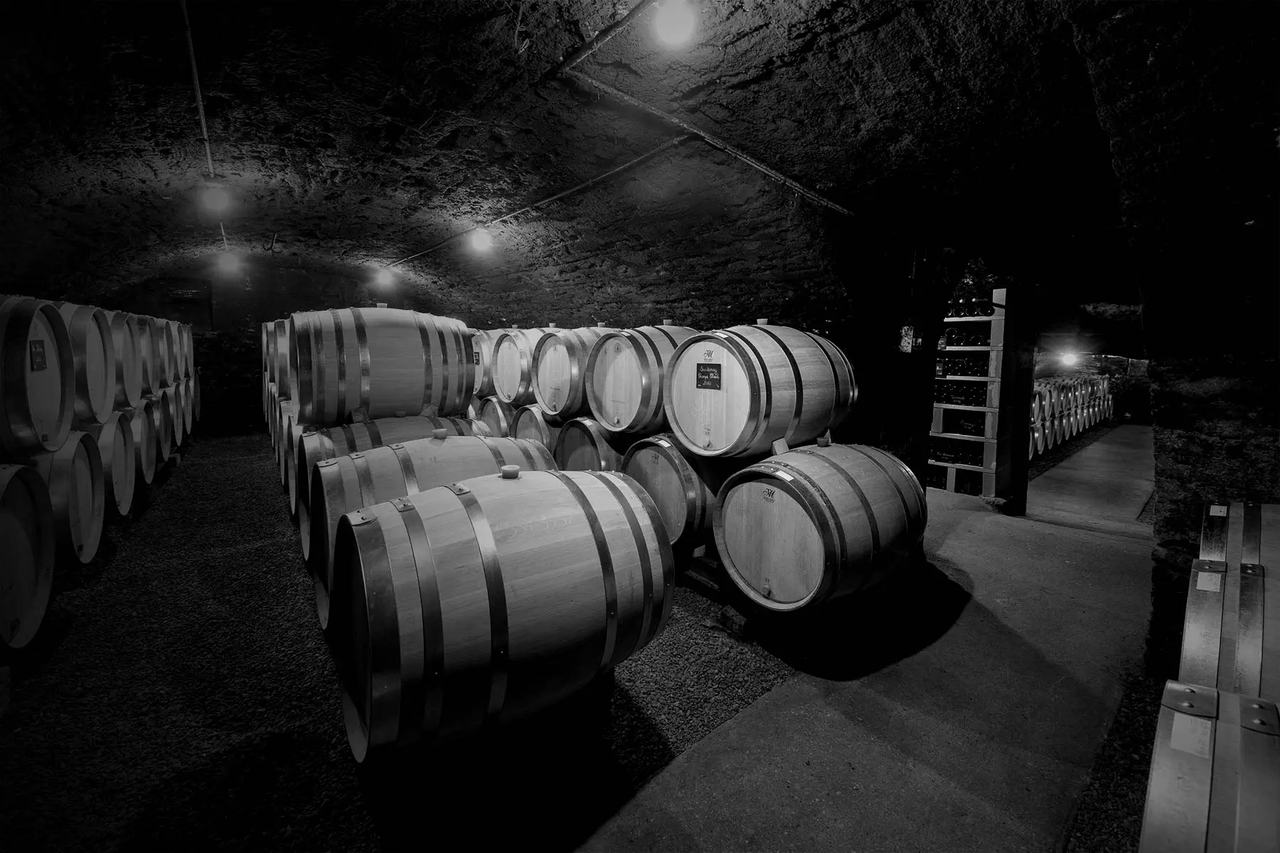
04 · Leave it to the vines“As little intervention as possible in the cellar. I leave that for the vines.”
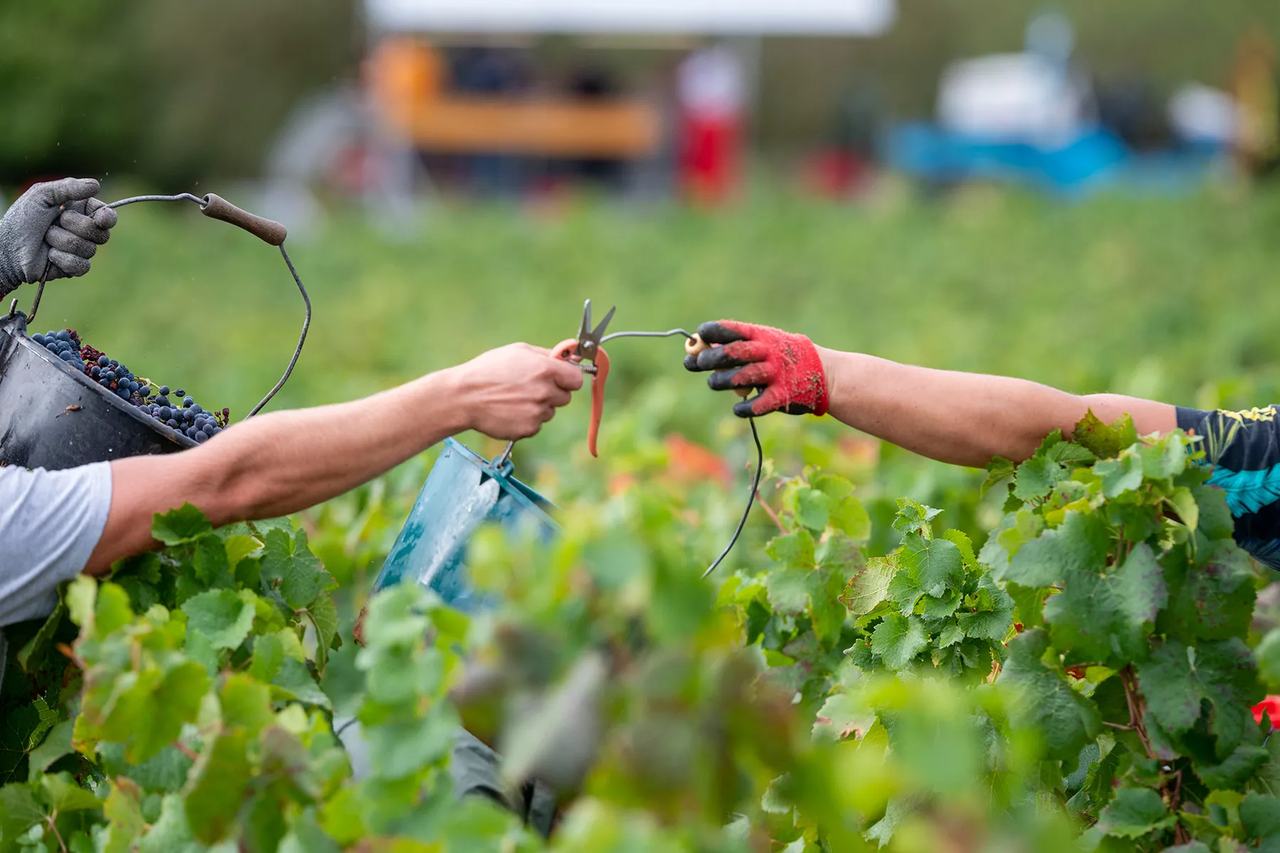
No weedkiller, no insecticide, light tractors on dry ground only, ploughed and grassed by turns, Cordon de Royat where the vine is too vigorous and Guyot-Poussard where it is not, pruned late against the frost. He follows the organic rulebook and declines the certificate; the Hachette noted, a little surprised, that he “admits to being more interventionist in the vines than in the cellar,” which is the right way round. Harvest by hand into ten-kilo crates, sorted on a table at the end of the row in daylight, where the best bunches are picked out to go in whole.
Then the cellar does very little. Five to twenty per cent whole cluster by cuvée and year (a tenth in the Clos des Mouches, a fifth in Cuvée S and Beauregard, more in the Maranges); into concrete by gravity, no pump, no sulphur, no added yeast; one punch-down a day until the middle of the fermentation, one pump-over a day after, and the length of the maceration decided at the tasting bench, around a fortnight. Twelve months in barrel, new oak from nothing on the Bourgogne to about a third on the premiers crus, then three to five months in steel to settle, and bottling on a fruit day of the waning moon. Whites are pressed whole-cluster and slowly (two and a half hours for the Meursault), settled overnight and fermented in 300- and 350-litre barrels, left on their lees until bottling, with the Beaurepaire blanc given no new wood at all “to make sure that it finds its freshness.” He dates his own style to 2013: gentle extraction, elegance of structure, wines that will age. The frost of 2021 took two-thirds of the crop and he bottled early rather than dry out what was left. “A wine is born above all from a terroir,” the website says, and the cellar is arranged so that nothing argues with it.
Un vin naît avant tout d’un terroir.
David Moreau
05 · What they say“Already one of the best addresses in Santenay.”
Bill Nanson of the Burgundy Report, who was first, in 2012: “Already one of the best addresses in Santenay!” And of the 2011 Clos Rousseau, “very, very silky – as good as any Volnay could offer.” Of the 2016s: “What a simply brilliant cellar in 2016 – one of the best for consistency too – bravo David!” Neal Martin, Vinous: “David Moreau has enjoyed a purple patch in recent vintages as he fine-tunes his art… demonstrate how the choicest Santenay vineyards can create beautiful and elegant wines,” and of the 2022 Clos des Mouches, 92–94, “smooth tannins, very sensual for a Santenay… What a beautiful Santenay this is going to be.” William Kelley, Wine Advocate, 92 on the 2020 Clos des Mouches: “rose petals, red berries, plums and raw cocoa… supple, powdery tannins and a fleshy core of fruit.” Jasper Morris MW on the 2020 Cuvée S: “remarkably elegant for such a powerful vintage.” Bourgogne Aujourd’hui gave the 2015 Clos Rousseau 18/20 (Très grand vin!) and the Hachette a coup de cœur to the 2011 Cuvée S, “born of the first vine his grandfather planted.” Decanter on the whites: “David Moreau has an impressive touch with his whites,” the Meursault Pellans “intensely racy and refreshing.”
What all of them are circling is the thing the essay above says plainly: this is premier cru quality from a village that still prices itself as a village. Clos Rousseau is Martin’s perennial favourite; the Clos des Mouches is everyone else’s.
David Moreau has enjoyed a purple patch in recent vintages as he fine-tunes his art.
Neal Martin, Vinous
In the vineyard
& cellar.
- Holding
- Nine hectares: Santenay village and four premiers crus, Maranges, Meursault, Pommard, Bourgogne and Aligoté; 80–90% red; everything from the domaine’s own massale selections, 10,000 vines per hectare
- Since
- Founded by Simone and Jean Moreau in 1959 as Domaine de la Buissière; David beside his grandfather from 2004, in charge from August 2009, the whole domaine from 2013
- Training
- Oenology at the University of Burgundy; Beaucastel, Hubert Lamy, Domaine de la Romanée-Conti, Neudorf in New Zealand
- Farming
- No herbicide or insecticide; organic principles, uncertified; ploughing and cover crop; Cordon de Royat, Guyot and Guyot-Poussard; late pruning; hand harvest into ten-kilo crates, sorted in the vineyard
- Reds
- 5–20% whole cluster by cuvée; gravity to concrete (Pommard in steel); indigenous yeasts, no sulphur at fermentation; one punch-down a day to mid-ferment, then one pump-over; about fifteen days
- Élevage
- Twelve months in barrel, 0–33% new, then three to five months in steel; sulphur only after malo and at bottling; bottled on the lunar calendar
- Whites
- Whole-cluster slow pneumatic press, overnight settling, fermented and raised in 300–350 litre barrels on the lees; 0–25% new; Aligoté mostly in tank