
The most forceful wine in the village of lace.
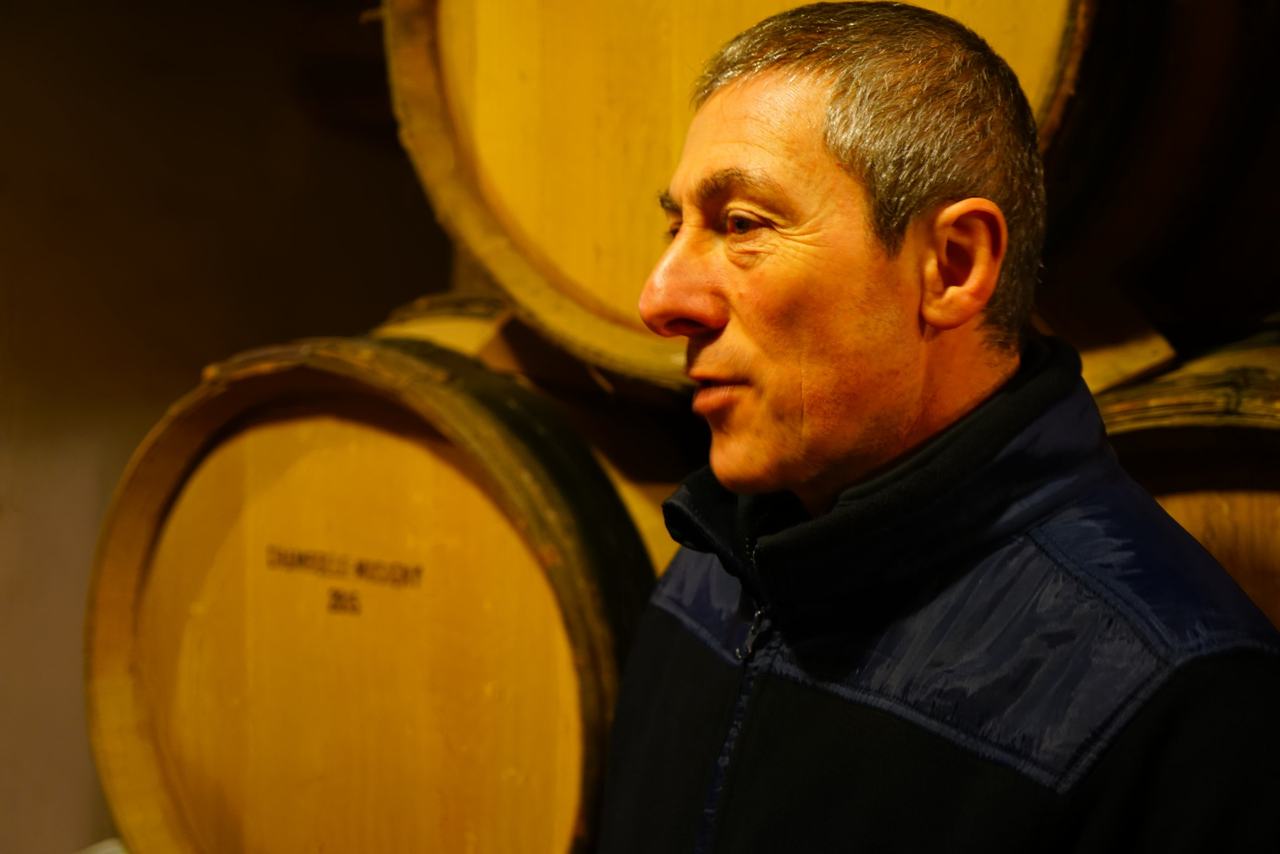
Chambolle is the village of lace and perfume, and Michel Di Gioia makes some of the most forceful wine in it. That is the sort of contradiction that makes collectors sit up. The estate goes back to Victor Moretti in the 1930s, passed to his daughter, and came to Michel, his grandson-in-law, in 1999. Five hectares, an unusually deep bench of old vines, soils worked mechanically with no weedkiller, everything picked by hand and fully destemmed. Only domaine-bottled since 2003. The cult following arrived fast, and I don't think it's going away.
02 · Two and a half hectares, and a son-in-lawVictor Moretti, Geneviève, and the 2003 vintage that was not sold to anyone.
Victor Moretti put the domaine together in the early 1930s at 16 rue du Carré, two and a half hectares in a village where the names on the cellar doors have mostly not changed since. The family bottled fifteen or twenty per cent of the wine and sold the rest to the négoce, as nearly everyone did. His daughter Geneviève Royer-Moretti joined him in 1982 and took the vines in 1984 (“slowly,” Michel says, “she acquired more and more”) and ran them until, with no one in the next generation to follow her, she asked her son-in-law in 1999 whether he would like to take over. He had trained in viticulture at Beaune. He said yes, in January, and the two surnames on the label are his and his wife’s.
The decision that made the domaine came four years later. “When the interest for my wines started to grow I decided to save all the 2003s for bottling myself. I didn’t sell anything en vrac or to the négociants.” It was a nervy year to do it (2003 was the heatwave vintage), and 2004 was a hard year to sell, but by the 2005s he had sold almost everything, and the domaine has bottled every drop since. Four hectares became four and a half with a few contracts, then five when a plot of Savigny came in 2014. Three small cellars in the village, no office to speak of, and a man who says, “I want to work in the vineyards and in the cellar. I don’t want to end up in an office, having others work for me.” Since 2019 there has been a small négoce beside the domaine (a Beaune premier cru, a Clos de Vougeot, barrels bought at the Hospices de Nuits), raised and bottled in the same cellars.
I want to stay close to the raw material as well as the finished wine.
Michel Di Gioia
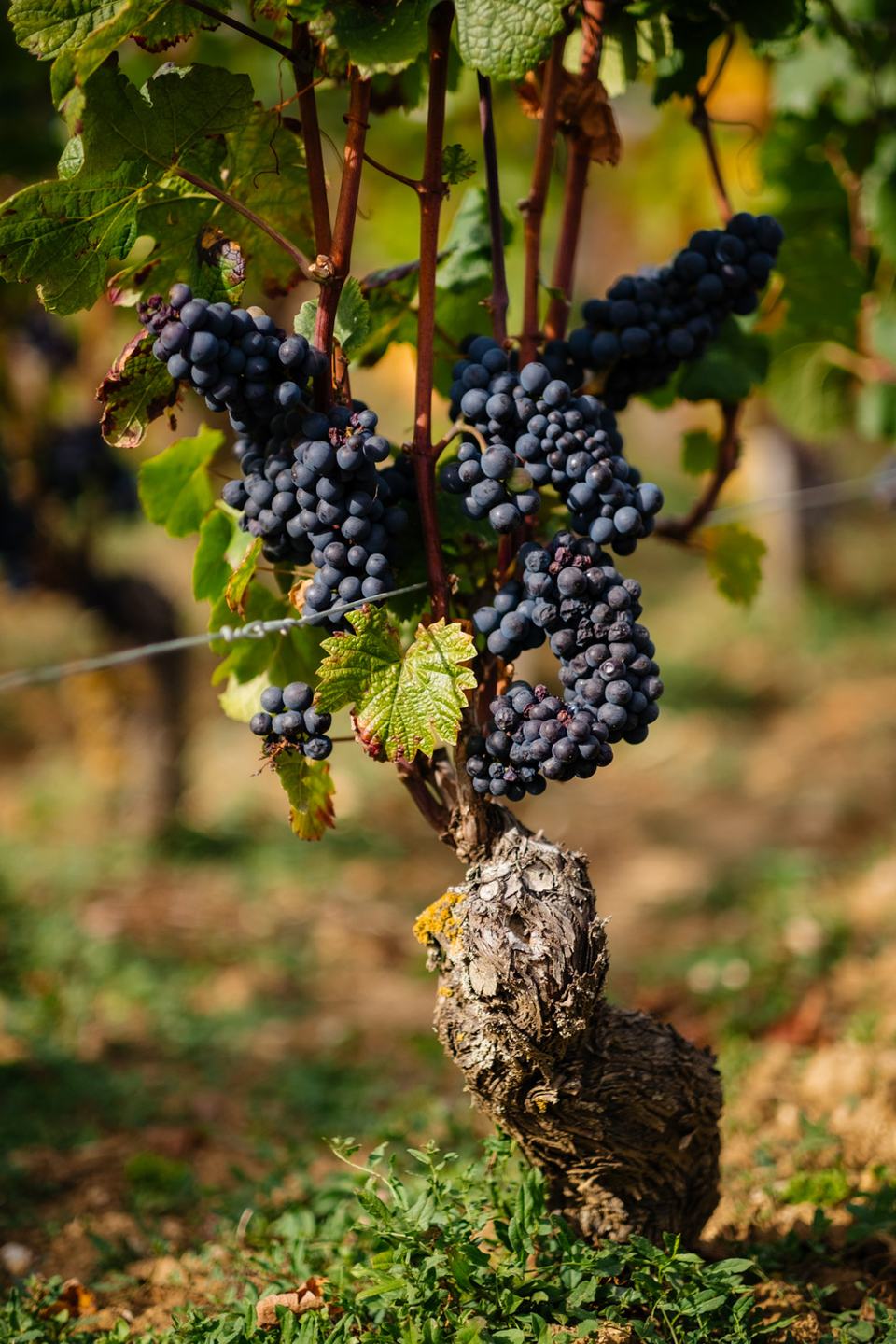
03 · Old vines on the Bonnes-Mares sideFremières planted 1930, Groseilles 1935, and a Gruenchers the size of a tennis court.
The holding is small enough to list vine by vine. Les Fremières is the heart of it: seventy ares on the north slope of Chambolle, on the Bonnes-Mares side, low on the hill in line below the grand cru, planted in 1930 and still mostly those vines; the Hachette, giving the 2022 its coup de cœur, called them vénérables. Michel takes his massale selection cuttings from here. For years it went out as the village Vieilles Vignes; the lieu-dit is now on the label. The village Chambolle is a hectare in eight parcels, Fremières excluded, vines of forty to fifty-five years. Les Groseilles, premier cru, is under a tenth of a hectare of 1935 vines at the mouth of the Combe Ambin on an old alluvial fan, light pebbly limestone, about forty cases a year. Les Gruenchers is smaller still: six ares, planted 1986, lower slope under forty centimetres of stony topsoil full of chert over the Premeaux limestone, twenty-five cases, the one young vine on the property. Bill Nanson on the 2013: “simply super persistence of flavour — this is an absolute beauty!”
Beyond the village: Les Charmois in Nuits-Saint-Georges since 2011, a cool lieu-dit that runs into the combe splitting the appellation in two, vines of the late seventies, always the last of the Côte de Nuits picked; Dessus les Vermots in Savigny, thirty-four ares bought in 2014 (“nicely exposed, but will need some work”); half a hectare of nearly sixty-year-old Pinot at Concœur in the Hautes-Côtes above Vosne; a hectare of old-vine Bourgogne across Morey and Chambolle; twenty ares of Chardonnay and twenty-eight of Aligoté. Through the négoce, Beaune Les Avaux and the Clos de Vougeot.
04 · DensityNo weedkiller, no stems, no hurry, little new oak.
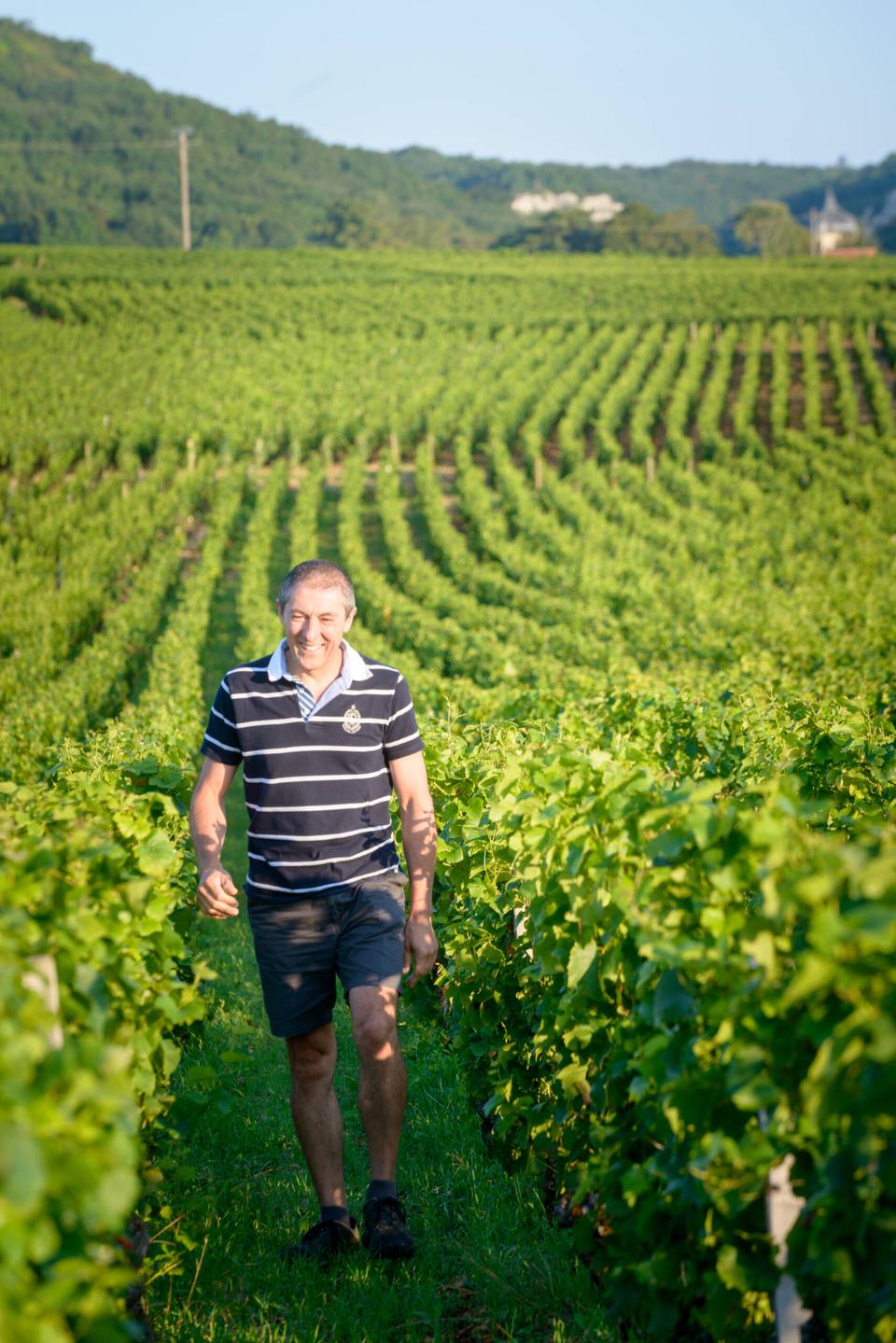
Lutte raisonnée, by his own description and not organic: “today lutte raisonnée often comes before bio, but not yet for me.” What that means here: his father-in-law’s generation used chemical weedkiller, “of course, back then they didn’t know of anything else”; Michel halved it, then stopped it, and the soils have been worked mechanically ever since. Pheromone confusion across Chambolle makes insecticide a rarity. Green work and harvest entirely by hand; HVE certified from the 2019 vintage. He starts picking in the old Chambolle vines, which ripen first because they carry so little, and finishes in the Hautes-Côtes.
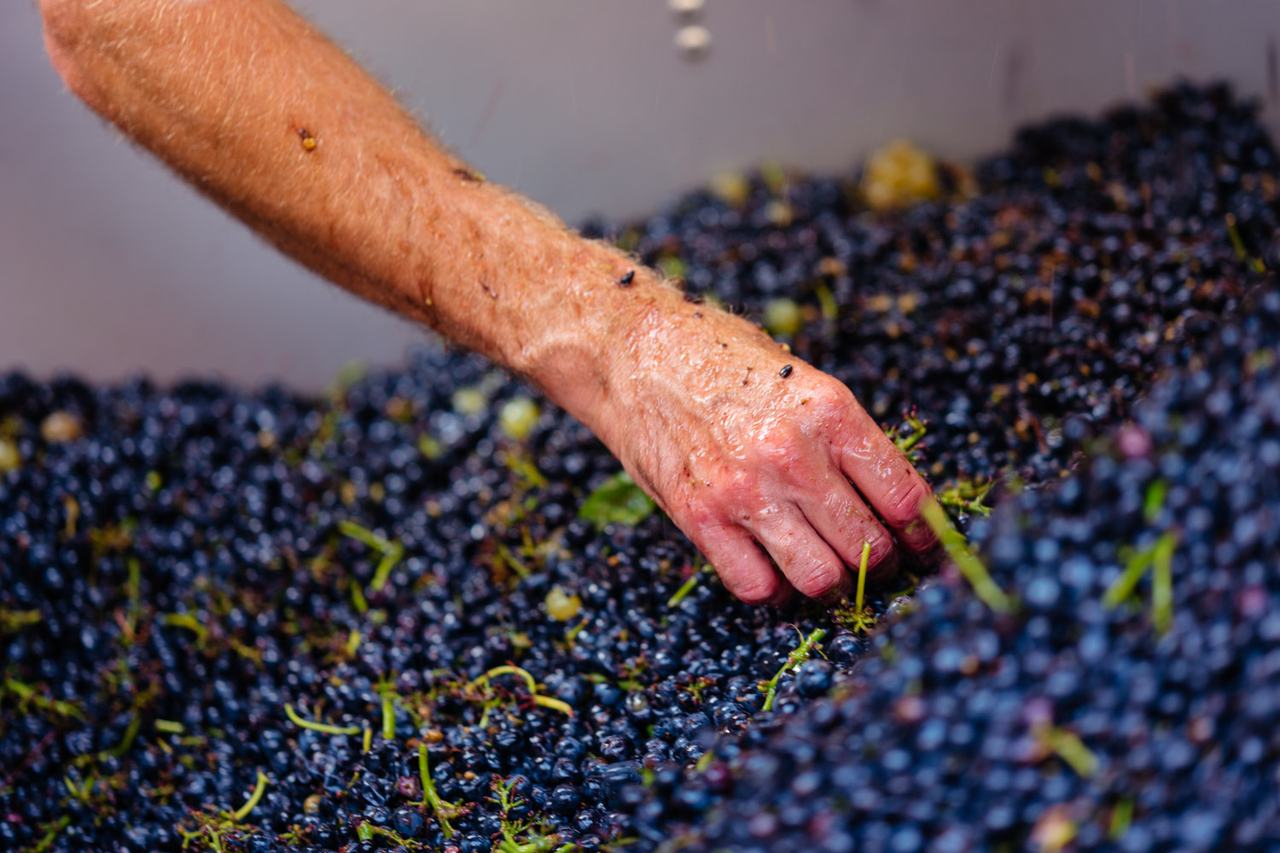
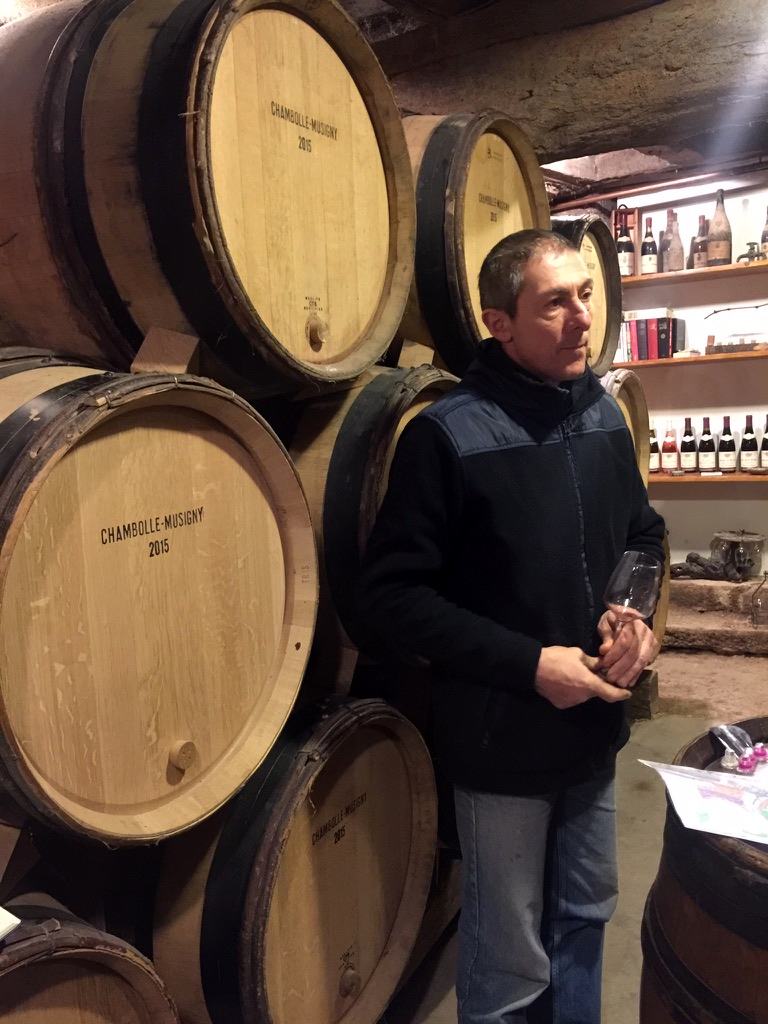
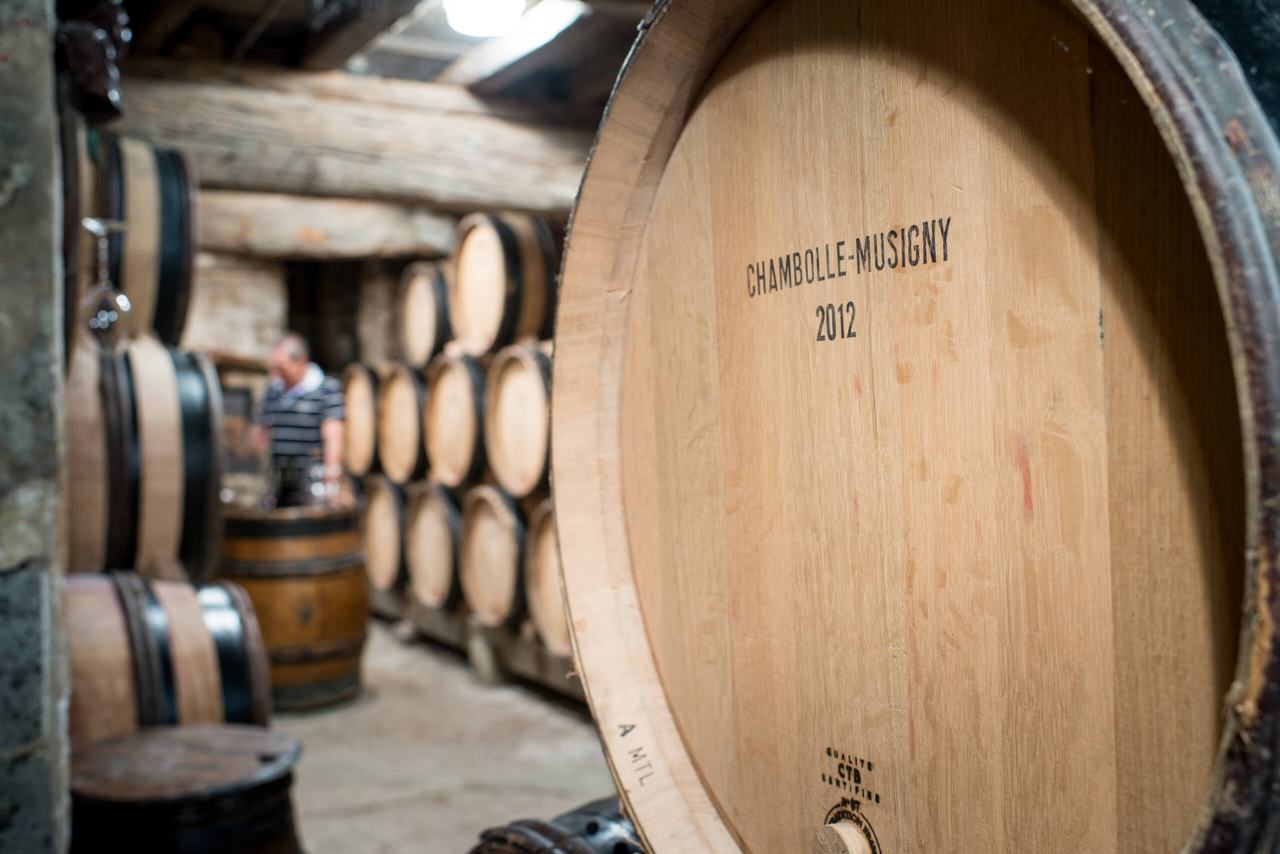
Everything destemmed; a few days cold before the yeasts start on their own; punch-downs by the year, some pumping over; fermentation in wooden vats. Then the élevage that explains the style: fourteen to eighteen months in barrel (the Hachette’s standing phrase is au long cours), from Remond and Rousseau, with little new wood on the village wines and historically none at all on the premiers crus. “I like to respect the terroir and the personality of the appellation,” he says of oak, “so I don’t like to use too much.” What comes out is not the Chambolle of the textbooks. The Hachette on the 2006: “richness and power on the palate, extraction obviously, but above all density and constitution”; Nanson on the 2012 Vieilles Vignes: “not quite brutal, but not far off.” And then, with age, the perfume arrives: the 2020 village was, in Nanson’s words, “cliché beautiful Chambolle — super!”
05 · What they say“Chambollois jusqu’au bout des ongles.”
The Guide Hachette has been on this domaine for twenty years (souvent en vue pour ses chambolle-musigny), with two coups de cœur: the 2007 village, “the jury, admiring, places it a notch above a simple village… the fruit still as explosive, the finish fleshy,” and the 2022 Fremières, “peppery, smoky, floral and fruited… tannins of great finesse… concluded with class by a fine length.” Of the 2005 Fremières: “a wine of very smooth texture, chambollois to the fingertips.” Neal Martin, 90 on the 2012 village: “corpulent and very pure red berry fruit on the nose that is harmonious and rounded.” Jasper Morris MW on the 2010 Gruenchers: “nicely fat and rich… very good indeed.” Clive Coates MW gave the 2001 Groseilles 92: “lovely, fresh, plump fruit.”
Bill Nanson, who profiled the house in 2011 (“here is another domaine whose prices would be very reasonable”), has tasted every vintage since. 2021: the village “simply excellent Chambolle,” the Fremières “at least excellent, possibly a great villages,” the Gruenchers “bravo!” 2020: the Fremières “potentially great!” Michel’s own line, to Nanson, is the one the allocation sheet confirms every spring: “there’s never enough Chambolle.”
Un cran au-dessus d’un simple village.
Guide Hachette des Vins, coup de cœur, on the 2007 Chambolle-Musigny
In the vineyard
& cellar.
- Holding
- About five hectares: Chambolle-Musigny village (1 ha in eight parcels), Les Fremières (0.7 ha, planted 1930), 1er Cru Les Groseilles (0.1 ha, planted 1935), 1er Cru Les Gruenchers (0.06 ha, planted 1986), Nuits-Saint-Georges Les Charmois, Savigny Dessus les Vermots (0.34 ha), Hautes-Côtes de Nuits at Concœur, Bourgogne rouge, Chardonnay and Aligoté; plus a small négoce since 2019 (Beaune 1er Cru Les Avaux, Clos de Vougeot, Hospices de Nuits barrels)
- Since
- Victor Moretti, 1930s; Geneviève Royer-Moretti from 1984; Michel Di Gioia, her son-in-law, from January 1999; entirely domaine-bottled since 2003
- Farming
- Lutte raisonnée; soils worked mechanically, no chemical weedkiller; green work and harvest by hand; HVE certified from 2019
- Cellar
- 100% destemmed; 3–4 days cold; indigenous yeasts; wooden vats; punch-downs and pump-overs by vintage
- Élevage
- 14–18 months in barrel (Remond, Rousseau); modest new oak, more on the premiers crus in recent years; fined and filtered only if needed
- Volume
- ~24,000 bottles; 2016 frost took 60%, 2021 about half
- Honours
- Guide Hachette coups de cœur: Chambolle-Musigny 2007, Les Fremières Vieilles Vignes 2022