
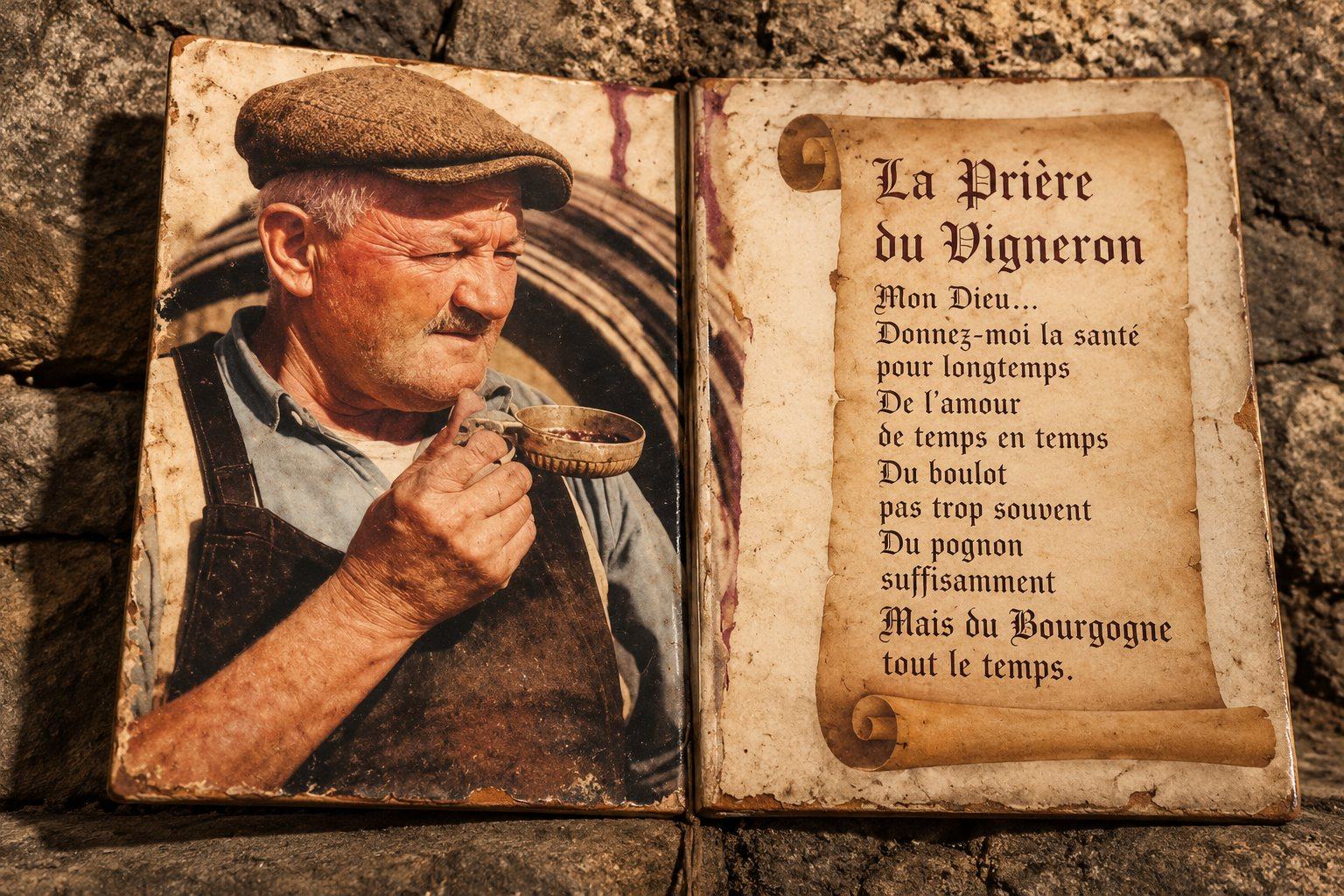
He believes the wine is made in the vineyard. The glass agrees.
Ask other growers in Vosne who farms best and Pascal Mugneret's name keeps coming up, which is how real reputations travel. Four generations: Eugène bought the first parcels, René ploughed with a horse, Gérard made his first solo vintage in 1973, Pascal took over in 2005 and immediately started dismantling the chemistry. Herbicides gone by 2006, synthetics by 2010, biodynamic preparations from 2011, and a private massale conservatory planted in 2020 so the vines of the future come from the vines of the past. Whole clusters, gravity instead of pumps, almost no sulfur. He believes the wine is made in the vineyard. The glass agrees.
02 · Sundays after MassA wood merchant, a prisoner of war, and the first grower Becky signed.
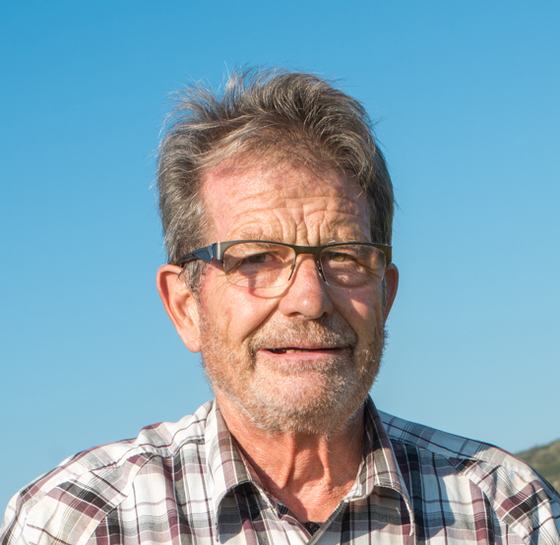
Eugène Mugneret was a wood merchant who bought vines and never farmed them. His son René was the first vigneron, and he came to it the hard way: five years as a prisoner of war, working a farm in Czechoslovakia, and then home to Vosne-Romanée to prune hard, plough with a horse, and build one of the village’s first private clienteles, receiving customers in the yard on Sundays after Mass. The yard is still the one the domaine uses, on the rue de la Grand Velle, just downhill from the church and the offices of the Romanée-Conti. In 1968 René became the very first grower Becky Wasserman signed, before she had a company to sign him to. Eugène’s five children seeded half the Mugnerets of the Côte: one son founded what is now Domaine des Perdrix, another Mugneret-Gibourg; René’s line became this one.
Gérard, René’s youngest, born 1948, had expected to be an electrician. He made wine under his own name from 1973, and with his wife Françoise pushed direct sales past seventy per cent of the volume; in the early nineties he modernised the cellar, destemming instead of crushing, a pneumatic press, and added Chambolle Les Charmes in 1987 and Savigny Les Gravains in 1994. Becky Wasserman’s description of the house, across the generations, to Jancis Robinson: “quiet, calm, and they age beautifully; a sort of Côte de Nuits Lafarge.”
03 · The engineerSeven years at Philips, then a year as his father’s employee.
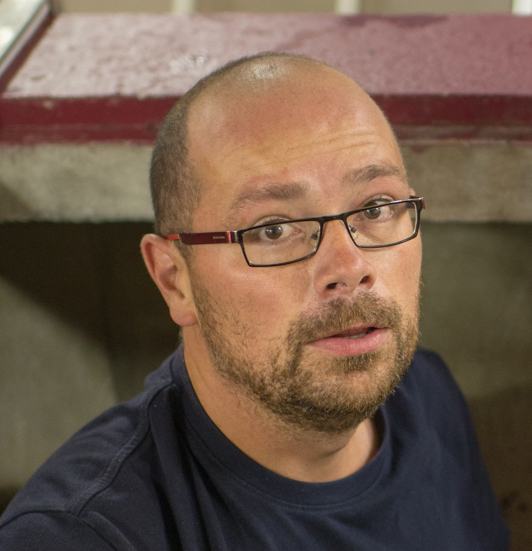
Pascal did not plan to come back. A physics diploma in Reims, materials engineering in Dijon, then seven years as an engineer with Philips, in Hatfield, England, and in Orléans. As a child he had seen the vines as rivals for his father’s attention. In early 2004 he enrolled at the wine school in Beaune, where one classmate was a former Williams Formula One engineer, interned with Jacques Girardin in Santenay, and spent a year on his father’s payroll before making his first vintage in 2005. Jancis Robinson, who went to see him and had her BlackBerry repaired in the process, titled her piece the engineer of Vosne. His own verdict on the training: “everything I learned as an engineer has been useful — everything except to be Cartesian.” On method: “I’d spend forty-five minutes analysing it and fifteen minutes acting on it.” On tricks: “Nothing special. Just a lot of details.”
He divides his own tenure into three phases and says so on his website. Continuity, 2005 to 2011: keep what works. Emancipation, 2012 to 2015: whole bunches tried, sulphur cut, the chemistry gone. Freedom, 2016 onward: lower yields, a hundred per cent whole cluster when the year allows, no sulphur at all during vinification. The epigraphs he chose for the domaine: l’humilité devrait être la plus grande qualité du vigneron, and le vin, souvenir climatique d’un lieu que nous livre la vigne: wine is the climatic memory of a place, delivered to us by the vine.
Everything I learned as an engineer has been useful — everything except to be Cartesian.
Pascal Mugneret
04 · Seven hectaresBrûlées under Richebourg, Gravains planted 1902, and a conservatory.
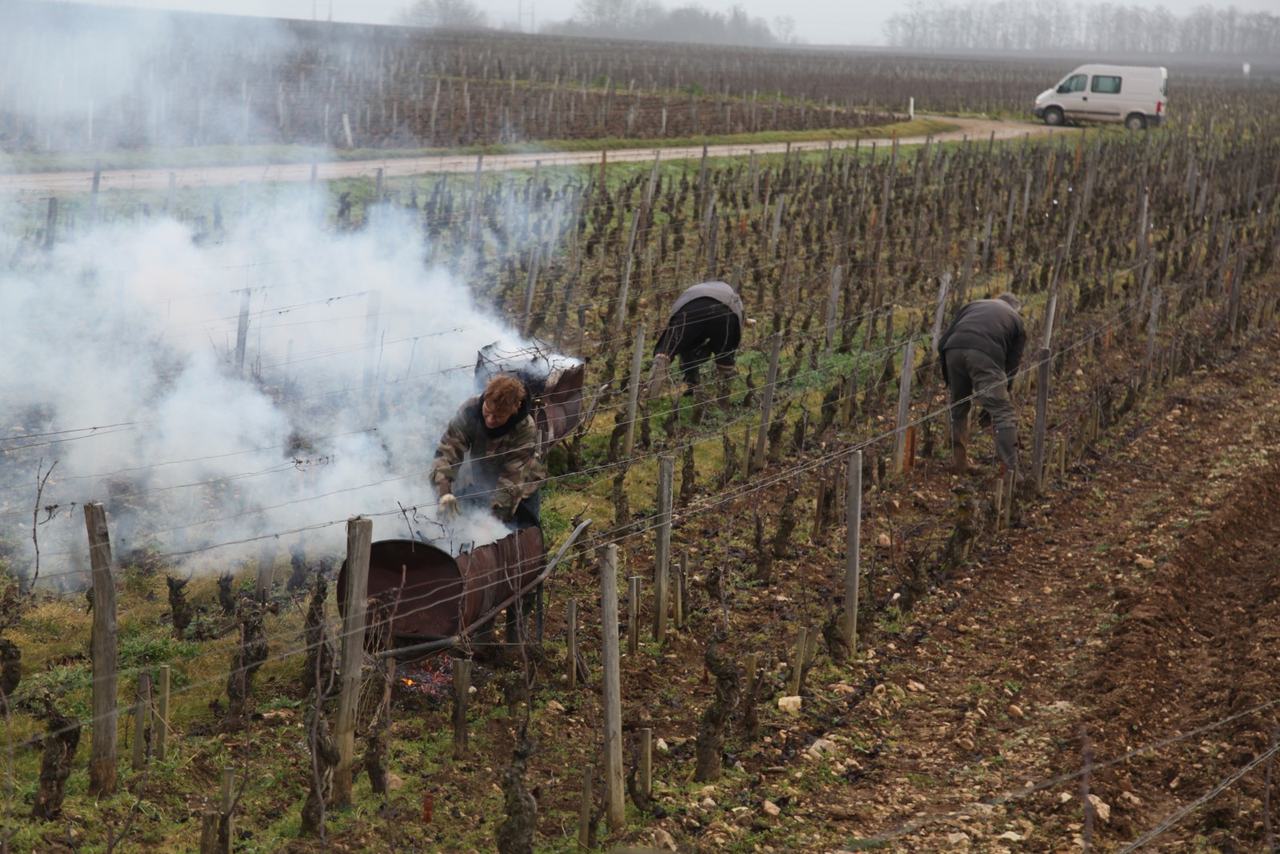
Seven hectares, a third regional, a third village, a third premier cru, and one grand cru: six-tenths of a hectare of Echézeaux in Les Quartiers de Nuits, the south-east corner against the Clos de Vougeot, farmed en métayage from the Mugneret-Gibourg cousins, “the Dames Mugneret.” The premiers crus: Vosne Aux Brûlées, two parcels of 1939 and 1944 vines in the combe below Richebourg on thirty centimetres of soil over rock, “more cerebral than hedonistic”; Vosne Les Suchots, the upper part, generous and extroverted (René believed an underground river ran beneath it, which is why the lower rows are always greener); Nuits Aux Cras and La Richemone, adjoining, which the family had always blended and sold as Les Boudots, as the rules allowed, until Pascal stopped in 2017 because “when people asked where my vines were located, I had to answer, well, they are not actually in Boudots”; Chambolle Les Charmes on white stone; and Savigny Les Gravains, planted in 1902 and never fully uprooted, which court-noué keeps near forty hectolitres.
The two and a half hectares of village Vosne were split from 2017 into three: Précolombière, the heart of the village; Aux Vigneux, ninety-year vines below Suchots; and Quatrain, the northern and southern climats together. In April 2020 he planted a conservatory on ground that had never carried a vine, and so is nematode-free, so that every replacement in the domaine from now on is a cutting from his own old vines. Herbicides stopped in 2005, synthetics in 2010, biodynamic practice since 2011 without the certificate: copper, sulphur, plant infusions, whey, the moon. Target thirty-five hectolitres; in 2020, nearly half that. Charles Lachaux and Nicolas Faure, by Wasserman’s account, rank his viticulture among the best in Vosne.
05 · Richemone“This wine is a movie from beginning to end.”
La Richemone is the domaine’s steepest parcel, seventeen ares high on the slope above Aux Cras, ploughed by horse, five to twenty-five centimetres of light sandy stony soil, planted 1944, 1974 and 1986. It makes one barrel, so the barrel is new, and it is made with no sulphur at all. The name is riche and mone, which sounds like nonne: the parcel probably belonged to the nuns of the Abbaye du Lieu-Dieu. Pascal on it: “When I taste La Richemone, I can say that we’ve reached the target. It’s very rich on the attack and you could imagine the finish will be heavy. But it is not heavy at all. It’s mineral, it’s floral. This wine is a movie from beginning to end.”
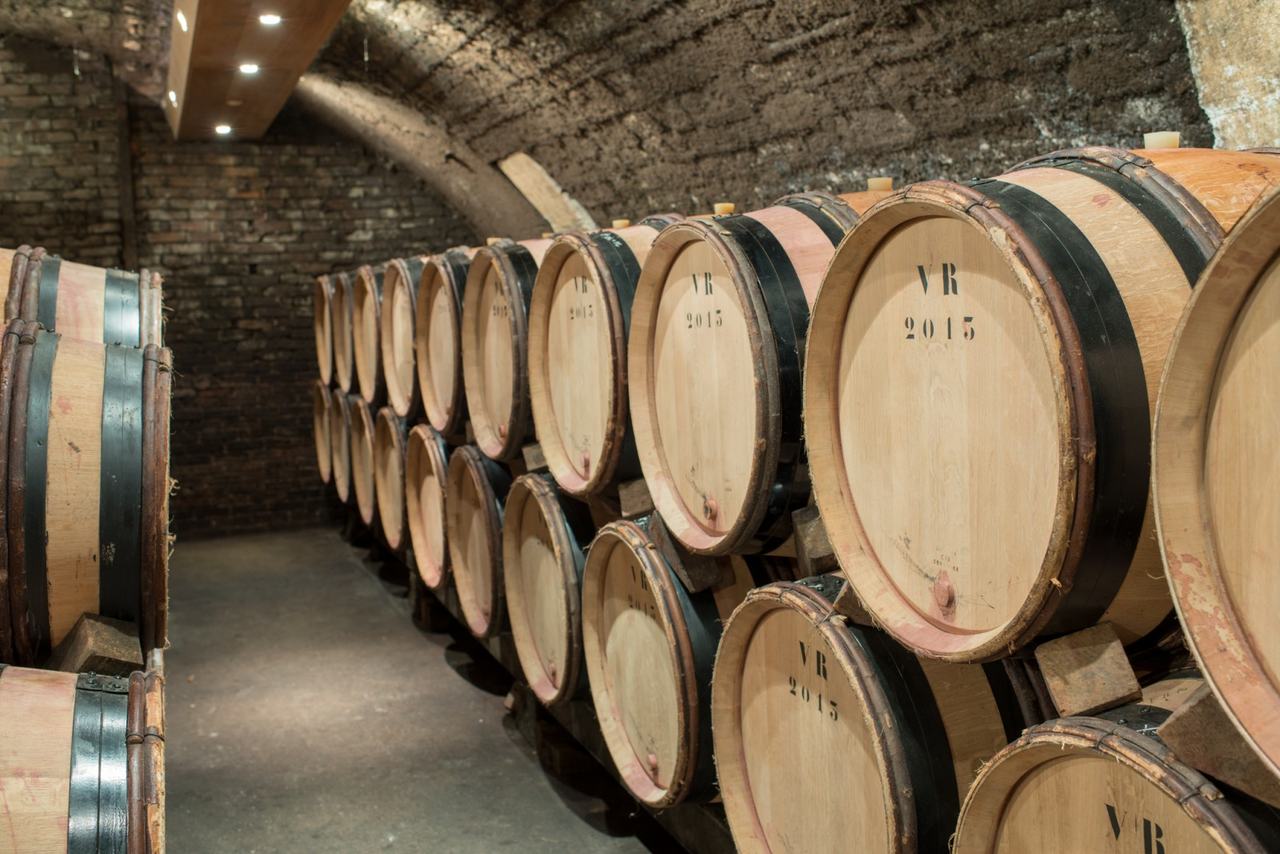
The cellar generally: a hundred per cent whole cluster across the range in 2019 and 2022, indigenous yeasts, no pied de cuve, three or four punch-downs late in the fermentation, gravity for every racking, no pumps. Twelve to eighteen months in barrel, new oak from a tenth to all of it depending on how many barrels a cuvée makes; every cuvée tasted once a month through the élevage. Since 2016 no sulphur during vinification, a first addition in spring, fifteen to twenty milligrams total at bottling. Bill Nanson of the Burgundy Report on the 2022s: “one of the greatest cellars of the Côte de Nuits this year.” On the 2020s: “When is Pascal not on song?”
One of the greatest cellars of the Côte de Nuits this year.
Bill Nanson, Burgundy Report, on the 2022s
06 · What they say“Gorgeous. What more could you want?”
Jancis Robinson on the 2012 village Vosne: “Gorgeous. What more could you want?” Allen Meadows on the 2023 Aux Vigneux, which he flagged as an outstanding value: “really a very good Vosne villages and a wine that’s worth seeking out”; on the 2023 Brûlées, “supple but vibrant medium-bodied flavours possess both focused power and taut muscularity.” William Kelley on the same Brûlées, 93–95: “raspberries and cherries mingled with orange zest and violets.” Nanson on the Brûlées 2022: “a wine that will outlive me.”
Pascal’s own rules, which sit under all of it: “Great wines are not possible without respectful farming.” “We are here to assist the vines.” And, on the hardest thing for an engineer: “Letting go is accepting a lack of total control.”
Gorgeous. What more could you want?
Jancis Robinson, on the 2012 Vosne-Romanée
In the vineyard
& cellar.
- Holding
- Seven hectares, ten appellations, about 3,000 cases: a third regional, a third village, a third premier cru, plus Echézeaux
- Since
- Eugène’s parcels; René the first vigneron; Gérard under his own name from 1973; Pascal from 2005
- Crus
- Echézeaux (Les Quartiers de Nuits, 0.65 ha, en métayage); Vosne Aux Brûlées (1939, 1944) and Les Suchots; Nuits Aux Cras and La Richemone; Chambolle Les Charmes; Savigny Les Gravains (planted 1902); Vosne Précolombière, Aux Vigneux, Quatrain; Gevrey Les Murots
- Farming
- No herbicide since 2005, no synthetics since 2010, biodynamic practice since 2011, uncertified; massale selection and a private conservatory planted 2020; horse on the steep ground; target 35 hl/ha
- Vinification
- 20–100% whole cluster by year, all of it in 2019 and 2022; indigenous yeasts; three or four late punch-downs; gravity, no pumps
- Élevage
- 12–18 months; new oak by cuvée, from a tenth to a single new barrel on Richemone; monthly tasting; no sulphur in vinification since 2016, 15–20 mg/L total at bottling