
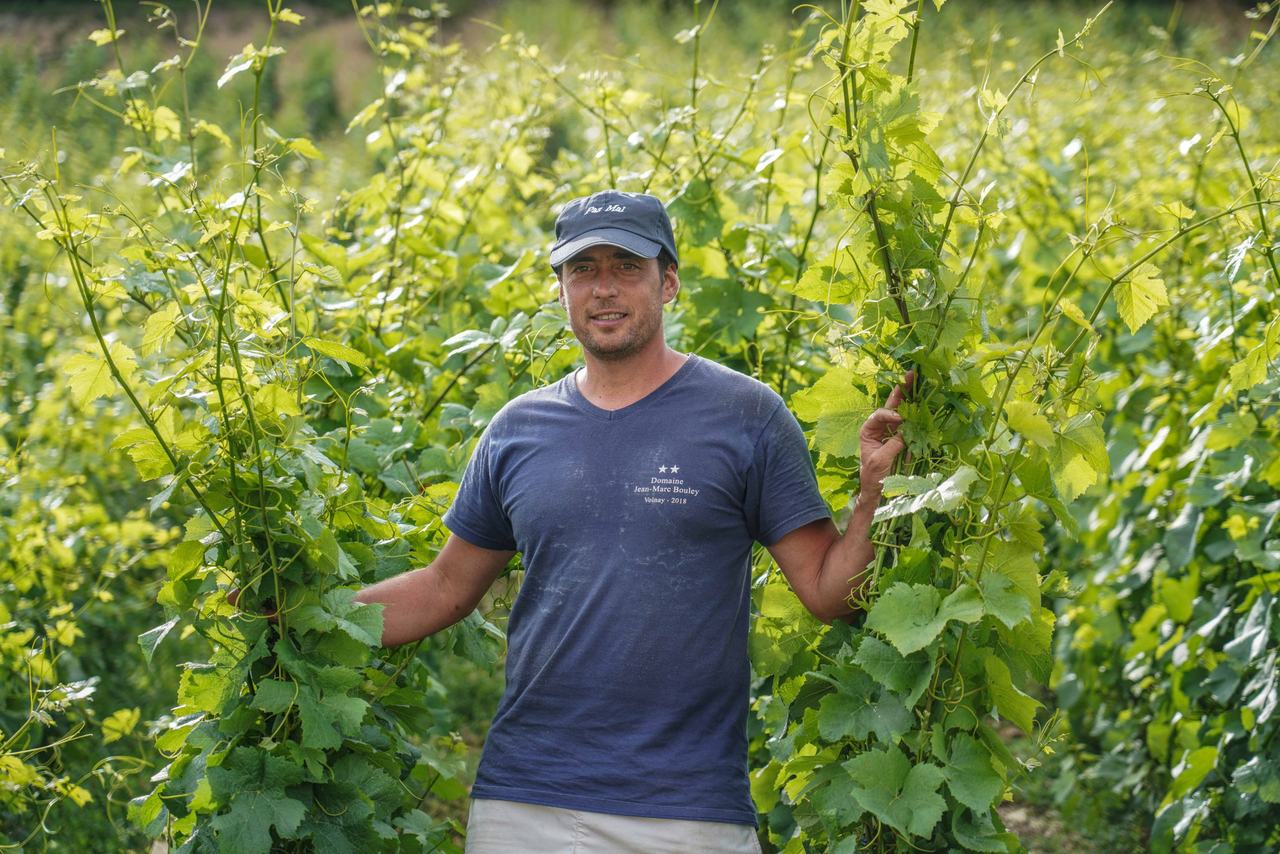
From under nine hectares around Volnay. This is what we’re for.
Jean-Marc started this in 1974. His son Thomas joined in 2002 and took the wheel in 2012, and what they farm now is 8.8 hectares broken into twenty-nine separate parcels across Volnay, Pommard and Beaune. They farm it organically, with Guyot-Poussard pruning, which is the fussy method that keeps the vine's sap flowing and the vine alive longer. Modest yields, partial whole cluster, a gentle élevage. MICHELIN's citation calls the wines "supple yet powerful, built around fine, powdery tannins," and put them at Three Grapes: one of nine estates in the whole of Burgundy, in a list that otherwise reads DRC, Leroy, Coche-Dury, Roumier. From under nine hectares around Volnay. This is what we're for.
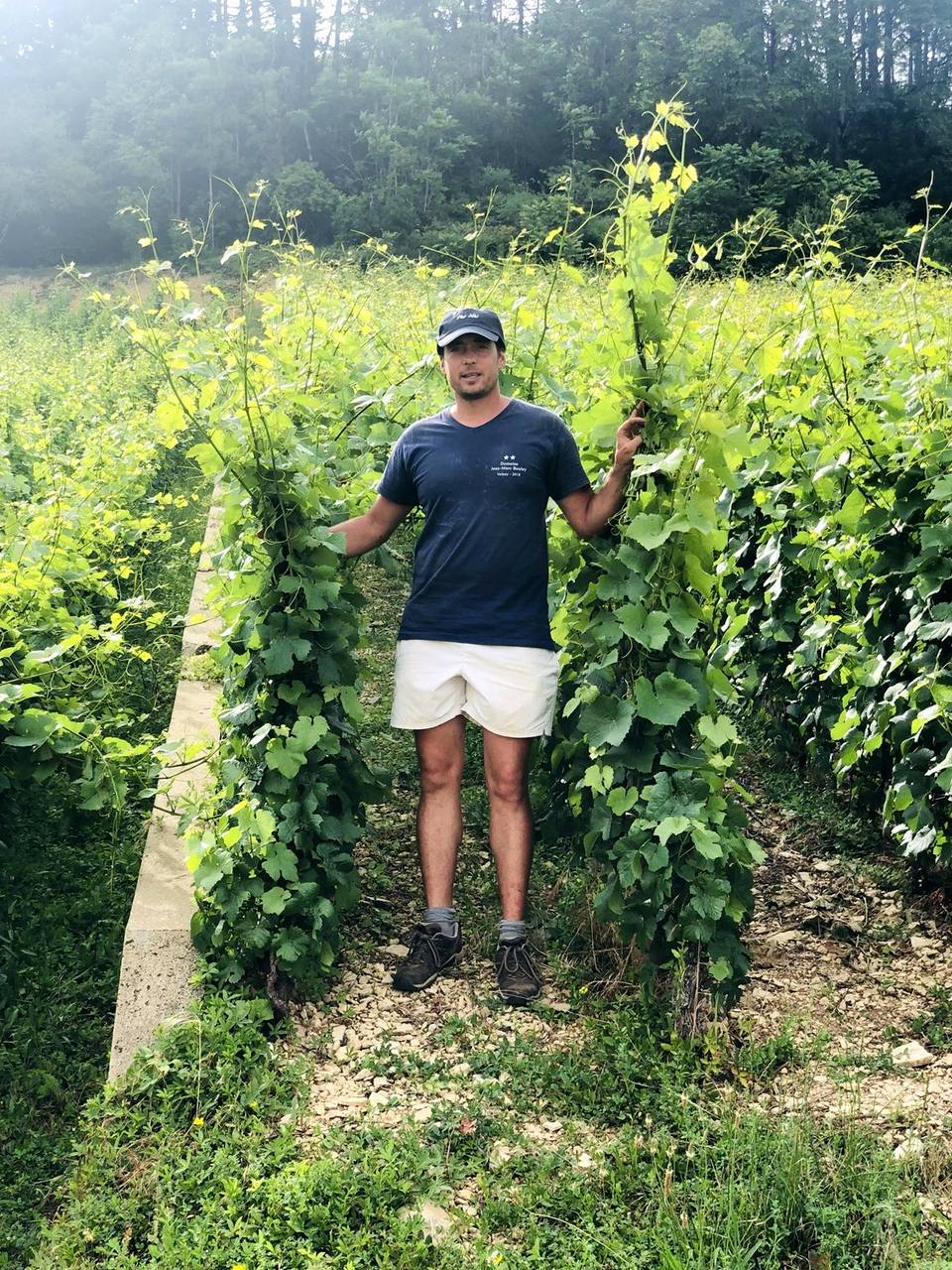
02 · Four generationsOregon, Comte Armand, Felton Road, and home by 2012.
François Bouley ran the family vines from 1919, Christian from 1948, and Jean-Marc made his own domaine in 1974, absorbing his father’s vines a decade later. Before him the family had a few hectares and sold most of the grapes; Jean-Marc grew it to seventeen hectares in the eighties and bottled everything himself, then sold off the regional land to concentrate on Volnay, Pommard and Beaune. What he handed Thomas in 2012 was smaller and better.
Thomas finished wine school in 2002 and went looking: an internship at Witness Tree in the Willamette Valley, next door to Cristom; 2004 at the Domaine des Epeneaux, Comte Armand, in Pommard; 2005 at Felton Road in Central Otago; spells in Jadot’s barrel cellar, with Jean-Pierre Diconne in Auxey and Jean-Luc Joillot in Pommard. He came back to work beside his father in 2002 and took the direction in 2012; the 2010 is the vintage people point to as the one where it turned. He has kept his father’s name on the label. Charles Curtis MW, in Decanter: Thomas is “perhaps among the first of Volnay’s new generation to come to wider notice.” Kelley: the results and the work ethic “won him the near-universal admiration of other growers along the Côte d’Or.”
There is no secret to wine. The most important point is the work in the vineyard.
Henri Jayer, as Thomas Bouley quotes him
03 · Five bunchesShort pruning, high canopies, and the soil first.
“For me, my primary focus is the soil in my vineyards.” No herbicide, no chemical fertiliser, for decades; the rows ploughed repeatedly until véraison, grass between them; the canopies carried high and the shoots rolled into the wires rather than hedged, hedged late when at all. Guyot-Poussard pruning, done by the lunar calendar, keeps the sap channels open so the vine lives longer. Then the hard part: five or six bunches left per vine, which is why the yields read twenty-eight hectolitres in 2010, fourteen and a half in the hail year of 2012, twenty in 2013. Kelley says you can spot a Bouley parcel from the road: high, even canopies, aerated grassy soils, clusters “invariably open and healthy.” It is organic in every respect but the paperwork; Thomas’s line is “it’s about healthy grapes, not ideology.”
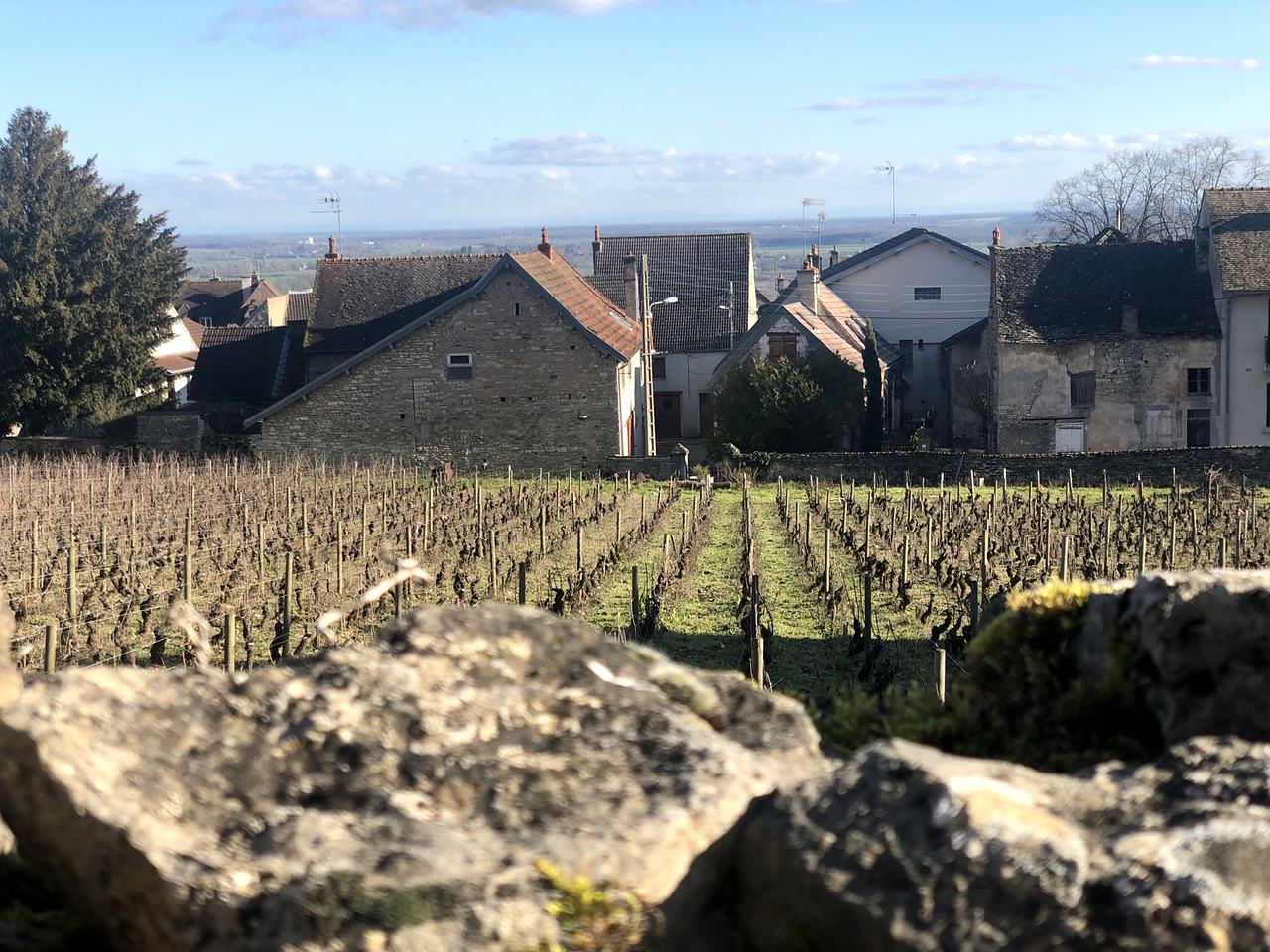
Twenty-nine parcels over a hundred metres of altitude. Clos des Chênes, the flagship: forty-three ares in two plots, 1951 and 1971, the upper one white, windy and south-east, the lower one heavy clay. Les Caillerets, planted only in 2004 on thin stony ground, of which Nanson wrote, in 2012, “grand cru standard, and from such baby vines.” Carelle sous la Chapelle, his grandfather’s parcel, red soil over limestone: “my baby, my grand cru.” Pommard Rugiens Hauts, half of it 1943 vines on thirty centimetres of red soil over rock; Pommard Fremiers, 1971, red soil with big limestone boulders; Beaune Reversées, 1963 and 1976, at the bottom of the slope and always the first picked. Behind the house, Clos de la Cave, seven metres of white marl and sand, which a Hachette juror called l’image même du volnay. And a hectare called Vibrations in the Hautes-Côtes at 380 metres above the village, picked a week after everything else.
04 · The worst wine, tooWhole bunches on the clay, none on the white soils.
“For me, the best wine is with whole bunches. But the worst wine is also with whole bunches.” So the stems are decided by soil: forty to seventy-five per cent on the clay-rich sites (Clos des Chênes, Fremiers, Reversées) and none on the thin white ones, Caillerets, Carelles, Rugiens, the old-vine Volnay. The must is cooled to fourteen degrees, ferments on its own yeasts for two or three weeks in concrete or steel with gentle punch-downs, and goes to barrel: a third new on Caillerets, a quarter on Fremiers and Reversées, a fifth on Clos des Chênes, next to none on the village wines, none at all on the Bourgogne. Then eighteen months on the lees (two winters, since the 2010 Pommard), a racking in spring, bottling a month later, no fining, no filtration, and sulphur only when it is needed: in 2014 the malolactics finished in November and nothing went in until July, “eight months protected by the CO2.” Thomas: “The last part of élevage is the most important. It’s really important not to rush into bottling.”
For me, the best wine is with whole bunches. But the worst wine is also with whole bunches.
Thomas Bouley
05 · What they say“Broad-shouldered and powerful but also unusually refined.”
William Kelley, Wine Advocate, 95 on the 2023 Clos des Chênes: “full-bodied, satiny and seamless, it’s broad-shouldered and powerful but also unusually refined and precise”; 95 again on the 2019, “one of the most elegant and compelling Clos des Chênes that Bouley has produced to date.” Neal Martin on the same 2019: “framed by filigree tannins that impart a silky texture… a sensual offering.” Allen Meadows on the 2016: “I very much like the texture of the extract-rich, medium-weight-plus flavours.” Charles Curtis on the 2022: “this magnificent wine shows why the site is held in such high regard.” Guide Hachette gave the Fremiers a coup de cœur twice, in 2005 and 2008.
Thomas on 2017: “the finest vintage I ever made — a mini 2015.” He has picked in October exactly once, in 2013, the first time anyone in the family had done so since 1981.
Full-bodied, satiny and seamless, it’s broad-shouldered and powerful but also unusually refined and precise.
William Kelley, Wine Advocate, on the 2023 Volnay Clos des Chênes
In the vineyard
& cellar.
- Holding
- 8.8 hectares in twenty-nine parcels across Volnay, Pommard and Beaune, over a hundred metres of altitude; fourth generation
- Since
- Family vines from 1919; Jean-Marc’s domaine from 1974; Thomas beside him from 2002, in charge from 2012
- Farming
- Organic, uncertified: no herbicide or chemical fertiliser; repeated ploughing, grass between rows; Guyot-Poussard by the lunar calendar; canopies high and barely hedged; five or six bunches per vine; hand harvest
- Vinification
- Sorted on a vibrating table and belt; whole cluster on the clay sites (40–75%), none on the white soils; must cooled to 14°C; ambient yeasts, two to three weeks in concrete or steel, gentle punch-downs
- Élevage
- Eighteen months on lees (twelve for Bourgogne), two winters; new oak 5–33% by cuvée, none on Bourgogne; racked in spring, bottled a month later; unfined, unfiltered, minimal sulphur
- Cuvées
- Volnay, Volnay Vieilles Vignes, Clos de la Cave; 1ers crus Clos des Chênes, Caillerets, Carelle sous la Chapelle; Pommard, 1ers crus Rugiens Hauts and Fremiers; Beaune 1er Reversées; Hautes-Côtes Vibrations; Bourgogne rouge, Aligoté; Meursault from bought organic fruit