
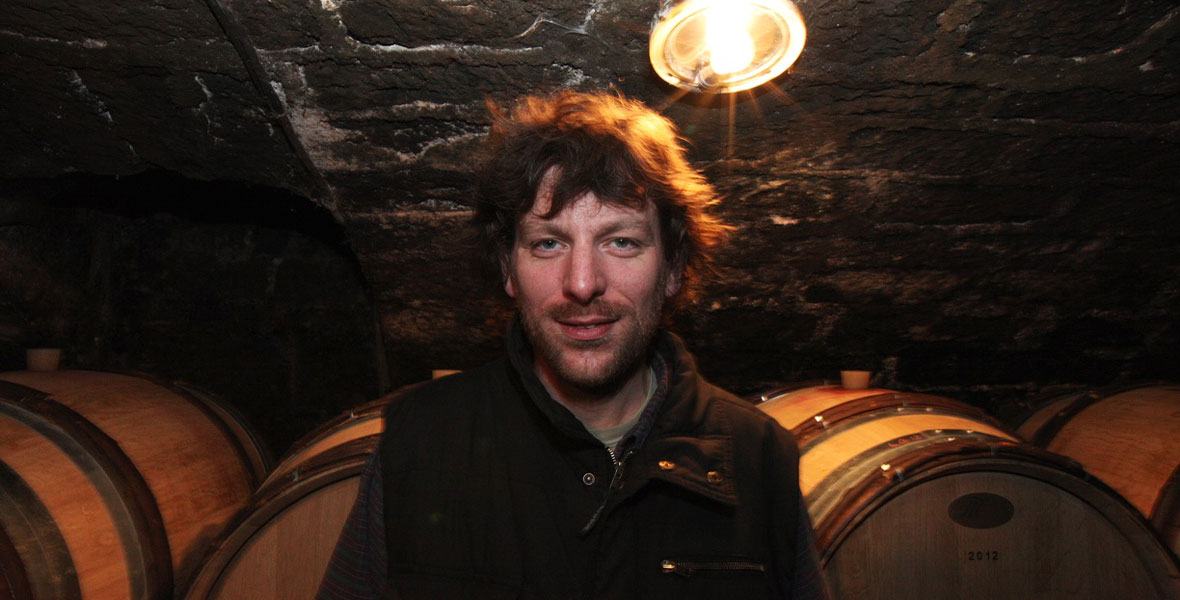
There is almost none of this wine. I’m telling you about it anyway.
Sylvain's younger brother, his right hand, and a trained oenologist himself. In 2010 he started his own thing with a few rented rows and made a hundred and fifty bottles. He now farms about a hectare and makes roughly seven hundred bottles a vintage. Read that again. Organic from the first day, certified in 2023, biodynamic preparations, and in 2015 he planted a parcel of massale Chardonnay Rose at twenty thousand vines per hectare because he wanted to see what would happen. Since 2019 the reds are whole-cluster. There is almost none of this wine. I'm telling you about it anyway.
02 · The bus driver’s sonsBeaune, Dijon, Bordeaux, Pouilly-Fumé, and home in 2008.
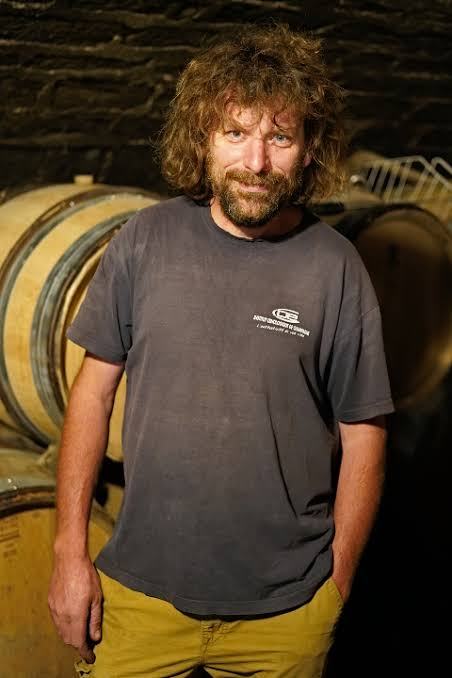
The Pataille boys did not inherit a domaine. Their father drove a bus in Dijon and spent his afternoons in his friend Jean Fournier’s vines, and in the eighties bought himself a few scraps (half an acre) in Marsannay. Sylvain was born in 1975, Laurent in 1978. Laurent went through the lycée viticole at Beaune and the oenology degree at Dijon, with stages at Château Calon in Saint-Émilion and René Muré in Alsace, then a business master’s in Bordeaux, and then five years as régisseur of the Château de Tracy in Pouilly-Fumé, where in 2004 he made the first wine from Tracy’s experimental block planted at seventeen thousand vines to the hectare. He did not forget it. In March 2008 his father fell ill and a member of Sylvain’s team left at the same time; Laurent came home to help his brother for a season, and stayed. He has been Sylvain’s right hand ever since, and still is.
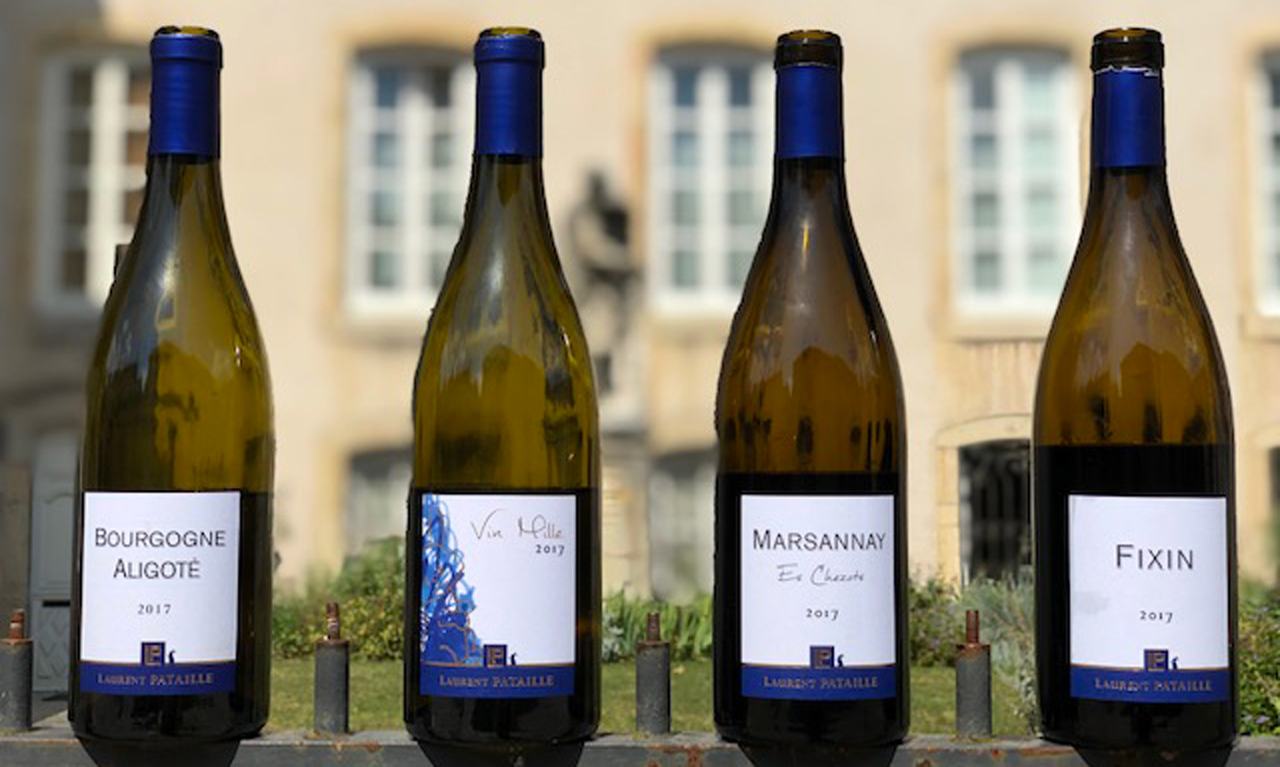
In 2010 old Monsieur Durand in Fixin mentioned he had a few vines he wanted to rent: twelve ares of Pinot Noir in Fixin, five ares of Aligoté in Marsannay. Laurent took them. The frost took most of the first crop, and the first vintage was a hundred and fifty bottles. Asked whether starting his own label while working for his brother was awkward, he says: “It was. Then Sylvain and I had a talk. And that was that.” In 2011 he married Tomoko Fukuda, who had interned at Sylvain’s in 2009; her connections found him a Japanese importer, and with seven hundred bottles a year he never looked for another, so for a decade nearly every bottle went to Japan. The West has only just seen them. In 2013 he bought a fallow parcel in Es Chezots and his father rented him his own vines in the same lieu-dit; in 2015 he planted the fallow ground to massale Chardonnay Rose, cuttings from the Château de Tracy, at twenty thousand to the hectare; in 2019 he bought thirty ares of Les Longeroies. That is the whole domaine.
It was. Then Sylvain and I had a talk. And that was that.
Laurent Pataille, on starting his own label
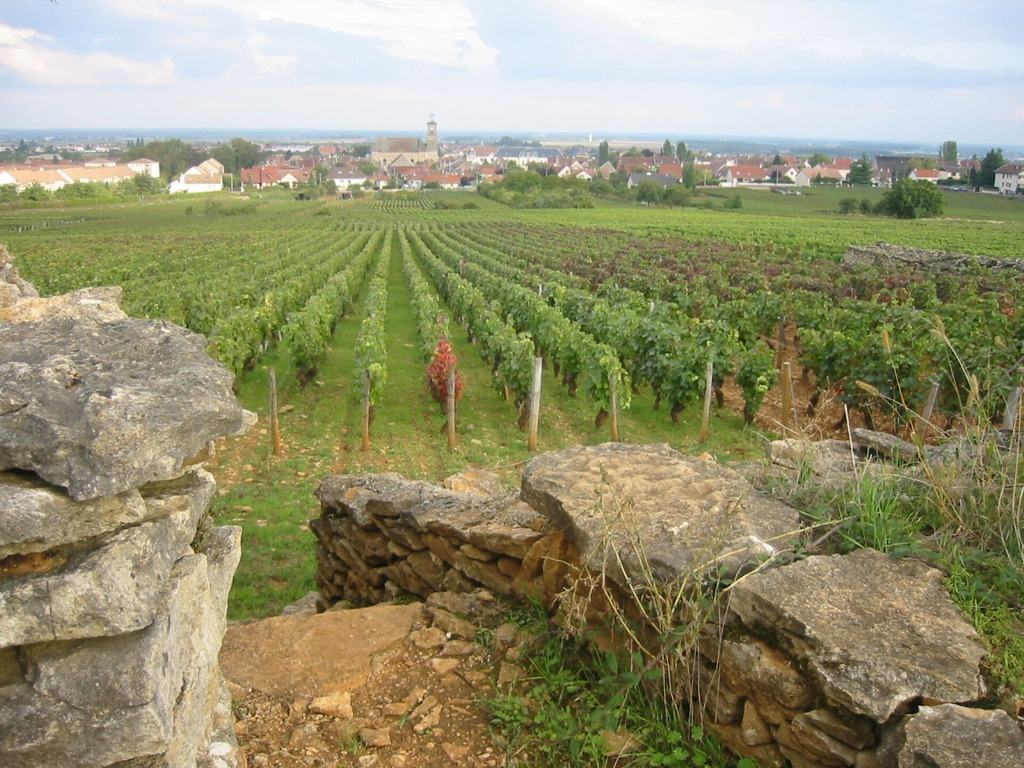
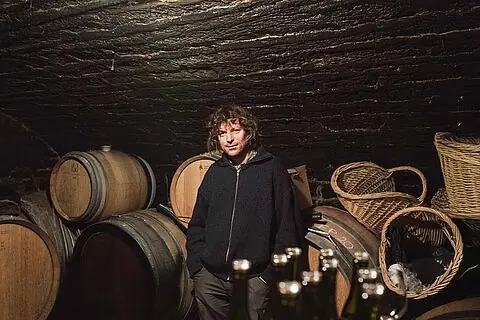
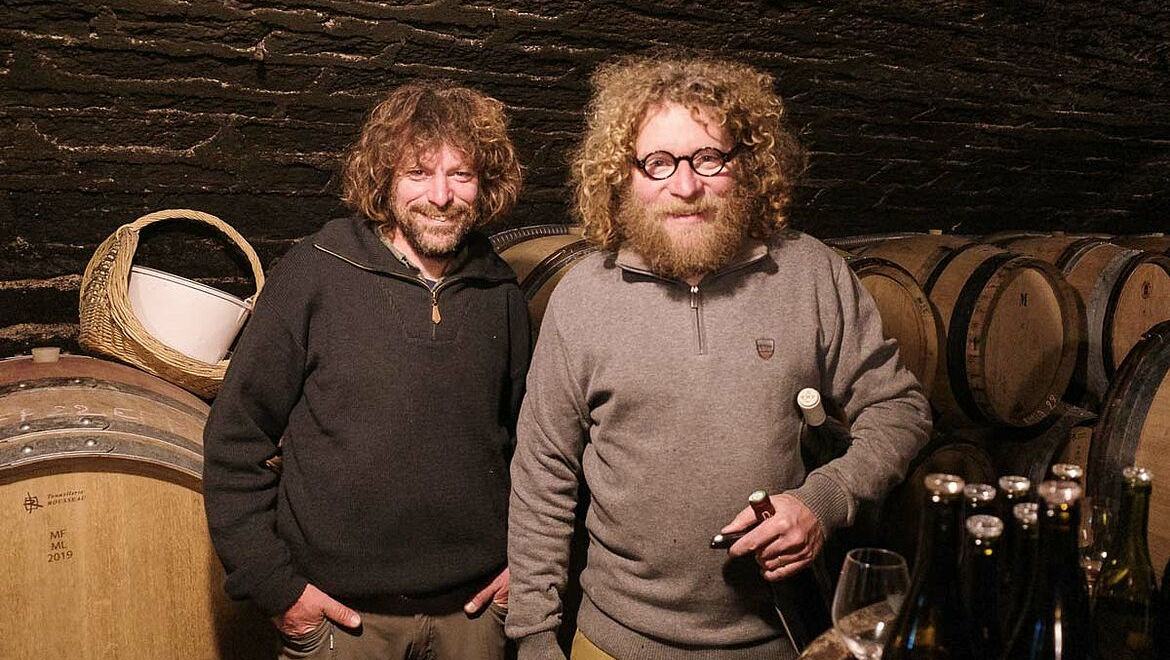
03 · Ninety-two aresEs Chezots in the cool of the combe, Longeroies, a Fixin, and the Aligoté by the pétanque court.
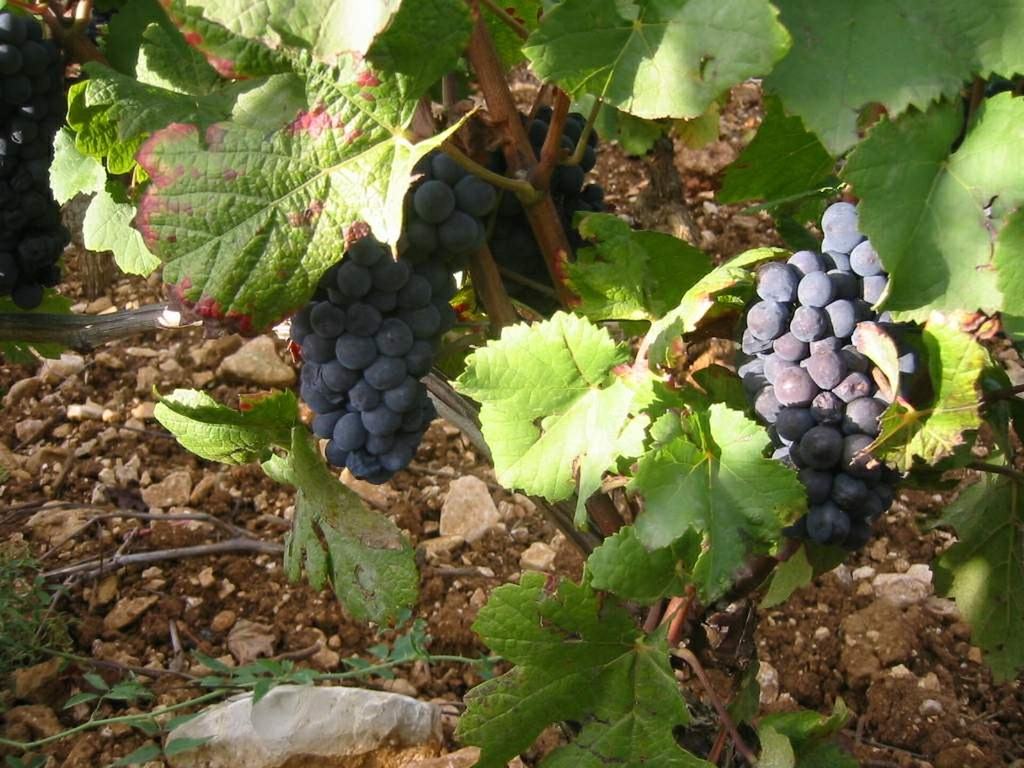
Add it up and it comes to ninety-two ares. The Aligoté is twenty, in two neighbouring lieux-dits below Les Longeroies, Les Étalles and La Champagne Haute, planted 1960 and 1982 on marl and dense clay (the marl parcel gives a natural reduction in the wine), and one of them sits beside a public garden: “there’s even a pétanque court.” Es Chezots is a cool site at the mouth of the Combe du Pré, where the valley turns: seventeen ares of his father’s Pinot Noir, planted 2001 on rocky soil with little clay, floral and lifted; and twelve ares of the Chardonnay Rose he planted in 2015 at twenty thousand vines, unhedged, the canopies braided, which makes a white he calls Vin Mille, a pun on vingt mille. The Fixin is twelve ares of 1986 Pinot in Les Basses Chenevrières just over the line from Marsannay, light draining soil, rented from Durand since the beginning. And Les Longeroies, the long rows, thirty-one ares planted 1981, runs the whole slope: pebbles at the bottom, clay in the middle, shallow limestone at the top.
04 · A grandfather’s pressWhole bunches, a third of them crushed; no sulphur until summer.
Organic from the first vintage with biodynamic preparations, in the conversion process from 2020 and certified by Ecocert in 2023, partly because, he says, Marsannay is a suburb of Dijon now: “I just want people who may be upset to see me spraying to feel reassured that it is organic.” The whites are trodden or run through an old crusher and pressed for five or six hours a cycle in his grandfather’s vertical press, so clean that no settling is needed; ambient yeasts, no sulphur at vinification, lees stirred by taste (“the purpose is not to fatten the wines but to use the lees to keep the wines reductive and protected”), and the first ten milligrams of sulphur only at the racking after a year. The Vin Mille started in 2017 at eighty per cent new oak, then half, then none; it now sees a year in barrel and nine months in steel.
The reds are the Pataille experiment in miniature. Fixin was all whole-cluster until 2016 and came out herbal; Es Chezots went from fully destemmed to half to all and back. Then in 2017 Sylvain ran a four-way trial on one parcel (whole, destemmed, half, and whole with part of the bunches crushed), and since 2019 both brothers do the last: every bunch in whole, about a third of them crushed to release juice and start the fermentation, which Laurent finds gives far less green character. Dry ice for protection, pump-overs early, four or five punch-downs around the middle of the fermentation, a fortnight on the skins, and no sulphur at all until the cellar warms the following summer. Fifteen to eighteen months in barrel, next to none of it new; unfined, and filtered only off the bottoms. Twenty-five to forty milligrams of sulphur total at bottling.
I just want people who may be upset to see me spraying to feel reassured that it is organic.
Laurent Pataille
05 · What they say“Endearing and full of character, like the man.”
There is not much, because there is not much wine. Decanter gave the 2014 Es Chezots 92 (“raspberry and cherry notes with a supple texture and a blood orange finish”) and the 2014 Fixin 90, “creamy strawberry… a juicy texture and smoky finish.” Bill Nanson of the Burgundy Report, who tasted the 2019s with Laurent in Sylvain’s cellar while Sylvain was away, found the Fixin “very aromatic, super elegant, rose-tinged — not powerful, but great,” the Longeroies “very elegant, fresh energy, direct, juicy,” the Vin Mille “super texture and presence,” and summed the range up as “endearing and full of character, like the man.” Julia Harding MW tastes them every year for JancisRobinson.com; Neal Martin added the domaine to Vinous in 2022. In Japan they have been drinking them for a decade.
Which is the point. A hectare, a vertical press, a brother next door, and seven hundred bottles. If you are offered one, take it.
Endearing and full of character, like the man.
Bill Nanson, Burgundy Report
In the vineyard
& cellar.
- Holding
- About a hectare (92 ares) in Marsannay and Fixin: Aligoté (0.20 ha), Es Chezots blanc (0.12) and rouge (0.17), Fixin (0.12), Les Longeroies (0.31); roughly 700 bottles a year
- Since
- Oenologist, five years régisseur of Château de Tracy; back in Marsannay beside Sylvain from 2008; own label from 2010 with 150 bottles
- Farming
- Organic from the first vintage, biodynamic preparations; in organic conversion (Ecocert) since 2020; no hedging, canopies braided; the Chardonnay Rose at 20,000 vines per hectare
- Whites
- Trodden or crushed, pressed in his grandfather’s vertical press; no settling; ambient yeasts; no sulphur at vinification; lees stirred by taste; Aligoté a year in tank and old barrels, Vin Mille a year in barrel plus nine months in steel
- Reds
- Since 2019, 100% whole cluster with about a third of the bunches crushed; dry ice; pump-overs then four or five punch-downs; a fortnight on skins; first sulphur the following summer
- Élevage
- Fixin and Es Chezots 15 months, Longeroies 18, little or no new oak; unfined, barrel bottoms only filtered; 25–40 mg/L total sulphur